
Shipbuilding Report
: Analysis on the Market, Trends, and TechnologiesThe shipbuilding sector faces a clear production and policy inflection: market data shows a baseline market value of $121,930,000,000 in 2020 and a projected $170,900,000,000 by 2028, implying a sustained mid-single-digit CAGR that makes manufacturing efficiency and fuel-type strategy decisive competitive levers. Recent market reports reinforce demand expansion for low-emission newbuilds and naval programs even as capacity concentration and supply-chain stress produce pockets of tight yard utilization and strategic opportunity Firms that compress in-dock time through modular pre-outfitting, digital engineering and precision joining will capture outsized margin uplift as green fuel readiness becomes a contract gating factor
183 days ago, we last updated this report. Notice something that’s not right? Let’s fix it together.
Topic Dominance Index of Shipbuilding
To gauge the influence of Shipbuilding within the technological landscape, the Dominance Index analyzes trends from published articles, newly established companies, and global search activity
Key Activities and Applications
- New-build commercial vessels (bulkers, tankers, containerships) driven by trade recovery and larger fleet renewal cycles; yards focus on capacity scheduling and fuel-type specification. Ship Building Market Outlook 2025-2034
- Naval and government ship programs that provide long-duration orderbooks and margin resilience, including patrol vessels, frigates and ice-class platforms.
- Offshore energy and marine construction vessels (WTIVs, cable layers, OSVs) supporting wind and subsea infrastructure buildout; these orders require integrated offshore construction capabilities.
- Retrofit, conversion and repair for emissions compliance (scrubbers, ballast water systems, hybridization) and life-extension work that monetizes aging fleets.
- Digital supply-chain and shipyard orchestration: digital twin and project management platforms to reduce rework and plan parallel outfitting activities.
- LNG and alternative-fuel integration across newbuilds and retrofits, including bunkering coordination and vessel design for dual-fuel systems.
- Precision assembly and block pre-outfitting to minimize dock occupancy (engine rooms and major systems preinstalled at ground level).
Emergent Trends and Core Insights
- Green-fuel specification is contract-level now: a rising share of orders require LNG, ammonia, hydrogen readiness or hybrid electric architectures; this alters design, outfitting and supplier selection timelines Ship Building Global Market Report 2024-2025 & 2030.
- Manufacturing efficiency as the primary moat: patent and market signals show intense investment in modular construction, automated welding and material handling to shrink in-dock time and cost per hull rather than dramatic hull redesigns.
- Digital twin and AI adoption scales from design to execution: majority adoption of model-based workflows and predictive analytics is shortening lead times and lowering defect rates; firms that integrate audit-grade emissions and lifecycle data into these platforms secure premium procurement outcomes StartUs Insights - Shipbuilding Trends.
- Orderbook concentration in East Asia creates both bottlenecks and price arbitrage: large Chinese and Korean yards hold multi-year backlogs, pushing some owners to seek niche yards or incentivize overseas build sites to meet schedule windows High-Tech Shipbuilding Industry Report.
- Modular pre-outfitting moves high-risk work ashore: pre-assembling complex systems (engine rooms, accommodation blocks) reduces expensive dock time and raises quality by enabling ground-level diagnostics and pressure testing.
- Workforce and skills are a gating constraint: retraining toward automation, welding robotics, systems integration and digital engineering is now a strategic investment; public policy measures in several countries target the talent pipeline to support national programs.
- Bunkering infrastructure growth parallels vessel fuel choices: expansion of LNG bunkering hubs and inland bunkering options materially affect route economics for dual-fuel designs.
Technologies and Methodologies
- Digital twins and integrated shipyard PLM for end-to-end simulation, clash detection and lifecycle emissions reporting, enabling auditable green credentials.
- Robotics and automated joining (laser welding, automated MIG/TIG) to raise weld quality and reduce manual rework on block splice operations, shortening critical path activities.
- Modular block pre-outfitting and containerized system modules (engine rooms, fuel modules) to parallelize workstreams and minimize dock occupancy.
- AI-assisted hull and systems optimisation for fuel performance improvements and for generating ship variants that are easier to outfit for alternative fuels Ship Building Global Market Report 2025
- Additive manufacturing for complex spares and low-volume components to reduce logistic lead times and enable on-site parts production during service windows
- IoT sensor networks and mass-flow fuel metering for construction QA, commissioning and post-delivery performance verification, feeding predictive maintenance models
- Air-lubrication, hull form tweaks and energy-recovery retrofits as near-term measures to meet emissions targets while alternative fuels scale
Shipbuilding Funding
A total of 477 Shipbuilding companies have received funding.
Overall, Shipbuilding companies have raised $75.8B.
Companies within the Shipbuilding domain have secured capital from 1.1K funding rounds.
The chart shows the funding trendline of Shipbuilding companies over the last 5 years
Shipbuilding Companies
- SSI (ShipConstructor & ShipbuildingPLM) — SSI supplies integrated CAD/PLM software purpose-built for shipbuilding that accelerates design-to-production handover and reduces rework through model-based workflows. The company emphasizes shipyard adoption programs and long track record in multi-year programs, making its platform a de-facto engineering multiplier for midsize yards moving to digital production. SSI's solutions directly support modular pre-outfitting and digital twin strategies already prioritized by owners and yards
- Saltwater Engineering B.V. — Saltwater Engineering provides naval architecture and conversion engineering focused on low-carbon retrofits and modular vessel conversions for offshore service fleets. The firm positions itself as an agile engineering partner for owners moving to LNG/hybrid solutions, offering rapid feasibility, conversion planning and on-site supervision to reduce retrofit downtime. Its small, specialized team enables rapid turnarounds on design certification and project delivery
- Shipbuilder — Shipbuilder develops web-based shipbuilding project management and knowledge-capture software with an AI tool (Shipbuilder Sense) that migrates legacy documents into an intelligent knowledge graph. The product reduces information friction between design and outfitting teams and claims material reductions in delivery delays for repeated platform classes. This software helps smaller yards raise their engineering productivity without large ERP investments
- Holland Shipyards Group — Holland Shipyards Group specialises in electric and hybrid small/medium vessels and has delivered more than 35 electric or hybrid vessels, combining conversion and newbuild capabilities for short-sea ferries and service vessels. The yard couples system integration expertise (battery, hybrid drives) with modular accommodation modules and retrofit services that address coastal routes and offshore support needs
Get detailed analytics and profiles on 11.8K companies driving change in Shipbuilding, enabling you to make informed strategic decisions.
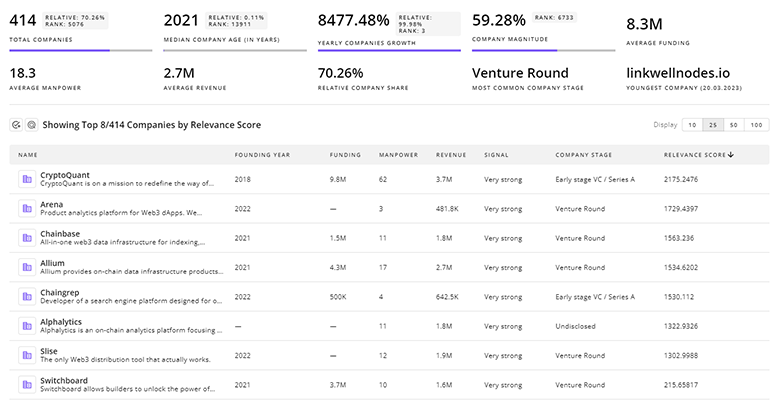
11.8K Shipbuilding Companies
Discover Shipbuilding Companies, their Funding, Manpower, Revenues, Stages, and much more
Shipbuilding Investors
TrendFeedr’s Investors tool provides an extensive overview of 1.0K Shipbuilding investors and their activities. By analyzing funding rounds and market trends, this tool equips you with the knowledge to make strategic investment decisions in the Shipbuilding sector.
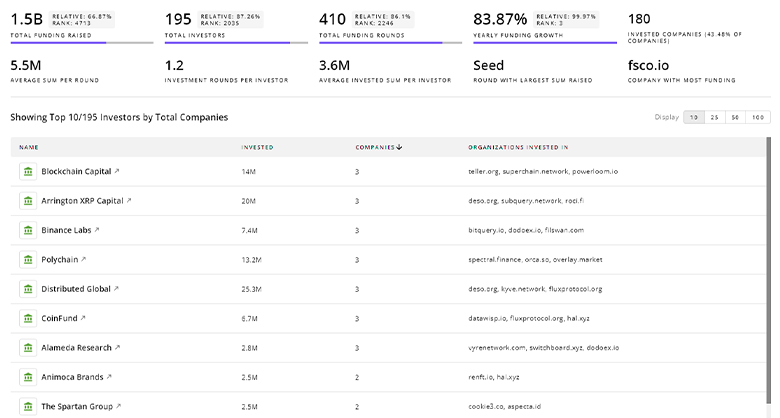
1.0K Shipbuilding Investors
Discover Shipbuilding Investors, Funding Rounds, Invested Amounts, and Funding Growth
Shipbuilding News
Explore the evolution and current state of Shipbuilding with TrendFeedr’s News feature. Access 15.0K Shipbuilding articles that provide comprehensive insights into market trends and technological advancements.
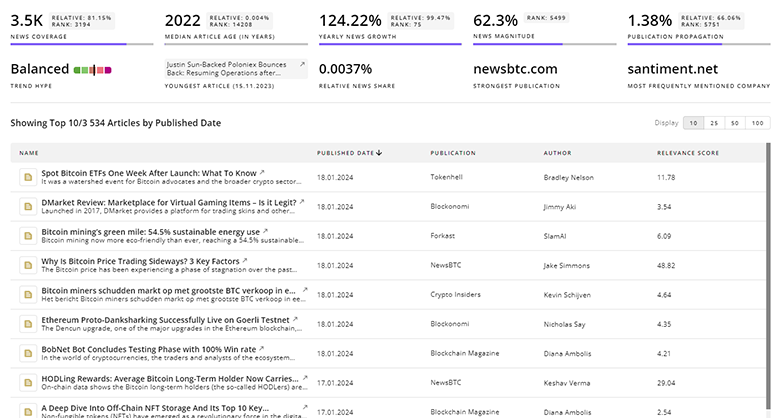
15.0K Shipbuilding News Articles
Discover Latest Shipbuilding Articles, News Magnitude, Publication Propagation, Yearly Growth, and Strongest Publications
Executive Summary
The shipbuilding industry is shifting from a pure scale contest to a two-track competitive environment where execution speed, verifiable low-emission readiness and digital engineering rigor determine contract capture and margin performance. Owners will prize yards that combine pre-outfitting, auditable fuel and lifecycle data, and the project-level digital thread that shortens dock occupancy. For investors and operators, priority actions are clear: fund modular pre-outfitting capacity, integrate audit-grade emissions and lifecycle reporting into digital twins, and invest in robotic joining and skilled retraining to protect yield on long government and offshore orders. The immediate commercial opportunity sits with yards and suppliers that can prove faster, cleaner, and auditable delivery at scale.
We're looking to collaborate with knowledgeable insiders to enhance our analysis of trends and tech. Join us!