Sickle Cell Disease Report
: Analysis on the Market, Trends, and TechnologiesThe sickle cell disease market is entering a period of concentrated clinical and commercial change driven by gene- and cell-based approaches and expanding screening programs: internal trend data projects a market CAGR of 11.3% and a forecast market size of *$7,040,000,000 by 2032. External market analyses report a range of near-term forecasts (reflecting methodology differences) but concur on strong upside tied to curative pipelines and expanded diagnosis — for example, one large forecast projects growth from USD 2.40 billion in 2023 to USD 12.38 billion by 2032 (CAGR 20.0%) Sickle-Cell Disease Market Report, 2024-2032. Together these data indicate a market where *technology adoption accelerates while company and news signals remain fragmented, creating a window for targeted clinical, diagnostic and access plays.
236 days ago, we last updated this report. Notice something that’s not right? Let’s fix it together.
Topic Dominance Index of Sickle Cell Disease
To gauge the influence of Sickle Cell Disease within the technological landscape, the Dominance Index analyzes trends from published articles, newly established companies, and global search activity
Key Activities and Applications
- Blood-transfusion programs and optimization — chronic transfusion remains the dominant care pathway today and represents a durable revenue base; improvements target inventory matching, iron-overload management and exchange protocols to lower complication rates Global Sickle Cell Disease Market Industry Overview and Forecast to 2031.
- Pharmacotherapy deployment for crisis reduction and hemoglobin modulation — increasing use of hydroxyurea and branded agents for vaso-occlusive crisis mitigation, with clinical uptake driven by payer coverage and new pediatric/adult formulations Sickle Cell Disease Treatment Market 2025.
- Curative gene- and cell-based interventions — ex-vivo lentiviral addition and in-vivo gene-editing/base-editing approaches are moving through late-stage trials; they shift the economic model from recurring treatment flows to one-time high-value interventions Sickle Cell Disease Drug Pipeline Analysis Report 2025.
- Point-of-care and newborn screening scale-up — population screening drives addressable market expansion in high-burden regions and enables early prophylaxis and enrolment into longitudinal registries Sickle Cell Disease Market Assessment.
- Digital disease management and real-world evidence (RWE) — apps, wearables and registries capture VOC frequency and treatment adherence to support payers and accelerate value-based contracting for novel therapies Sickle Cell Disease Treatment Market Report by Treatment Type (2024-2032).
Emergent Trends and Core Insights
- Transition economics: chronic care to one-time curative valuation. Payers and health systems are actively modeling lifetime cost offsets versus recurring transfusions and hospitalizations; this dynamic is the principal commercial battleground for gene therapies and lower-cost BMT alternatives Sickle Cell Treatment - Market Share Analysis (2025-2030).
- Geographic divergence between capability and burden. North America will continue to generate most revenue while Asia-Pacific and sub-Saharan Africa show the fastest demand growth driven by screening scale-up and policy programs — but access gaps persist where the clinical infrastructure for advanced therapies is limited
- Pipeline consolidation around gene editing and HbF induction. Late-stage assets (gene addition, CRISPR/prime edits, PKR activators) are central to value creation; regulatory pathways and long-term safety data will determine market winners Sickle Cell Disease- Pipeline Insight, 2025.
- Specialty complication plays create acquisition targets. Companies that deeply address under-served morbidities (e.g. chronic ulcers, reproductive health, maternal risk) can build defensible niches attractive to platform players seeking end-to-end patient solutions
- Payment innovation and outcomes contracting will accelerate access. Early outcomes-based and annuity models are emerging to spread cost and align payer incentives for high-cost curative therapies
Technologies and Methodologies
- CRISPR, base editing and prime editing platforms — move from proof-of-concept to pivotal trials for durable HbF induction or direct HBB correction; regulatory designations are concentrated on these modalities
- Lentiviral vector autologous HSC approaches — established ex-vivo manufacturing route pursued by several clinical programs; vector supply and manufacturing scale remain key operational constraints
- Small-molecule modulators and PKR activators — oral agents that alter RBC metabolism or increase HbF (e.g. mitapivat) offer mid-market opportunities where curative access is limited
- Point-of-care diagnostics and newborn screening tech — low-cost electrophoresis kits and POC devices that enable decentralized identification of affected infants and linkage to care in resource-constrained settings
- RWE platforms and registries — multi-center registries and digital symptom trackers provide the datasets necessary for outcomes contracting and post-market surveillance of novel therapies
Sickle Cell Disease Funding
A total of 148 Sickle Cell Disease companies have received funding.
Overall, Sickle Cell Disease companies have raised $53.9B.
Companies within the Sickle Cell Disease domain have secured capital from 682 funding rounds.
The chart shows the funding trendline of Sickle Cell Disease companies over the last 5 years
Sickle Cell Disease Companies
- Prolong Pharmaceuticals — builds biologic therapies targeting SCD comorbidities; lead program SANGUINATE™ is positioned at the intersection of anemia and vascular complications and aims for shorter inpatient trajectories by addressing tissue oxygenation. The company has advanced clinical-stage activity and $30.73M reported funding, which underwrites late-stage development and commercialization planning
- San Rocco Therapeutics — focused on curative gene therapy programs for SCD and thalassemia; a small, grant-backed team emphasizing affordability and simplified administration to increase applicability beyond high-income settings. Their model seeks to shorten translational timelines by concentrating on scalable vector and delivery choices
- IMALIA — developing IMA001, an oral small molecule with a dual mechanism aimed at reducing vaso-occlusive crises and oxidative RBC damage; the firm's India clinical trial launch signals a pathway to rapid regional adoption and lower cost thresholds for broad patient impact
- Theris Medical — clinical-stage specialty biopharma targeting sickle cell leg ulcers with an orphan-designated program that repurposes a well-characterized drug (DFO) and seeks the first FDA-approved therapy for this disabling complication. The focused morbidity play gives clear commercial defensibility and a near-term regulatory pathway
- HARTIS Pharma — small Swiss biotech exploring HDL-based approaches to modulate RBC membrane properties and inflammation; their hypothesis targets a non-genetic route to disease modification that can complement curative programs, and their early-stage status makes them a candidate for strategic partnerships
Get detailed analytics and profiles on 616 companies driving change in Sickle Cell Disease, enabling you to make informed strategic decisions.
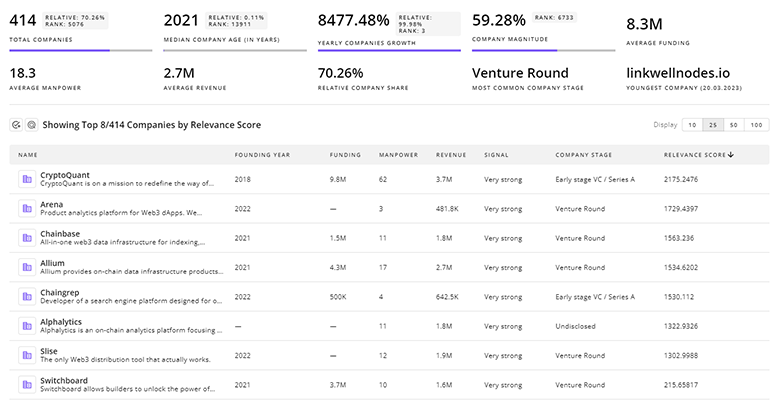
616 Sickle Cell Disease Companies
Discover Sickle Cell Disease Companies, their Funding, Manpower, Revenues, Stages, and much more
Sickle Cell Disease Investors
TrendFeedr’s Investors tool provides an extensive overview of 731 Sickle Cell Disease investors and their activities. By analyzing funding rounds and market trends, this tool equips you with the knowledge to make strategic investment decisions in the Sickle Cell Disease sector.
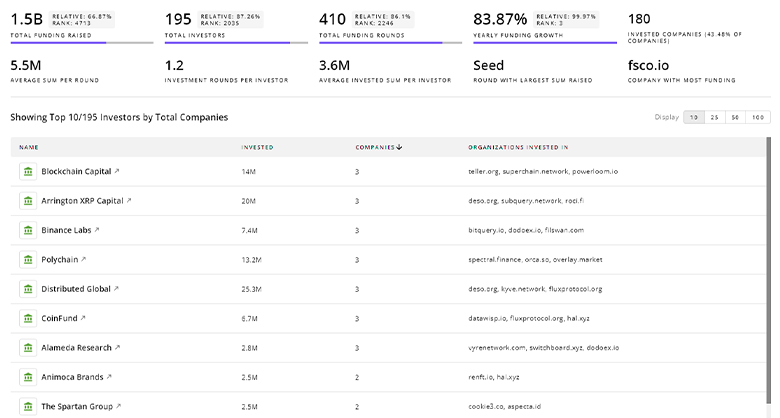
731 Sickle Cell Disease Investors
Discover Sickle Cell Disease Investors, Funding Rounds, Invested Amounts, and Funding Growth
Sickle Cell Disease News
Explore the evolution and current state of Sickle Cell Disease with TrendFeedr’s News feature. Access 5.4K Sickle Cell Disease articles that provide comprehensive insights into market trends and technological advancements.
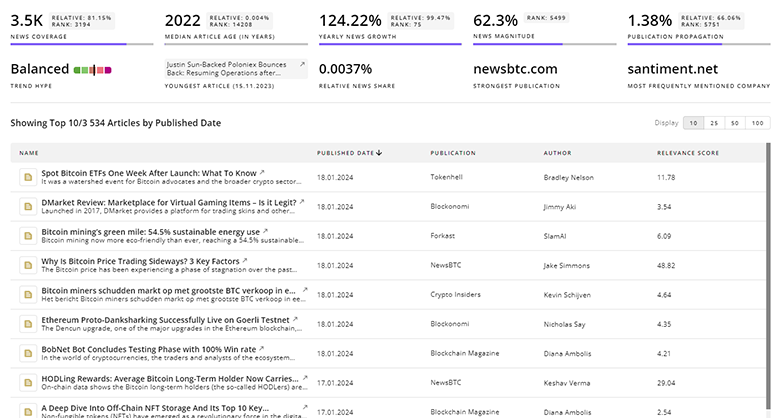
5.4K Sickle Cell Disease News Articles
Discover Latest Sickle Cell Disease Articles, News Magnitude, Publication Propagation, Yearly Growth, and Strongest Publications
Executive Summary
Sickle cell disease is at a strategic inflection: durable, high-volume care models anchored in transfusion and pharmacotherapy will coexist with a small but accelerating set of curative gene- and cell-based therapies. Market forecasts differ by methodology, yet all signal substantial growth as screening expands and late-stage pipelines mature. Commercial success will hinge on three linked capabilities: (1) demonstrating long-term clinical durability and safety for curative candidates; (2) architecting access and payment solutions that translate one-time clinical benefit into acceptable payer economics; and (3) forming partnerships across advocacy groups, regional care networks and diagnostics providers to ensure equitable delivery in high-burden geographies. For investors and executives, the immediate opportunity lies in platform technologies that reduce manufacturing cost/time, diagnostics and screening infrastructure, and targeted complication therapies that can be commercialized faster and bundled into broader patient solutions.
We're looking to collaborate with knowledgeable insiders to enhance our analysis of trends and tech. Join us!