Smart Assistant Report
: Analysis on the Market, Trends, and TechnologiesThe smart assistant market is entering a high-growth, application-driven phase where productivity and vertical specialization capture capital and attention: the global smart assistant market is estimated at $9.5B in 2024 with a projected CAGR of 32.1%, and firm-level forecasts place total addressable value near $88.6B by 2032. These numbers reflect rapidly accelerating technology adoption (especially LLM integration and on-device inference) and a shift in buyer priorities from generic conversational features to measurable time- and cost-savings in specific workflows.
174 days ago, we last updated this report. Notice something that’s not right? Let’s fix it together.
Topic Dominance Index of Smart Assistant
To gauge the influence of Smart Assistant within the technological landscape, the Dominance Index analyzes trends from published articles, newly established companies, and global search activity
Key Activities and Applications
- Executive and knowledge-worker augmentation: Assistants automate calendar and inbox triage, meeting summarization, and follow-through (action extraction and task creation), replacing repetitive admin work and improving meeting-to-action velocity Ambient.
- Sales and revenue orchestration: AI assistants generate follow-ups, prepare deal-specific assets, and update CRMs automatically, reducing seller admin time and raising CRM adoption—metrics already reported by sales-assistant vendors as material productivity gains Sybill.
- Customer service automation (voice and chat): Phone and chat automation agents handle first-level support, route complex issues, and free human agents for escalation; implementations report automation rates north of 50% in live deployments.
- Domain-specific clinical and lab assistants: Voice-enabled clinical scribes and lab assistants capture structured data, reduce documentation time (clinician savings reported at tens of hours per month), and improve compliance in regulated workflows Tali AI.
- OS-level and on-device copilots: System-level agents that interact with local files, apps, and device context provide low-latency, privacy-first automation suitable for enterprise desktops and AI PCs.
Emergent Trends and Core Insights
- Agency over reactivity: Assistants increasingly move from reactive Q&A to agentic behavior—planning and executing multi-step tasks across applications—which changes success metrics from intent-recognition accuracy to task completion reliability AI Agents vs AI Assistants: A Detailed Comparison.
- Privacy as product differentiation: On-device inference and private-cloud deployments become a purchasing requirement in sectors with high data sensitivity; this gives advantage to assistants architected for local processing or hybrid orchestration Building the AI-powered local smart home.
- Context persistence and memory retention are rising as defining capabilities: assistants that retain long-running context (project, team, and workflow memory) deliver disproportionate value for knowledge work and enterprise copilots Why Gemini Signals a New Chapter in Personal Assistants?.
- Verticalization wins economic arguments: Solutions tightly coupled to industry data and compliance (healthcare, life sciences, automotive dealerships) capture premium pricing because they reduce risk and error costs STELLA Automotive AI.
- Monetization shifts: Buyers favor subscription and outcome-based pricing for continuous value delivery (SaaS plus usage tiers) over one-time licenses, aligning vendor incentives to sustain improvement and integration.
Technologies and Methodologies
- Retrieval-Augmented Generation (RAG) and knowledge graphs: Enterprises connect LLMs to validated internal sources to raise factual accuracy and compliance for decisioning tasks Smartly.AI.
- Agentic orchestration frameworks and workflow APIs: Architectures that model multi-step plans and manage authentication/state across apps are essential for reliable action execution; vendors exposing workflow APIs see faster enterprise integration HyperWrite (OthersideAI).
- Edge and hybrid inference: Strategies that split lightweight control and privacy-sensitive inference to local devices while delegating heavy LLM reasoning to private clouds balance latency, cost, and compliance.
- Multimodal inputs and outputs: Combining voice, text, and visual context (camera/document parsing) improves task coverage in retail, automotive, and field services AshnaAI.
- No-code/low-code builder tooling: Democratized assistant creation accelerates vertical uptake by enabling domain teams to configure intents, RAG connectors, and compliance rules without heavy engineering.
Smart Assistant Funding
A total of 216 Smart Assistant companies have received funding.
Overall, Smart Assistant companies have raised $3.2B.
Companies within the Smart Assistant domain have secured capital from 785 funding rounds.
The chart shows the funding trendline of Smart Assistant companies over the last 5 years
Smart Assistant Companies
- Martin — Martin offers a personal AI butler that links calendar, inbox, messaging, and calls to proactively brief users and suggest actions; its focus is on developing a longitudinal relationship with users to surface high-leverage assistance rather than one-off queries. The product emphasizes cross-channel coordination (email, SMS, Slack) and proactive outreach to reduce daily friction. Its small team and early M&A stage position it to partner or be embedded as a user-facing layer within broader productivity suites.
- Lobby AI — Lobby AI positions itself as a coordination OS that automates routine workflows beginning with email; the company emphasizes learning user routines to surface end-to-end handling of frequent tasks. With an extremely lean team, Lobby's product strategy targets rapid adoption by knowledge workers through tight inbox integration and workflow templates. Early traction suggests it competes on simplicity and low setup cost rather than deep vertical customization.
- IrisGo — IrisGo builds an on-device assistant for AI-native PCs that processes all data locally to preserve privacy while accessing local files and app context for automation; its go-to-market includes OEM pre-installation partnerships. That local inference approach directly addresses enterprise concerns about data exfiltration and regulatory exposure, making IrisGo attractive for security-sensitive deployments. The small engineering footprint and device-first model position IrisGo for OEM distribution rather than direct consumer subscription.
- LabVoice — LabVoice provides a voice assistant designed for research labs to capture experimental notes, set timers, and integrate with lab systems (ELNs/LIMS), improving documentation quality and biosafety compliance. The product targets hands-free scenarios where manual logging is error-prone, and clients report measurable improvements in auditability and paperless workflows. LabVoice's vertical focus creates high switching costs for lab operators due to integration with lab equipment and processes.
- Simular — Simular develops open-source AI agents that observe user behavior on-device and automate multi-app tasks; the company emphasizes an "agent that acts" model rather than passive suggestion. Its approach pairs local context capture with pluggable orchestration so agents can safely execute repetitive digital work across browsers and desktop apps. Simular's research-centric stack and agent SDK aim to become the programmable layer enterprise IT licenses to embed automation into employee desktops.
Get detailed analytics and profiles on 1.5K companies driving change in Smart Assistant, enabling you to make informed strategic decisions.
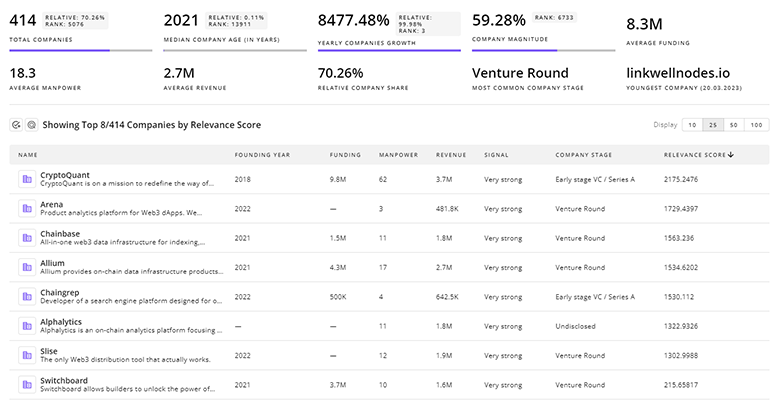
1.5K Smart Assistant Companies
Discover Smart Assistant Companies, their Funding, Manpower, Revenues, Stages, and much more
Smart Assistant Investors
TrendFeedr’s Investors tool provides an extensive overview of 979 Smart Assistant investors and their activities. By analyzing funding rounds and market trends, this tool equips you with the knowledge to make strategic investment decisions in the Smart Assistant sector.
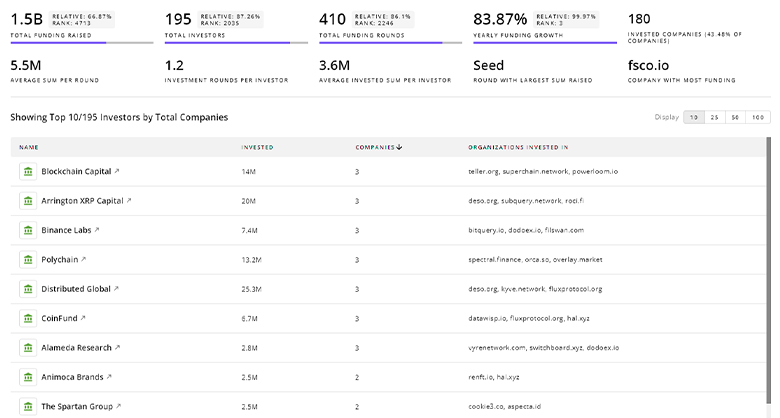
979 Smart Assistant Investors
Discover Smart Assistant Investors, Funding Rounds, Invested Amounts, and Funding Growth
Smart Assistant News
Explore the evolution and current state of Smart Assistant with TrendFeedr’s News feature. Access 4.0K Smart Assistant articles that provide comprehensive insights into market trends and technological advancements.
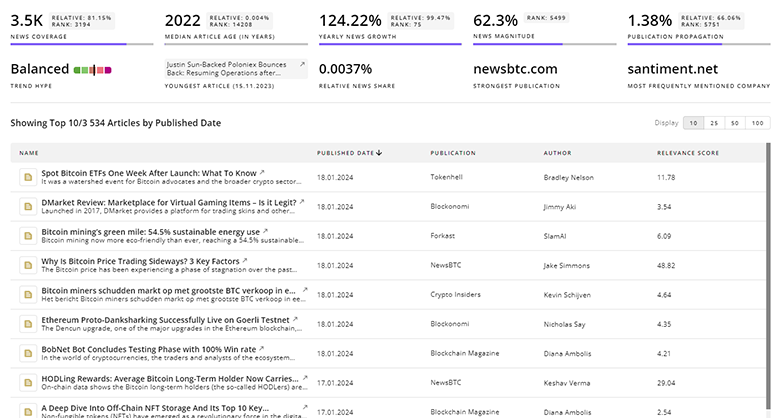
4.0K Smart Assistant News Articles
Discover Latest Smart Assistant Articles, News Magnitude, Publication Propagation, Yearly Growth, and Strongest Publications
Executive Summary
Smart assistants are transitioning from novelty conversational interfaces to measurable automation platforms that save time and reduce operational cost in defined workflows. Success requires integrating high-accuracy retrieval to enterprise knowledge, reliable workflow orchestration across authenticated systems, and deployment models aligned to data governance needs. Vendors that pair agentic execution capability with privacy-conscious architecture and deep vertical integration will capture most commercial value; generalist conversational features without workflow guarantees will struggle to command premium adoption or sustainable revenue.
We're looking to collaborate with knowledgeable insiders to enhance our analysis of trends and tech. Join us!