
Smart Building Report
: Analysis on the Market, Trends, and TechnologiesThe smart building sector is accelerating: the internal smart building trend report records a 2023 market size of USD 80.91 billion and projects USD 112.7 billion by 2029, driven by rapid IoT sensor deployment, AI-driven operations, and a large retrofit opportunity for existing building stock. This report synthesizes patent, market, company, and news evidence to show three actionable realities for investors and operators: (1) energy and HVAC optimization remain the highest-value immediate use case, (2) platform convergence (BMS + analytics + tenant apps) is the commercial battlefront, and (3) sensor networks, digital twins, and AI are the technical stack that separates measured pilots from scalable rollouts Global Smart Buildings Market: 2024-2029 Top 5 Growth Opportunities in Smart Buildings, 2025 Smart Building – Market Share Analysis, Industry Trends & Statistics, Growth Forecasts (2025 – 2030).
352 days ago, we last updated this report. Notice something that’s not right? Let’s fix it together.
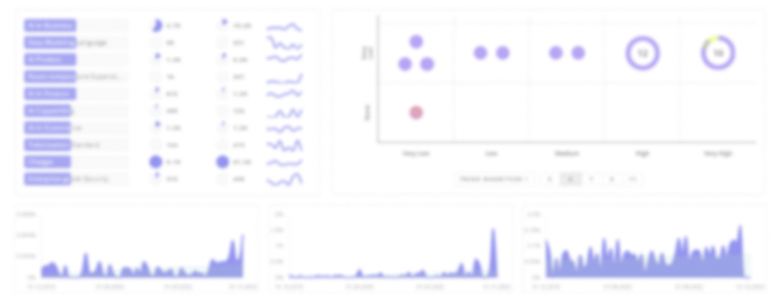
Topic Dominance Index of Smart Building
To gauge the influence of Smart Building within the technological landscape, the Dominance Index analyzes trends from published articles, newly established companies, and global search activity
Key Activities and Applications
- Energy management and HVAC optimization — Operators prioritize software and controls that reduce consumption and peak demand because energy savings produce the fastest payback; AI HVAC controllers and BEMS drive measurable savings and carbon reduction targets Global Smart Buildings Market: 2024-2029 Bueno Analytics.
- Occupancy sensing and space utilization — Real-time occupancy data (CO2, PIR, radar, badge data) enables demand-based ventilation, dynamic cleaning schedules, and flexible workspace monetization Improve Indoor Air Quality, Occupancy Sensing, and AI and Digital Twin are Driving Building Automation Market Growth Pressac Communications.
- Predictive maintenance and asset lifecycle management — Sensor telemetry plus analytics shift capital and maintenance spend from reactive repairs to condition-based interventions, lowering downtime and extending asset life Pametan.
- Indoor environmental quality and occupant health — IAQ, VOC, and CO2 monitoring now map directly to productivity and tenant retention metrics; WELL/LEED/RESET compliance is a demand signal for many landlords Sensgreen.
- Retrofitting and low-disruption installs — Wireless mesh, power-line micromodules, and plug-and-play gateways make upgrades cost-effective for existing stock and unlock the largest addressable market outside new builds eSMART Technologies Mymesh.
Emergent Trends and Core Insights
- AI-first operations: AI agents and self-learning controls are moving from pilot to commercial use, producing documented HVAC energy reductions and autonomous scheduling that cut operating costs and carbon intensity BrainBox AI Top 5 Growth Opportunities in Smart Buildings, 2025.
- Platform consolidation and “building OS” strategies: Market leaders and scale-ups pursue platform models that combine BMS, digital twins, and tenant/ops apps so clients buy a single, integrated stack instead of point solutions Global Smart Buildings Market: 2024-2029 Smart Building – Market Share Analysis, Industry Trends & Statistics, Growth Forecasts (2025 – 2030).
- Edge-plus-cloud orchestration: Edge compute reduces latency for control loops while cloud analytics handle fleet-level optimization and benchmarking, a necessary hybrid for latency-sensitive HVAC control and large-scale portfolio insights Intelligent Building Automation Technologies Market Research Report (2025) Optigo Networks.
- Cybersecurity and OT/IT convergence: As OT networks carry more operational intelligence, zero-trust and continuous monitoring for OT become procurement requirements, not optional extras Growth Opportunities and Impact of Sensors and Digital Technologies on Building Automation Optigo Networks.
- Measurement and performance scoring: Demand for quantifiable building performance (energy, emission, IAQ scores) is rising; standardized scores enable comparability and unlock ESG-linked financing and incentives Research: Smart Building Market (2025 – 2030).
Technologies and Methodologies
- IoT sensor networks (LoRaWAN, NB-IoT, mesh) for scalable telemetry collection — these enable low-power, retrofit-friendly deployments across portfolios.
- AI / machine learning for autonomous control, predictive maintenance, and anomaly detection — proven in several vendor case studies to cut HVAC energy and faults BrainBox AI aedifion.
- Digital twin and BIM integration for scenario simulation, commissioning, and operational forecasting — digital twins let teams test control changes virtually before field deployment Digital twin growth opportunities report.
- Edge computing for deterministic control with cloud for analytics — this split ensures fast local response while preserving centralized learning across assets Intelligent Building Automation Technologies Market Research Report (2025).
- Open protocols and interoperability (BACnet, KNX, Modbus, DALI, Matter) as procurement filters — clients demand systems that prevent vendor lock-in and simplify integration JMS Integrated Building Solutions.
Smart Building Funding
A total of 386 Smart Building companies have received funding.
Overall, Smart Building companies have raised $11.6B.
Companies within the Smart Building domain have secured capital from 1.3K funding rounds.
The chart shows the funding trendline of Smart Building companies over the last 5 years
Smart Building Companies
- eSMART Technologies — eSMART provides micro-modules that install behind existing switches to create smart controls without rewiring, targeting low-disruption retrofits that accelerate penetration in occupied buildings; the company traces its technology to EPFL and focuses on in-room energy visibility and control for developers and integrators eSMART Technologies.
- Sensgreen — Sensgreen combines IAQ, energy optimization, and sustainability scoring into a light-footprint IoT platform used by FM companies and ESCOs across multiple countries, positioning itself where compliance (WELL/LEED/RESET) and operational efficiency converge Sensgreen.
- INESS — INESS installs dense sensor arrays and creates data twins that feed predictive occupancy, energy, and commercial data flows; they sell building data as an asset to cross-vertical buyers, making buildings a data source for marketing, insurance, and smart city use cases INESS.
- Mymesh — Mymesh supplies an all-wireless mesh protocol and multidisciplinary control stack designed for retrofit and new builds that need flexible, wireless actuation for lighting, shading, and ventilation control; the mesh approach lowers installation friction in occupied spaces Mymesh.
- Signal OS — Signal OS offers modular, standalone software products that link building systems and present role-specific analytics (site managers, tenants, visitors), enabling incremental deployments where customers pay only for capabilities they need Signal OS.
Get detailed analytics and profiles on 4.3K companies driving change in Smart Building, enabling you to make informed strategic decisions.
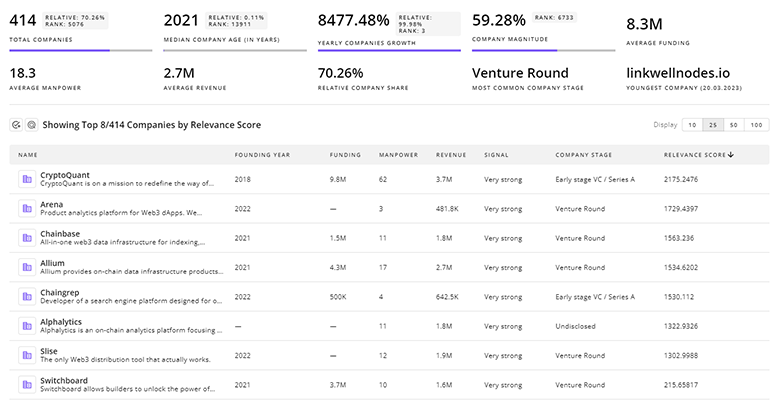
4.3K Smart Building Companies
Discover Smart Building Companies, their Funding, Manpower, Revenues, Stages, and much more
Smart Building Investors
TrendFeedr’s Investors tool provides an extensive overview of 1.2K Smart Building investors and their activities. By analyzing funding rounds and market trends, this tool equips you with the knowledge to make strategic investment decisions in the Smart Building sector.
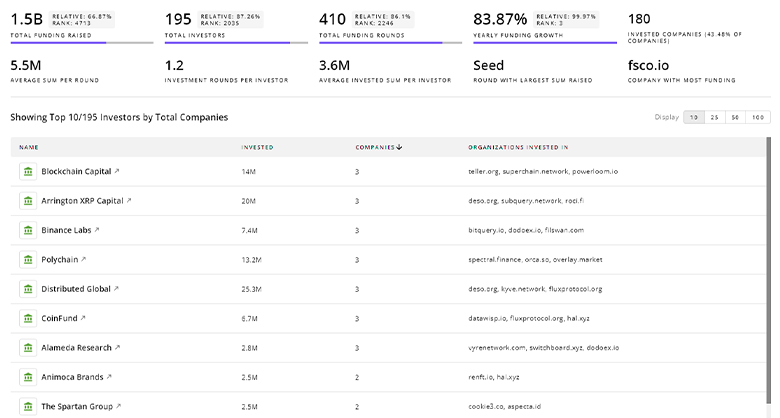
1.2K Smart Building Investors
Discover Smart Building Investors, Funding Rounds, Invested Amounts, and Funding Growth
Smart Building News
Explore the evolution and current state of Smart Building with TrendFeedr’s News feature. Access 4.1K Smart Building articles that provide comprehensive insights into market trends and technological advancements.
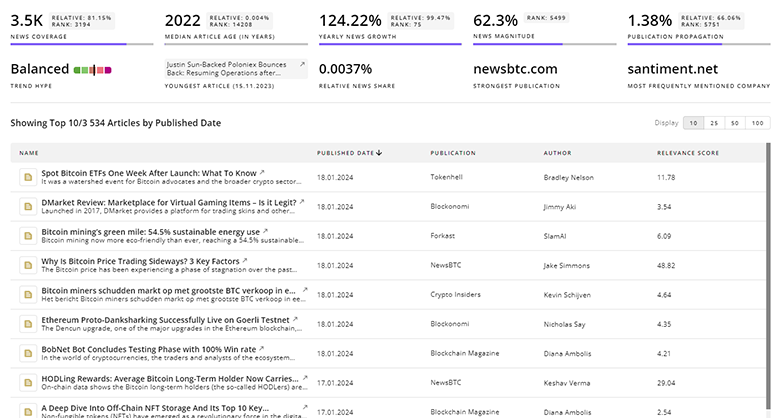
4.1K Smart Building News Articles
Discover Latest Smart Building Articles, News Magnitude, Publication Propagation, Yearly Growth, and Strongest Publications
Executive Summary
Investors and operators should treat smart building initiatives as a portfolio play: prioritize quick-win energy and HVAC control projects that deliver measurable savings and create proof points, while simultaneously investing in a platform strategy (open protocols, edge compute, digital twin) that permits incremental feature add-ons without large rip-and-replace costs. Procurement teams must require OT security, measurable performance KPIs, and interoperability as standard contract terms. For technology providers, the practical path to scale runs through retrofit-friendly hardware, AI that delivers quantified savings, and software platforms that aggregate multi-building insights to create recurring, portfolio-level value.
We're looking to collaborate with knowledgeable insiders to enhance our analysis of trends and tech. Join us!