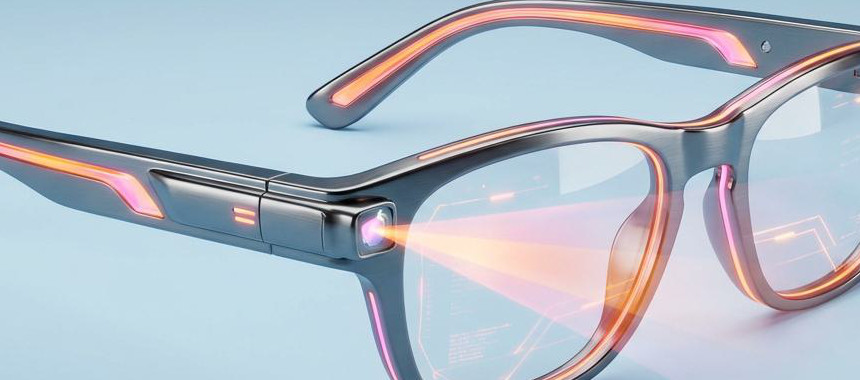
Smart Glasses Report
: Analysis on the Market, Trends, and TechnologiesThe smart glasses market sits at a decisive inflection where hardware convergence and AI-first software are dictating winners; the internal smart glasses trend report records 3222 active companies and $37.48B in total funding raised, highlighting both intense entrepreneurial activity and concentrated capital flows. Shipment and revenue forecasts reinforce the industrial momentum: global shipments are expected to accelerate toward 45 million units in 2025 and the market value is projected to grow from US$5.5B (2023) to US$15B by 2028, with enterprise uses accounting for the majority of revenue and units IDC Forecast 2024. Together, these data points show a sector shifting from isolated pilots to scaled deployments in logistics, field service, and healthcare, underpinned by rapid advances in micro-optics, low-power sensing, and multimodal AI agents.
59 days ago, we last updated this report. Notice something that’s not right? Let’s fix it together.
Topic Dominance Index of Smart Glasses
To gauge the influence of Smart Glasses within the technological landscape, the Dominance Index analyzes trends from published articles, newly established companies, and global search activity
Key Activities and Applications
- Enterprise remote assistance and field service — Hands-free streaming plus contextual overlays are shortening repair cycles and lowering travel and downtime costs; deployed pilots report 12–15% productivity and error-rate improvements in logistics and maintenance.
- Warehouse picking, inventory, and AR-guided operations — Heads-up visual guidance tied to back-end systems reduces picking errors and speeds throughput, making this one of the fastest routes to near-term ROI.
- Clinical and surgical guidance — Intraoperative overlays and image co-registration are shortening procedure times and improving accuracy; hospital pilots show a ~10% reduction in procedure time and measurable accuracy gains, catalyzing a projected US$2.1B medical AR devices spend by 2026.
- Assistive vision for blind and low-vision users — Real-time scene description, OCR, and navigation services are moving from smartphone apps to wearable AI glasses, delivering independence and opening reimbursement and public-sector procurement channels.
- Performance overlays and sports telemetry — Lightweight HUDs for athletes provide live metrics (heart rate, cadence, route guidance) in training and competition, an early consumer vertical with clear product-market fit for endurance use cases ENGO Eyewear.
Emergent Trends and Core Insights
- Enterprise-first volume, consumer-first style — Forecasts show enterprise will lead unit volumes while consumer segments drive fashion and daily-wear expectations; this bifurcation pressures device makers to offer both rugged enterprise stacks and discreet consumer aesthetics Technology Review - What's next for smart glasses.
- AI agents convert visibility into action — Multimodal LLMs running as persistent agents on glasses are the practical multiplier: when agents can interpret what the wearer sees and hears, glasses shift from passive displays to active productivity assistants, enabling reminders, identification, and context-aware prompts Technology Review - The coolest thing about smart glasses is not the AR. It's the AI..
- Optical and micro-display miniaturization is the gating factor — Waveguides, holographic optical elements, and novel micro-LED/micro-OLED microdisplays are the primary engineering battlegrounds; companies that own manufacturable optical modules capture the largest strategic premium DigiLens Inc..
- Eye-tracking and focus control enable natural interaction — Low-latency eye tracking (<5 ms) and dynamic focus systems remove friction from gaze and attention switches, enabling true hands-free UIs and adaptive display ergonomics (critical in sterile and safety-sensitive environments).
- Modular hardware and upgradeable temples — The economic logic favors modular temple-modules that host compute, battery, and sensors, allowing optics and frames to remain fashionable while compute generations evolve more rapidly; this model reduces total cost of ownership and encourages subscription hardware models referenced by select vendors in the landscape.
Technologies and Methodologies
- Reflective and diffractive waveguides; HOEs — Proven paths to thin, see-through displays with expanding field of view; manufacturing scale and brightness remain the two technical checkpoints for outdoor usability Optinvent.
- Micro-LED and micro-OLED microdisplays — Micro-LEDs offer the path to sunlight-readable AR with superior power efficiency and pixel density; production readiness in 2026+ is a key timing assumption for consumer-grade AR Technology Review - Components Behind Today's Breakthrough Smart and AR Glasses.
- Sensor fusion + SLAM for stable overlays — Multi-camera arrays, IMUs, ToF sensors, and optimized SLAM pipelines sustain accurate, low-latency overlays in dynamic industrial settings; this stack is table stakes for field service workflows.
- Low-power, sub-milliwatt eye tracking — Enabling gaze as a primary input with minimal battery impact – a direct enabler of hands-free UIs and assistive visual aids.
- On-device ML and edge streaming architectures — Tethered designs offload heavy compute to phones or nearby edge nodes for thin, stylish form factors, while select use cases (privacy, medical) push on-device inference to meet latency and compliance needs.
- Secure, containerized OS layers and SDK ecosystems — Operating system choices that support enterprise security policies and developer SDKs (open or permissive) will determine which platforms attract third-party vertical apps and developer communities.
Smart Glasses Funding
A total of 490 Smart Glasses companies have received funding.
Overall, Smart Glasses companies have raised $37.5B.
Companies within the Smart Glasses domain have secured capital from 2.3K funding rounds.
The chart shows the funding trendline of Smart Glasses companies over the last 5 years
Smart Glasses Companies
Mentra — Mentra builds an open-source smart glasses OS and SDK focused on developer extensibility and privacy-centred tooling; its small team emphasizes modular software that can run on multiple optical platforms, accelerating vertical experimentation without requiring heavy hardware investment. The open approach lowers entry friction for specialized apps (accessibility, workplace workflows) and positions the company as a potential integrator for niche hardware partners. Its seed funding profile indicates a lightweight runway concentrated on software and community growth.
Gyges Labs — Gyges Labs pursues ultra-compact near-eye display engines and a tailored AI inference stack for wearables; it claims the world's smallest near-eye display module and couples that micro-optics work with custom AI optimized for low power. This hardware+AI pairing targets consumer and enterprise wearables where size and autonomy are decisive; the early funding suggests focused R&D to commercialize its DigiWindow approach.
Halliday — Halliday markets proactive AI glasses with an "invisible display" approach that surfaces contextual insights unobtrusively; the team blends academic AI expertise with product design to emphasize day-long wearability and social acceptability. Halliday's early rounds fund integration work on multimodal agents and hardware miniaturization, a strategy that bets on software differentiation to win early adopters in productivity and accessibility niches.
SKUGGA Technology AB — SKUGGA focuses on a component-centric business model: a miniaturized sensor and electronics module that integrates into fashionable eyewear frames, enabling existing optical brands to ship smart variants without redesigning lenses. This B2B orientation attacks the biggest behavioral barrier to consumer adoption—style—by letting users keep preferred frames while adding sensing and AI services; SKUGGA's integration and privacy messaging appeal to premium eyewear partners.
Lighthouse Tech — Lighthouse Tech develops modular assistive eyewear for visually impaired users with obstacle detection, haptic feedback, and a strong design focus to reduce stigma; its TAMI frame demonstrates how fashion and function can coexist, improving adoption among target users and institutional buyers. The startup's positioning toward public procurement and NGO partnerships creates alternative demand channels beyond pure commercial sales.
Get detailed analytics and profiles on 3.2K companies driving change in Smart Glasses, enabling you to make informed strategic decisions.
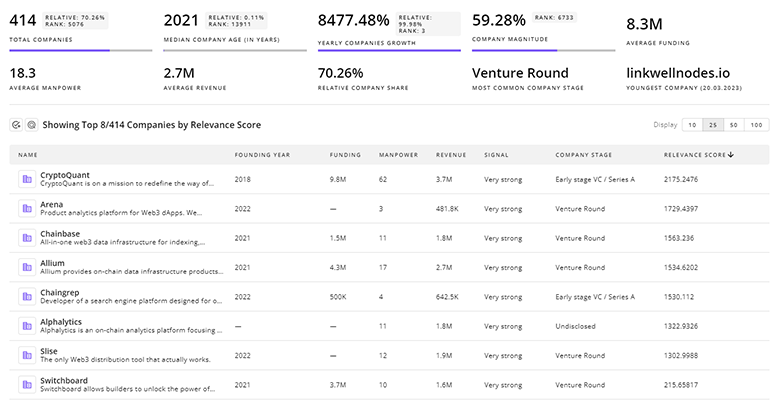
3.2K Smart Glasses Companies
Discover Smart Glasses Companies, their Funding, Manpower, Revenues, Stages, and much more
Smart Glasses Investors
TrendFeedr’s Investors tool provides an extensive overview of 2.4K Smart Glasses investors and their activities. By analyzing funding rounds and market trends, this tool equips you with the knowledge to make strategic investment decisions in the Smart Glasses sector.
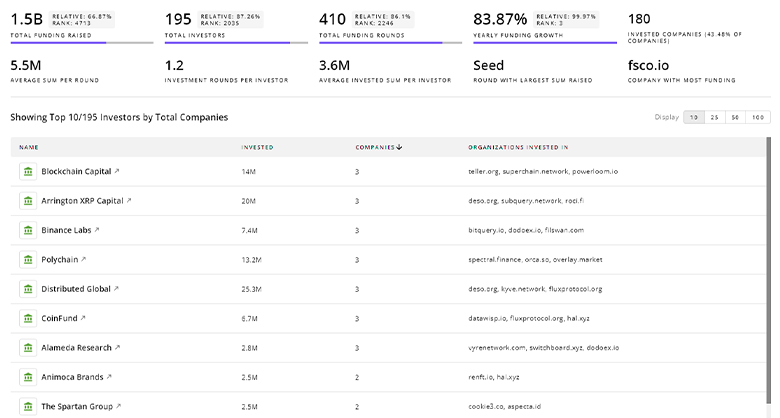
2.4K Smart Glasses Investors
Discover Smart Glasses Investors, Funding Rounds, Invested Amounts, and Funding Growth
Smart Glasses News
Explore the evolution and current state of Smart Glasses with TrendFeedr’s News feature. Access 18.4K Smart Glasses articles that provide comprehensive insights into market trends and technological advancements.

18.4K Smart Glasses News Articles
Discover Latest Smart Glasses Articles, News Magnitude, Publication Propagation, Yearly Growth, and Strongest Publications
Executive Summary
Smart glasses have moved from laboratory curiosities to commercially viable platforms where optical IP, on-device sensing, and AI agent software determine strategic advantage. The short window for consolidation favors firms that can both supply manufacturable optical engines and cultivate vertical software ecosystems—especially in logistics, field service, and healthcare where quantified gains already justify procurement. For investors and enterprise leaders, the practical priorities are clear: secure partner paths to proven optical modules, pilot agent-driven workflows that produce measurable KPIs, and structure procurement to allow hardware modularity so compute upgrades do not force full device replacement. Businesses that align procurement, compliance, and developer access now will gain scale and defensibility as shipments and revenues accelerate.
We're looking to collaborate with knowledgeable insiders to enhance our analysis of trends and tech. Join us!