
Smart Home Hub Report
: Analysis on the Market, Trends, and TechnologiesThe smart home hub market is at a decisive inflection: core market data show a USD 136.2 billion base in 2024 with an expected compound annual growth rate of 11.5%, pointing to a USD 404.5 billion opportunity over the next decade as hubs move from simple bridges to intelligent orchestration layers. Major market models project materially different near-term trajectories, but all signal sustained demand driven by energy management, security, and cross-device integration market_us – Global Smart Home Hub Market Report, 2025. Strategic winners will either aggregate device complexity into broad service platforms or defend tightly scoped use cases where data control, accessibility, or operational integration create durable differentiation.
67 days ago, we last updated this report. Notice something that’s not right? Let’s fix it together.
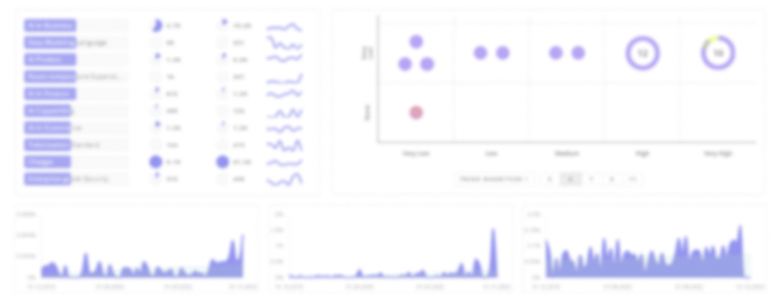
Topic Dominance Index of Smart Home Hub
To gauge the influence of Smart Home Hub within the technological landscape, the Dominance Index analyzes trends from published articles, newly established companies, and global search activity
Key Activities and Applications
- Centralized device orchestration and protocol bridging. Hubs continue to unify lighting, HVAC, locks, cameras and appliances into single control planes, supporting voice assistants and app dashboards as primary UX layers.
- Security and monitoring services. Integration of video analytics, alarm systems and remote monitoring remains the largest application segment, representing roughly 41.3% of hub use cases in recent market tallies
- Energy management and demand response. Hubs increasingly interface with thermostats, smart meters, EV chargers and utility programs to deliver peak shaving and time-of-use optimization, creating measurable bill savings and new utility partnership revenue streams
- Local-first automation for reliability and privacy. A measurable portion of the market favors on-device rule execution and edge inference to maintain operations during outages and to reduce data exposure risk.
- Property and operations integration. Hubs tailored for property managers and builders connect to Property Management Systems (PMS) and construction workflows to reduce operational cost and accelerate handover diagnostics Hubi Home.
- Health and assisted-living services. Monitoring, non-wearable fall detection and remote caregiver dashboards are moving hubs into regulated healthcare adjacencies with higher willingness to pay.
Emergent Trends and Core Insights
- Standardization is changing buyer calculus. The rollout and certification of the Matter protocol and Thread border routing materially reduce integration friction, accelerating multi-vendor purchases and lowering churn risk
- Processing is migrating to the edge. Patent and product activity show a shift from cloud command-and-control to local inference for latency-sensitive functions such as security and real-time automation, improving privacy posture and uptime.
- Platform monetization is maturing. Leading platform plays are shifting hubs into subscription-first offerings (Smart Home as a Service), transforming lifetime value and giving service providers reasons to bundle connectivity, monitoring and insurance-adjacent services
- Visual and multimodal automation expands capability. Emerging hubs embed vision models and multi-modal triggers (audio + vision + sensors) to enable scene understanding and reduce false positives in security and wellness applications
- Vertical specialization yields defensible positions. Startups that focus on elder care, accessibility, new construction integration or property operations secure procurement pathways and regulatory alignment that generalist consumer hubs cannot easily replicate.
- Regional adoption diverges. North America retains a leading revenue share (about 35.2%), while Asia-Pacific and Latin America register the fastest adoption growth as lower-cost hubs and telco bundles create new addressable markets
Technologies and Methodologies
- Matter and Thread for cross-vendor interoperability. These protocols are moving from pilot to mass integration, enabling hubs to operate as neutral controllers rather than vendor lock-ins
- Thread + Border Router architectures. Hubs that act as Thread border routers unlock low-power meshes for battery sensors while preserving IPv6 connectivity to cloud or edge services
- Edge AI and on-device inference. Hubs incorporate smaller neural models for voice, anomaly detection and lightweight vision to lower latency and minimize cloud telemetry.
- Multi-protocol radio stacks (Wi-Fi, Zigbee, Z-Wave, Bluetooth). Multi-protocol hubs remain crucial for retrofit markets and heterogeneous device estates.
- OTA secure update frameworks and secure boot. As hubs consolidate control, secure lifecycle management is mandatory to reduce attack surface and satisfy regulatory requirements
- Digital twins and 3D modeling for property management. Using spatial models to detect anomalies and predict maintenance needs raises hub value for commercial and multi-unit housing applications
- Local dashboards and wall controllers. Visual, always-on controllers (7-inch and similar) are becoming a new interface class for households that prefer non-phone interactions
Smart Home Hub Funding
A total of 86 Smart Home Hub companies have received funding.
Overall, Smart Home Hub companies have raised $4.1B.
Companies within the Smart Home Hub domain have secured capital from 261 funding rounds.
The chart shows the funding trendline of Smart Home Hub companies over the last 5 years
Smart Home Hub Companies
- Oliver IQ
Oliver IQ operates a Smart Home as a Service platform aimed at homeowners and service providers, positioning the hub as a managed subscription layer rather than a one-off device. The company reported $20.25M in historical financing and pursues operator and ISP partnerships to scale white-label SHaaS distribution Its product mix emphasizes remote monitoring, integrated Wi-Fi reliability and bundled support that convert hardware buyers into recurring revenue customers This operator-focused route reduces customer acquisition friction for large-scale deployments in multi-dwelling and service provider channels - SMARTOTUM
SMARTOTUM designs low-intrusion smart lighting and consumption monitoring solutions with gateway intelligence residing on affordable Wi-Fi hardware, targeting retrofit markets in Europe. The company runs a small, product-centric engineering team aiming to keep operations local-first and to use gateways that also function as high-performance Wi-Fi access points That architecture directly addresses intermittent connectivity markets and consumers who refuse cloud dependency SMARTOTUM’s affordability and privacy positioning create an accessible entry for homeowners and installers reluctant to adopt vendor-cloud ecosystems - Hommi
Hommi builds a Matter/Thread-first ecosystem focused on privacy and local storage for the Indian market, seeking to leverage protocol standardization to accelerate device interoperability. The startup is at pre-seed stage and emphasizes regional device certification and localized firmware that keeps sensitive data in the home By aligning early with Matter, Hommi aims to reduce integration cost for OEM partners and to become a trusted local alternative to global cloud providers in cost-sensitive markets - Homeable
Homeable targets accessibility and independent living through co-created smart home packages for people with disabilities and the elderly, integrating design, installation and ongoing support under funded care programs. The company is small but specialized and draws on national assistance frameworks to finance deployments and maintenance, which shortens procurement cycles for higher-value installations Its approach anchors hubs to regulated funding streams and positions the product as a clinical support tool rather than a consumer novelty. Long term, Homeable’s deep user research and compliance orientation create significant switching costs for institutional customers - SmartHub.ai
SmartHub.ai focuses on enterprise-grade edge intelligence, offering software-defined edge systems for lifecycle management of IoT devices, predictive analytics and cybersecurity hygiene in commercial deployments. The company sits at the intersection of OT/IT and targets property managers and industrial facilities with an edge analytics value proposition; it has raised approximately USD 1.45M in venture funding By treating the hub as an operational data plane, SmartHub.ai captures recurring value through analytics subscriptions and compliance reporting rather than pure consumer retail margins. This orientation differentiates it from consumer hub vendors and opens B2B distribution channels via systems integrators
Get detailed analytics and profiles on 1.2K companies driving change in Smart Home Hub, enabling you to make informed strategic decisions.
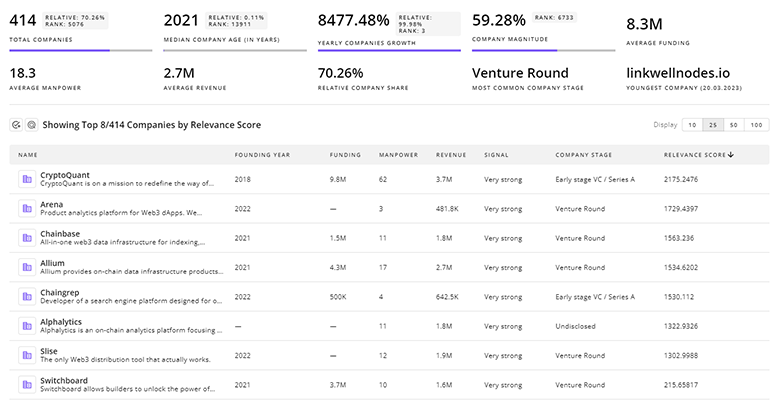
1.2K Smart Home Hub Companies
Discover Smart Home Hub Companies, their Funding, Manpower, Revenues, Stages, and much more
Smart Home Hub Investors
TrendFeedr’s Investors tool provides an extensive overview of 290 Smart Home Hub investors and their activities. By analyzing funding rounds and market trends, this tool equips you with the knowledge to make strategic investment decisions in the Smart Home Hub sector.
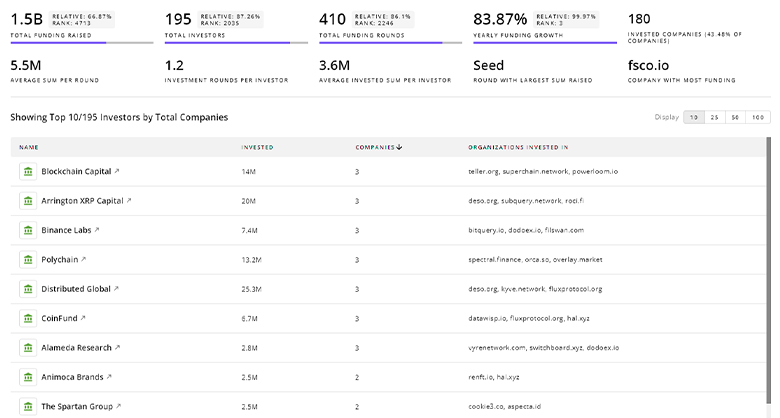
290 Smart Home Hub Investors
Discover Smart Home Hub Investors, Funding Rounds, Invested Amounts, and Funding Growth
Smart Home Hub News
Explore the evolution and current state of Smart Home Hub with TrendFeedr’s News feature. Access 4.1K Smart Home Hub articles that provide comprehensive insights into market trends and technological advancements.
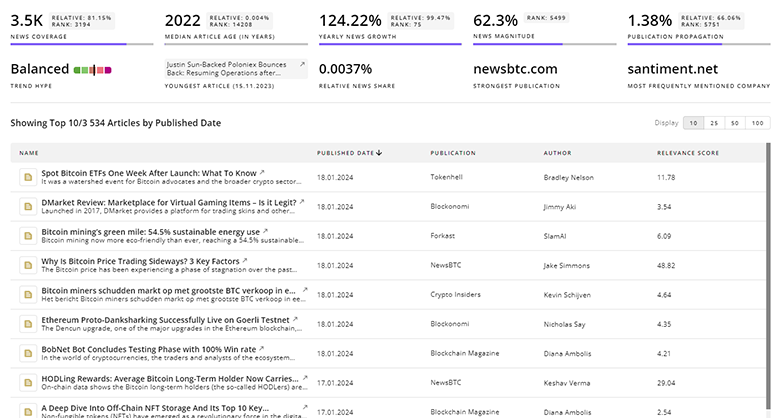
4.1K Smart Home Hub News Articles
Discover Latest Smart Home Hub Articles, News Magnitude, Publication Propagation, Yearly Growth, and Strongest Publications
Executive Summary
The smart home hub market will grow substantially in the coming decade, but winners will not be decided by basic connectivity alone. The strategic tradeoff sits between platform aggregation and data sovereignty: platform aggregation wins scale and recurring revenue via service bundling, while sovereignty secures trust, uptime and regulatory alignment for high-value verticals. Technical levers that matter now include Matter/Thread adoption, edge AI for low-latency local automation, secure lifecycle management, and multi-protocol radio stacks for retrofit markets. For product teams and investors, the highest return paths emerge where hubs integrate into existing operational processes (property management, utilities, healthcare) or where hubs provide provable privacy and reliability benefits that justify subscription economics. Decision makers should pick a focused commercial lane, instrument measurable outcomes (energy saved, incidents prevented, occupancy uptime), and align technology roadmaps to edge processing and API openness to capture the expanding addressable market.
We're looking to collaborate with knowledgeable insiders to enhance our analysis of trends and tech. Join us!