Spacecraft Report
: Analysis on the Market, Trends, and TechnologiesThe spacecraft market is shifting from an emphasis on getting mass to orbit toward sustained utility in orbit, driven by a $6,600,000,000 addressable market in 2024 and a projected 5.7% CAGR to 2033 alliedmarketresearch – 2024.
34 days ago, we last updated this report. Notice something that’s not right? Let’s fix it together.
Topic Dominance Index of Spacecraft
To gauge the influence of Spacecraft within the technological landscape, the Dominance Index analyzes trends from published articles, newly established companies, and global search activity
Key Activities and Applications
- Satellite constellations for broadband and ISR — mass deployment of LEO satellites remains the largest volume application and continues to drive launch cadence and bus manufacturing demand alliedmarketresearch - Spacecraft Market, 2024.
- In-orbit servicing, assembly, and manufacturing (ISAM) — robotic refueling, module swaps, and on-orbit assembly are maturing into recurring service contracts that extend asset life and shift value to operations.
- In-space manufacturing and sample return — pharmaceutical and advanced-materials processing in microgravity is moving from demonstrations to commercial pilots that capture terrestrial IP value on reentry Varda Space Industries.
- Space logistics and orbital transfer (space tugs / OTVs) — last-mile delivery, orbit raising, and flexible repositioning enable dynamic constellation management and responsive defense capabilities.
- Space domain awareness and debris mitigation — life-extension and removal technologies become operational prerequisites as LEO congestion rises; passive and active deorbit systems gain commercial traction.
Emergent Trends and Core Insights
- Service-first commercial model: Revenue is shifting from one-off spacecraft sales to subscription/service models for life extension, refueling, and roadside assistance in orbit.
- Modularity and interface standardization: Modular buses and standardized docking/refueling interfaces materially reduce integration risk and create addressable, repeatable revenue for service providers.
- Autonomy compresses cost and latency: AI-enabled GNC, vision-based rendezvous, and on-board processing reduce human overhead for proximity operations and enable high-cadence servicing missions.
- Green propulsion & deorbit compliance: Non-toxic propellants and passive deorbit devices are becoming de-facto compliance tools as regulators and operators prioritize safe end-of-life behaviour.
- Cislunar commercialization emergence: Investment and programs targeted at the Moon and cislunar logistics are catalyzing a next wave of platform and habitat development beyond LEO.
Technologies and Methodologies
- Electric propulsion (Hall / ion thrusters) for station keeping, orbit raising, and high-delta-V OTV missions.
- Modular spacecraft buses and plug-and-play payload interfaces that decouple payload development from platform risk, reducing time-to-mission.
- Robotic manipulators and autonomous docking for inspection, refueling, and assembly — critical for ISAM service chains.
- Additive manufacturing and closed-loop reentry platforms enabling orbital production and terrestrial commercialization of microgravity-manufactured goods Made in Space Varda Space Industries.
- Advanced power systems (high-efficiency PV, modular storage, RTGs) to support longer missions and higher-power electric propulsion needs Space Power Systems Global Market Report 2026-2030.
Spacecraft Funding
A total of 553 Spacecraft companies have received funding.
Overall, Spacecraft companies have raised $77.5B.
Companies within the Spacecraft domain have secured capital from 2.3K funding rounds.
The chart shows the funding trendline of Spacecraft companies over the last 5 years
Spacecraft Companies
- Orbit Fab — Orbit Fab builds in-orbit propellant logistics and the RAFTI interface to enable refueling across LEO/GEO/cislunar orbits. Its proposition turns fuel into a distributed commodity, shifting satellite economics from "one-time" to ongoing operations and enabling cheaper mission profiles for large constellations Orbit Fab.
- Starfish Space — Starfish Space develops the Otter servicing vehicle for life extension and debris remediation. The company packages propulsion, rendezvous autonomy, and modular tool-pods to offer multi-mission servicing at scale, directly addressing the escalating LEO-congestion risk Starfish Space.
- Portal Space Systems — Portal Space Systems offers an ESPA-class, high-maneuverability bus with a novel solar-thermal propulsion system that increases operational reach for tactical repositioning and rapid response logistics, creating a capability gap for legacy, low-mobility satellites Portal Space Systems.
- Obruta — Obruta supplies turnkey autonomous docking hardware and software to simplify retrofit servicing deployments. Its single-system docking approach reduces integration time for both servicers and clients, lowering the transaction cost for ISAM missions Obruta.
- Varda Space Industries — Varda combines orbital manufacturing with reentry capabilities to return products to Earth (pharma, advanced fibers). Success in reentry and product quality would create a high-margin terrestrial revenue stream that changes the payoff calculus for orbital manufacturing Varda Space Industries.
Get detailed analytics and profiles on 2.2K companies driving change in Spacecraft, enabling you to make informed strategic decisions.
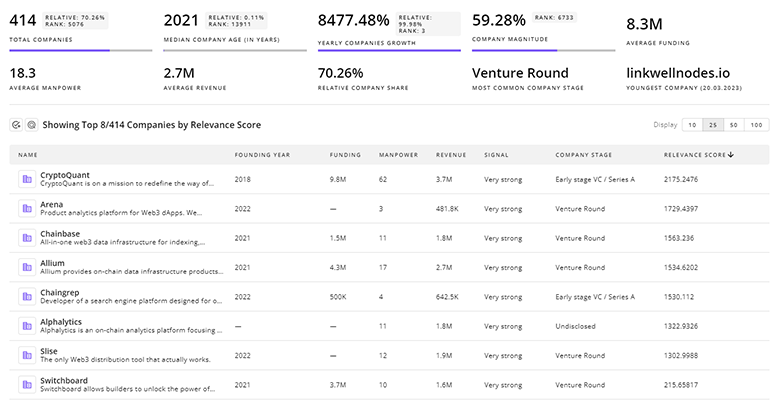
2.2K Spacecraft Companies
Discover Spacecraft Companies, their Funding, Manpower, Revenues, Stages, and much more
Spacecraft Investors
TrendFeedr’s Investors tool provides an extensive overview of 3.0K Spacecraft investors and their activities. By analyzing funding rounds and market trends, this tool equips you with the knowledge to make strategic investment decisions in the Spacecraft sector.
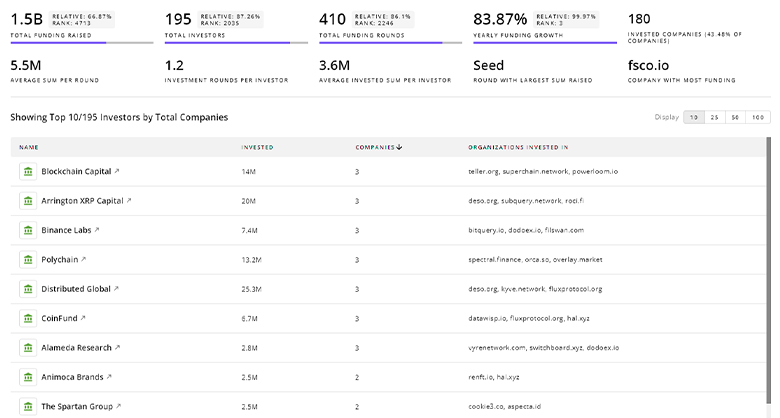
3.0K Spacecraft Investors
Discover Spacecraft Investors, Funding Rounds, Invested Amounts, and Funding Growth
Spacecraft News
Explore the evolution and current state of Spacecraft with TrendFeedr’s News feature. Access 53.4K Spacecraft articles that provide comprehensive insights into market trends and technological advancements.
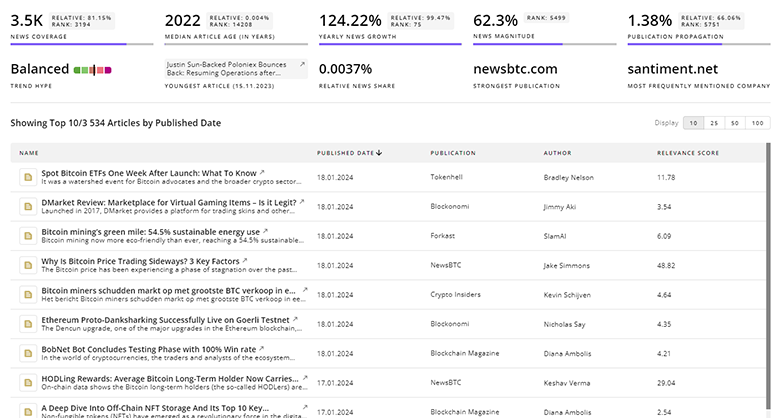
53.4K Spacecraft News Articles
Discover Latest Spacecraft Articles, News Magnitude, Publication Propagation, Yearly Growth, and Strongest Publications
Executive Summary
The commercial strategy that wins in spacecraft over the next three years will not be defined by single successful launches but by the ability to operate assets in orbit as recurring revenue platforms. Investors and operators must prioritize: (1) service networks — refueling, rapid response servicing, and debris mitigation; (2) interface standards — docking, propellant, and data standards that create scale; and (3) mission economics — in-orbit production and reliable return mechanisms that can generate high-margin terrestrial revenues. Companies that control the physical and software interfaces for sustainment — propulsion, docking, and autonomous GNC — will convert current capital intensity into durable market positions.
We're looking to collaborate with knowledgeable insiders to enhance our analysis of trends and tech. Join us!