
Steel Tubes Report
: Analysis on the Market, Trends, and TechnologiesThe steel tubes market sits at a crossroads of slow headline growth and rapid niche specialization: the global steel tubes market is valued at USD 83.35 billion in 2024 and is projected to reach USD 93.25 billion by 2033 (CAGR 1.24%), reflecting measured expansion in bulk segments alongside sharp upside in high-performance submarkets. Patent activity and technical reports show intense R&D on high-strength alloys and precision processes, while recent market studies highlight higher CAGRs for specialty seamless and cold-drawn segments—creating a two-speed market where commodity welded tubes remain volume drivers and precision/seamless tubes capture margin growth Market Research Future sphericalinsights.
240 days ago, we last updated this report. Notice something that’s not right? Let’s fix it together.
Topic Dominance Index of Steel Tubes
To gauge the influence of Steel Tubes within the technological landscape, the Dominance Index analyzes trends from published articles, newly established companies, and global search activity
Key Activities and Applications
- Structural support in construction — primary use for medium and large-diameter welded and seamless tubes in frameworks, piling, and scaffolding; construction accounted for the largest application slice in recent market reports and drives >40% of revenues in some forecasts marketresearchfuture VPA Research.
So what: steady public and private infrastructure spend preserves baseline demand for commodity tubes and supports service businesses (cutting, coating, logistics). - Automotive components and lightweight structure — precision cold-drawn and thin-wall tubes supply chassis, exhaust, hydraulic and fuel lines; precision tube market growth targets automotive lightweighting needs Global Precision Tubes Market.
So what: OEMs' material substitution and EV structural strategies create a continuing premium for tubes with tight tolerances and controlled microstructures. - Oil & gas (OCTG, casing, pipelines) — demand for seamless, corrosion-resistant tubes for high-pressure wells and subsea infrastructure remains a major revenue driver globally IMARC Group.
So what: long-cycle energy projects sustain high-margin seamless tube demand even when general construction softens. - Renewable energy and hydrogen infrastructure — tubular supports for offshore wind and hydrogen pipelines require new alloy and coating standards; several market reports identify these as emerging demand pockets marketresearchfuture IMARC Group (US outlook).
So what: spec complexity and certification needs allow suppliers with R&D and traceability to capture premium contracts. - Industrial machinery, heat exchangers and process tubing — high-quality seamless tubes and nickel/alloy products for heat-exchangers, boilers, and corrosive process streams.
So what: equipment OEMs demand consistent metallurgy and NDT traceability, raising barriers for commodity entrants.
Emergent Trends and Core Insights
- Market bifurcation: volume growth concentrated in welded/commodity tubes while specialty seamless, cold-drawn, nickel/alloy and precision tubes grow materially faster; forecasts show overall market CAGR near 1–4% but subsegments (e.g. cold-drawn seamless) with double-digit CAGR projections sphericalinsights Spherical Insights (cold-drawn forecast).
So what: companies must pick a strategic lane—scale/price or specification/margin—and align capex and sales accordingly. - Advanced metallurgy and microstructure engineering are central R&D themes: recent patents and filings focus on alloy recipes (micro-alloying with Nb, V, Ti), controlled thermomechanical processing, and HAZ toughness for high-strength tubes.
So what: material design dictates final properties more than geometry; IP ownership in alloy/process tech can create defensible product tiers. - Digital and automated production control — inline NDT, automated laser cutting and integrated production monitoring improve yield and traceability; vendors report adoption of Industry 4.0 monitoring for defect detection Tech adoption in tube fabrication.
So what: buyers increasingly require digital traceability and QA data packets as a procurement condition for critical infrastructure. - Decarbonization of production and EAF adoption — manufacturers invest in EAF and recycled steel routes; buyers and regulators push low-emission sourcing and EPDs marketresearchfuture sustainability note.
So what: green credentials will influence tender outcomes on infrastructure and energy projects; capex to lower Scope 1/2 can become a competitive necessity. - Hydrogen-ready specifications and marine-grade alloys — new coating and alloy formulations address hydrogen embrittlement and marine corrosion requirements.
So what: first movers who certify hydrogen-service tubing can access early project pipelines and command price premiums.
Technologies and Methodologies
- Seamless tube forming (pilgering, rotary piercing) and cold drawing for precision hydraulic and instrumentation tubes; these methods deliver tight tolerances required by automotive and hydraulic OEMs.
Operational implication: high capital intensity but high margin and long customer lifecycles. - High-frequency induction welding (HFIW), ERW and advanced submerged arc welding for large-diameter welded tubes; process control and inline annealing improve mechanical consistency news on inline seam annealing.
Operational implication: welded lines deliver scale and low cost but require QA to approach seamless performance for many applications. - Thermomechanical control processing and tailored heat treatments to engineer bainitic/martensitic microstructures and refined ferrite grains for >600 MPa yield steels in tubular form.
- Advanced surface treatments and coatings (galvanizing, nano-coatings) targeted at offshore wind and hydrogen service; these combine with internal stiffeners and composite overlays for durability.
- Digital QA, inline eddy current/ultrasonic NDT, and production data capture for certificate-level traceability required by energy and aerospace customers CSM TUBE capability note.
Steel Tubes Funding
A total of 86 Steel Tubes companies have received funding.
Overall, Steel Tubes companies have raised $8.4B.
Companies within the Steel Tubes domain have secured capital from 177 funding rounds.
The chart shows the funding trendline of Steel Tubes companies over the last 5 years
Steel Tubes Companies
- Timeless Tube — Timeless Tube specializes in shaped and profile stainless tubing for architectural, marine and luxury fabrication clients; they offer a portfolio of unique profiles (flat-sided oval, D-shape, twisted square) and flexible tooling for bespoke prototypes, enabling small-batch, high-value projects that conventional mills do not serve Timeless Tube.
- Eurotubi s.r.l. — Eurotubi manufactures precision welded steel tubes (Ø28–304 mm) and provides value-added services including bending, flanging and custom cutting; as part of a family group it combines small-series customization with industrial process control to serve mechanical and architectural markets Eurotubi s.r.l..
- KVA Stainless — KVA develops welded martensitic stainless structural tubing with patented MS2™ technology, claiming strength comparable to titanium at lower cost; the company targets weight-sensitive applications where cost and performance converge (bicycles, automotive components) KVA Stainless.
- Ark Steel Tube Co.Ltd — Ark (and subsidiary KWK STEEL) supplies both seamless and welded tubes across alloy ranges including nickel and duplex grades; the company emphasizes material breadth and small-to-large lot flexibility for oil & gas, aerospace and nuclear customers Ark Steel Tube Co.Ltd.
Get detailed analytics and profiles on 3.4K companies driving change in Steel Tubes, enabling you to make informed strategic decisions.
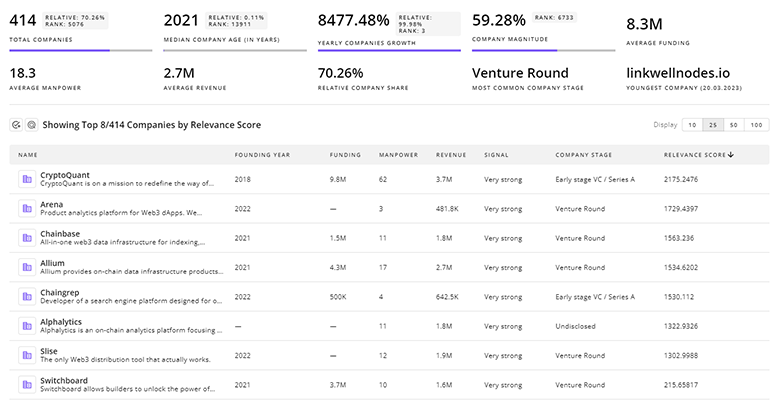
3.4K Steel Tubes Companies
Discover Steel Tubes Companies, their Funding, Manpower, Revenues, Stages, and much more
Steel Tubes Investors
TrendFeedr’s Investors tool provides an extensive overview of 148 Steel Tubes investors and their activities. By analyzing funding rounds and market trends, this tool equips you with the knowledge to make strategic investment decisions in the Steel Tubes sector.
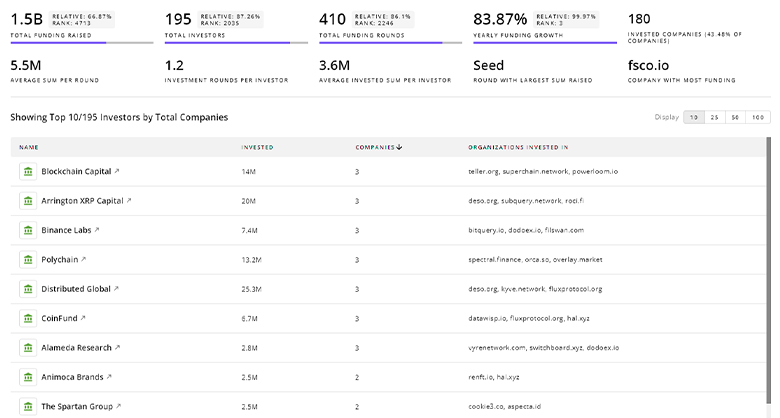
148 Steel Tubes Investors
Discover Steel Tubes Investors, Funding Rounds, Invested Amounts, and Funding Growth
Steel Tubes News
Explore the evolution and current state of Steel Tubes with TrendFeedr’s News feature. Access 909 Steel Tubes articles that provide comprehensive insights into market trends and technological advancements.
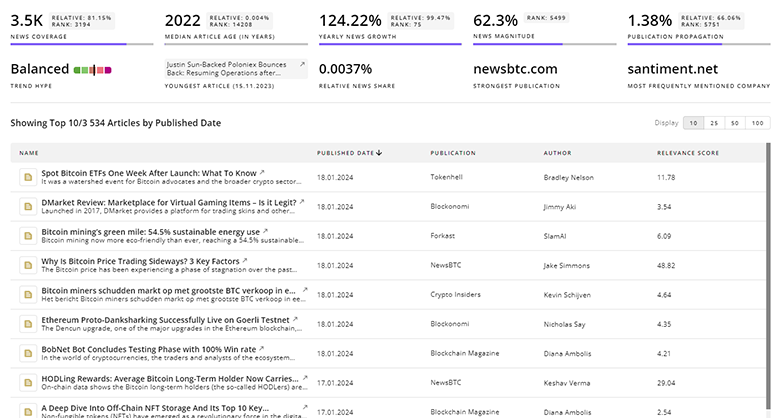
909 Steel Tubes News Articles
Discover Latest Steel Tubes Articles, News Magnitude, Publication Propagation, Yearly Growth, and Strongest Publications
Executive Summary
The steel tubes sector presents a clear strategic split: mainstream welded tubes preserve scale and steady revenue, while precision seamless and specialty alloy tubes offer higher growth and margin through technical differentiation. Patent trends and company capabilities show the domain of competition shifting from pure scale to integrated offerings that combine advanced metallurgy, certifiable processes, and digital traceability. For players with capital and R&D capacity, the most defensible moves are targeted investment in precision forming (pilger/cold draw), alloy and coating R&D for hydrogen and offshore standards, and production digitization that turns quality data into commercial advantage. For distributors and fabricators, focusing on value-added services (cutting, bending, testing) and partnerships with high-spec producers will capture the premium flows that are emerging even as total market growth remains modest.
We're looking to collaborate with knowledgeable insiders to enhance our analysis of trends and tech. Join us!