Surgical Robotics Report
: Analysis on the Market, Trends, and TechnologiesThe surgical robotics market stands at an inflection where software-first platforms, miniaturized form factors, and navigation-integrated systems are shifting value from standalone hardware to procedural intelligence and workflow integration; the market measured $9,490,000,000 in 2024 and shows a strong growth trajectory consistent with a 9.2% CAGR expectation. This change is visible in recent regulatory and commercial activity—multiple new soft-tissue and orthopedic platforms advanced through approvals and clinical milestones—and in the rapid growth of robot-assisted case volumes that support near-term addressable-market expansion.
77 days ago, we last updated this report. Notice something that’s not right? Let’s fix it together.
Topic Dominance Index of Surgical Robotics
To gauge the influence of Surgical Robotics within the technological landscape, the Dominance Index analyzes trends from published articles, newly established companies, and global search activity
Key Activities and Applications
- Minimally invasive soft-tissue procedures — Procedures such as cholecystectomy, colorectal resections, and hysterectomy are the largest current volume drivers for robotic platforms because they most directly benefit from motion scaling, tremor filtration, and enhanced 3-D visualization.
- Orthopedics and spine instrumentation — Robotic systems for joint replacement and pedicle-screw guidance are expanding into outpatient and specialty clinic settings; navigation integration and procedure-specific automation are the principal value levers in this segment.
- Image-guided cardiovascular and endovascular interventions — Endovascular robotics and magnetic/optical guidance aim to reduce fluoroscopy and improve precision in catheter navigation, shortening procedure times and lowering radiation exposure Robotic Surgical Systems Pipeline by Development Stages.
- Microsurgery and ophthalmology — High-magnification, tremor-filtered platforms for microsurgery (lymphatic, microvascular, ophthalmic cataract work) are commercializing, enabling new clinical use cases that previously required manual supermicrosurgical skill.
- Data capture, analytics and training — Enterprise surgical-data platforms are collecting perioperative video, device telemetry and EMR signals to produce actionable quality metrics and training content that accelerate surgeon proficiency and provide a recurring-revenue software layer Caresyntax.
Emergent Trends and Core Insights
- Software and data are becoming the primary differentiator — Vendors that provide a platform for continuous learning, intraoperative decision support, and post-op analytics capture a disproportionate share of long-term margin versus pure hardware suppliers.
- Modular, miniaturized systems accelerate diffusion — Miniaturized patient-side units and single-use instrument architectures lower capital and footprint barriers, enabling deployment in Ambulatory Surgical Centers (ASCs) and regional hospitals Virtual Incision.
- Clinical specialization yields defensible moats — Procedure-specific robots (urology, ophthalmology, percutaneous oncology) trade breadth for deeper clinical integration and evidence, creating adoption accelerants in their target specialties Quantum Surgical.
- AI-assisted autonomy emerges in discrete tasks — Imitation learning and procedural AI are moving from research into early clinical demonstrations (routine suturing, camera control, sub-task execution), shifting regulatory and liability debates toward task-bounded automation rather than full autonomy AI First Surgical Robotics Market Size, Share and Forecast 2025-2034.
- Geographic competition and cost pressure — Asia-Pacific is the fastest growing regional market and domestic manufacturers are strategically priced to undercut incumbent hardware, forcing established vendors to rework pricing, service and consumables strategies Global AI-Driven Surgical Robotics Market.
Technologies and Methodologies
- Image-guided navigation and hybrid tracking — Integration of optical, electromagnetic, radar and machine-vision trackers is enabling radiation-reduced workflows and sub-millimeter registration that are critical for spine, neuro and orthopedic applications.
- AI-powered intraoperative decision support — Real-time models ingest video, instrument telemetry and preop images to provide margin assessment, step recognition, and safety alerts; this moves value from the robot to the software stack.
- Haptics, acoustic and alternative sensing — Efforts to restore tactile cues include instrument force sensing, auditory feedback from tissue interaction, and model-based haptic displays to reduce cognitive load and shorten adoption curves SURAG Medical.
- Miniaturization and modular arms — Compact, interchangeable patient-side units and handheld/robot-assisted tools enable lower capital outlay and flexible OR layouts, increasing the total number of ORs that can economically use robotics Distalmotion.
- Simulation, XR and digital twins — High-fidelity simulation and case-specific digital twins enable credentialing, rehearsal and AI training datasets that shorten surgeon learning curves and raise reproducibility of outcomes.
- Telesurgery and connectivity — Demonstrations of latency-managed telesurgery over advanced networks (photonics/5G) show path to remote expert coverage and new delivery models for underserved regions.
Surgical Robotics Funding
A total of 519 Surgical Robotics companies have received funding.
Overall, Surgical Robotics companies have raised $43.0B.
Companies within the Surgical Robotics domain have secured capital from 1.7K funding rounds.
The chart shows the funding trendline of Surgical Robotics companies over the last 5 years
Surgical Robotics Companies
- Microsure — Microsure develops a CE-certified microsurgical robot (MUSA series) aimed at supermicrosurgical procedures such as lymphaticovenous anastomosis and free flap reconstruction; the platform emphasizes tremor filtration, motion scaling and use of the surgeon's preferred micro-instruments to reduce workflow disruption. Microsure's clinical focus gives it a narrow but growing procedural footprint in reconstructive and vascular microsurgery, and the company is iterating on camera magnification and instrument ergonomics to address digital zoom limitations at very high magnifications.
- ForSight Robotics — ForSight Robotics is building a robotic platform for cataract and general ophthalmic procedures that combines computer vision, AI and microsurgical robotics to expand access to high-quality eye surgery. The company's targeted, high-volume clinical focus and substantial Series-B backing position it to scale cataract programs in high-need regions while aiming to improve standardization and throughput. Clinical validation and supply-chain readiness are central to near-term commercialization plans.
- Biobot Surgical — Biobot Surgical commercializes a purpose-built robot for transperineal prostate biopsy and focal prostate therapy (Mona Lisa platform) and has secured CE and FDA regulatory milestones; their strategy centers on specialty clinical endpoints, procedural standardization and reducing variability in prostate cancer diagnosis and treatment. That focus creates fast clinical traction in urology centers and helps accumulate the procedure-level data needed to support AI augmentation.
- Rob Surgical — Rob Surgical offers an open, four-arm, hybrid manual-robotic platform designed specifically for high-precision interventions with the option to alternate between manual and robotic steps. The company's value proposition is centered on reducing per-case cost and OR staffing friction by enabling targeted robot assistance only where it adds measurable clinical value, which shortens procedures and reduces consumable dependency. That hybrid posture lowers training burden and can increase adoption in mid-size hospitals.
- PathKeeper — PathKeeper develops an active spine navigation system using high-refresh 3-D optical tracking and AI to provide radiation-free, real-time navigation for spine instrumentation; the system refreshes at 15x per second and is optimized to maintain accuracy despite patient motion. By focusing on navigation fidelity and workflow simplicity, PathKeeper targets the high-value spine market where reduced fluoroscopy and set-up time deliver immediate OR economics.
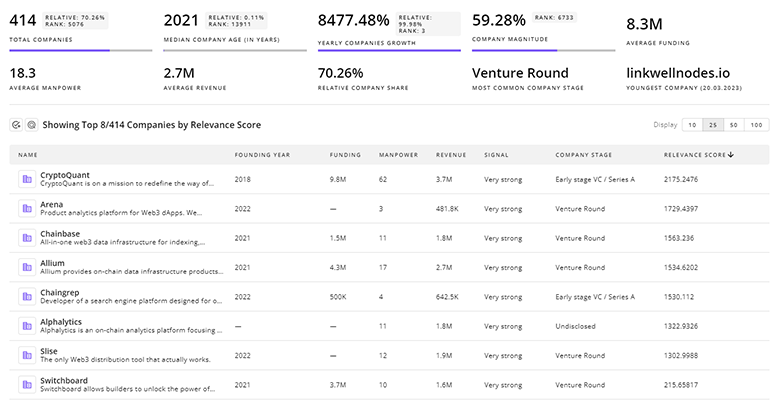
Get detailed analytics and profiles on 3.2K companies driving change in Surgical Robotics, enabling you to make informed strategic decisions.
3.2K Surgical Robotics Companies
Discover Surgical Robotics Companies, their Funding, Manpower, Revenues, Stages, and much more
Surgical Robotics Investors
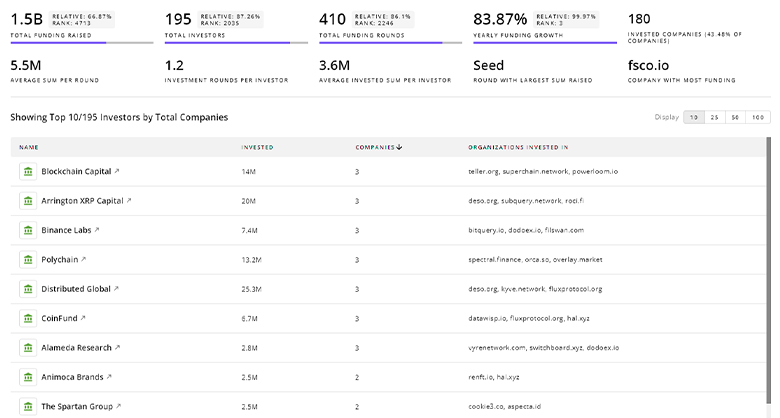
TrendFeedr’s Investors tool provides an extensive overview of 1.9K Surgical Robotics investors and their activities. By analyzing funding rounds and market trends, this tool equips you with the knowledge to make strategic investment decisions in the Surgical Robotics sector.
1.9K Surgical Robotics Investors
Discover Surgical Robotics Investors, Funding Rounds, Invested Amounts, and Funding Growth
Surgical Robotics News
Explore the evolution and current state of Surgical Robotics with TrendFeedr’s News feature. Access 2.8K Surgical Robotics articles that provide comprehensive insights into market trends and technological advancements.

2.8K Surgical Robotics News Articles
Discover Latest Surgical Robotics Articles, News Magnitude, Publication Propagation, Yearly Growth, and Strongest Publications
Executive Summary
Surgical robotics is entering a phase where clinical scope and economic access expand in parallel: AI and data platforms are creating new, high-margin services that sit above hardware, while miniaturized and modular systems bring robotics into ASCs and non-tertiary hospitals. The most defensible strategies are those that (1) lock in procedural data flows and outcome feedback loops to sustain learning systems, (2) align product form factors to the procurement and space realities of mid-size hospitals and ASCs, and (3) pair vertical clinical focus with credible regulatory evidence to build specialty adoption pathways. For established vendors, the imperative is to convert installed bases into interoperable data platforms or partner aggressively with software enablers; for new entrants, narrowing scope to a high-value procedure and executing a rapid evidence-generation program offers the fastest route to sustained commercial traction.
We're looking to collaborate with knowledgeable insiders to enhance our analysis of trends and tech. Join us!