Sustainable Finance Report
: Analysis on the Market, Trends, and TechnologiesThe sustainable finance market has moved from niche allocation to mainstream capital flows, anchored by a 2024 market size of *$5.87 trillion* and a projected CAGR of *19.8% through the next decade, indicating very large capital re-direction toward climate and nature outcomes. This report finds that three structural forces govern near-term outcomes: (1) rapid adoption of data and verification tools that make performance-linked instruments auditable, (2) regulatory pressure that ties capital cost to disclosure and impact alignment, and (3) concentrated product innovation in fixed-income structures and carbon/nature instruments that channel institutional flows into infrastructure and land-use projects. Together these forces create *a demand profile for verified, investable environmental outcomes and open commercial opportunities across SaaS for ESG data, asset-level MRV, and specialized deployment finance.
72 days ago, we last updated this report. Notice something that’s not right? Let’s fix it together.
Topic Dominance Index of Sustainable Finance
To gauge the influence of Sustainable Finance within the technological landscape, the Dominance Index analyzes trends from published articles, newly established companies, and global search activity
Key Activities and Applications
- Green and Sustainability Debt Issuance: Issuers expand green, social, and sustainability-linked bond programs to finance renewable energy, energy retrofits, and resilience projects; market infrastructure now supports large sovereign and corporate issuance that channels stable fixed-income capital into transition assets.
- ESG Data Aggregation and Single Source of Truth: Financial institutions centralize distributed ESG inputs into governance workflows and portfolio-level analytics to comply with disclosure regimes and to price financed emissions, using integrated SaaS stacks that replace manual reporting.
- Nature-based and Carbon Finance Structuring: Project developers and asset managers package verified nature outcomes (carbon removal, biodiversity credits) into tradable structures and pooled portfolios for institutional buyers, with new issuance formats that embed MRV triggers and performance gates researchandmarkets - Sustainable Finance Market, 2025.
- Frontier and SME Climate Lending: Specialized lenders deploy tailored credit products for distributed renewables and adaptation in emerging markets—combining local underwriting with technical assistance to mobilize institutional capital into underbanked sectors GroFin.
- Automated Compliance and Monitoring (dMRV): Digital Measurement, Reporting, and Verification platforms ingest satellite, IoT, and supply-chain data to produce auditable impact streams that feed bond covenants and sustainability-linked loan KPIs.
Emergent Trends and Core Insights
- From Labels to Verifiable Outcomes: Market emphasis has shifted from labeling to verifiable performance. Investors and regulators now favor instruments where proceeds and KPIs map to external, sensor-backed evidence rather than issuer self-reporting Fitch Group – Sustainable Finance Outlook 2024.
- Fixed Income Is the Deployment Engine: Fixed-income instruments (green and sustainability-linked bonds, asset-backed structures) account for the largest share of capital mobilized and are the primary mechanism for large infrastructure and adaptation spending One-Off Global Market Insights.
- Regional Differentiation Requires Local Product Design: Asia-Pacific and parts of Latin America show distinct taxonomy and regulatory dynamics; product structures and verification frameworks must be localized to access those pools of capital market.us - Sustainable Finance Market, 2025.
- Social Dimensions Lag but Gain Strategic Salience: Social financing (affordable housing, health, livelihoods) remains underrepresented relative to climate finance; blended finance and outcome-linked sovereign instruments are emerging to close the gap.
- Credibility and Greenwashing Risk Drive Demand for Third-party Verification: The probability of investor and regulatory pushback is increasing; third-party verification and transparent MRV become commercial differentiators for issuers and platforms.
Technologies and Methodologies
- AI and Machine Learning for ESG and Climate Risk Modeling: Machine learning models synthesize heterogeneous ESG inputs, estimate financed emissions, and score transition pathways for credit portfolios, improving portfolio-level risk measurement.
- Digital MRV (satellite, IoT, drone): Remote sensing and IoT feed objective, near-real-time project performance data into bond covenants and credit triggers, reducing verification lag and strengthening investor confidence.
- Blockchain and Tokenization for Traceability: Distributed ledger solutions are used for provenance tracking of carbon/nature credits and to enable fractionalized, tradable green assets with embedded audit trails.
- SaaS Workflow Platforms for Deal Lifecycle: Platforms that automate origination, lender syndication, covenant monitoring, and impact reporting shorten time-to-close and reduce transaction costs for distributed energy and infrastructure deals.
- Double Materiality and Scenario-based Stress Testing: Methods that combine financial materiality with impact materiality and climate scenario testing inform pricing, capital allocation, and transition finance structures.
Sustainable Finance Funding
A total of 450 Sustainable Finance companies have received funding.
Overall, Sustainable Finance companies have raised $265.4B.
Companies within the Sustainable Finance domain have secured capital from 1.6K funding rounds.
The chart shows the funding trendline of Sustainable Finance companies over the last 5 years
Sustainable Finance Companies
- WeeFin
WeeFin operates a SaaS platform that centralizes ESG data and supports institutional workflows for disclosure and portfolio impact management; the platform is designed to create a single source of truth for compliance and portfolio steering. The company reports having over 40 institutional clients and manages data for assets representing nearly €7,000 billion in AUM, evidence of strong enterprise traction. In 2025 the firm closed a €25 million Series B to scale product and international deployment (Series B, €25M). - Banyan Infrastructure
Banyan Infrastructure provides end-to-end project finance software aimed at accelerating sustainable infrastructure transactions by automating origination, compliance, and portfolio monitoring. The platform targets the operational drag that slows deal velocity and claims measurable time savings across the deal lifecycle, positioning itself as a financing operations utility for distributed energy and retrofit portfolios. Public filings show Banyan as a commercial platform with enterprise customers and Series B scale funding to expand product features. - Lestari Capital
Lestari Capital specializes in nature-based project finance across Southeast Asia, using a "collectives" model that pools corporate buyers to deliver conservation and community outcomes while generating high-quality carbon and biodiversity credits. The firm focuses on insetting and long-term project stewardship with multi-decadal purchase commitments, enabling corporates to align supply-chain claims with verifiable ecosystem outcomes. Lestari emphasizes rigorous project development and long-term community partnerships to preserve credit integrity. - sustainacraft, inc.
sustainacraft, inc. builds transparent carbon accounting and project verification systems that link corporate funds to nature-conservation projects via clear, auditable reporting. The startup combines remote sensing and ledgered project records to reduce verification friction for nature-based credits, offering corporate clients a mechanism to trace funds to measurable conservation outcomes. The company positions its platform as a response to credibility gaps in voluntary carbon markets and works with project developers to standardize evidence flows. - GreenArc Capital Pte Ltd
GreenArc Capital is an impact investment and analytics fintech focusing on private debt across South and South-East Asia, combining an impact measurement API with portfolio execution capabilities. The firm's value proposition pairs capital deployment in private debt with embedded impact measurement that reports contributions to UN SDGs, making it easier for lenders and asset managers to quantify social and environmental outcomes. GreenArc targets the structural gap for credible impact measurement in private markets and sells both analytics and investment products to regional financial institutions.
Get detailed analytics and profiles on 2.9K companies driving change in Sustainable Finance, enabling you to make informed strategic decisions.
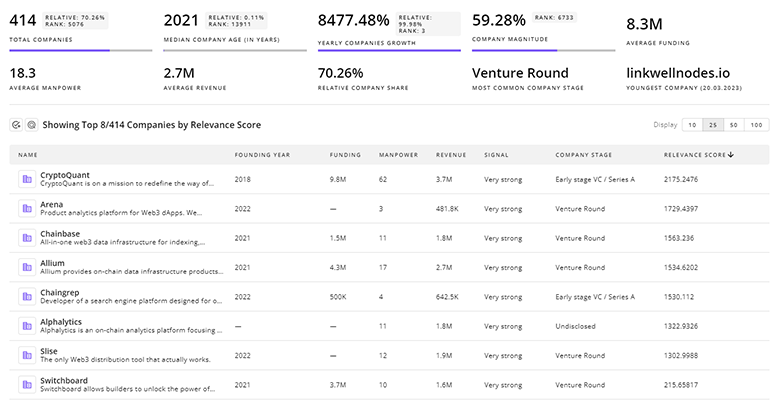
2.9K Sustainable Finance Companies
Discover Sustainable Finance Companies, their Funding, Manpower, Revenues, Stages, and much more
Sustainable Finance Investors
TrendFeedr’s Investors tool provides an extensive overview of 1.3K Sustainable Finance investors and their activities. By analyzing funding rounds and market trends, this tool equips you with the knowledge to make strategic investment decisions in the Sustainable Finance sector.
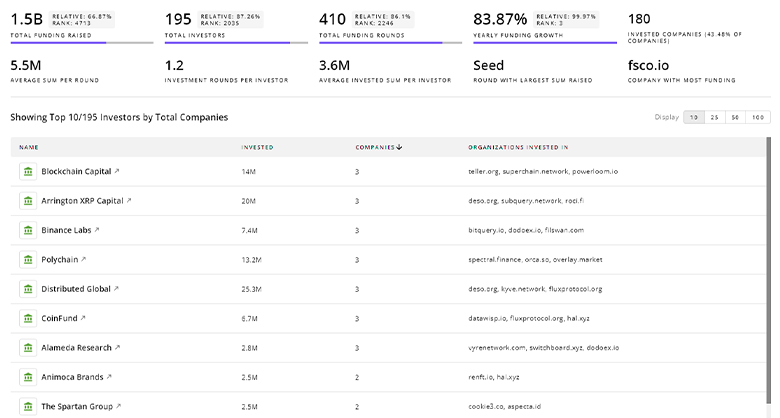
1.3K Sustainable Finance Investors
Discover Sustainable Finance Investors, Funding Rounds, Invested Amounts, and Funding Growth
Sustainable Finance News
Explore the evolution and current state of Sustainable Finance with TrendFeedr’s News feature. Access 4.3K Sustainable Finance articles that provide comprehensive insights into market trends and technological advancements.
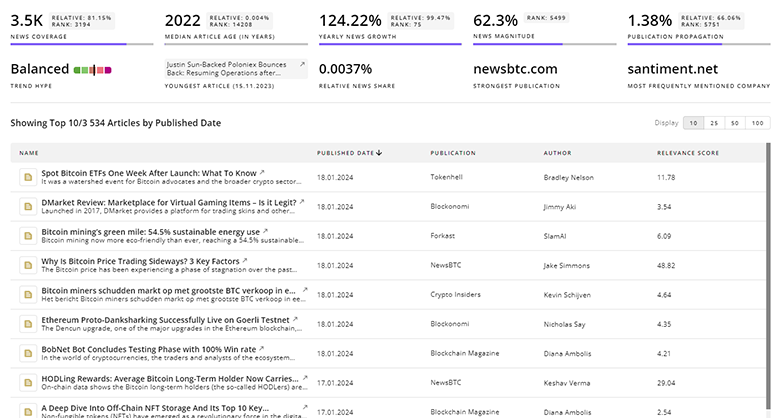
4.3K Sustainable Finance News Articles
Discover Latest Sustainable Finance Articles, News Magnitude, Publication Propagation, Yearly Growth, and Strongest Publications
Executive Summary
Sustainable finance has entered a phase in which capital scale and measurement fidelity must converge. Market value is large and expanding—driven principally by fixed-income instruments and institutional mandates—but continued growth depends on three interlinked capabilities: dependable data pipelines (digital MRV), standardized assurance frameworks, and regionally adapted product design. Businesses that supply auditable impact data, reduce transactional friction for infrastructure finance, or originate credible nature-based assets will capture the highest value. For financial institutions, integrating high-frequency impact data into underwriting and pricing is no longer optional if they wish to maintain investor trust and regulatory alignment.
We're looking to collaborate with knowledgeable insiders to enhance our analysis of trends and tech. Join us!