Sustainable Food Production Report
: Analysis on the Market, Trends, and TechnologiesThe sustainable food production sector sits at a strategic inflection point where measurable market growth, tightening regulation, and concentrated technological innovation create clear commercial pathways for scale. The internal trend dataset projects a long-range market value of USD 488,260,000,000 by 2034 with a compound annual growth rate near 6.8% from recent baselines, a figure that anchors the sector’s material economic potential. External market studies show smaller, more narrowly defined market estimates (for example, USD 3.8–4.0 billion by 2034 in focused sustainable-food product reports), reflecting differences in scope and segmentation that matter for investors and strategists Sustainable Food Industry Perspective – Zionmarketresearch. Consumer willingness to pay premiums and regulatory pressure for supply-chain disclosure are accelerating adoption of precision agriculture, circular feed/value chains, vertical farming, and cellular/fermentation protein platforms, all of which convert environmental performance into quantifiable commercial advantages Top Tips And Trends For Sustainable Eating In The U.S. – Forbes.
96 days ago, we last updated this report. Notice something that’s not right? Let’s fix it together.
Topic Dominance Index of Sustainable Food Production
To gauge the influence of Sustainable Food Production within the technological landscape, the Dominance Index analyzes trends from published articles, newly established companies, and global search activity
Key Activities and Applications
- Waste-to-value feed and soil inputs — Converting crop residues, processing byproducts and organic waste into protein-rich animal feeds or soil amendments via controlled fermentation and enzymatic treatments reduces upstream demand for arable land and commodity feed crops and closes nutrient loops.
- Controlled environment agriculture (CEA) and modular urban production — Multi-layer, containerized and building-integrated farms deliver year-round local supply, reduce transport emissions and shrink cold-chain exposure for perishables.
- Alternative and engineered protein production — Precision fermentation, fungal and seaweed proteins, and cultivated meat manufacture target the high-impact protein node in food systems and reduce livestock land and water footprints.
- Precision inputs and digital agronomy — Satellite imagery, IoT sensors, and AI models enable variable-rate nutrient and water application, lowering input intensity per ton of output and improving resilience under climate stress Food Security Technologies Market Research Report.
- Food loss reduction and circular logistics — Cold-chain upgrades, on-farm storage, redistribution platforms and upcycling systems remove waste across the chain and recover value from unsold food, with policy targets increasingly mandating measurement and reduction Global Sustainable Food Market Size, Share, And Business Benefits - Market.us.
Emergent Trends and Core Insights
- Scale focus moves from novelty to cost parity — Investors and corporates now prioritize technologies or business models that reduce OpEx per kilogram (energy, water, labor) rather than only demonstrating technical feasibility; precision fermentation and CEA firms showing clear unit-cost roadmaps attract the most capital.
- Carbon and non-carbon metrics become commercial levers — Mandates for scope 1-3 reporting and carbon labeling raise the commercial value of verified emissions reductions and create new monetizable channels (procurement preferences, carbon credits, subsidy access) for producers who can prove performance Global sustainable food system - Deloitte.
- Waste valorization drives vertical integration — The patent and innovation evidence emphasizes feed and input substitution (fermentation, enzymology, microbial consortia) as high-leverage points; firms that control conversion processes and input quality capture disproportionate margin uplift.
- Protein diversification accelerates — Seaweed, fungi, microbial single-cell protein and insect channels expand supply diversity and reduce hedging exposure to soy/wheat markets; regulatory pathways and consumer acceptance remain key gating factors.
- Water efficiency and location economics govern capital allocation — Capital increasingly flows to ventures that credibly lower water usage per unit output because investors view water efficiency as a proxy for geopolitical and physical risk mitigation.
Technologies and Methodologies
- Precision fermentation and synthetic biology — Microbial platforms produce targeted proteins, fats and flavor precursors at molecular precision, offering ingredient substitution with predictable supply profiles.
- Integrated biorefinery modules for heterogeneous waste — Modular, sensor-controlled fermentation units enable on-farm or regional processing of mixed organic waste into standardized feed or fertilizer products, turning logistics cost into value capture.
- Controlled environment automation (AI + robotics) — Climate control, robotic harvesters and digital twins compress R&D cycles and reduce labor intensity per unit produced in vertical and aeroponic systems Vertical Farming Field Lab case and CEA research.
- Carbon accounting platforms and traceability stacks — SaaS platforms combine life-cycle assessment, supplier data and immutable records to satisfy regulatory disclosure and commercial procurement criteria Klimato insights and broader reporting trends.
- Aquaculture feed innovation and circular protein chains — Fermented byproducts, insect-derived proteins and single-cell ingredients offer lower-impact feed alternatives, reducing reliance on fishmeal and soy while improving feed conversion ratios in farmed species.
Sustainable Food Production Funding
A total of 464 Sustainable Food Production companies have received funding.
Overall, Sustainable Food Production companies have raised $12.6B.
Companies within the Sustainable Food Production domain have secured capital from 1.8K funding rounds.
The chart shows the funding trendline of Sustainable Food Production companies over the last 5 years
Sustainable Food Production Companies
- OpenSC — OpenSC builds supply-chain verification and traceability tools that enable retailers and producers to prove environmental claims and trace origin points; their platform targets procurement teams seeking verified sustainability credentials and supports buyer premium capture.
- Palmtree Africa — Palmtree Africa pilots modular, low-capex agribusiness hubs that integrate local circular inputs and smallholder aggregation; the model lowers barriers for farmers to access regenerative practices and premium markets.
- Evah Corp — Evah develops fermentation-based upcycling processes for food-processing residues, producing feed ingredients and soil amendments aimed at regional processors and feedlots seeking scope-3 reductions.
- SmallGrowr — SmallGrowr offers compact aeroponic/aquaponic modules for urban retailers and restaurants; the company focuses on minimizing water use per kilogram and providing just-in-time leafy greens for local distribution networks.
- Crop Performance — Crop Performance sells microbial consortia and soil-health diagnostics that boost nutrient uptake and drought tolerance for row crops; their value proposition is immediate input reduction and improved resilience for commodity growers transitioning toward regenerative practices.
Get detailed analytics and profiles on 2.1K companies driving change in Sustainable Food Production, enabling you to make informed strategic decisions.
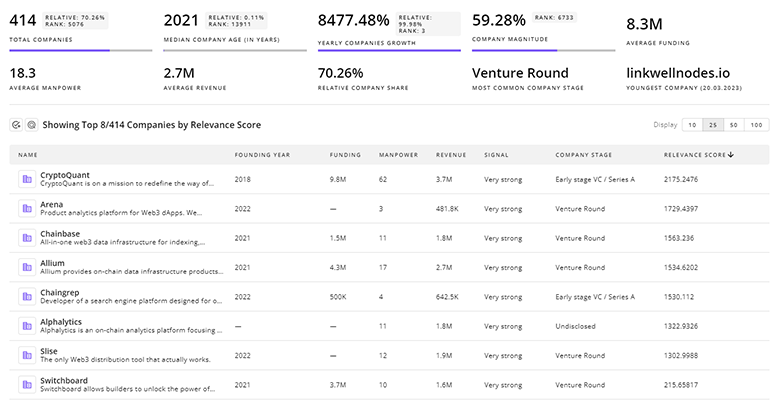
2.1K Sustainable Food Production Companies
Discover Sustainable Food Production Companies, their Funding, Manpower, Revenues, Stages, and much more
Sustainable Food Production Investors
TrendFeedr’s Investors tool provides an extensive overview of 1.5K Sustainable Food Production investors and their activities. By analyzing funding rounds and market trends, this tool equips you with the knowledge to make strategic investment decisions in the Sustainable Food Production sector.
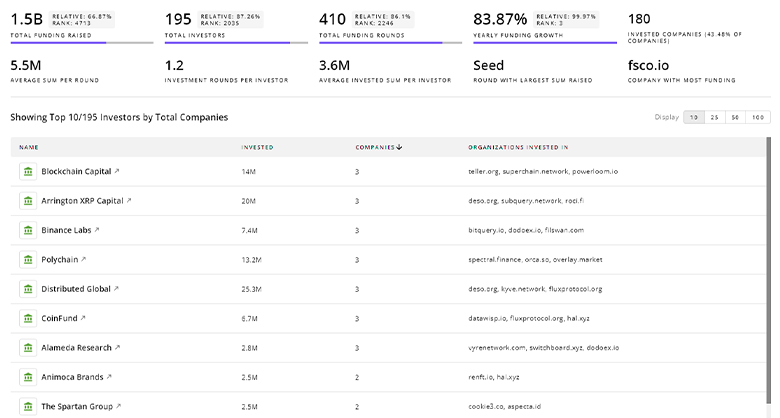
1.5K Sustainable Food Production Investors
Discover Sustainable Food Production Investors, Funding Rounds, Invested Amounts, and Funding Growth
Sustainable Food Production News
Explore the evolution and current state of Sustainable Food Production with TrendFeedr’s News feature. Access 2.0K Sustainable Food Production articles that provide comprehensive insights into market trends and technological advancements.
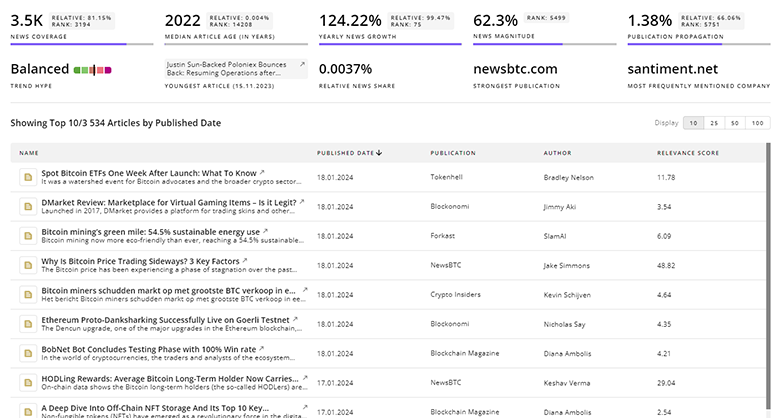
2.0K Sustainable Food Production News Articles
Discover Latest Sustainable Food Production Articles, News Magnitude, Publication Propagation, Yearly Growth, and Strongest Publications
Executive Summary
Sustainable food production is now a strategic investment frontier that links environmental outcomes to measurable commercial benefits. The data shows two immediate implications for business leaders: first, define your addressable market precisely (consumer product, upstream technology, infrastructure or services) because forecasts vary dramatically by scope; second, prioritize solutions that cut unit economics—water, energy, and labor per kilogram—while delivering verifiable emissions and supply-chain transparency. Short-term value accrues to companies that convert waste into standardized inputs, scale platform automation in controlled environments, and monetize verified carbon or resilience benefits. For investors and corporate strategists, the pragmatic path to market leadership combines IP in biological conversion with engineering systems that drive continuous, low-variance production at competitive cost.
We're looking to collaborate with knowledgeable insiders to enhance our analysis of trends and tech. Join us!