The Gig Economy Report
: Analysis on the Market, Trends, and TechnologiesThe gig economy is at a practical inflection where platform survival depends less on scale and more on owning non-substitutable infrastructure: worker finance, compliance, and data. Total ecosystem funding stands at $142.39B and aggregate annual revenue at $320.85B, indicating both sizeable capital flow and substantial revenue pools that incumbents and vertical specialists can capture by embedding payroll, benefits, and payments into the work flow.
319 days ago, we last updated this report. Notice something that’s not right? Let’s fix it together.
Topic Dominance Index of The Gig Economy
To gauge the influence of The Gig Economy within the technological landscape, the Dominance Index analyzes trends from published articles, newly established companies, and global search activity
Key Activities and Applications
- Contingent workforce orchestration (EOR and compliance stacks) — Enterprises outsource onboarding, taxes, and risk management to platforms that act as Employer-of-Record or compliance wrappers, converting contingent hiring from a legal pain point into a predictable procurement category.
- Embedded pay and credit (EWA, micro-lending, instant payouts) — Platforms integrate Earned Wage Access and short-term credit to reduce liquidity friction for workers, improving retention and increasing time-on-platform.
- Verticalized talent marketplaces — Sector-specific platforms (healthcare, hospitality, construction, engineering) supply vetted, compliance-ready talent and replace commodity matching with domain workflows and SLAs Gigpro.
- Worker data custody and monetization — Cooperative or worker-owned models capture operational and performance data to negotiate better financial and insurance terms and to create alternative revenue channels for workers.
- Last-mile delivery orchestration as a service — Aggregators and pooling providers offer Delivery-as-a-Service with API routing and multi-platform pooling to reduce costs and improve utilization for merchants.
- Benefits and insurance packaging — On-demand, pay-as-you-go insurance and modular benefit bundles targeted at 1099 workers reduce churn and increase lifetime value for platforms that control distribution GigEasy.
Emergent Trends and Core Insights
- Financialization of labor is a primary moat — Platforms that own payments, instant settlements, and credit capture recurring revenue and stickiness; investor interest is concentrated in these flows rather than pure matching.
- Skill migration to higher-value gigs — Demand and listings for specialized services (IT, engineering, healthcare) are growing faster than commoditized delivery and ride work, supporting premium match and subscription pricing strategies Gigster.
- Regulatory pressure is forcing product redesign — Worker classification debates and portable benefits pilots push platforms toward EOR, embedded benefits, or cooperative governance to reduce litigation and enable enterprise contracting.
- Geographic thickening beyond metros — Market expansion into Tier-2/3 cities and emerging markets creates arbitrage for localized marketplace builds supported by public-private programs and development initiatives Mesirat Ethiopia.
- Payments and payout innovation are strategic battlegrounds — Instant, multi-currency settlement and wallet models materially improve worker uptake; fintech integrations present high-margin monetization opportunities for platforms MarketReportsWorld - Gig Economy Market.
- Platform segmentation: aggregator vs. ingredient — Broad horizontal platforms face substitution risk from vertical specialists that embed compliance, finance, and domain workflows; funding is migrating into vertical infrastructure and fintech stacks ResearchAndMarkets - The Gig and Sharing Economies in Insurance 2025.
Technologies and Methodologies
- AI-first skill and outcome matching — Machine learning models evaluate performance histories, soft-skill signals, and project outcomes to move beyond keyword matching and to enable guaranteed-outcome offerings Precedence Research - Gig Economy Tech Platforms Market.
- Embedded fintech stacks (payments, EWA, credit scoring) — Integrated payment rails, real-time settlements, and earnings-linked credit underwrite worker liquidity and form a recurring revenue layer for platforms DemandSage - Gig Economy Statistics.
- Smart contracts and tokenized reputation — Blockchain approaches trialed for escrow, cross-platform reputation portability, and automated compliance settlements where auditability and trust are required.
- SaaS orchestration for hybrid workforce — Employer tools that manage blended rosters (full-time + contingent) and provide scheduling, compliance, and billing automation create enterprise lock-in Gigomy.
- Worker-centric analytics and micro-upskilling — Platforms that surface income forecasting, taxes, and micro-learning pathways turn one-time gig labor into repeatable career moves and reduce churn Solo.
- API-first delivery orchestration — Multi-platform pooling, dynamic routing, and merchant APIs reduce last-mile costs and allow retailers to plug into multiple courier pools without high integration costs.
The Gig Economy Funding
A total of 2.6K The Gig Economy companies have received funding.
Overall, The Gig Economy companies have raised $167.5B.
Companies within the The Gig Economy domain have secured capital from 10.0K funding rounds.
The chart shows the funding trendline of The Gig Economy companies over the last 5 years
The Gig Economy Companies
- Giggle Finance — A Miami-based fintech focused on instant cash and short-term funding for app-based freelancers and independent contractors; the company positions fast payouts as a core retention lever for gig workers and aims to convert payout frequency into a payment product suite.
- Driver's Seat Cooperative — A worker-centric cooperative that enables ride-hail and delivery drivers to collect and monetize their operational data; the model targets data sovereignty as a leverage point to secure better insurance and policy outcomes for drivers and has raised early funding to build dataset products for cities and researchers.
- Fleetlery — A Germany-based Delivery-as-a-Service provider that pools thousands of couriers and exposes an API for merchants to orchestrate last-mile logistics across platforms; its multi-platform pooling reduces retailer integration cost and improves courier utilization in dense urban markets.
- Gigfactory — A vertical marketplace focused on construction and infrastructure professionals, offering project-level deliverable tracking and escrowed milestone payments to convert fixed project budgets into variable, output-based contracting; the model targets a sector with high ticket sizes and strong demand for quality assurance.
Get detailed analytics and profiles on 19.2K companies driving change in The Gig Economy, enabling you to make informed strategic decisions.
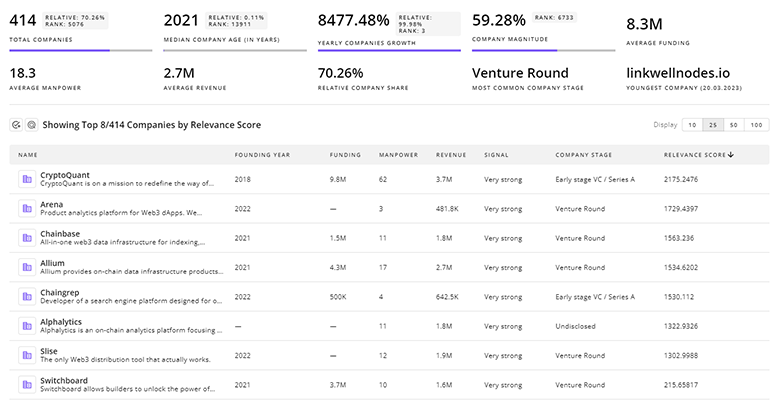
19.2K The Gig Economy Companies
Discover The Gig Economy Companies, their Funding, Manpower, Revenues, Stages, and much more
The Gig Economy Investors
TrendFeedr’s Investors tool provides an extensive overview of 10.6K The Gig Economy investors and their activities. By analyzing funding rounds and market trends, this tool equips you with the knowledge to make strategic investment decisions in the The Gig Economy sector.
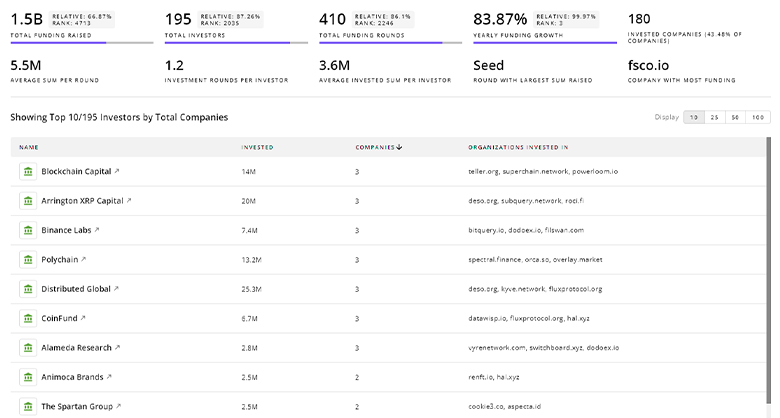
10.6K The Gig Economy Investors
Discover The Gig Economy Investors, Funding Rounds, Invested Amounts, and Funding Growth
The Gig Economy News
Explore the evolution and current state of The Gig Economy with TrendFeedr’s News feature. Access 18.0K The Gig Economy articles that provide comprehensive insights into market trends and technological advancements.
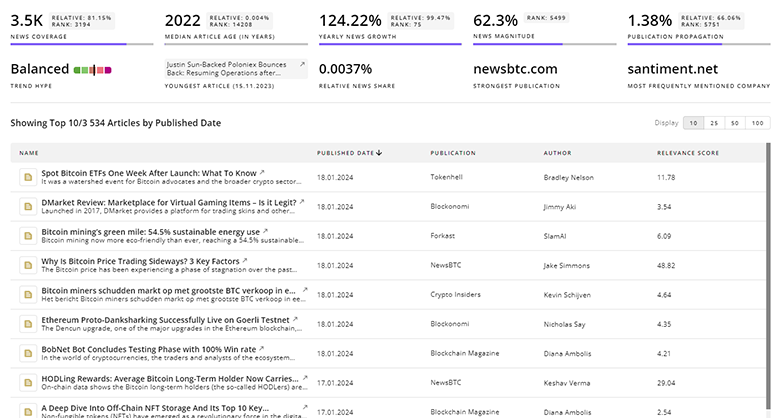
18.0K The Gig Economy News Articles
Discover Latest The Gig Economy Articles, News Magnitude, Publication Propagation, Yearly Growth, and Strongest Publications
Executive Summary
Platforms that control the financial rails, compliance envelope, or worker data will extract the largest economic value as the gig economy matures. Short-term winners will be vertical specialists that deliver measurable efficiency gains and risk reduction for enterprise buyers; medium-term winners will be platforms that convert episodic workers into lifetime customers by embedding benefits, predictable payouts, and career pathways. For investors and operators, the pragmatic priorities are clear: secure payment flows, prove regulatory-safe employment models, and build data assets that benefit both workers and business buyers.
We're looking to collaborate with knowledgeable insiders to enhance our analysis of trends and tech. Join us!