Thermal Energy Storage Report
: Analysis on the Market, Trends, and TechnologiesThe thermal energy storage market is experiencing strong ecosystem growth, with 763 companies actively developing solutions in this sector. At the same time, the global market is expected to expand from USD 31.87 billion in 2024 to USD 93.70 billion by 2033 at a 12.73% CAGR (Global Thermal Energy Storage Market Size).
157 days ago, we last updated this report. Notice something that’s not right? Let’s fix it together.
Topic Dominance Index of Thermal Energy Storage
To gauge the influence of Thermal Energy Storage within the technological landscape, the Dominance Index analyzes trends from published articles, newly established companies, and global search activity

Key Activities and Applications
- Decarbonizing industrial heat: Thermal energy storage systems are deployed in heavy industries-such as steel and glass manufacturing-to store and reapply heat, reducing fossil-fuel boiler use and cutting carbon emissions in processes that account for roughly 25% of global industrial heating demand (IDTechEx Explores Thermal Energy Storage Technologies for Industrial Heating Applications).
- Enhancing building energy efficiency: Building-integrated TES in HVAC applications can reduce energy consumption by 10-30% and lower peak electrical load by 20-50%, directly addressing demand-side management in commercial and residential structures (Energies, Vol. 18, Pages 4000: Recent Advancements in Latent Thermal Energy Storage and Their Applications for HVAC Systems in Commercial and Residential Buildings in Europe-Analysis of Different EU Countries’ Scenarios).
- Grid-scale renewable integration: TES is used to store excess solar and wind energy as heat or cold, providing grid-balancing services and enhancing reliability through dispatchable thermal capacity (Energies, Vol. 15, Pages 3388: Technical Development and Economic Evaluation of the Integration of Thermal Energy Storage in Steam Power Plants).
- Waste heat recovery: Mobile TES units capture industrial waste heat, transport it, and deliver usable thermal energy where needed, addressing mismatches between heat generation and demand (Energies, Vol. 18, Pages 4136: Mobile Thermal Energy Storage-A Review and Analysis in the Context of Waste Heat Recovery).
- Seasonal and underground storage: Large-scale underground systems-in aquifers or boreholes-enable multi-season heat storage, storing summer heat for winter buildings and district heating applications.
Emergent Trends and Core Insights
- Nano-enhanced phase change materials: Incorporating nano-additives into PCMs boosts thermal conductivity and energy density, overcoming leakage and slow response issues (Energies, Vol. 17, Pages 2461: Experimental Study on Paraffin Wax and Soya Wax Supported by High-Density Polyethylene and Loaded with Nano-Additives for Thermal Energy Storage).
- High-temperature storage materials: Research into concrete and ceramic heat storage media capable of operating at 1000 C and above is opening new applications in concentrated solar power and industrial process heat (Energies, Vol. 15, Pages 4544: Key Challenges for High Temperature Thermal Energy Storage in Concrete-First Steps towards a Novel Storage Design).
- Bio-inspired tank designs: Mimicking plant vein structures improves heat transfer in latent storage tanks, shortening charge/discharge cycles (Applied Sciences, Vol. 14, Pages 2940: Development of a Bio-Inspired TES Tank for Heat Transfer Enhancement in Latent Heat Thermal Energy Storage Systems).
- Integration with existing appliances: Retrofitting electric water heaters enables billions of homes to act as distributed thermal storage, effectively substituting millions of battery units.
- Long-duration storage demonstration projects: Facilities like the 90 GWh sand-based storage system show the feasibility of year-long heat retention capable of heating entire cities for extended periods (90-GWh thermal energy storage facility could heat a city for a year).
Technologies and Methodologies
- Latent heat storage: PCMs absorb or release thermal energy during phase transitions, providing high energy density and near-isothermal operation for building and solar applications.
- Sensible heat storage: Energy is stored by raising the temperature of media such as water, rocks, or concrete; this mature approach is widely used in district heating and large-scale solar plants (Sustainability, Vol. 14, Pages 5316: An Experimental Demonstration of the Effective Application of Thermal Energy Storage in a Particle-Based CSP System).
- Thermochemical storage: Reversible chemical reactions store and release heat with minimal losses, offering high-density, long-duration storage for seasonal applications (Energies, Vol. 16, Pages 756: Solid-Gas Thermochemical Energy Storage Materials and Reactors for Low to High-Temperature Applications: A Concise Review).
- Aquifer thermal energy storage: Underground groundwater reservoirs serve as large-scale heat banks, integrating with solar and geothermal systems for multi-month storage (Storing solar power via borehole thermal energy storage).
- Compressed air with thermal integration: Hybrid CAES captures heat generated during air compression and repurposes it during expansion, boosting round-trip efficiency in grid-scale applications (Hybridizing compressed air, thermal energy storage in post mining infrastructure).
Thermal Energy Storage Funding
A total of 153 Thermal Energy Storage companies have received funding.
Overall, Thermal Energy Storage companies have raised $13.7B.
Companies within the Thermal Energy Storage domain have secured capital from 570 funding rounds.
The chart shows the funding trendline of Thermal Energy Storage companies over the last 5 years
Thermal Energy Storage Companies
- Electrified Thermal Solutions specializes in electrically conductive firebrick “Joule Hives” that deliver decarbonized industrial heat up to 1800 C. Originating from a decade of MIT research, their technology combines scalable, low-cost manufacturing with compatibility with existing brick producers, targeting heavy-industry heat decarbonization.
- Nanolope develops shape-stabilized PCMs that overcome mechanical instability and leakage issues, enabling high-density thermal batteries for roofs, walls, PV systems, and battery cooling. Their breakthrough solves critical material challenges, setting new performance benchmarks for PCM-based TES.
- Phasestor UK offers bio-based PCM thermal batteries (eSTOR(TM)) for load-shifting in residential and commercial hot water and HVAC systems. Their compact design integrates into existing installations, reducing peak grid stress and delivering cost savings through optimized off-peak charging.
- FLASC B.V. pioneers an offshore hydro-pneumatic liquid piston system for co-located wind farms, storing electricity by pumping fluid to compress air and using the seawater as a natural heat sink. Their patented Open-Gas Cycle enhances efficiency, enabling offshore wind to provide grid flexibility with minimal environmental impact.
Get detailed analytics and profiles on 732 companies driving change in Thermal Energy Storage, enabling you to make informed strategic decisions.

732 Thermal Energy Storage Companies
Discover Thermal Energy Storage Companies, their Funding, Manpower, Revenues, Stages, and much more
Thermal Energy Storage Investors
TrendFeedr’s Investors tool provides an extensive overview of 623 Thermal Energy Storage investors and their activities. By analyzing funding rounds and market trends, this tool equips you with the knowledge to make strategic investment decisions in the Thermal Energy Storage sector.
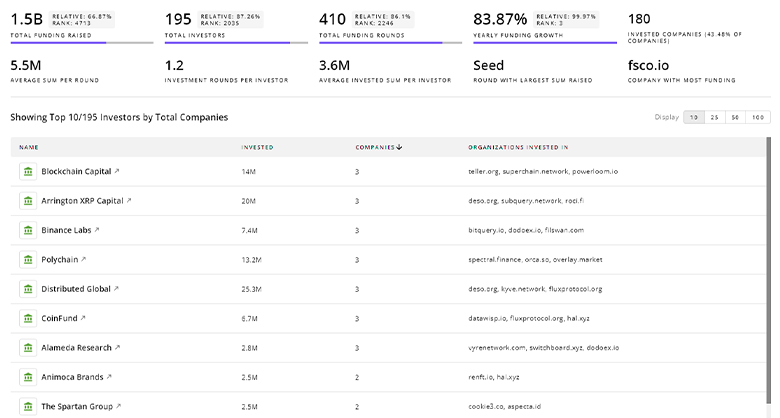
623 Thermal Energy Storage Investors
Discover Thermal Energy Storage Investors, Funding Rounds, Invested Amounts, and Funding Growth
Thermal Energy Storage News
Explore the evolution and current state of Thermal Energy Storage with TrendFeedr’s News feature. Access 2.9K Thermal Energy Storage articles that provide comprehensive insights into market trends and technological advancements.

2.9K Thermal Energy Storage News Articles
Discover Latest Thermal Energy Storage Articles, News Magnitude, Publication Propagation, Yearly Growth, and Strongest Publications
Executive Summary
Thermal energy storage has transitioned from niche demonstrations to a core pillar of decarbonization strategies across industries, buildings, and power systems. Innovations in materials – such as advanced PCMs, molten salts, and thermochemical media – coupled with diverse system designs, are enabling scalable, cost-effective solutions that tackle renewable intermittency and high-temperature industrial heat. The rapid emergence of specialized startups alongside established technology developers underscores a strategic shift toward integrated energy platforms that blend generation, storage, and digital management. As the market approaches a critical scale, companies must align their offerings to either serve as indispensable components within broader ecosystems or build end-to-end TES platforms, ensuring their positioning in a future defined by flexible, low-carbon energy systems.
We're looking to collaborate with knowledgeable insiders to enhance our analysis of trends and tech. Join us!