
Thermal Management Report
: Analysis on the Market, Trends, and TechnologiesThe thermal management market sits at an inflection point: demand for cooling and heat-reuse solutions is driving rapid growth from a 2024 base of USD 15.4 billion to an internal projection of USD 26.1 billion by 2030 (CAGR 9.2%) — driven principally by data-center densification, EV electrification, and higher-power semiconductor nodes. Market research corroborates the scale and direction of this shift, reporting high single-digit to low double-digit CAGRs for the sector and pointing to consumer electronics, data centers, and automotive as the largest demand pools Thermal Management Market Research Report Information By Material (MRF) The Market for Thermal Management Technologies (ResearchAndMarkets). Strategic winners will be companies that combine high-conductivity materials, efficient liquid / two-phase cooling, and sensor + control software to convert cooling into a recurring service (maintenance + heat-recovery) revenue stream The Global Market for Thermal Management Materials and Systems 2025-2035.
373 days ago, we last updated this report. Notice something that’s not right? Let’s fix it together.
Topic Dominance Index of Thermal Management
To gauge the influence of Thermal Management within the technological landscape, the Dominance Index analyzes trends from published articles, newly established companies, and global search activity
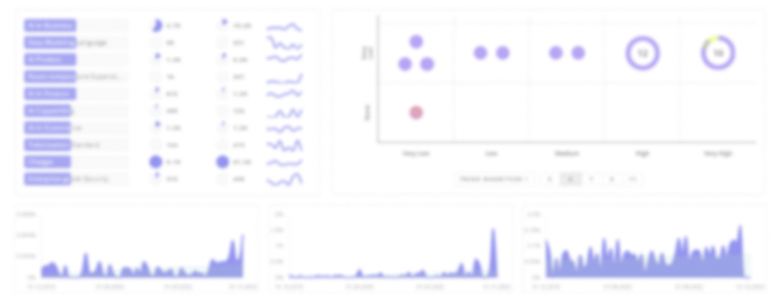
Key Activities and Applications
- Design and integration of direct-to-chip and cold-plate liquid cooling systems for AI/HPC servers and high-power edge compute nodes; suppliers and integrators execute rack-to-chip retrofits and turnkey liquid-cooling projects to reduce PUE and enable higher rack power density.
- Development and commercialization of immersion cooling platforms for hyperscalers and ASIC miners to lower cooling OPEX and reclaim heat for reuse.
- Advanced thermal interface materials (TIMs) and engineered heat spreaders (graphene, boron nitride, liquid-metal hybrids) to reduce junction-to-case thermal resistance in CPUs, GPUs, power modules, and EV power electronics.
- Battery thermal management systems (BTMS): modular liquid cold plates, integrated heat-pump loops, and PCM buffering for cell temperature uniformity and thermal runaway mitigation in EVs and energy storage systems.
- Passive and active thermal energy storage / PCM solutions for building HVAC load shifting, cold chain and CSP plants; these provide load leveling and enable peak-shaving strategies for utilities The Global Market for Passive Cooling Materials and Technologies 2024-2034.
Emergent Trends and Core Insights
- Hybrid architectures win. Designers combine conductive TIMs and heat pipes with liquid loops or immersion to meet different temporal and spatial cooling needs; hybrid architectures now represent the engineering default for high-flux electronics.
- Data-driven thermal control becomes a product. Embedding distributed sensors and predictive control into cooling hardware reduces energy use and increases equipment life; vendors that pair hardware with analytics secure recurring service revenues.
- Liquid and two-phase cooling cross the adoption threshold for compute. Two-phase direct-to-chip systems (serviceable, high-density) now deliver multiple percent energy savings and enable >4 kW+ per socket cooling in commercial deployments Accelsius NeuCool two-phase direct-to-chip offering.
- Materials remain the long pole. Graphene and engineered carbon architectures raise TIM conductivity; bio-based PCMs and low-GWP coolants address regulator and procurement pressure on sustainability.
- EV BTMS converges on integrated thermal loops and heat-pump cabin strategies. OEMs move from distributed circuits to multi-port valve + integrated heat-pump architectures to cut mass, increase range, and simplify controls China OEM integrated thermal management examples and industry trends.
Technologies and Methodologies
- Single-phase and two-phase direct-to-chip cold plates and micro-jet impingement targeting hotspots in CPUs/GPUs JetCool / direct-to-chip microconvective cooling technology and Flex acquisition.
- Immersion cooling (single-phase and boiling two-phase) to enable ultra-dense deployments and heat capture for reuse or heat pumps midasimmersion.com.
- Advanced TIMs: graphene-enhanced films, VACNT arrays, liquid-metal embedded elastomers and sintered metal TIMs to lower interface thermal resistance and improve reliability Global Market for Thermal Interface Materials 2024-2035.
- Thermoelectric modules and solid-state cooling for spot cooling and contactless temperature control in photonics, optics, and military/aerospace components Thermoelectric Assemblies Market (Allied Market Research).
- Phase change materials and PCM integration for buffering transient heat and for low-energy thermal storage in buildings, transport and battery packs.
- Simulation, CFD and digital-twin workflows to reduce prototyping cycles and optimize multi-physics thermal systems before hardware commit ThermoAnalytics and thermal modeling services.
Thermal Management Funding
A total of 299 Thermal Management companies have received funding.
Overall, Thermal Management companies have raised $16.7B.
Companies within the Thermal Management domain have secured capital from 984 funding rounds.
The chart shows the funding trendline of Thermal Management companies over the last 5 years
Thermal Management Companies
- SHT Smart High Tech AB — Graphene first mover for TIMs. SHT develops high-conductivity, graphene-based films and TIM products targeted at high-power GPUs, CPUs and power modules; the company claims extreme through-plane conductivities and positions its products as durable, energy-saving replacements for conventional pastes.
- Meerkats World — Nanostructured metallic TIM startup. Meerkats World commercializes vertically aligned metallic nanocylinder TIMs that use electron-dominant heat transport to improve interface contact and longevity; the company focuses on laptop, desktop and server applications where thermal degradation limits service life.
- PureTemp — Biobased phase-change materials specialist. PureTemp supplies USDA-backed, renewable PCMs for wearable cooling packs, refrigerated shipping inserts and thermal tanks; its PCM portfolio supports a wide range of transition temperatures for passive buffering and cold-chain use cases.
- Heat Inverse — Passive thin-film radiative cooling materials. Heat Inverse pursues ultralight metamaterial films that passively radiate heat to sky bands for vehicle, enclosure and textile cooling, positioning the product as a zero-energy option for outdoor electronics and transport applications.
- Teimmers — End-to-end immersion cooling integrator. Teimmers engineers and delivers single- and two-phase immersion systems for data centers and supercomputers, emphasizing secure, serviceable retrofits and containerized edge deployments that shorten installation time and operational risk.
Get detailed analytics and profiles on 2.0K companies driving change in Thermal Management, enabling you to make informed strategic decisions.
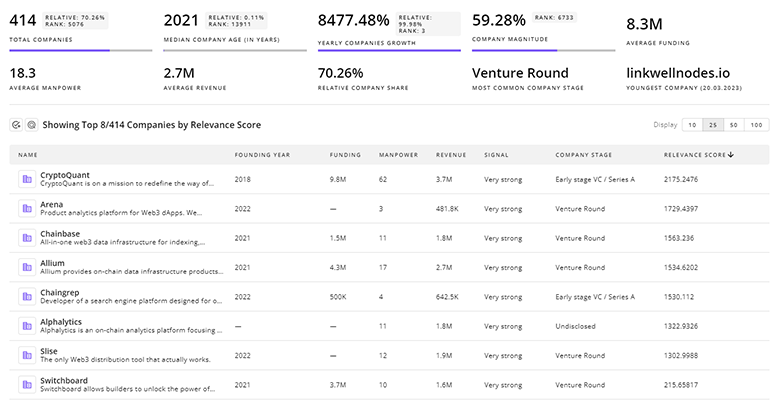
2.0K Thermal Management Companies
Discover Thermal Management Companies, their Funding, Manpower, Revenues, Stages, and much more
Thermal Management Investors
TrendFeedr’s Investors tool provides an extensive overview of 956 Thermal Management investors and their activities. By analyzing funding rounds and market trends, this tool equips you with the knowledge to make strategic investment decisions in the Thermal Management sector.
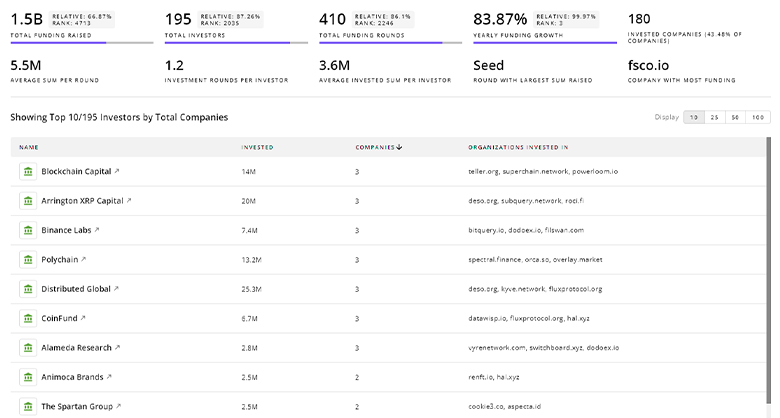
956 Thermal Management Investors
Discover Thermal Management Investors, Funding Rounds, Invested Amounts, and Funding Growth
Thermal Management News
Explore the evolution and current state of Thermal Management with TrendFeedr’s News feature. Access 6.3K Thermal Management articles that provide comprehensive insights into market trends and technological advancements.
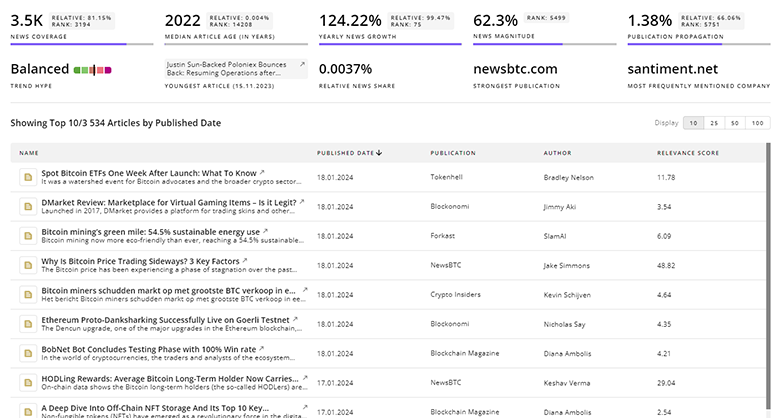
6.3K Thermal Management News Articles
Discover Latest Thermal Management Articles, News Magnitude, Publication Propagation, Yearly Growth, and Strongest Publications
Executive Summary
The thermal-management market now demands systems thinking: materials, fluids, hardware and real-time control must work together. Quantitatively, the internal trend data and external market studies converge on strong expansion over the next decade, with multiple high-growth pockets — AI compute, EV battery systems, and data-center heat reuse — offering clear commercial paths. Practically, winners will offer integrated stacks: low-resistance TIMs, compact two-phase and immersion solutions, and predictive control software that turns cooling into a service. Investors and OEMs should prioritize (1) supply-chain resilience for advanced materials, (2) modular designs that protect upgrade and maintenance economics, and (3) business models that monetize heat recovery and ongoing analytics services.
We're looking to collaborate with knowledgeable insiders to enhance our analysis of trends and tech. Join us!