Third Party Security Report
: Analysis on the Market, Trends, and TechnologiesThe third-party security landscape is escalating into a core business risk: the internal data shows 621 active companies in the topic and total funding of $8.38B, signaling both broad commercial interest and concentrated capital flows. Attacks that originate in vendor ecosystems and unseen Nth-party links push organizations away from point-in-time checks toward continuous, AI-assisted monitoring, compressing detection-to-remediation cycles and raising the value of platforms that deliver verifiable, audit-grade evidence for regulators and boards.
363 days ago, we last updated this report. Notice something that’s not right? Let’s fix it together.
Topic Dominance Index of Third Party Security
To gauge the influence of Third Party Security within the technological landscape, the Dominance Index analyzes trends from published articles, newly established companies, and global search activity
Key Activities and Applications
- Continuous vendor risk scoring and continuous monitoring — move vendor oversight from periodic questionnaires to real-time posture signals that feed access and remediation workflows.
> So what: Continuous scoring reduces window of exposure and enables automated privilege adjustments, shrinking the effective attack surface created by an average enterprise vendor base. - Vendor due diligence, onboarding automation and evidence management — automated questionnaires, SIG/SOC collection and policy mapping accelerate vendor onboarding while producing audit packages for regulators.
> So what: Automation converts TPRM from a blocking cost to a measurable control whose outputs can be consumed by procurement, legal, and auditors. - External attack surface and supply-chain component analysis — EASM and software-supply-chain scanning to detect vulnerable dependencies and compromised build artifacts.
> So what: Detecting compromised components upstream prevents mass exploitation events like large vendor compromise cascades. - Access orchestration tied to risk posture — dynamic least-privilege enforcement and session controls based on vendor risk DNA and device validation.
> So what: Tying permissions to live risk signals materially reduces blast radius when a vendor credential or endpoint is breached. - Incident readiness and coordinated recovery with vendors — playbooks, SLAs and joint tabletop testing to contain vendor-origin incidents and restore services without cascading outages.
Emergent Trends and Core Insights
- AI-first TPRM platforms: AI/ML now drives scoring, questionnaire triage, NLP contract analysis and anomaly detection, enabling scale across thousands of suppliers.
> So what: Organizations that integrate AI into risk workflows reduce manual review time and can detect pattern shifts across vendor cohorts earlier. - Visibility beyond direct vendors (Nth-party risk): network and supply-chain graphing tools surface fourth- and fifth-party exposure that static inventories miss.
> So what: Failure to map Nth-party relationships creates systemic blind spots that attackers exploit to island-hop into targets. - Regulatory tightening and sectoral focus: DORA, NIS2, GDPR/HIPAA enforcement and financial-sector vendor oversight raise compliance evidence requirements and penalty risk.
> So what: TPRM investments now carry legal and financial imperatives; platforms that produce auditable artifacts reduce regulatory friction. - Convergence of EASM, security ratings and TPRM: organizations combine external observation, telemetry ratings and self-reported attestations for richer risk context.
> So what: Synthesizing signal types increases detection fidelity and lowers false positives compared with single-source approaches. - Shift from point tools to integrated platforms: buyers favor suites that cover onboarding, continuous monitoring, attack surface, and remediation orchestration company landscape report.
> So what: Platform winners will monetize through higher per-vendor SaaS fees and by embedding into procurement and insurance workflows.
Technologies and Methodologies
- AI/ML risk engines and NLP for questionnaires — automate evidence extraction, map controls to frameworks and generate dynamic risk scores.
> Implication: Scales assessment teams and surfaces contextual risk drivers for remediation prioritization. - External Attack Surface Management (EASM) and software composition analysis — continuous discovery of vendor-facing assets and vulnerable open-source components.
> Implication: Enables fast detection of newly exposed vendor assets before exploitation. - Dynamic access control and device attestation — endpoint validation and session controls enforced pre-access for third parties.
> Implication: Reduces incidents that arise from insecure partner endpoints. - Security ratings, threat intelligence fusion and continuous controls monitoring — combine rating APIs, threat feeds and vendor telemetry into single risk views SecurityScorecard.
> Implication: Prioritizes limited remediation capacity on vendors with meaningful exposure and exploit activity. - Policy-as-code and evidence-first workflows — codify regulatory requirements into automated checks and produce audit-ready artifacts on demand.
Third Party Security Funding
A total of 102 Third Party Security companies have received funding.
Overall, Third Party Security companies have raised $8.4B.
Companies within the Third Party Security domain have secured capital from 327 funding rounds.
The chart shows the funding trendline of Third Party Security companies over the last 5 years
Third Party Security Companies
-
Ceeyu
Ceeyu combines automated attack-surface scans with tailored questionnaire workflows to manage supplier risk and compliance, targeting NIS2/DORA use cases. Its platform reduces manual evidence collection and centralizes supplier assessments, which speeds audits and regulatory reporting. Ceeyu has early European traction and raised growth funding in 2024, positioning it as an acquisition candidate for larger TPRM platforms. -
Ensure Endpoint Technologies Inc.
Ensure Endpoint validates third-party endpoints before granting access, enforcing device hygiene for brokers, agents and contractors to reduce data-exfiltration risk. Its lightweight device attestation approach fits organizations that must manage large partner populations without intrusive tooling. The company’s small size and focused product make it appealing as a bolt-on for larger access orchestration or PAM vendors. -
Source Defense
Source Defense provides run-time client-side protection that isolates or neutralizes malicious third-party JavaScript, addressing a frequent vector for website supply-chain attacks. It uses sandbox isolation and ML policies to reconcile user experience with security controls, making it suitable for high-traffic web properties where third-party scripts are necessary. Enterprises with heavy e-commerce or customer portals benefit from Source Defense’s targeted mitigation of client-side compromises. -
Risk Ledger
Risk Ledger builds a networked supply-chain model to reveal concentration and Nth-party risks, delivering continuous supplier telemetry and a shared supplier network for faster onboarding. Its graph approach highlights single-points-of-failure across supplier ecosystems, which helps procurement and resilience teams prioritize diversification or secondary sourcing. Risk Ledger’s model matches the market move toward visibility beyond direct vendors and supports automated supplier attestations. -
Findings
Findings integrates cloud risk monitoring, ESG and compliance automation to provide continuous vendor visibility and audit-ready reporting across cybersecurity and sustainability dimensions. By combining technical signals with regulatory and ESG metrics, Findings answers buyer demand for broader supplier assurance and supports cross-functional risk workflows. That cross-discipline approach addresses procurement and sustainability teams as well as security, expanding the buying committee and monetization paths.
Get detailed analytics and profiles on 637 companies driving change in Third Party Security, enabling you to make informed strategic decisions.
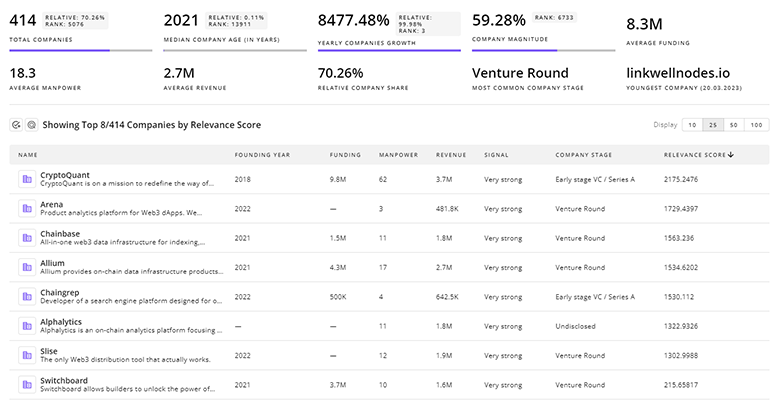
637 Third Party Security Companies
Discover Third Party Security Companies, their Funding, Manpower, Revenues, Stages, and much more
Third Party Security Investors
TrendFeedr’s Investors tool provides an extensive overview of 505 Third Party Security investors and their activities. By analyzing funding rounds and market trends, this tool equips you with the knowledge to make strategic investment decisions in the Third Party Security sector.
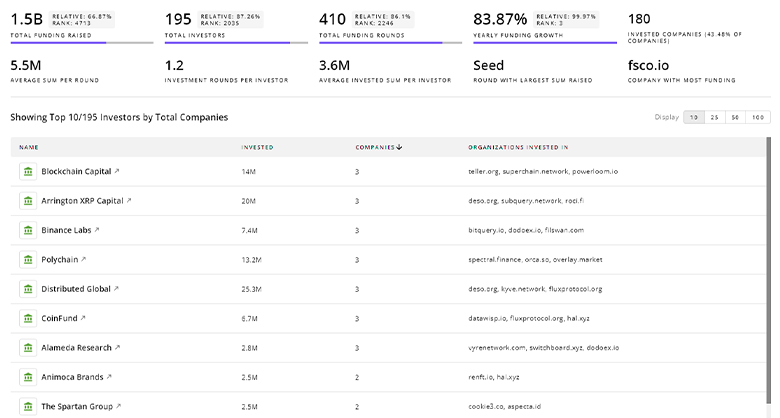
505 Third Party Security Investors
Discover Third Party Security Investors, Funding Rounds, Invested Amounts, and Funding Growth
Third Party Security News
Explore the evolution and current state of Third Party Security with TrendFeedr’s News feature. Access 2.7K Third Party Security articles that provide comprehensive insights into market trends and technological advancements.
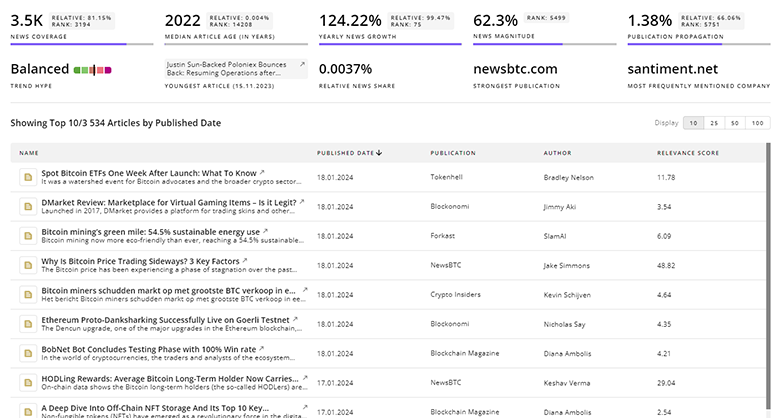
2.7K Third Party Security News Articles
Discover Latest Third Party Security Articles, News Magnitude, Publication Propagation, Yearly Growth, and Strongest Publications
Executive Summary
Third-party security has shifted from a compliance checkbox to an operational discipline that directly affects resilience, regulatory exposure and business continuity. Market and internal data show strong growth and accelerated technology adoption; investment will flow to platforms that synthesize external telemetry, vendor attestations and automated remediation into auditable workflows. Organizations that prioritize continuous monitoring, Nth-party visibility and access controls tied to live risk signals will reduce the most frequent and impactful failure modes associated with vendor ecosystems. For vendors and buyers alike, the commercial winners will be those who can prove measurable reduction in vendor-origin incidents while producing evidence that meets regulators and insurers.
We're looking to collaborate with knowledgeable insiders to enhance our analysis of trends and tech. Join us!