Treasury Management Report
: Analysis on the Market, Trends, and TechnologiesThe treasury function faces a decisive structural upgrade as firms convert fragmented cash processes into continuous, data-driven liquidity operations$159.75B according to market data and trend aggregation. Large corporates are already changing their operating model—67% of firms with >$10B revenue operate an in-house bank and 60% run a payment factory—shifting liquidity control into centralized platforms that combine API connectivity, virtual accounts, and AI forecasting to reduce manual workload and shorten cash cycles 2025 Global Treasury Survey – PwC.
245 days ago, we last updated this report. Notice something that’s not right? Let’s fix it together.
Topic Dominance Index of Treasury Management
To gauge the influence of Treasury Management within the technological landscape, the Dominance Index analyzes trends from published articles, newly established companies, and global search activity
Key Activities and Applications
- Global cash visibility & intraday liquidity orchestration — Consolidating multi-bank balances into a single operating view with virtual accounts and intraday pooling is the primary operational imperative; platforms now prioritize bank connectivity and normalization to enable immediate funding decisions.
- AI-enhanced cash forecasting and scenario planning — Machine learning ensembles and ensemble-based scenario engines are applied to receivables/payables patterns to raise forecast accuracy materially, moving forecasting from monthly to intraday decision support J.P. Morgan – Future of Treasury.
- Payment factory orchestration (POBO/ROBO) and centralised payments — Centralized outbound/inbound execution reduces FX and operational frictions; adoption of POBO/ROBO structures is now mainstream in large enterprises and directly shortens reconciliation loops
- AP/AR automation and cash application — Automated invoice ingestion, virtual card processing, and straight-through cash application compress Days Sales Outstanding and free treasury capacity to focus on liquidity strategy Accounts Receivable Automation market data.
- Working-capital engineering and supply-chain finance — Dynamic discounting and platform-based supply-chain finance are expanding adoption; market spend in SCF platforms has risen double digits year-over-year as treasury integrates with procurement and payables Treasury Management Services Market Analysis 2026.
- Digital asset custody and crypto treasury operations — Institutional-grade custody, settlement rails, and compliance tooling are emerging as adjacent capabilities for treasuries managing tokenized assets or payment flows in digital rails
Emergent Trends and Core Insights
- Platform schism: full-suite TMS vs. API-first components — The market is polarizing between comprehensive TMS suites and high-performance modular ingredients (connectivity, forecasting, fraud/controls). Enterprises either adopt a single source of truth or assemble best-of-breed microservices that plug into ERP ecosystems.
- AI moves into production — Firms report measurable forecasting improvements and automation of routine exceptions; Treasuries that operationalize ML for anomaly detection and predictive collections gain measurable working-capital uplift
- Real-time payments and intraday liquidity as infrastructure — Adoption of real-time rails, paired with virtual account frameworks and payment factories, is elevating liquidity management to a core infrastructure capability rather than a pure back-office function Strategic Treasurer – 2026 Treasury Trends.
- Regulatory embedding as product differentiation — Compliance modules (e.g. eBAM, audit trails, hedge-accounting automation) are a competitive moat because regulatory complexity increases the total cost of switching for corporates
- Cross-domain convergence (treasury + procurement + risk) — Treasury teams that integrate with procurement and FP&A capture working-capital levers earlier in the lifecycle, enabling proactive scheduling of payables against receivable confidence scores.
- Geography and licensing matter: vendors with multi-jurisdictional licensing and regional rails capture cross-border volumes more effectively; regional specialists continue to prosper where local payments or regulatory friction demand tailored solutions Finmo.
Technologies and Methodologies
- Cloud-native, API-first Treasury Management Systems (TMS) — Microservice architectures and multi-tenant SaaS enable faster deployments, continuous upgrades, and elastic scaling for high-transaction clients Treasury Management Systems market analysis.
- Machine learning ensembles for forecasting and anomaly detection — Time-series ensembles, classification models for exception routing, and causal variable enrichment from AR/AP data reduce forecast error and automate low-risk decisions.
- Payment factories and virtual account frameworks — Operational models that centralize execution and reconciliation (POBO/ROBO) are standard design patterns; they rely on standardized APIs and payment orchestration layers
- Embedded treasury APIs and treasury-as-a-service — Exposing liquidity and investment primitives via APIs lets non-finance applications embed cash management capabilities and yields new revenue or product propositions
- Secure digital asset infrastructure — Institutional custody, policy-based execution, and reconciliation between fiat and token rails are increasingly offered as integrated modules for organisations holding crypto or tokenized cash equivalents
- Standards and certifications as baseline — SOC/ISAE and ISO certifications plus ISO 20022 readiness are now expected for enterprise procurement and bank onboarding Datalog Finance.
- API-driven ERP and bank integrations — Real-time feeds between ERP, AR/AP platforms, and bank networks via APIs replace legacy file exchange and enable intraday reconciliation and automated decision workflows.
Treasury Management Funding
A total of 853 Treasury Management companies have received funding.
Overall, Treasury Management companies have raised $159.8B.
Companies within the Treasury Management domain have secured capital from 2.6K funding rounds.
The chart shows the funding trendline of Treasury Management companies over the last 5 years
Treasury Management Companies
- Jutsoo — Jutsoo offers a compact, cloud-first treasury platform focused on real-time cash visibility, automated reconciliation, and simple forecasting for fast-growing corporates; its recent launch of an AI Bookkeeper Agent automates transaction categorization and bank-feed reconciliation to keep small finance teams audit-ready.
- Embat — Embat is a European fintech that centralizes payments, reconciliations, and treasury controls for mid-market firms; the vendor emphasizes AI-powered reconciliation and generative models for cash-flow monitoring, claiming up to 75% time savings on routine treasury tasks for customers that consolidate on its platform
- Treasure Financial — Treasure Financial positions itself as an intelligent idle-cash manager for corporates, offering high-yield, liquid cash management with institutional custody and an API for embedding cash products inside other platforms; its model targets treasury teams seeking yield without sacrificing liquidity controls
- Fortris — Fortris provides enterprise crypto treasury infrastructure—custody, policy controls, and rails that integrate with existing treasury workflows—allowing organizations to treat digital assets with the same governance and auditability as fiat cash, which is critical as some treasuries expand to tokenized settlement and payroll pilots
- ZenTreasury — ZenTreasury targets holding companies and groups with complex multi-entity structures via a freemium-to-premium model focused on cash forecasting, lease accounting (IFRS-16), and rapid onboarding; its modular SaaS approach helps regional treasuries migrate from spreadsheets to controlled cloud workflows quickly
Get detailed analytics and profiles on 3.2K companies driving change in Treasury Management, enabling you to make informed strategic decisions.
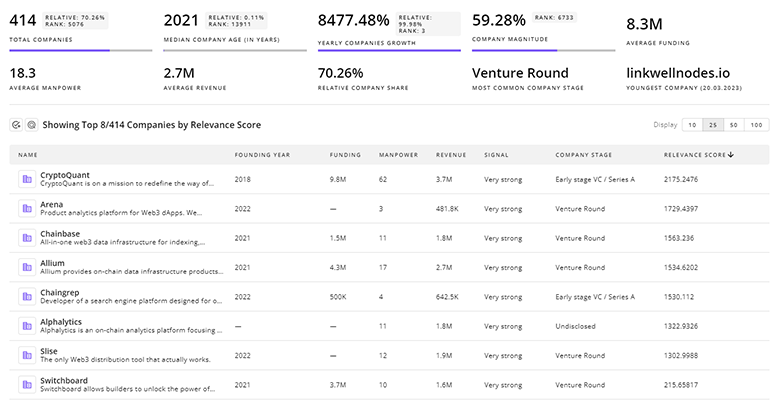
3.2K Treasury Management Companies
Discover Treasury Management Companies, their Funding, Manpower, Revenues, Stages, and much more
Treasury Management Investors
TrendFeedr’s Investors tool provides an extensive overview of 3.1K Treasury Management investors and their activities. By analyzing funding rounds and market trends, this tool equips you with the knowledge to make strategic investment decisions in the Treasury Management sector.
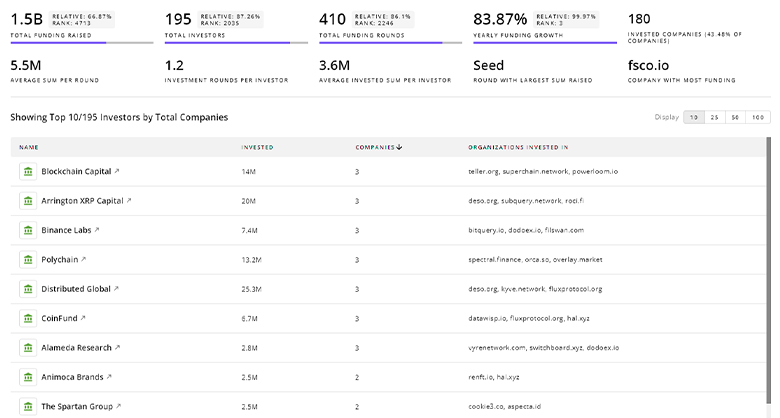
3.1K Treasury Management Investors
Discover Treasury Management Investors, Funding Rounds, Invested Amounts, and Funding Growth
Treasury Management News
Explore the evolution and current state of Treasury Management with TrendFeedr’s News feature. Access 4.0K Treasury Management articles that provide comprehensive insights into market trends and technological advancements.
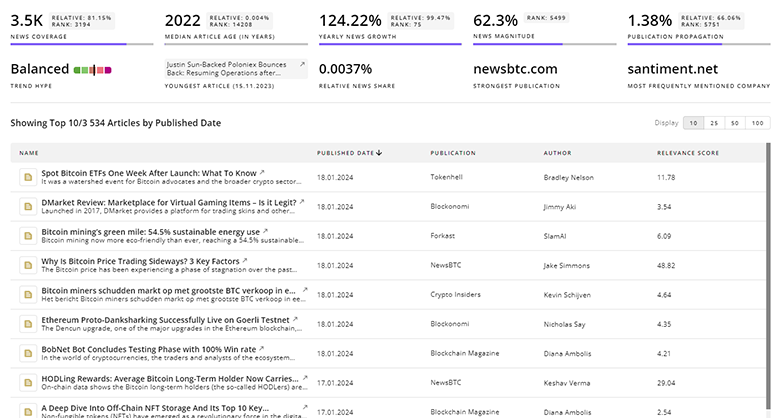
4.0K Treasury Management News Articles
Discover Latest Treasury Management Articles, News Magnitude, Publication Propagation, Yearly Growth, and Strongest Publications
Executive Summary
Treasury management is evolving from periodic reporting toward continuous liquidity orchestration driven by API connectivity, cloud architectures, and operationalized AI. The commercial choices facing vendors and adopters break down into two coherent paths: build scale to be the enterprise control plane or specialize as the indispensable intelligence or connectivity component that integrates into that plane. For treasury leaders the near-term agenda is practical and measurable: secure intraday visibility, deploy predictive forecasting to reduce DSO and idle balances, and rearchitect payments into central factories that minimize manual exceptions and regulatory friction. Capital allocation should favor platforms and partners that demonstrate rapid time-to-value on reconciliations, forecasting accuracy, and multi-jurisdictional compliance, while maintaining tight operational security and auditable controls.
We're looking to collaborate with knowledgeable insiders to enhance our analysis of trends and tech. Join us!