Water Electrolysis Report
: Analysis on the Market, Trends, and TechnologiesThe water electrolysis market is moving into industrial scale with a projected market size of $8.59B in 2025 and a forecasted $12.44B by 2029 at a 9.7% CAGR, driven by falling electrolyser unit costs, policy incentives, and rapid manufacturing scale-up thebusinessresearchcompany – Water Electrolysis Market, 2025. The most important commercial inflection is not a single materials breakthrough but the combination of lower stack CAPEX, alternative feedstock handling (brine/seawater/wastewater), and modular manufacturing that compresses time-to-deployment for both distributed and gigawatt-class projects Technological Advancements Enabling Saltwater Electrolysis for Hydrogen Production. These forces reposition electrolytic hydrogen from pilot-stage climate projects into near-term industrial procurement decisions for ammonia, refining, and mobility applications
61 days ago, we last updated this report. Notice something that’s not right? Let’s fix it together.
Topic Dominance Index of Water Electrolysis
To understand the relative impact of Water Electrolysis relative to other known Trends and Technologies, our Dominance Index examines three correlated timelines: the volume of articles published, the number of companies founded, and the intensity of global search interest.
Key Activities and Applications
- Green hydrogen for industrial feedstocks and fuels — Large-scale electrolysis is being adopted to supply hydrogen for ammonia and methanol production and to replace gray hydrogen in refineries, creating immediate demand for MW–GW electrolyser capacity
- Power-to-gas and grid balancing — Electrolysers increasingly serve as flexible loads to absorb surplus renewable electricity and convert it into storable hydrogen for reconversion or seasonal dispatch, improving renewable asset economics
- On-site and distributed hydrogen generation — Containerized and modular systems allow industrial sites and hydrogen refuelling stations to produce hydrogen on-demand, reducing logistics and enabling localized decarbonization
- Seawater and brine feedstock strategies — Technology development now prioritizes electrodes, membranes, and system architectures that tolerate saline or impure inputs, enabling coastal and offshore hydrogen production without full desalination
- Electrochemical wastewater valorization — Electrolysis systems that treat ammonia-rich or industrial effluent can simultaneously produce hydrogen and recover chemicals, transforming wastewater from a cost center into a revenue stream.
- Power-to-X and synthetic fuels integration — Electrolysers coupled with CO2 conversion or SOEC co-electrolysis create syngas or e-fuels, offering higher-margin pathways for hydrogen producers targeting chemical markets H2Electro.
Emergent Trends and Core Insights
- Alkaline continues to command bulk share while AEM/PEM climb in dynamic applications — Alkaline remains dominant for large-scale, steady-output plants because of lower CAPEX, while PEM and AEM gain traction where fast load-following and PGM reduction matter
- Feedstock independence is now a commercial differentiator — Companies that demonstrate reliable operation on seawater, brine, or contaminated wastewater create access to coastal/offshore and water-stressed industrial markets without the added cost of full desalination
- Manufacturing scale and stack standardization drive unit-cost reductions — High-throughput stack production and containerized plant architectures are compressing CAPEX and enabling price targets near $2/kg hydrogen in leading programs Hysata.
- Electrode and catalyst supply is a hidden bottleneck — Reducing reliance on iridium and platinum via AEM, alternative coatings, or coated nickel substrates will determine which manufacturers can scale without severe material cost exposure
- System integration and digital control are maturation vectors — AI/IoT energy management stacks and multi-technology hybrid plants (e.g. AWE + PEM segmentation for frequency response) are delivering higher utilization and lower LCOH in real projects.
- Byproduct monetization (disinfectants, acids, recovered salts) increases project resilience by diversifying revenue streams and lowering pure H2 breakeven exposure Aepnus Technology.
Technologies and Methodologies
- Alkaline Water Electrolysis (AWE) — Favoured for bulk hydrogen due to proven durability and lower stack CAPEX; innovations focus on zero-gap designs and high-pressure operation to reduce downstream compression.
- Proton Exchange Membrane (PEM) Electrolysis — Suited for refuelling and fast-response grid services; present challenges are PGM catalyst supply and cost, addressed by low-iridium CCMs and higher pressure stacks
- Anion Exchange Membrane (AEM) Electrolysis — Offers a PGM-free pathway that balances the low-cost of alkaline with PEM dynamics; commercialization is advancing via modular AEM stacks Enapter.
- Solid Oxide Electrolysis Cells (SOEC/SOEL) — High-efficiency, high-temperature electrolysis ideal for industrial heat integration and Power-to-X; focus areas are ceramic durability and co-electrolysis of CO2 and steam
- Membrane-free and membrane-less architectures — Eliminating vulnerable membranes reduces maintenance and enables saline feedstocks; several startups and patents target membrane-free stacks for cost parity with desalination-coupled systems
- Advanced electrodes/catalyst coating (SPARKFUZE et al.) — Scalable catalytic coating processes and novel electrode substrates increase current density and lifetime while lowering precious-metal loading
- System controls and digital optimization — Energy management toolkits and predictive maintenance extend stack life and optimize operation with variable renewables, improving effective capacity factor and reducing LCOH.
Water Electrolysis Funding
A total of 101 Water Electrolysis companies have received funding.
Overall, Water Electrolysis companies have raised $6.6B.
Companies within the Water Electrolysis domain have secured capital from 438 funding rounds.
The chart shows the funding trendline of Water Electrolysis companies over the last 5 years
Water Electrolysis Companies
Spiral Hydrogen
Spiral Hydrogen pursues a mechanical innovation: a rotating, bubble-free electrolyser stack that uses centrifugal force to avoid gas coverage of electrodes and raise usable current density, claiming very high single-cell efficiencies and long service life. Their design targets lower stack cost and longer durability by integrating pumping and cooling into the rotating architecture, enabling smaller footprints for on-site hydrogen generation. The company has validated prototypes and filed patents, and plans pilot deployments to scale from single cells to multi-kilowatt stacks.Jolt Activated Electrodes
Jolt Activated Electrodes supplies catalytic electrode coatings via a high-throughput SPARKFUZE process designed to reduce cost and increase durability of electrodes across AWE, AEM, and PEM stacks. Their value proposition is enabling scale by turning electrode manufacture from a lab process into factory-grade output, already operating a multi-GW factory and supplying major electrolyser builders. Clients seeking reduced precious-metal exposure and longer stack lifetimes treat these coatings as a direct lever to cut OPEX and maintenance frequency.Cetos Water
Cetos Water develops membrane-less, non-evaporative desalination and brine treatment technologies capable of treating streams up to 10× seawater salinity, enabling electrolyser projects to access high-salinity waste streams and achieve Zero Liquid Discharge outcomes. Their approach directly lowers feedstock processing costs for coastal industrial hydrogen projects by recovering potable water while supplying compatible feeds for downstream electrolysis. This positions them as a sector partner for hydrogen projects seeking to avoid large desalination CAPEX and brine disposal liabilities.Agriwater Corp.
Agriwater Corp. applies electrolysis to livestock wastewater, producing clean water, fertilizer-grade byproducts, and hydrogen in a localized, regulatory-driven value chain. Their niche targets agricultural operators facing stringent effluent rules, converting a compliance cost into a multi-product offering that improves farm economics and reduces scope-1 emissions. Early adoption in pilot farms demonstrates the commercial logic for decentralized electrochemical waste treatment tied to hydrogen and nutrient recovery.KERIONICS
KERIONICS commercializes high-temperature Solid Oxide Electrolysis (SOEC) components and aims at industrial decarbonization by integrating electrolysis with existing high-temperature processes in steel and cement plants. Their core advantage is advanced ceramic materials and cell manufacturing that promise higher conversion efficiency where process heat is available, improving the economics versus low-temperature routes for large chemical and metallurgical customers. Success depends on demonstrating long-term durability at industrial duty cycles and partnering with heat-intensive industrials for pilot deployments.
TrendFeedr’s Companies feature offers comprehensive insights into 444 Water Electrolysis companies.
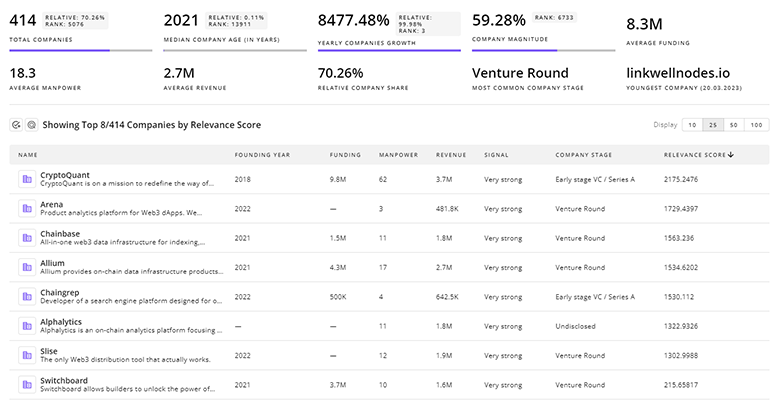
444 Water Electrolysis Companies
Discover Water Electrolysis Companies, their Funding, Manpower, Revenues, Stages, and much more
Water Electrolysis Investors
TrendFeedr’s Investors tool offers you a detailed perspective into 597 Water Electrolysis investors and their funding activities. This information enables you to analyze investment trends and make informed decisions in the Water Electrolysis market.
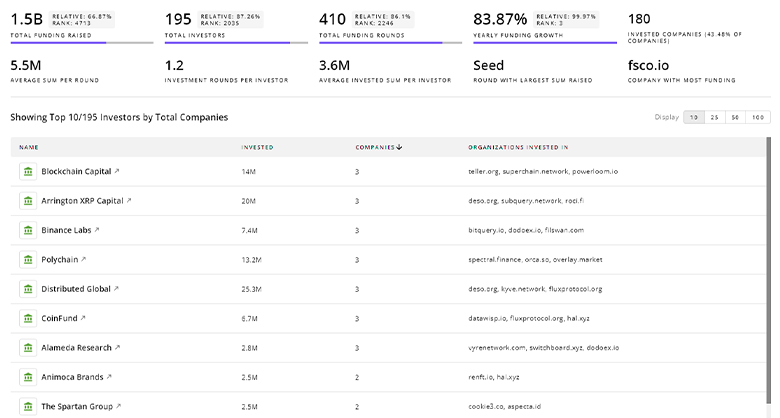
597 Water Electrolysis Investors
Discover Water Electrolysis Investors, Funding Rounds, Invested Amounts, and Funding Growth
Water Electrolysis News
TrendFeedr’s News feature delivers access to 1.7K articles focused on Water Electrolysis. Use this tool to stay informed about the latest market developments and historical context, which is crucial for strategic decision-making.
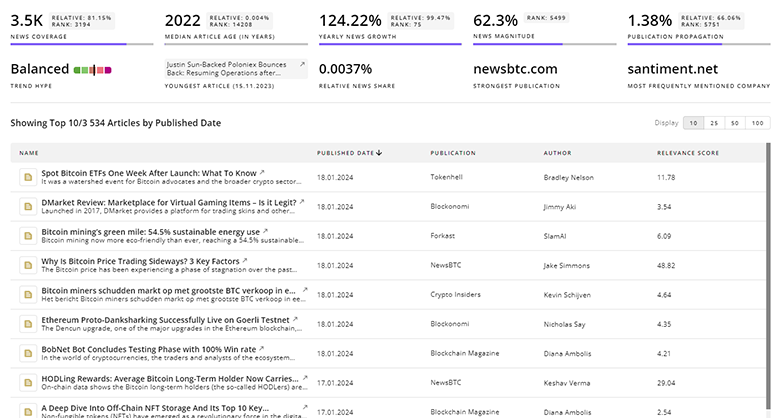
1.7K Water Electrolysis News Articles
Discover Latest Water Electrolysis Articles, News Magnitude, Publication Propagation, Yearly Growth, and Strongest Publications
Executive Summary
The water electrolysis sector is shifting from isolated laboratory claims to systems that must perform in the messy realities of industrial operations: variable renewables, impure feedstocks, and integrated utility economics. The commercial winners will pair materials progress with manufacturing scale and system-level engineering that treats water handling, byproduct streams, and digital controls as first-order levers for cost and reliability. Investors and industrial buyers should prioritize firms that demonstrate validated operation on non-ideal feeds, have clear pathways to reduce precious-metal exposure, or offer revenue diversification through co-products; these capabilities determine whether an electrolyser vendor becomes a long-term supplier to the emerging green hydrogen economy.
We're looking to collaborate with knowledgeable insiders to enhance our analysis of trends and tech. Join us!