Water Heat Pumps Report
: Analysis on the Market, Trends, and TechnologiesThe water heat pump market is accelerating toward scale: the sector’s installed-market value is $2,660,000,000 in 2025 with a projected rise to $3,600,000,000 by 2029 at a 7.8% CAGR. Market reports and industry analyses show higher growth pockets in residential heat-pump water heaters and industrial high-temperature solutions, indicating a split commercial strategy where installation speed and systems integration matter as much as thermodynamic performance Heat Pump Water Heater Market.
265 days ago, we last updated this report. Notice something that’s not right? Let’s fix it together.
Topic Dominance Index of Water Heat Pumps
To understand the relative impact of Water Heat Pumps relative to other known Trends and Technologies, our Dominance Index examines three correlated timelines: the volume of articles published, the number of companies founded, and the intensity of global search interest.

Key Activities and Applications
- Residential hot-water replacement and retrofits — heat-pump water heaters are being deployed to replace electric resistance and gas water heaters where incentives and retrofit programs exist; this segment carries large unit volumes and drives product standardization
- Space heating and combi systems for multi-family buildings — air-to-water and hydronic integrations address both space heating and DHW with a single appliance, improving lifecycle economics in denser housing stock.
- Industrial process heat and waste-heat recovery — Very High Temperature (VHT) and industrial heat pumps target process temperatures above 160°C, enabling fossil-fuel substitution in manufacturing and food processing.
- District heating and utility-scale water-source projects — water-source systems are being integrated into heat networks where water bodies or engineered loops provide stable source temperatures, improving seasonal COP and reducing peak grid stress.
- Grid-interactive water thermal storage (central HPWHs) — centralised heat-pump water-heater plants are being trialed as thermal batteries to shift demand and provide grid services in regions with high renewable penetration Central Heat Pump Water Heaters.
Emergent Trends and Core Insights
- Installer capacity and process digitization are now rate-limiting. Software, pre-installation modeling, and installer marketplaces reduce on-site time and increase throughput; the market rewards firms that lower installation friction Spruce Energy.
- Policy-led adoption remains decisive. Tax credits, rebates, and mandatory sales quotas materially change ROI and sales velocity for heat-pump water heaters, particularly in Europe and North America. Where incentives align, penetration spikes; where incentives lapse, sales slow.
- Refrigerant transition toward low-GWP chemistries is mainstream: adoption of natural refrigerants (R290, CO2/R744) increases compliance certainty and long-term operating carbon advantages for HPWHs.
- Segmentation between low-friction residential solutions and deep-tech industrial moats is widening; platform players concentrate on acquisition & installation channels while specialist OEMs capture high-value industrial contracts.
- Efficiency gains increasingly come from control systems and systems integration rather than raw compressor improvements. Remote monitoring, predictive maintenance, and tariff-aware operation add measurable operational value.
Technologies and Methodologies
- Variable-speed inverter compressors and EVI (Enhanced Vapor Injection) — improve COP at low ambient conditions and permit higher delivery temperatures for DHW and hydronic loops.
- High-temperature piston and TurboClaw compressor architectures — key enablers for industrial process heat above 150°C–200°C where conventional scroll compressors cannot deliver reliably SPH Sustainable Process Heat GmbH.
- Closed-loop water exchangers and hydrothermal platforms — stable source temperatures from lakes, rivers, or engineered walls support higher seasonal COP and predictable performance for WSHP deployments.
- Digital twin pre-surveying, ML-based control, and IoT orchestration — reduce site visits, right-size equipment and enable demand-response participation; these software layers materially shorten lead times and lower installer skill friction.
- Thermal energy storage integration and central HPWH plants — combine modular heat pumps with buffer tanks to act as grid-flexible assets and to shift load into low-carbon hours.
Water Heat Pumps Funding
A total of 361 Water Heat Pumps companies have received funding.
Overall, Water Heat Pumps companies have raised $21.1B.
Companies within the Water Heat Pumps domain have secured capital from 758 funding rounds.
The chart shows the funding trendline of Water Heat Pumps companies over the last 5 years
Water Heat Pumps Companies
- Adia — Adia couples AI-based digital twins with low-cost sensor inputs to produce rapid room-by-room heat-loss models that shrink on-site design time and enable faster installations. The team targets existing radiator systems, enabling heat-pump retrofits without comprehensive hydronic redesign, and has raised early-stage capital to scale installer integrations. Adia's approach addresses the primary bottleneck in many markets: installer throughput and commissioning complexity.
- Cala Systems — Cala designs intelligent HPWH controllers that synchronize hot-water production with solar and grid-carbon signals to maximise low-carbon energy use. Their product strategy converts existing tanks into flexible distributed energy assets, improving household economics without replacing primary infrastructure. This makes Cala attractive to utilities and DER programs seeking low-disruption electrification options.
- HotRiver — HotRiver deploys floating hydrothermal exchange platforms that harvest surface-water heat for urban district heating and building supply. Their installations prioritise minimal civil works and visual placemaking while delivering continuous heat to networks, suited to cities with navigable water bodies. HotRiver's model reduces ground-space constraints for urban projects and packages the water source as an installable product.
- Upheat Solutions — Upheat focuses on oil-free, high-temperature heat pumps that upgrade low-grade waste heat into process-usable temperatures, offering direct payback through fuel-switch economics in industrial sites. Their compact units target brownfield retrofits where replacing boilers with electrified thermal solutions yields measurable ROI.
- HHS GmbH — HHS sells a patented connection system that lets installers add a heat pump into existing gas/oil systems with minimal hydraulic and electrical work, lowering both installation time and upfront cost. The company pitches fast, low-disruption hybrid retrofits that can deliver immediate CO2 savings for legacy buildings. Their offering targets markets where homeowner disruption and permit hurdles block heat-pump adoption.
TrendFeedr’s Companies feature offers comprehensive insights into 6.5K Water Heat Pumps companies.

6.5K Water Heat Pumps Companies
Discover Water Heat Pumps Companies, their Funding, Manpower, Revenues, Stages, and much more
Water Heat Pumps Investors
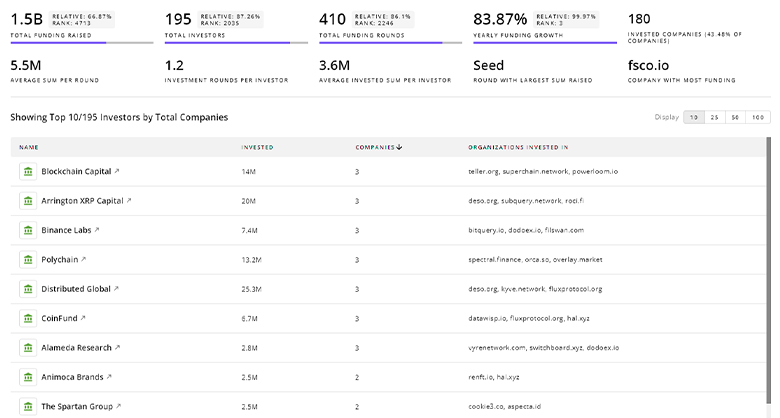
TrendFeedr’s Investors tool offers you a detailed perspective into 691 Water Heat Pumps investors and their funding activities. This information enables you to analyze investment trends and make informed decisions in the Water Heat Pumps market.
691 Water Heat Pumps Investors
Discover Water Heat Pumps Investors, Funding Rounds, Invested Amounts, and Funding Growth
Water Heat Pumps News
TrendFeedr’s News feature delivers access to 1.8K articles focused on Water Heat Pumps. Use this tool to stay informed about the latest market developments and historical context, which is crucial for strategic decision-making.

1.8K Water Heat Pumps News Articles
Discover Latest Water Heat Pumps Articles, News Magnitude, Publication Propagation, Yearly Growth, and Strongest Publications
Executive Summary
The water heat-pump sector's near-term contest will be won by actors who resolve two friction points simultaneously: (1) installation velocity and trade workforce enablement, and (2) defensible thermal technology for high-value industrial applications. Markets with generous incentives and clear regulatory signals will continue to outpace others, and the most valuable companies will combine scalable hardware with software that abstracts commissioning and grid integration. Strategic choices are therefore binary for most players: invest to become an installer-centric platform that controls demand and logistics, or invest in deep-tech engineering that captures high-margin industrial decarbonization contracts. The practical path to near-term impact lies in pairing improved field execution (faster, cheaper installs) with refrigerant and controls choices that secure regulatory compliance and grid-service revenue.
We're looking to collaborate with knowledgeable insiders to enhance our analysis of trends and tech. Join us!