Zero-trust Security Report
: Analysis on the Market, Trends, and TechnologiesThe zero-trust security market is rapidly expanding, with the internal trend report projecting a market size of USD 38.37 billion in 2025 and a near-18% CAGR (17.7%) through the current forecast window, signaling sustained commercial momentum and heavy enterprise demand for identity-centric defenses. Market research and recent industry analysis corroborate multiple fivefold market-size scenarios to the early 2030s, driven by cloud migration, remote work, and regulatory pressure that together force organisations to replace perimeter assumptions with continuous verification and least-privilege controls
361 days ago, we last updated this report. Notice something that’s not right? Let’s fix it together.
Topic Dominance Index of Zero-trust Security
By combining normalized data from published articles, newly founded companies, and global search trends, the Topic Dominance Index provides a comprehensive lens that enables you to view the progression and prominence of Zero-trust Security in relation to known Trends and Technologies.
Key Activities and Applications
- Identity-centric access control: continuous authentication and authorization of users, devices, and services to enforce least privilege and replace implicit network trust Zero trust closes the end-user gap in cybersecurity.
So what: identity becomes the primary enforcement plane; investments in MFA, passwordless flows, device posture and session re-validation yield the largest near-term reduction in large breach surface area. - Micro-segmentation and network containment: fine-grained segmentation to limit lateral movement and contain breaches, applied across cloud, virtualized workloads and OT networks
So what: segmentation converts catastrophic “east-west” compromises into isolated incidents, enabling pragmatic breach isolation without full network rewrites. - Zero Trust Network Access (ZTNA) / VPN replacement: identity-aware, context-driven access to specific applications rather than broad network tunnels
So what: ZTNA reduces attack surface exposed by legacy VPNs and simplifies remote access compliance. - Endpoint and runtime posture verification: continuous device health checks, runtime integrity attestation, and workload posture for containers and VMs.
So what: runtime attestation prevents compromised endpoints from becoming persistent footholds and is essential for cloud-native workloads. - Data-centric controls and entitlement governance: dynamic, context-aware data access (ZTDA), CIEM/entitlement management and DLP integrated into trust decisions
So what: controlling who/what can see or move sensitive data materially reduces regulatory and breach exposure.
Emergent Trends and Core Insights
- Market scale and investor focus sharpen around platforms: multiple market forecasts indicate high-teens CAGR and multi-fold growth to the 2030s, which shifts investor preference from point tools to integrated zero-trust platforms that combine IAM, ZTNA, micro-segmentation, and data controls Zero Trust Security Market Size & Share Report | 2034 Zero Trust Security Market Size – By Deployment (Cloud, On-premises)… 2024 – 2032.
So what: vendors that productize cohesive policy orchestration and simplify integration gain procurement traction with enterprise and government buyers. - AI/ML embedded in policy and detection: behavioural analytics, anomaly detection and adaptive trust scoring appear in patents and product roadmaps as core capabilities that automate re-authentication and dynamic policy shifts
So what: automation reduces policy churn and compensates for scarce skilled security operators while improving time to detect and respond. - Expansion of zero trust into OT/IoT and non-traditional environments: research emphasises extending zero-trust to industrial control systems and IoT endpoints, where legacy constraints create adoption friction but high risk Extending Zero Trust Principles to OT Cybersecurity: European Market Perspective.
So what: specialists that can integrate identity, micro-segmentation and non-intrusive attestation for legacy OT will capture high-value projects. - Zero-knowledge and privacy-preserving verification: cryptographic proofs and decentralized identity are being prototyped to allow verification without revealing attributes, reducing data exposure in identity flows zkMe — decentralized KYC p0x labs / ZK rollups.
So what: ZKP-based identity reduces compliance risk for sensitive identity exchanges and limits credential exposure across federated services. - Securing non-human identities (NHIs) and agentic automation: products focused on API keys, service accounts and AI agents are rising as these identities outnumber humans and carry persistent privileges Astrix Security Clutch Security.
So what: enterprises must expand governance to NHIs or accept growing systemic exposure.
Technologies and Methodologies
- Zero Trust Network Access (ZTNA) and Software-Defined Perimeter: privacy-aware, application-level access that replaces broad network tunnels Is the Middle East Ready for Zero Trust?.
Business impact: reduces lateral blast radius and simplifies least-privilege enforcement. - Identity and Access Management (IAM) with passwordless and phishing-resistant MFA: device trust, continuous authentication and identity orchestration Beyond Identity Solutions implemented as part of ZT strategy (Statista).
Business impact: sharp reductions in credential-based breaches and easier regulatory proof points. - Micro-segmentation and identity-based segmentation: application/workload mapping and fine policy at the process or container level.
Business impact: containment of breaches and pragmatic risk reduction without wholesale network rewrites. - CIEM and entitlement governance: continuous entitlements discovery to enforce least privilege in cloud native environments CIEM and Zero Trust — Lower Risk Appetite Improves Posture.
Business impact: reduces over-provisioning that fuels privilege escalation attacks. - AI-driven analytics and policy automation (CARTA models): continuous adaptive risk and trust assessment for session-level decisions IDC PlanScape: Zero Trust Security Services.
Business impact: scales decisioning and shortens mean time to remediation. - Hardware roots of trust and runtime attestation: TPM, TEEs and QRNG for higher assurance endpoints and post-quantum planning.
Business impact: protects high-value assets and prepares organizations for quantum transition risks.
Zero-trust Security Funding
A total of 579 Zero-trust Security companies have received funding.
Overall, Zero-trust Security companies have raised $48.0B.
Companies within the Zero-trust Security domain have secured capital from 2.3K funding rounds.
The chart shows the funding trendline of Zero-trust Security companies over the last 5 years
Zero-trust Security Companies
- SURF SECURITY — SURF commercialises a zero-trust enterprise browser that treats the browser as the primary enforcement point for SaaS and web app access, combining identity-first access, policy enforcement, and privacy controls. The company targets browser-centric attack paths and aims to reduce tooling sprawl by placing policy close to the user session, which shortens deployment time for SaaS-heavy organisations
- TrustLynx | Embedded Trust Solutions — TrustLynx embeds trust services (e-identification, e-signing, e-sealing) into business applications so identity and attestation become native capabilities. The product suits regulated sectors that require auditable, privacy-preserving identity workflows and reduces integration friction for digital transactions in banking, utilities and health services
- ZeroTrusted.ai — ZeroTrusted.ai combines AI/ML with advanced encryption and decentralized storage to protect data, APIs and models. The startup positions itself for securing generative AI pipelines and datasets with continuous intrusion detection and data-centric access controls, addressing the emerging intersection of AI risk and zero-trust policy
- AccuKnox — AccuKnox offers an AI-powered cloud-native CNAPP that blends runtime protection, anomaly detection and data provenance for containers and microservices. Built with academic partnerships and patented techniques, the platform targets multi-cloud and Kubernetes environments where dynamic service interactions require continuous, identity-based policy enforcement
TrendFeedr’s Companies feature offers in-depth knowledge on [number_of_companies] emerging companies defining the Zero-trust Security landscape.
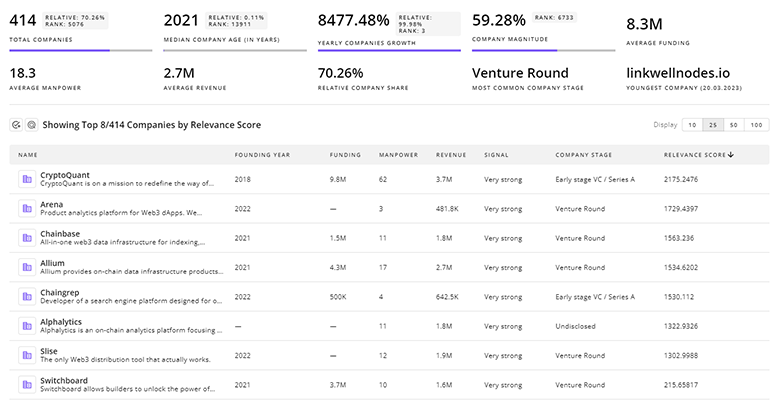
3.7K Zero-trust Security Companies
Discover Zero-trust Security Companies, their Funding, Manpower, Revenues, Stages, and much more
Zero-trust Security Investors
TrendFeedr’s Investors tool enables you to navigate the investment landscape using the data on 2.7K Zero-trust Security investors. It provides you with an in-depth analysis of funding rounds and investment trends to drive business strategies.
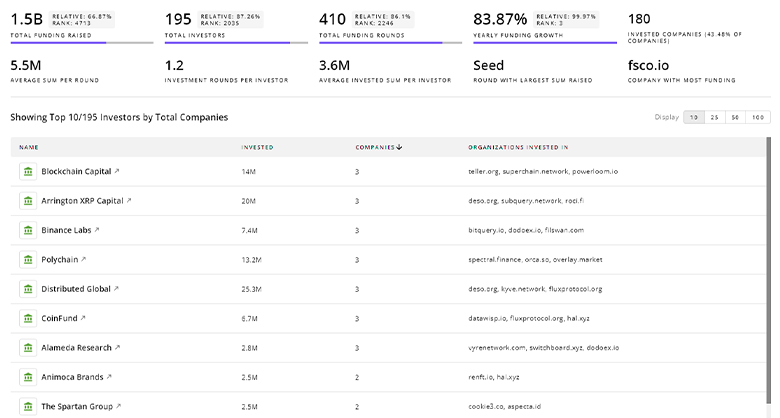
2.7K Zero-trust Security Investors
Discover Zero-trust Security Investors, Funding Rounds, Invested Amounts, and Funding Growth
Zero-trust Security News
Navigate the complexities of Zero-trust Security with TrendFeedr’s News feature that offers access to 14.8K articles. This tool allows market analysts and strategists to stay informed about both past and present trends.
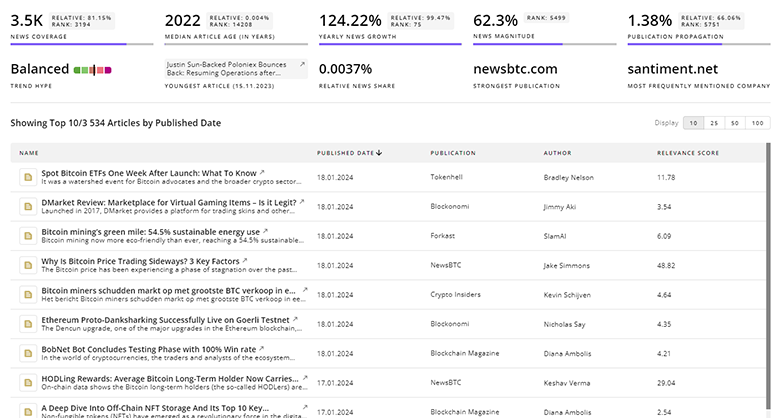
14.8K Zero-trust Security News Articles
Discover Latest Zero-trust Security Articles, News Magnitude, Publication Propagation, Yearly Growth, and Strongest Publications
Executive Summary
Zero trust has moved from a conceptual model to procurement reality, with data showing high growth expectations and widespread prioritisation by security leaders. The practical challenge for buyers is not the theory but integration: legacy systems, complex vendor stacks and OT constraints slow full-scale adoption. Market winners will deliver consistent identity orchestration, seamless CIEM and data-centric controls, and automate policy with AI so organisations gain continuous verification without unsustainable operational burden. Vendors that make zero-trust policies simple to deploy across cloud, endpoint and OT, while addressing NHIs and AI pipelines, will capture the most durable enterprise and government demand.
We're looking to collaborate with knowledgeable insiders to enhance our analysis of trends and tech. Join us!