Zero Waste Report
: Analysis on the Market, Trends, and TechnologiesThe zero-waste sector is shifting from pilot projects to measurable value chains: market analysis reports a $1,300,000,000 market base with a 7.64% CAGR in zero-waste applications, driving a forecasted expansion to $2,700,000,000 as stakeholders redirect capital into reuse, recovery and traceability systems. Policy moves (for example municipal organics mandates) and commercial forecasts for packaging further amplify demand for reusable and material-recovery solutions, creating predictable revenue streams for companies that can deliver high-purity outputs and verifiable diversion metrics.
282 days ago, we last updated this report. Notice something that’s not right? Let’s fix it together.
Topic Dominance Index of Zero Waste
By combining normalized data from published articles, newly founded companies, and global search trends, the Topic Dominance Index provides a comprehensive lens that enables you to view the progression and prominence of Zero Waste in relation to known Trends and Technologies.
Key Activities and Applications
- Source reduction in food-service and manufacturing: menu redesign, inventory forecasting and reusable serviceware reduce disposal costs and create direct operational savings; large food-service audits show immediate ROI when diversion is coupled with product redesign.
- Reusable packaging loops and return logistics: deposit/return, RFID/QR tracking and reverse logistics for glass, metal and durable plastic are scaling across events and campuses, reducing single-use procurement and lowering lifecycle costs.
- Localized organic valorization: on-site anaerobic digesters and containerized biodigesters convert food waste into biogas and fertilizer, cutting transport and methane liabilities while generating onsite energy.
- Advanced sorting and material recovery: AI/robotic optical sorting and automated pre-processing improve recyclate purity, enabling higher-value chemical and mechanical recycling streams.
- Thermochemical and gasification conversions for non-recyclables: plasma gasification, pyrolysis and thermal cracking produce syngas, hydrogen or pyrolysis oil from mixed waste, opening routes to carbon-negative molecules and fuels Standard Gas Technologies Ltd.
- Digital traceability and compliance (EPR, carbon credits): blockchain and platform reporting for EPR compliance and verified diversion create the audit trail that corporates and regulators require.
Emergent Trends and Core Insights
- Material-first value capture: value concentrates on actors that convert mixed waste into high-specification feedstocks rather than those focused solely on volume diversion; companies proving consistent output quality command premium offtake contracts.
- Decentralized processing for energy security: modular, on-site units (containerized digesters, modular gasifiers) deliver energy and heat to campuses and industrial parks, reducing logistical cost and enabling faster project paybacks Trashology.
- Regulatory acceleration creating near-term demand: municipal mandates for organics collection and packaging regulation are producing deterministic demand for collection systems and composting/valorization capacity NYC Department of Sanitation FY2025 Zero Waste Report.
- Data as enabling infrastructure: precise waste-profiling and dashboards convert qualitative sustainability claims into quantifiable line-item savings and compliance proof, which accelerates procurement decisions by corporates.
- Investor focus on scalable modularity and high-margin outputs: funding is migrating toward platforms that deliver repeatable module economics and to companies producing chemical intermediates or clean hydrogen from waste.
Technologies and Methodologies
- Plasma gasification and advanced pyrolysis: convert heterogeneous, non-recyclable material into syngas, hydrogen or PyOil while minimizing emissions; commercial pilots show feasibility for distributed hydrogen production Freepoint Eco-Systems.
- AI/ML optical sorters and robotic pickers: improve material purity and reduce contamination rates that undermine high-value recycling economics Ishitva Robotic Systems.
- Containerized anaerobic digestion and modular biodigesters: enable site-level circularity for food generators (hotels, hospitals, campuses) and supply biogas for local use or RNG upgrading The Waste Transformers.
- Closed-loop composite production (residuals to materials): thermoplastic composites and engineered feedstocks produced from unsorted household residuals offer direct substitution for fossil-derived polymers UBQ Materials.
- Digital verification stacks (blockchain + IoT): traceability stacks that link collection, processing and certification underpin monetization via EPR compliance and potential carbon crediting Cercle X.
- High-value biochemical upcycling: fermentation and enzymatic routes convert organic wastes into specialty chemicals and monomers (e.g. lactic acid) with lower capital intensity than thermochemical plants TripleW.
Zero Waste Funding
A total of 8.6K Zero Waste companies have received funding.
Overall, Zero Waste companies have raised $724.0B.
Companies within the Zero Waste domain have secured capital from 31.6K funding rounds.
The chart shows the funding trendline of Zero Waste companies over the last 5 years
Zero Waste Companies
- Zero Waste Co. — Zero Waste Co. specializes in waste-to-value solutions for agro-industry by converting organic byproducts into tailored livestock feed and other valorized outputs; the company reports 81 employees and $7.00M total capital raised with $2.60M revenue reported in 2023. Its offering targets food processors and large farms where onsite ensiling and feed substitution deliver immediate cost avoidance and circular revenue streams.
- Kore Infrastructure — Kore Infrastructure deploys a Modular Conversion Reactor that produces carbon-negative dispatchable power from landfill-diverted organics via closed-loop pyrolysis; the company emphasizes a 1-acre footprint modularity for rapid site rollout and has validated a commercial deployment with a major utility partner.
- Plagazi — Plagazi applies plasma gasification to convert non-recyclable waste into high-purity circular hydrogen and syngas, positioning its plants as onsite turnkey installations for industries that need clean hydrogen feedstock; the firm reports $72.2M in capital raised to advance proprietary Plagazi® systems.
- TrashCon — TrashCon offers automated sorting that separates unsegregated municipal waste into bio and non-bio streams with reported segregation efficiency up to 99.6%, then valorizes streams into products (manure, biogas, recycled sheets) and employment for informal workforce cohorts; TrashCon operates in high-volume Indian markets and focuses on municipal and community implementations.
- Limetrack — Limetrack provides a low-friction digital B2B platform for food waste management that automates collection, tracking and emissions reporting for hospitality and retail; the platform targets compliance and Scope accounting with reported seed funding and a focus on simplifying audits and municipal reporting.
TrendFeedr’s Companies feature offers in-depth knowledge on [number_of_companies] emerging companies defining the Zero Waste landscape.
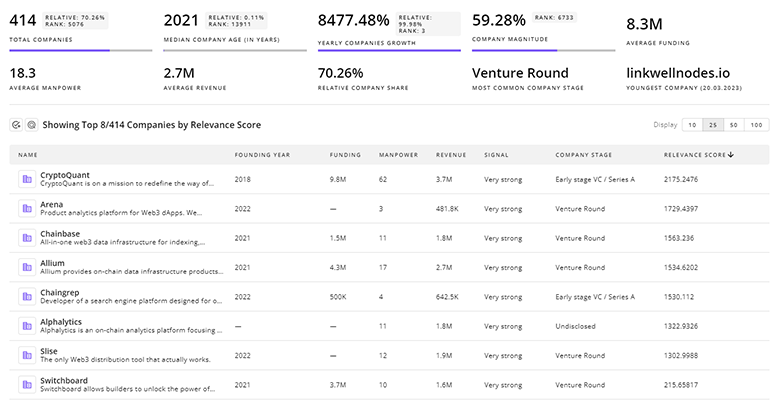
54.7K Zero Waste Companies
Discover Zero Waste Companies, their Funding, Manpower, Revenues, Stages, and much more
Zero Waste Investors
TrendFeedr’s Investors tool enables you to navigate the investment landscape using the data on 22.3K Zero Waste investors. It provides you with an in-depth analysis of funding rounds and investment trends to drive business strategies.
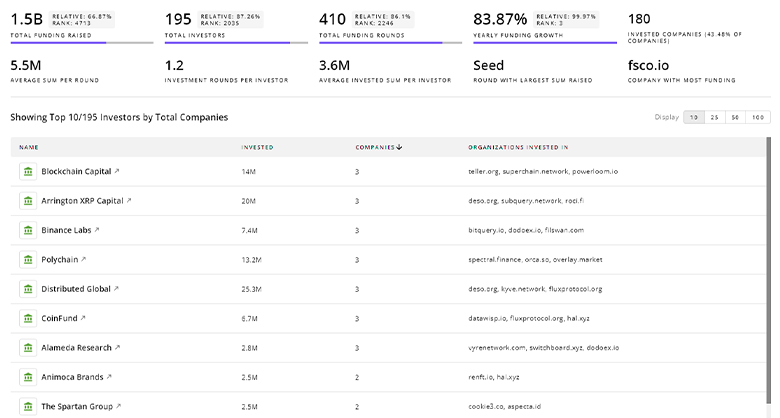
22.3K Zero Waste Investors
Discover Zero Waste Investors, Funding Rounds, Invested Amounts, and Funding Growth
Zero Waste News
Navigate the complexities of Zero Waste with TrendFeedr’s News feature that offers access to 45.4K articles. This tool allows market analysts and strategists to stay informed about both past and present trends.
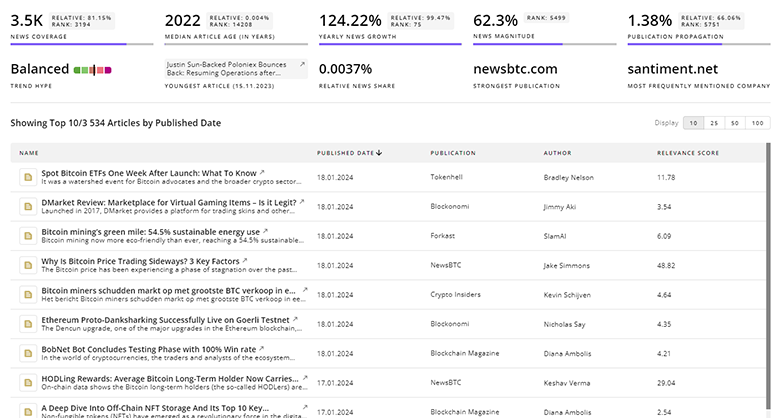
45.4K Zero Waste News Articles
Discover Latest Zero Waste Articles, News Magnitude, Publication Propagation, Yearly Growth, and Strongest Publications
Executive Summary
Zero-waste has matured into a collection of commercial plays where value resides in either producing high-quality secondary feedstocks or in delivering decentralized utility (energy, heat, hydrogen) with predictable economics. Companies that align process design to material purity and provide auditable, platform-level traceability will capture margins as regulation and corporate procurement prioritize accountable circularity. For corporate buyers and municipal planners the immediate priorities are (1) match technology choice to the waste stream's physical and chemical profile, (2) insist on measurable delivery (mass flows, purity metrics and emissions reductions) and (3) structure procurement to favor modular deployments for quick wins while retaining options for scale through strategic partnerships with large recyclers or converters. Strategic investment should therefore favor firms combining validated conversion IP, digital verification stacks and repeatable modular economics.
We're looking to collaborate with knowledgeable insiders to enhance our analysis of trends and tech. Join us!