3D Visualization Report
: Analysis on the Market, Trends, and TechnologiesThe 3D visualization market is accelerating: the internal data shows 6,889 companies operating in this topic today, reflecting a large and diverse supplier base that feeds rapid innovation and competition. Market forecasts vary by methodology but agree on sustained multi-year expansion (examples below), driven by real-time rendering, AI automation in content pipelines, and broader XR/digital-twin adoption; marketresearchfuture – 2025.
This report was last updated 357 days ago. Spot an error or missing detail? Help us fix it by getting in touch!
Topic Dominance Index of 3D Visualization
To identify the Dominance Index of 3D Visualization in the Trend and Technology ecosystem, we look at 3 different time series: the timeline of published articles, founded companies, and global search.
Key Activities and Applications
- Architectural and real-estate visualization — photorealistic renders, interactive walkthroughs, and 360 tours accelerate approvals and off-plan sales and serve as lead-generation assets for developers and brokers; MarketsandMarkets.
- Product design and engineering visualization — CAD/PLM integration and real-time previews reduce prototype cycles and shift validation earlier in development; marketresearchfuture – 2025.
- E-commerce & marketing product viewers — web-embedded PBR viewers and AR try-on increase conversion and lower returns by showing configurable, interactive products online.
- Medical planning and surgical support — patient-specific 3D reconstructions, AR overlays in the OR, and 3D printed models support planning, training, and patient communication.
- Digital twins, industrial dashboards and simulation — 3D point clouds, LiDAR capture, and streamed visualization power asset monitoring, remote inspections, and scenario simulations for manufacturing and infrastructure;.
Emergent Trends and Core Insights
- AI-first content generation and automation — AI reduces manual modeling, automates segmentation and texturing, and creates draft environments from prompts; this lowers marginal cost per asset and expands addressable customers beyond studios and agencies; marketresearchfuture – 2025.
> So what: firms that embed AI into authored pipelines shorten time-to-value and can convert one-off service engagements into repeatable SaaS flows. - Shift to real-time, interactive experiences — adoption of Unreal/Unity and cloud streaming replaces long batch renders for many use cases, enabling live configurators and multi-user review sessions.
> So what: companies that provide low-latency delivery (edge + cloud) capture B2B workflows (sales demos, design reviews) previously done with static images. - Web-native 3D delivery — WebGL/WebGPU and browser PBR viewers remove friction for e-commerce and marketing, shifting value from plugins to lightweight web components; Buildings, Vol. 15 study.
> So what: lower integration costs accelerate adoption among SMBs and retail brands. - Convergence with 3D capture and sensing — faster photogrammetry, LiDAR capture, and automated point-cloud processing feed visualization pipelines, enabling near-real digital twins at lower cost.
> So what: companies that combine capture + hosted visualization can own recurring data contracts for infrastructure and facilities. - Specialized verticalization — medical, geological, and industrial visualization require domain accuracy, regulatory traceability, and integration with enterprise systems; this raises switching costs for platform suppliers that meet compliance and integration needs;.
Technologies and Methodologies
- Physically Based Rendering (PBR) and real-time ray tracing — standard for photorealism in product and architectural visualization; GPU advances enable on-the-fly lighting for interactive scenes; Visualization 3D Rendering Software Market Report.
- Neural Radiance Fields (NeRF) and learned scene representations — permit compact, view-synthesizable captures from sparse imagery; research and prototypes address scaling photogrammetry to drone and large-site captures News Landscape: NeRF research summary.
- AI-driven segmentation and model generation — medical image segmentation and automated CAD-to-visual models accelerate downstream rendering and analysis.
- Cloud rendering and edge streaming — hybrid on-prem/cloud deployment patterns balance data control and scalability for enterprises; cloud rendering lowers capital barriers for SMBs marketresearchfuture – 2025.
- Point-cloud processing, multi-LOD streaming, and WebGL/WebGPU delivery — critical for large scene interactivity (smart cities, infrastructure) and browser-based viewers Buildings, Vol. 15 study.
- Volumetric capture and spatial video — emerging for volumetric avatars and virtual production; toolchains remain specialized but show commercial use in media and events.
3D Visualization Funding
A total of 444 3D Visualization companies have received funding.
Overall, 3D Visualization companies have raised $3.6B.
Companies within the 3D Visualization domain have secured capital from 1.5K funding rounds.
The chart shows the funding trendline of 3D Visualization companies over the last 5 years
3D Visualization Companies
- Brand3D — Provides a SaaS platform for interactive 3D product experiences and no-app 3D embedding for web storefronts. Brand3D emphasizes rapid configurators and AR integration to shorten purchase journeys and supports real-time material and color edits for live demos Brand3D.
- VisualAIs Labs GmbH — A Munich startup using AI to create 3D product models from smartphone imagery; the platform targets e-commerce teams that need fast catalog digitization and lighter capture workflows VisualAIs Labs.
- Microscape Inc. — Builds collaborative cloud tools for biomedical 3D+ imaging, enabling multi-user review, annotation, and sharing of volumetric research data; it focuses on life-science workflows where traceability and multi-user review drive adoption Microscape.
- Texel Visualization — Small studio leveraging Unreal Engine to deliver cinematic and interactive architectural visualizations; its artist-led approach positions it for high-value projects that require both storytelling and interactive demos Texel Visualization.
- Chat3D — Offers an AI-driven iterative 3D shape creation workflow that targets professionals who need fast concept modeling; the company markets significant speed gains relative to traditional CAD for early-stage design iterations Chat3D.
Identify and analyze 7.1K innovators and key players in 3D Visualization more easily with this feature.
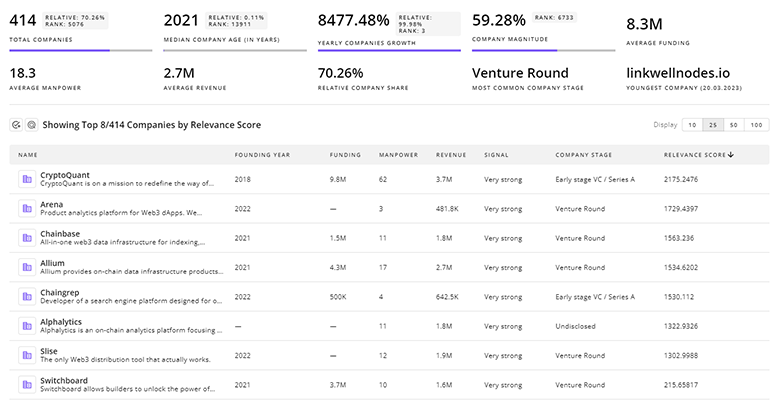
7.1K 3D Visualization Companies
Discover 3D Visualization Companies, their Funding, Manpower, Revenues, Stages, and much more
3D Visualization Investors
TrendFeedr’s investors tool offers a detailed view of investment activities that align with specific trends and technologies. This tool features comprehensive data on 1.7K 3D Visualization investors, funding rounds, and investment trends, providing an overview of market dynamics.
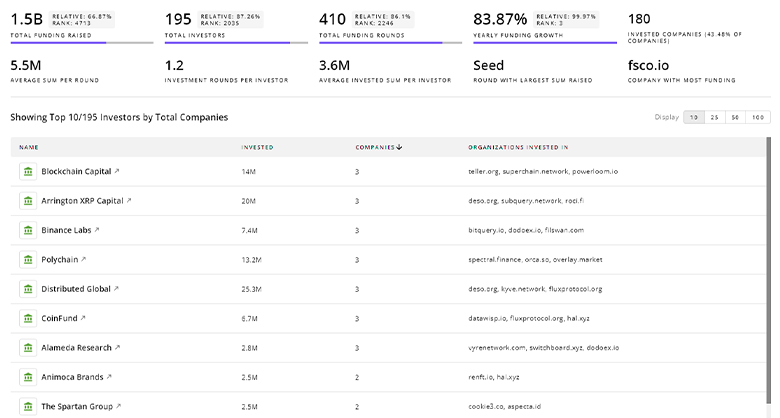
1.7K 3D Visualization Investors
Discover 3D Visualization Investors, Funding Rounds, Invested Amounts, and Funding Growth
3D Visualization News
Stay informed and ahead of the curve with TrendFeedr’s News feature, which provides access to 2.0K 3D Visualization articles. The tool is tailored for professionals seeking to understand the historical trajectory and current momentum of changing market trends.
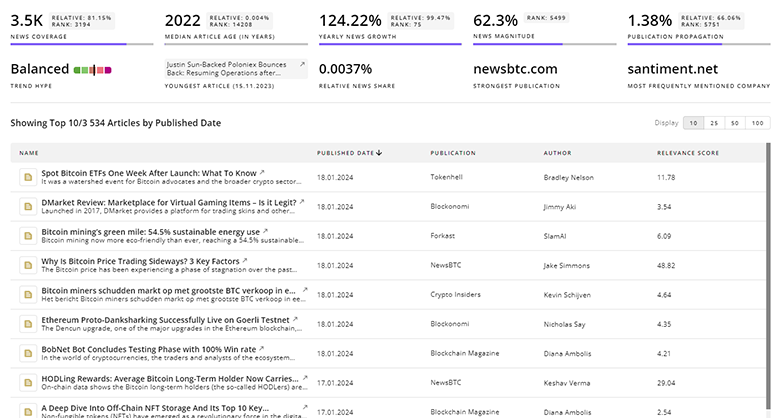
2.0K 3D Visualization News Articles
Discover Latest 3D Visualization Articles, News Magnitude, Publication Propagation, Yearly Growth, and Strongest Publications
Executive Summary
3D visualization already serves as a multiplier across design, sales, operations, and training. The competitive advantage will accrue to firms that do three things concurrently: automate asset creation with AI to lower marginal costs; deliver interactive, low-latency experiences via hybrid cloud/edge architectures; and embed domain specificity where accuracy, compliance, or integration raise switching costs (for example, healthcare and infrastructure). Market forecasts differ by scope but converge on strong multi-year growth; companies should therefore choose whether to scale horizontally into platform plays or to deepen vertical integrations where specialization commands premium pricing. Prioritize investable capabilities that produce recurring revenue: hosted data services for digital twins, subscription configurators for commerce, and regulated pipelines for medical visualization.
Interested in enhancing our coverage of trends and tech? We value insights from experts like you - reach out!