Agroforestry Report
: Analysis on the Market, Trends, and TechnologiesThe agroforestry sector is at a commercial inflection: $5.36B of cumulative funding has flowed into active players, even as technology adoption accelerates and new revenue models tied to ecosystem services scale rapidly. Market estimates diverge by provider but consistently show multi-year expansion — for example, a prominent forecast pegs the market at USD 114.52 billion in 2025 rising to USD 212.32 billion by 2034 (CAGR 7.10%) precedenceresearch – Agroforestry Market, 2025 — while applied research and patent activity indicate moves from manual restoration toward mechanized, data-driven systems that make carbon and biodiversity legible and tradeable to corporate buyers.
This report was last updated 21 days ago. Spot an error or missing detail? Help us fix it by getting in touch!
Topic Dominance Index of Agroforestry
To identify the Dominance Index of Agroforestry in the Trend and Technology ecosystem, we look at 3 different time series: the timeline of published articles, founded companies, and global search.
Key Activities and Applications
- Carbon-credit generation and project development — Designing and registering agroforestry parcels to produce verifiable carbon removals and sell credits to corporate buyers; this activity sits at the intersection of land management, MRV platforms, and corporate procurement channels researchandmarkets - Agroforestry Market, 2025.
- Seedling and nursery scaling (improved planting stock) — Producing tissue-culture, grafted, or otherwise improved seedlings to shorten establishment risk and raise early yields; this supply chain underpins fast-adoption silvopasture and high-value fruit/tree systems gminsights - Agroforestry Species and Varieties Market, 2025.
- Data-driven planning and financial modelling — Farm-scale simulation tools that translate ecological metrics into cashflow and certification outcomes so financiers and farmers can compare scenarios over decades.
- Integrated land systems (silvopasture, alley cropping, agrivoltaics) — Combining trees with crops, livestock, or solar generation to create diversified revenue streams and reduce stand-alone risk for smallholders and commercial farms Powerfultree.
- Large-scale restoration via mechanised or aerial methods — Using seedpods, drone deployment, and low-labour mechanization to scale reforestation and mixed-species plantings on degraded lands.
- Waste valorization and local bioeconomy — Converting crop and forest residues into higher-value, carbon-negative bioproducts near source to create rural income and reduce open burning.
- Capacity building and local nursery networks — Community nurseries and training programs that lower adoption friction for smallholders and create locally owned project pipelines Kijani Forestry.
Emergent Trends and Core Insights
- Financialization of ecosystem outputs. Markets and project developers are turning carbon, measured biodiversity gains, and water outcomes into revenue lines; the shift converts long-term ecological work into near-term balance-sheet narratives for buyers and banks.
- Platform consolidation for the intelligence layer. The space rewards integrated stacks that combine planning, MRV, market access, and finance rather than single-feature analytics; platform winners will capture transaction margins across implementation and crediting cycles.
- Technology-led risk reduction. Remote sensing, AI and drone methods reduce monitoring costs and make project performance auditable at scale, which directly increases institutional appetite for agroforestry assets.
- Methodological differentiation as a moat. Complex management systems such as syntropic agroforestry create a practical barrier to rapid replication by generic software providers because they require hands-on knowledge, high-frequency pruning cycles, and local plant knowledge.
- Regional split between finance and implementation. North America and Europe are moving faster on high-value verification, MRV and corporate procurement; Africa, Latin America and parts of Asia concentrate on large-scale implementation, seedling supply and rural livelihoods programs.
- Species and genetics matter commercially. Investment in tissue culture and breeding for drought or pest tolerance shortens payback windows and raises the commercial profile of agroforestry products such as nuts, specialty fruit, and fast-rotation timber.
- Emerging MRV expectations from buyers. Corporate buyers demand granular, auditable data for credit purchases; this drives commercial MRV product development and raises the economic value of projects that can demonstrate high-frequency measurement and transparent registries Global Data Stats market overview.
Technologies and Methodologies
- Remote sensing + AI image analytics — Multispectral satellite, LiDAR and UAV inputs fused with ML models to estimate canopy, biomass and carbon stocks over time; this reduces audit cost and supports credit issuance Arboair.
- Drone deployment and seedpod technology — Aerial seed delivery and targeted eco-engineering accelerate revegetation across inaccessible or degraded landscapes and cut labour cost per hectare precision forestry case reports.
- Farm and landscape simulation tools (financial + ecological) — Models that translate species mixes, spacing, and management choices into 10–100 year cashflow and carbon projections are now central to bankable project design.
- Digital MRV and tokenization layers — Blockchain and cryptographic registries for traceable credits combine with digital MRV to enable secondary trading and corporate procurement workflows.
- Tissue culture and advanced nursery systems — Scaled micropropagation shortens plant establishment risk and supplies uniform, high-value planting stock for commercial agroforestry systems AgriForest Bio-Technologies Ltd..
- Decision-support and extension via mobile platforms — Mobile delivery of localized pruning regimes, species mixes, and agronomic schedules reduces farmer errors and improves survival rates for multi-species systems Regen Farmer.
- Low-input soil & water engineering — Site preparation and water retention techniques (terracing, planting-pit amendments, mycorrhizal augmentation) raise survival on marginal lands and increase marginal carbon benefit per hectare.
Agroforestry Funding
A total of 212 Agroforestry companies have received funding.
Overall, Agroforestry companies have raised $5.4B.
Companies within the Agroforestry domain have secured capital from 604 funding rounds.
The chart shows the funding trendline of Agroforestry companies over the last 5 years
Agroforestry Companies
FarmTree B.V. — FarmTree offers the FarmTree® Tool, a long-horizon farm and landscape simulation engine that projects ecological and financial indicators (soil carbon, erosion, labour days, revenues) for alternative management scenarios; the platform is purpose-built for certification planning and ex-ante impact assessment and targets project developers and NGOs working on scalable agroforestry interventions. FarmTree's approach reduces early decision risk by linking species mixes and management to quantifiable outcomes, enabling better bankability of projects. Its small team and seed-stage funding profile make it a high-leverage intelligence provider for programmatic implementations.
PRETATERRA — PRETATERRA functions as an agroforestry intelligence hub that combines ancestral techniques with data and economic modelling to design replicable regenerative systems; it also operates an academy that trains practitioners and scales methodological adoption in Latin America. PRETATERRA's value lies in converting complex management into bankable project designs and a trained labour pipeline, which helps close the implementation capacity gap for institutional projects. Its mix of design services and education creates a demand-side funnel for follow-on MRV and financing products.
Takachar — Takachar builds portable biomass upgrading systems that convert forestry and agricultural residues into marketable, carbon-negative bioproducts at the source, targeting emission avoidance and rural income generation. The company's mobile densification and conversion tech reduces transport costs and open-burning pollution, creating product lines (fertilizer blends, biofuels) that can feed local circular economies. Takachar's model creates a revenue anchor for communities while improving the economics of land restoration projects that rely on residue value capture.
eGro — eGro applies syntropic agroforestry concepts to build food-forest supply chains in West Africa, emphasizing design replication, seedling support and farmer partnership models that replace monoculture practices; their pilot footprint focuses on peanuts and other raw materials destined for European processing plants. eGro's model links supply-chain buyers to resilient on-farm systems and highlights how methodical, locally adapted designs improve yield stability and buyer assurance. As a pre-revenue climate startup, eGro signals a rising class of system-first implementers that can feed premium processing and procurement pipelines.
Identify and analyze 1.9K innovators and key players in Agroforestry more easily with this feature.
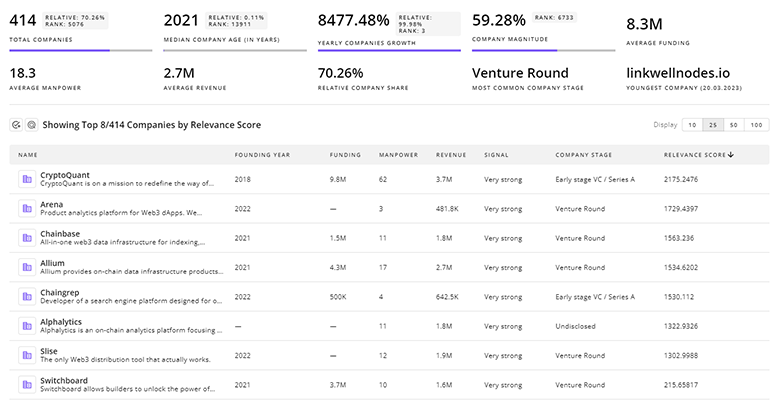
1.9K Agroforestry Companies
Discover Agroforestry Companies, their Funding, Manpower, Revenues, Stages, and much more
Agroforestry Investors
TrendFeedr’s investors tool offers a detailed view of investment activities that align with specific trends and technologies. This tool features comprehensive data on 696 Agroforestry investors, funding rounds, and investment trends, providing an overview of market dynamics.
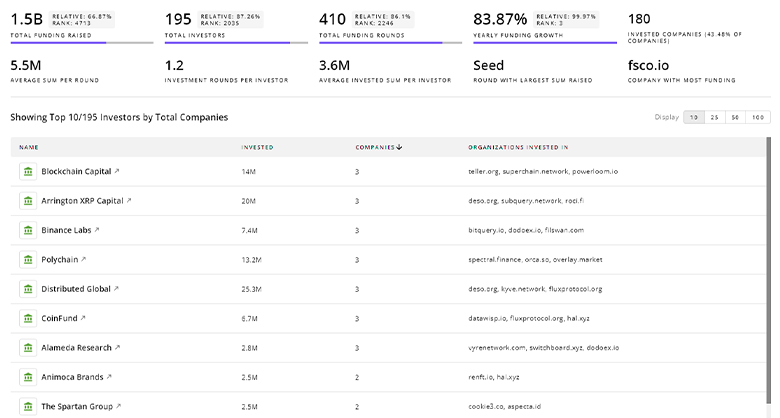
696 Agroforestry Investors
Discover Agroforestry Investors, Funding Rounds, Invested Amounts, and Funding Growth
Agroforestry News
Stay informed and ahead of the curve with TrendFeedr’s News feature, which provides access to 1.7K Agroforestry articles. The tool is tailored for professionals seeking to understand the historical trajectory and current momentum of changing market trends.
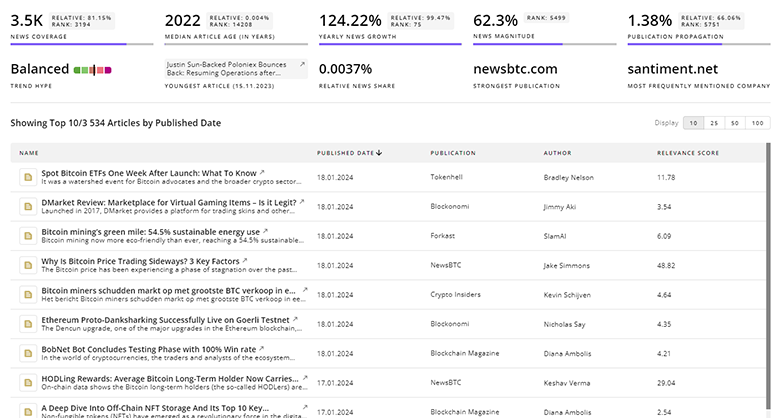
1.7K Agroforestry News Articles
Discover Latest Agroforestry Articles, News Magnitude, Publication Propagation, Yearly Growth, and Strongest Publications
Executive Summary
Agroforestry has moved from experimental practice to investible infrastructure where ecology, data and finance intersect. Market forecasts and company activity show predictable commercial pathways: projects that can quantify ecological outcomes, deliver improved planting stock, and provide auditable MRV will access capital and premium buyers; implementers that master hands-on systems (syntropy, silvopasture, mixed nurseries) will retain on-the-ground value. Strategic investors should prioritize exposure to: (1) intelligence platforms that integrate planning, MRV and monetization; (2) seedling and nursery operations that reduce establishment risk; and (3) operational technologies (drones, low-cost MRV) that compress unit costs and make projects bankable at scale. Public and philanthropic actors should target incentives that shorten the payback window for smallholders—subsidies for high-quality seedlings, payment for verified ecosystem services, and extension funding—because commercial demand for verified agroforestry outcomes will rise faster than farmer capacity unless these gaps narrow.
Interested in enhancing our coverage of trends and tech? We value insights from experts like you - reach out!