
AI In Automotive Report
: Analysis on the Market, Trends, and TechnologiesThe AI in automotive sector is at a strategic inflection where software-defined vehicle capabilities and validation infrastructure capture disproportionate investment, with the vehicle analytics submarket alone estimated at $5,700,000,000 in 2024. Market forecasts vary but consistently predict very high growth: scenario-based forecasts cluster around double-digit to mid-double-digit CAGRs to 2029–2034, reflecting diverging assumptions about the pace of L4/L5 adoption and the speed at which OEMs monetize connected-vehicle data market_us – Global AI in Automotive Market Report, 2025. In practice, competitive advantage concentrates where firms can provide verifiable simulation fidelity, edge-capable inference, and explainable safety evidence at scale.
This report was last updated 289 days ago. Spot an error or missing detail? Help us fix it by getting in touch!
Topic Dominance Index of AI In Automotive
To identify the Dominance Index of AI In Automotive in the Trend and Technology ecosystem, we look at 3 different time series: the timeline of published articles, founded companies, and global search.
Key Activities and Applications
- High-fidelity simulation & validation: Virtual testbeds that reproduce millions of edge scenarios for ADAS and autonomy reduce physical test cost and accelerate certification; specialist simulators are now positioned as strategic gatekeepers for L4/L5 rollouts.
- Perception, sensor fusion and driver monitoring: Camera, radar, LiDAR fusion and DMS/OMS systems remain primary revenue-generating applications, improving roadside safety and enabling adaptive human-machine interactions gminsights – AI in Automotive Report, 2025.
- Edge inference and model orchestration: On-vehicle model optimization and NPU orchestration reduce latency and preserve privacy for safety-critical functions, positioning hardware-aware optimization as an immediate commercial need.
- Aftermarket diagnostics and predictive maintenance: AI that converts telemetry and unstructured MRO records into prescriptive service actions shortens downtime and converts maintenance into recurring revenue CEREBRUMX.
- Retail automation and AI sales agents: Conversational agents and F&I automation increase dealer throughput and conversion, making dealership integration a near-term path to ROI for many AI vendors AiAuto | Virtual F&I.
- Claims automation and visual inspection: Computer-vision inspection workflows speed up claims and remarketing cycles while reducing fraud exposure Click-Ins.
Emergent Trends and Core Insights
- Simulation as the new moat: Firms that deliver behavioural realism for other-agent modelling and rare-event synthesis will command disproportionate value in the autonomy value chain.
- From cloud to the edge: There is a decisive migration of inference and partial training to the vehicle edge to meet latency, cost, and privacy constraints; solutions that are hardware-aware win faster OEM adoption AI4DI.
- Explainability and certifiability: Regulatory pressure and procurement demands force adoption of XAI methods and audit chains for perception and decision modules; products that provide traceable decision evidence shorten compliance timelines.
- Agentic cockpit assistants: Multi-agent conversational frameworks are moving beyond simple voice control toward proactive task orchestration inside vehicles, but persistent usability gaps (wake-word reliability, intent accuracy) remain technical bottlenecks researchandmarkets – Automotive AI Agent Product Development Report, 2024.
- Data monetization and fleet flywheels: Fleets and OEMs that consolidate, label, and monetize telemetry and event data gain both recurring revenue and a performance feedback loop that accelerates model improvement.
Technologies and Methodologies
- Deep perception stacks (CNNs & transformers) + sensor fusion: Foundational for ADAS and environment sensing; incremental gains hinge on multi-modal alignment and domain adaptation.
- Neurosymbolic & self-learning approaches: Hybrid models combine symbolic rules and learned priors to create more consistent, auditable behavior under distribution shift.
- Edge optimization and NPU orchestration: Model quantization, compiler-level scheduling, and runtime adaptation directly improve on-vehicle throughput and power consumption.
- Digital twins and scenario generation: Large synthetic scenario libraries and digital twins shorten the verification loop and permit targeted stress testing for rare events.
- Federated and privacy-preserving training: Fleet-scale learning with privacy constraints allows continuous improvement without centralizing raw telemetry, fitting regulatory risk profiles in multiple jurisdictions.
- Generative AI for engineering: LLMs and generative design tools accelerate requirements, safety cases, and E/E systems documentation, compressing development cycles for compliance processes.
AI In Automotive Funding
A total of 229 AI In Automotive companies have received funding.
Overall, AI In Automotive companies have raised $35.0B.
Companies within the AI In Automotive domain have secured capital from 953 funding rounds.
The chart shows the funding trendline of AI In Automotive companies over the last 5 years
AI In Automotive Companies
- Automotive Artificial Intelligence (AAI) GmbH — AAI provides a high-fidelity simulation environment that lets OEMs and AV teams accelerate validation by running millions of virtual miles in compressed time. Their ReplicaR platform emphasizes reproducibility of incidents and HD map–based scenario fidelity, which reduces field testing load and shortens iteration cycles; this directly addresses the verification bottleneck for higher automation levels. AAI targets customers that require traceable, scalable scenario libraries for regulatory evidence gathering.
- Teratics — Teratics applies generative AI assistants to automotive systems engineering tasks, automating requirements authoring, SOTIF analyses, and verification workflows. Their approach reduces expert effort on routine compliance documentation and accelerates E/E development without replacing domain experts. This positions them as a productivity multiplier for Tier-1 and OEM engineering teams.
- Inverted AI — Inverted AI builds directable, human-like NPC agents for traffic simulation, enabling richer behavioral variety in virtual environments and reducing the need for costly real-world data collection. Their synthetic agent models plug directly into simulation toolchains used in autonomy validation, improving corner-case coverage with far less field mileage. The company targets autonomy teams seeking higher scenario realism.
- OptAI Inc. — OptAI specializes in hardware-aware model optimization and edge deployment for resource-constrained automotive ECUs. They have demonstrated production PoCs with major OEM divisions for DMS optimization and NPU orchestration, making them a pragmatic partner when inference efficiency determines feasibility. Their value sits at the intersection of software portability and real-world hardware constraints.
- Tchek.ai — Tchek provides ALTO AI vehicle inspection and remarketing solutions with modular APIs for fleet, auction, and insurer workflows. Their image-first inspection stack produces precise damage localization and repair estimates that compress claims cycles and support remarketing decisions, capturing measurable ROI in high-volume inspection pipelines. This makes them a defensible niche player in post-sales automation.
Identify and analyze 883 innovators and key players in AI In Automotive more easily with this feature.
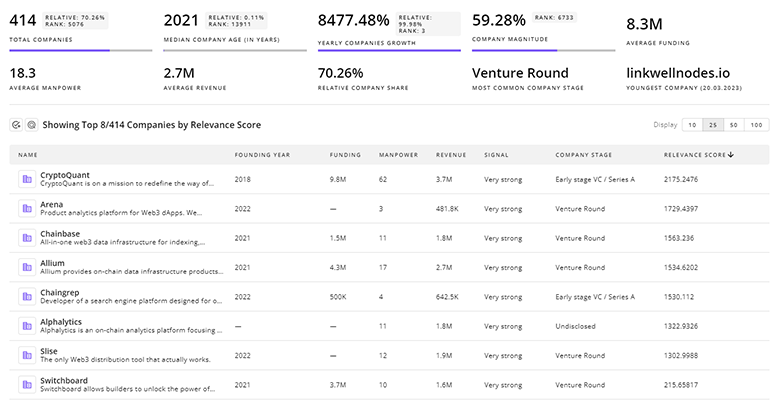
883 AI In Automotive Companies
Discover AI In Automotive Companies, their Funding, Manpower, Revenues, Stages, and much more
AI In Automotive Investors
TrendFeedr’s investors tool offers a detailed view of investment activities that align with specific trends and technologies. This tool features comprehensive data on 1.2K AI In Automotive investors, funding rounds, and investment trends, providing an overview of market dynamics.
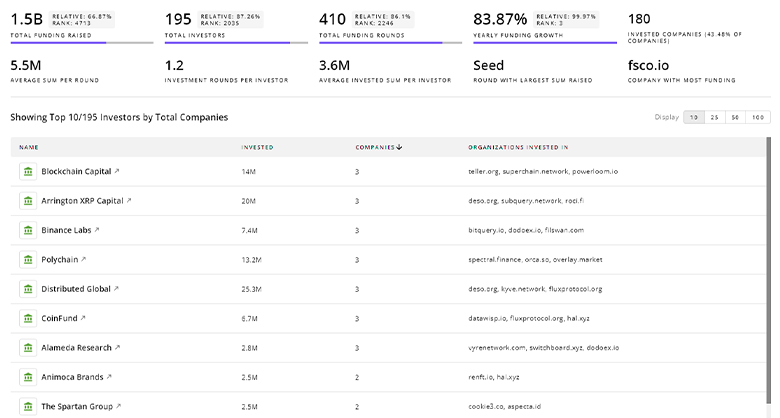
1.2K AI In Automotive Investors
Discover AI In Automotive Investors, Funding Rounds, Invested Amounts, and Funding Growth
AI In Automotive News
Stay informed and ahead of the curve with TrendFeedr’s News feature, which provides access to 2.0K AI In Automotive articles. The tool is tailored for professionals seeking to understand the historical trajectory and current momentum of changing market trends.
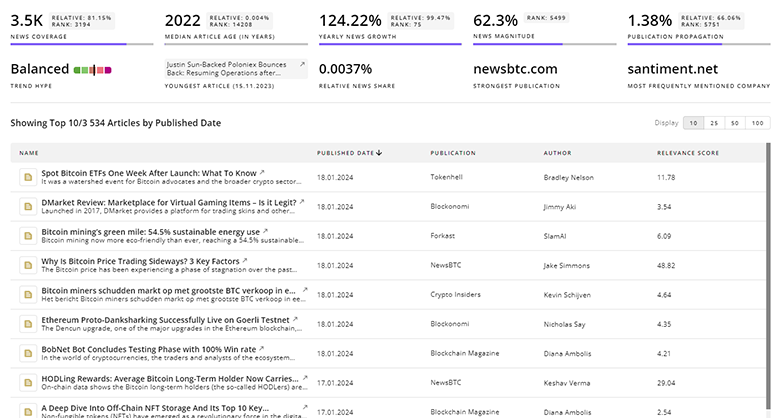
2.0K AI In Automotive News Articles
Discover Latest AI In Automotive Articles, News Magnitude, Publication Propagation, Yearly Growth, and Strongest Publications
Executive Summary
The most actionable strategic choice for technology leaders is explicit: secure a foundational role in the autonomy validation or edge-compute layers, or target rapid, high-frequency revenue in retail and aftermarket automation with deep integrations into incumbent workflows. Players that attempt both without clear, defensible moats risk being squeezed from below by focused insurgents and from above by platform incumbents. Operational priorities for serious contenders should include (1) investing in scenario fidelity and explainable evidence chains for safety certification, (2) engineering for hardware-aware edge deployment to satisfy real-world constraints, and (3) capturing and normalizing fleet data to create a learning loop that turns telemetry into repeatable commercial outcomes.
Interested in enhancing our coverage of trends and tech? We value insights from experts like you - reach out!