AI Workers Report
: Analysis on the Market, Trends, and TechnologiesThe AI workers market has moved from pilot projects to a full industry signal: 448 companies actively work on AI worker solutions and the sector has attracted $1.61B in total funding, showing concentrated investor interest and rapid company formation that forces strategic choices about platform vs point-product plays.
This report was last updated 367 days ago. Spot an error or missing detail? Help us fix it by getting in touch!
Topic Dominance Index of AI Workers
To identify the Dominance Index of AI Workers in the Trend and Technology ecosystem, we look at 3 different time series: the timeline of published articles, founded companies, and global search.
Key Activities and Applications
- Automated recruitment and staffing — AI workers screen, match, and schedule candidates to reduce time-to-hire and human screening workload; this application appears as a primary use case across the internal data and recruitment reports Evolutions in Recruitment: Leveraging Artificial Intelligence.
- Enterprise workflow automation (finance, HR, IT, operations) — Digital workers execute end-to-end processes (invoice handling, ticket triage, approvals) and integrate with legacy ERPs and SaaS stacks, delivering measurable capacity gains when deployed as integrated platforms.
- Customer service and conversational support — AI chat workers provide 24/7 multilingual support, performing first-contact resolution and escalating to humans for exceptions; this reduces routine load on human agents and shortens response cycles.
- Generative content and code assistance — LLM-driven assistants draft reports, create marketing copy, and produce code snippets that humans review and refine, enabling faster iteration across knowledge work.
- Supply chain and operations execution — AI workers take task-level actions across logistics, tracking, and coordination, improving throughput and reducing manual handoffs in distributed supply chains.
- Data labeling, human feedback, and model refinement — Human annotators and AI-assisted labelers remain central to training and RLHF pipelines that raise agent reliability; this is a structural demand driving labor markets adjacent to AI workers.
Emergent Trends and Core Insights
- Employee-led tool adoption (BYOAI) and shadow tooling — Workers bring personal AI tools at scale, creating a governance gap where institutional controls lag behind usage patterns; this amplifies operational risk and compliance exposure while accelerating pilot-to-production velocity.
- Reskilling as the dominant workforce strategy — Firms prioritize reskilling: 77% report upskilling/reskilling programs to operate with AI, making training the single largest near-term HR priority for adoption success.
- Trust, accountability, and management boundaries — Employees accept AI as a teammate but reject algorithmic managers; distrust centers on unreliable outputs, accountability gaps, and lack of clear ownership for agent actions, which creates adoption friction and demand for explainability and auditing tools News Landscape Report synthesis.
- Agentic AI and multi-agent orchestration — The market moves from single-purpose bots to collaborative agent teams that hand off tasks, coordinate, and manage exceptions; success differentiators will be orchestration, observability, and agent testing capabilities.
- Surveillance and productivity monitoring risk — Algorithmic oversight tools that measure productivity raise legal and ethical issues; bias and measurement errors cause operational and reputational risk for adopters How AI is used to surveil workers.
- Frontline worker access gap — Frontline employees lag in training and tool access, creating the risk of a two-tier workforce unless providers design simpler UX and targeted education programs Frontline Workers Perspective on AI.
Technologies and Methodologies
- Large Language Models (LLMs) with fine-tuning and RAG — LLMs power natural language interaction; industry deployments pair fine-tuning with retrieval-augmented generation (RAG) to ground agents in enterprise data and reduce hallucination risk Microsoft Work Trend Index 2025.
- Agent orchestration platforms and multi-agent frameworks — Platforms that coordinate multiple agents, handle state, retries, and observability become critical IP for suppliers focused on complex workflows.
- RPA plus AI (intelligent automation) — Rule-based RPA augmented with ML for exception handling and document understanding remains core for back-office automation and is a clear migration path for legacy RPA buyers.
- No-code / low-code builder experiences — Platforms that let business users compose agents and workflows without engineering resources accelerate adoption and concentrate market power in platform vendors.
- Edge and distributed inference for latency-sensitive tasks — Edge deployments and distributed inference architectures support real-time assistance in field operations and industrial settings; privacy-preserving federated learning appears in regulated environments.
- Human-in-the-loop (HITL) and RLHF pipelines — Continuous human feedback and annotation systems remain necessary to drive quality and reduce unreliable outputs from generative agents We Are All AIs’ Free Data Workers.
- AI governance, explainability and monitoring — Audit trails, bias detection, and incident reporting become product requirements as organizations seek compliance with emerging regulation.
AI Workers Funding
A total of 149 AI Workers companies have received funding.
Overall, AI Workers companies have raised $1.5B.
Companies within the AI Workers domain have secured capital from 499 funding rounds.
The chart shows the funding trendline of AI Workers companies over the last 5 years
AI Workers Companies
- HappyRobot — HappyRobot builds AI workers that integrate conversational interfaces with task orchestration for customer support and field operations; recent Series A backing signals investor belief in their verticalized agent approach to service automation.
- EverWorker — EverWorker focuses on end-to-end digital workers for enterprise operations, combining RPA connectors with LLM-driven decision layers to automate finance and HR workflows while providing admin controls for governance.
- BasePilot — BasePilot provides no-code tooling for composing multi-step agents that act across SaaS applications; its value proposition targets business teams that need to automate complex cross-application processes without heavy engineering investment.
- WiseLayer — WiseLayer delivers privacy-aware digital workers for regulated industries, with features for data residency and compliance; the company markets pre-trained vertical agents for finance and healthcare operations.
Identify and analyze 485 innovators and key players in AI Workers more easily with this feature.
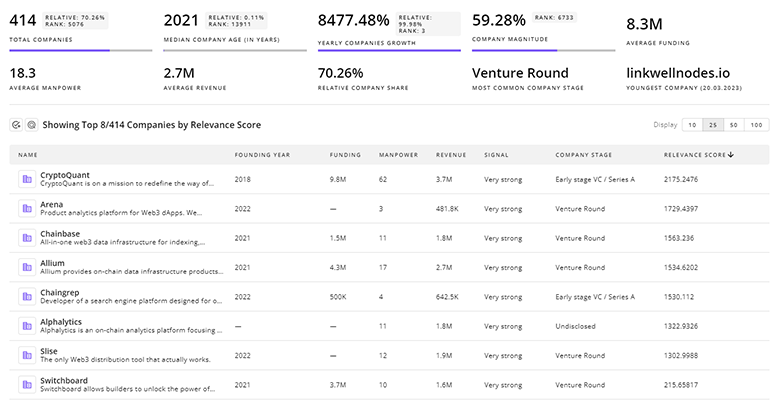
485 AI Workers Companies
Discover AI Workers Companies, their Funding, Manpower, Revenues, Stages, and much more
AI Workers Investors
TrendFeedr’s investors tool offers a detailed view of investment activities that align with specific trends and technologies. This tool features comprehensive data on 750 AI Workers investors, funding rounds, and investment trends, providing an overview of market dynamics.
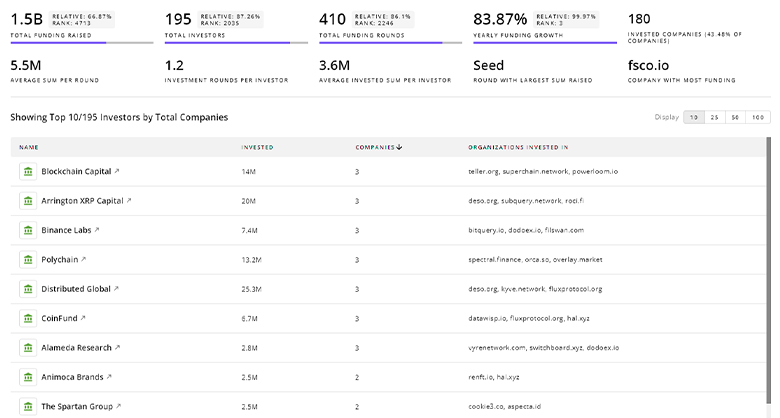
750 AI Workers Investors
Discover AI Workers Investors, Funding Rounds, Invested Amounts, and Funding Growth
AI Workers News
Stay informed and ahead of the curve with TrendFeedr’s News feature, which provides access to 737 AI Workers articles. The tool is tailored for professionals seeking to understand the historical trajectory and current momentum of changing market trends.
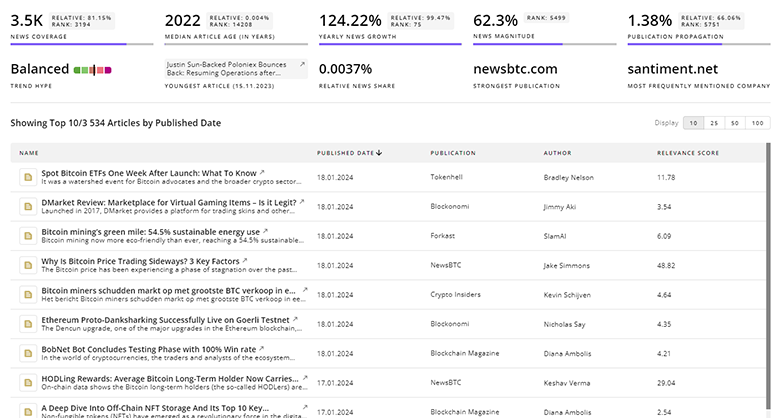
737 AI Workers News Articles
Discover Latest AI Workers Articles, News Magnitude, Publication Propagation, Yearly Growth, and Strongest Publications
Executive Summary
The practical takeaway is that AI workers are now a strategic operational lever, not an experimental novelty. Vendors that combine reliable LLM grounding, multi-agent orchestration, governance and easy composition will capture enterprise dollars and margin. Firms should treat reskilling as a corner-stone investment, pair human oversight with continuous feedback loops to manage agent quality, and prioritize governance to reduce legal and reputational risk. Providers and buyers must align on measurable KPIs for agent performance, handoff protocols for human intervention, and pragmatic rollout plans that first target high-frequency, low-risk tasks to demonstrate ROI.
Interested in enhancing our coverage of trends and tech? We value insights from experts like you - reach out!