Aviation Security Report
: Analysis on the Market, Trends, and TechnologiesThe aviation security market is under rapid re-prioritization as operators move capital and attention from perimeter-only measures to integrated cyber-physical defence; total ecosystem funding recorded in the sector is $12.57B which signals available capital for scaling platform plays and specialist technologies.
This report was last updated 82 days ago. Spot an error or missing detail? Help us fix it by getting in touch!
Topic Dominance Index of Aviation Security
To identify the Dominance Index of Aviation Security in the Trend and Technology ecosystem, we look at 3 different time series: the timeline of published articles, founded companies, and global search.
Key Activities and Applications
- Threat intelligence sharing and coordinated incident response between airlines, airports, and regulators to anticipate geopolitical and cyber threats; industry reports show information sharing and collective mitigation have risen as central activities after high-profile incidents IATA Annual Security Report, 2024.
- Integrated passenger and baggage screening that layers advanced imaging with AI-assisted detection to reduce operator error and speed throughput; commercial pilots and airport deployments prioritize CT and 3D imaging upgrades to remove rescreening steps.
- Aircraft-focused cyber resilience: continuous monitoring of avionic data links and in-flight communications to detect anomalies before they affect flight control systems; specialized aircraft cybersecurity vendors are tailoring managed detection services to the cockpit-to-ground attack surface.
- Perimeter and landside protection including counter-UAS to mitigate drone incursions and vehicle-borne threats; detection platforms combining radar, RF, and EO sensors are being fielded at major hubs AirSight.
- Insider threat mitigation and workforce screening for aviation staff, using new worker-screening imaging and behavioral monitoring to address incidents originating inside secure perimeters.
- Safety Management System (SMS) optimization integrated with analytics to convert compliance artifacts into real-time operational risk controls and pre-flight risk scoring.
Emergent Trends and Core Insights
- Cybersecurity is a board-level priority: 74% of airlines and 72% of airports expect IT budgets to rise, with cybersecurity ranked among top strategic priorities—this creates expanding demand for aviation-specific managed security services and incident-response playbooks SITA – Aviation industry doubles down on cybersecurity.
- Security platform consolidation is likely as integrators seek to bundle identity, screening, surveillance, and cyber-defence into single management layers; market analysis shows platform aggregation capturing the majority of investment dollars.
- A widening performance gap in cyber hygiene among carriers: independent scoring indicates 20% of airlines are high performers while 21% reported breach or compromise events, creating segmented procurement demand for remediation services and resilience testing The Cyber Risk Landscape of the Global Aviation Industry.
- Non-intrusive, passenger-friendly screening (passive terahertz, CT scanners, AI X-ray assist) moves from pilots to production as hubs seek throughput gains without sacrificing detection capability Airport Security Solutions Global Analysis Report 2025-2030.
- UAS and DIB systems become operational staples around airfields and remote perimeters; incident response now requires fused command-and-control across airspace managers and perimeter teams.
- Regulatory tightening and harmonization pressure will be a growth driver for vendors that embed compliance workflows into product design, because operators face both national mandates and cross-border interoperability requirements.
Technologies and Methodologies
- AI/ML image analysis applied to baggage and body scanning for faster, higher-accuracy detection and operator-assist cues; pilots show AI reduces missed detections and supports automated secondary-screening triage.
- Passive Terahertz imaging for walk-through, non-contact people screening that detects metallic and non-metallic threats at range and preserves dignity; vendors field TSA-vetted solutions for surface-transport and aviation staffing checkpoints Thruvision.
- 3D perspective X-ray and multi-energy CT for automated baggage content recognition and reduced false alarms; deployments replace legacy 2D X-ray lanes to support laptops and liquids in bags Commercial Airport Passenger Security Market.
- Zero-trust and segmentation of avionics networks to isolate OT/IT and prevent lateral movement from cabin or maintenance systems into flight controls.
- Multi-sensor detect-and-avoid (DAA) and UTM integration for safe UAS operations and automated perimeter airspace defence; NASA-derived architectures underpin several commercial platforms Vigilant Aerospace Systems, Inc..
- Edge computing on screening conveyors and checkpoint sensors to perform on-device analytics and cut latency for threat calls, reducing raw data egress for privacy compliance.
- SOAR and automated incident playbooks that unify cyber and physical workflows, enabling rapid containment across operations, IT, and ground services aviation cybersecurity market analysis.
Aviation Security Funding
A total of 69 Aviation Security companies have received funding.
Overall, Aviation Security companies have raised $13.9B.
Companies within the Aviation Security domain have secured capital from 191 funding rounds.
The chart shows the funding trendline of Aviation Security companies over the last 5 years
Aviation Security Companies
- Cyviation — Cyviation provides focused aircraft cybersecurity and airborne communications monitoring tailored to airlines and business jets; the company blends aviation domain experts with proactive intelligence to map avionics vulnerabilities and deliver continuous monitoring services. Cyviation has strategic shareholders linked to aerospace industry capability development, positioning it to support regulatory-driven certification requirements for aircraft cyber resilience.
- Synaptic Aviation — Synaptic Aviation applies AI-powered computer vision to ground operations, turning turnaround video into operational and security alerts that shorten gate times and identify unsafe behaviours or anomalous vehicle access. By converting routine apron and gate imagery into structured events, Synaptic Aviation enables airports to extract security value from operational data and reduce human monitoring burdens.
- Microavia — Microavia delivers autonomous drone-in-a-box systems for continuous perimeter and airfield monitoring, coupling automated launch and recovery with traffic management software for patrol and intrusion response. Their product targets remote and landside coverage gaps where continuous human patrol is costly, creating an always-on surveillance layer that integrates with existing command centres.
- Focus System — Focus System builds operator-attention and workstation-monitoring AI that directly addresses the persistent human-factor failures at X-ray consoles, providing real-time alerts and work-queue controls to curtail misses and false negatives. Trials indicate this approach is a low-footprint way to lift checkpoint effectiveness without wholesale equipment replacement, making Focus System an attractive incremental upgrade for budget-constrained hubs.
- BaggageAI — BaggageAI offers a patent-pending AI layer for live X-ray belts that flags prohibited items in real time, reducing reliance on operator vigilance and lowering throughput friction during peak demand. The solution targets high-volume checkpoints and secondary screening rooms where faster, higher-fidelity discrimination materially cuts rescreen rates and passenger delay.
Identify and analyze 955 innovators and key players in Aviation Security more easily with this feature.
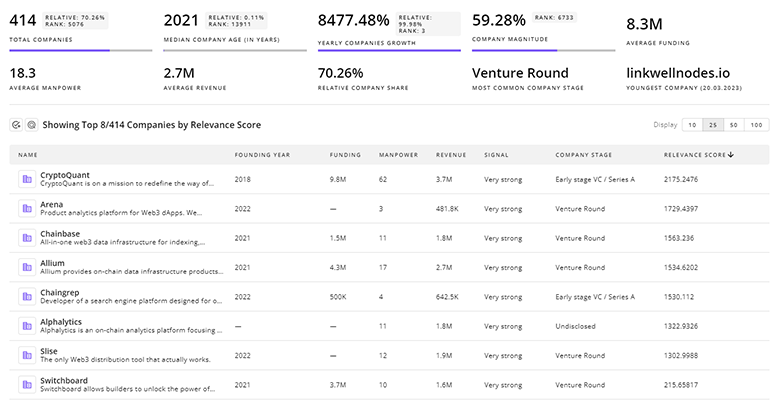
955 Aviation Security Companies
Discover Aviation Security Companies, their Funding, Manpower, Revenues, Stages, and much more
Aviation Security Investors
TrendFeedr’s investors tool offers a detailed view of investment activities that align with specific trends and technologies. This tool features comprehensive data on 175 Aviation Security investors, funding rounds, and investment trends, providing an overview of market dynamics.
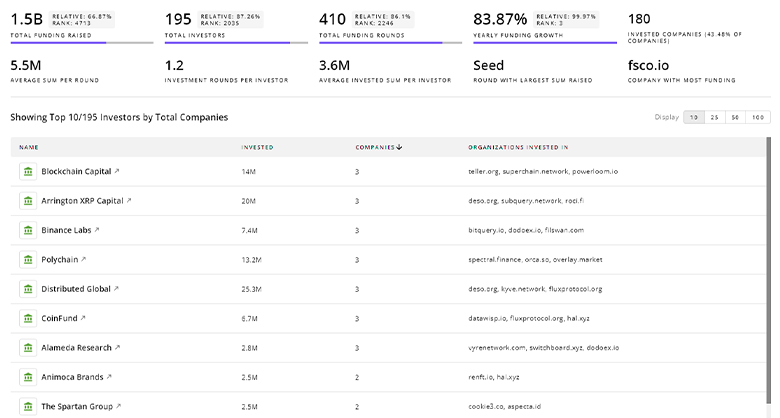
175 Aviation Security Investors
Discover Aviation Security Investors, Funding Rounds, Invested Amounts, and Funding Growth
Aviation Security News
Stay informed and ahead of the curve with TrendFeedr’s News feature, which provides access to 1.4K Aviation Security articles. The tool is tailored for professionals seeking to understand the historical trajectory and current momentum of changing market trends.
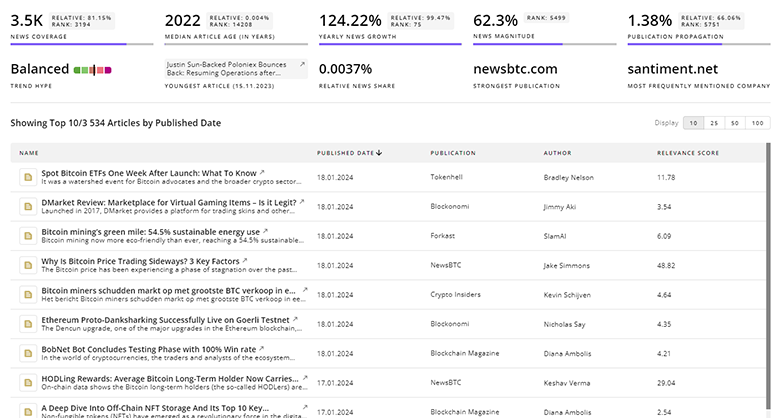
1.4K Aviation Security News Articles
Discover Latest Aviation Security Articles, News Magnitude, Publication Propagation, Yearly Growth, and Strongest Publications
Executive Summary
Investment and procurement in aviation security are concentrating on integrated, intelligence-driven systems that collapse legacy silos between physical screening, identity, airspace defence, and cyber resilience. Operators will pay premiums for solutions that demonstrably reduce manual rescreening, raise cyber hygiene in avionics and ground systems, and convert operational data into security decisions. Companies that combine deep aviation protocol knowledge with modular, standards-aligned products will win long-term contracts; conversely, vendors that only offer point upgrades without compliance workflows will face price pressure and limited adoption. Stakeholders should prioritize solutions that reduce the human error surface, enforce network segmentation for aircraft systems, and enable interoperable threat intelligence across airports and carriers.
Interested in enhancing our coverage of trends and tech? We value insights from experts like you - reach out!