Battery Electric Vehicles Report
: Analysis on the Market, Trends, and TechnologiesThe global transition to Battery Electric Vehicles is accelerating along measurable vectors: total ecosystem funding exceeds $268.94B, company count stands at 3,877, and technology adoption is accelerating—creating a landscape where operational models (BaaS, CaaS, fleet-managed electrification) and software-led energy control capture structural value more than incremental cell improvements.
This report was last updated 89 days ago. Spot an error or missing detail? Help us fix it by getting in touch!
Topic Dominance Index of Battery Electric Vehicles
To identify the Dominance Index of Battery Electric Vehicles in the Trend and Technology ecosystem, we look at 3 different time series: the timeline of published articles, founded companies, and global search.
Key Activities and Applications
- Commercial fleet electrification and managed charging — Operators convert TCO advantages into services: entire fleet electrification, charged and billed as a monthly service, reduces upfront CapEx and concentrates risk with integrated providers. This model appears across North America and Europe in platform offerings and is explicitly described as an end-to-end commercial solution in recent market data.
- Retrofitting and asset-extending ICE conversions — Converting existing vehicles (particularly three-wheelers and light commercial units) reduces capital barriers and accelerates deployment in dense developing markets; retrofit+battery-lease business models tie into local charging and payment behaviours.
- Battery swapping and battery-as-a-service (BaaS) — Pay-per-use swapping networks and captive swapping by OEMs target high-utilization two- and three-wheel fleets where rapid turnaround and asset-light models matter most; regional pilots and scale rollouts are visible in APAC.
- Second-life / stationary storage and V2G applications — Used EV packs feed residential and commercial storage markets and support grid services; this creates lifecycle value beyond vehicle resale and ties fleet operators into energy markets.
- Niche commercial & utility vehicle electrification — Terminal yard trucks, last-mile vans, and off-road utility vehicles yield immediate TCO wins and become beachheads for scale electrification (lower range requirements, centrally managed charging) Orange EV.
Emergent Trends and Core Insights
- Software and services now capture the largest residual margin opportunity — fleet-grade energy orchestration, predictive battery intelligence, and charging optimization shift value to control layers rather than raw cell chemistry.
- Geographic business-model divergence is consolidating: Asia-Pacific favors high-volume service models (BaaS, swapping) and retrofit economics, while Europe and North America push integrated platform plays, factory gigafactories, and financed CaaS offerings Electric Vehicle Battery Market Size Driven by 21.50% CAGR.
- Charging architecture upgrades (400V→800V) and ultra-fast charging materially reduce downtime for premium and fleet segments; these architectures enable shorter duty cycles and permit smaller battery sizing per use case telematicswire – 800V Electric Vehicles.
- Battery circularity rises from niche to strategic: recycling, direct-lithium extraction, and standardized second-life modules appear in policy and investment pipelines as supply constraints and ESG pressures persist.
- Rapidly improving battery economics set new adoption thresholds: several forecasts and market commentary expect pack prices around or below $100/kWh in near term scenarios—an inflection that materially shifts private buyer economics and fleet TCO Global EV Outlook 2025 – Analysis.
Technologies and Methodologies
- Cell-to-chassis / cell-to-pack integration to recover packaging efficiency and reduce system mass; platform-level integration produces up to ~25% chassis-level energy-density improvements in prototype programs.
- AI/ML battery intelligence and adaptive BMS—predictive state-of-health, duty-profile optimization, and warranty-grade diagnostics shift lifecycle value from hardware to software Electra Vehicles.
- Fast/flash charging chemistries and thermal management (immersion, two-phase cooling) to support high-C charging rates while maintaining cycle life—an approach validated in regional rapid-charge pilots and proprietary cell designs.
- Automated battery swapping and modular packs tied to standardized mechanical and communication interfaces to enable BaaS and multi-OEM swapping ecosystems Electric Vehicle Battery Swapping Market Research Report.
- Wireless dynamic charging (infrastructure embedded) for continuous operation fleets (buses, shuttles) to reduce pack size and downtime; commercial pilots of inductive in-road and depot charging proceed in urban testbeds Electreon.
Battery Electric Vehicles Funding
A total of 841 Battery Electric Vehicles companies have received funding.
Overall, Battery Electric Vehicles companies have raised $277.0B.
Companies within the Battery Electric Vehicles domain have secured capital from 3.5K funding rounds.
The chart shows the funding trendline of Battery Electric Vehicles companies over the last 5 years
Battery Electric Vehicles Companies
- Konwert India Motors
Konwert offers rapid retrofit drivetrain kits and a battery-lease model aimed at three-wheeler operators to lower upfront cost and accelerate electrification in dense urban markets. The firm couples ML-assisted battery life optimization with localized charging solutions—an approach that reduces replacement cost risk for drivers and enables higher fleet uptime. - **Tadpole Projects
Tadpole focuses on converting existing passenger vehicles to pure electric powertrains, reusing chassis assets to avoid incremental vehicle production and fast-track emissions reduction. The company positions conversions as a lower-capital route to electrification for fleets and high-value vehicles in markets with longevity needs. - **Clean Electric
Clean Electric develops proprietary cell-to-pack architectures, immersion thermal management, and a custom BMS that supports 12-minute rapid charging claims; they sell modular packs across 2W–4W segments while holding multiple patents on thermal and pack integration. - **Banke ApS
Banke specializes in electrifying vehicle auxiliary functions (E-PTO) and electric powertrains for heavy-duty use cases such as refuse vehicles and cranes—areas where electrification reduces fuel consumption of non-propulsion loads and improves urban emissions profiles. - **Voltia
Voltia delivers automated fleet electrification advisory and optimization software that models vehicle duty cycles, charging strategies, and tariff arbitrage to reduce fleet costs by up to 30% in customer case studies; their tooling is positioned as the decision layer for electrification projects in Europe.
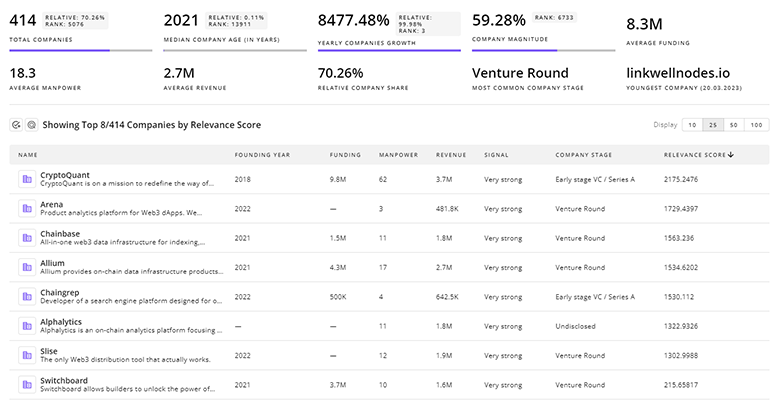
Identify and analyze 3.9K innovators and key players in Battery Electric Vehicles more easily with this feature.
3.9K Battery Electric Vehicles Companies
Discover Battery Electric Vehicles Companies, their Funding, Manpower, Revenues, Stages, and much more
Battery Electric Vehicles Investors
TrendFeedr’s investors tool offers a detailed view of investment activities that align with specific trends and technologies. This tool features comprehensive data on 3.7K Battery Electric Vehicles investors, funding rounds, and investment trends, providing an overview of market dynamics.
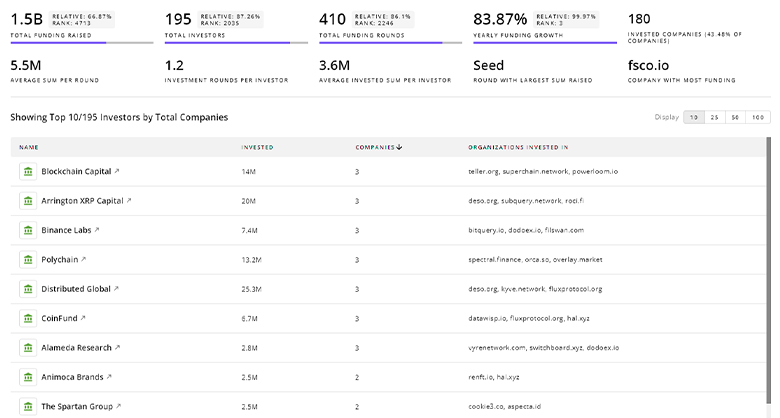
3.7K Battery Electric Vehicles Investors
Discover Battery Electric Vehicles Investors, Funding Rounds, Invested Amounts, and Funding Growth
Battery Electric Vehicles News
Stay informed and ahead of the curve with TrendFeedr’s News feature, which provides access to 6.9K Battery Electric Vehicles articles. The tool is tailored for professionals seeking to understand the historical trajectory and current momentum of changing market trends.
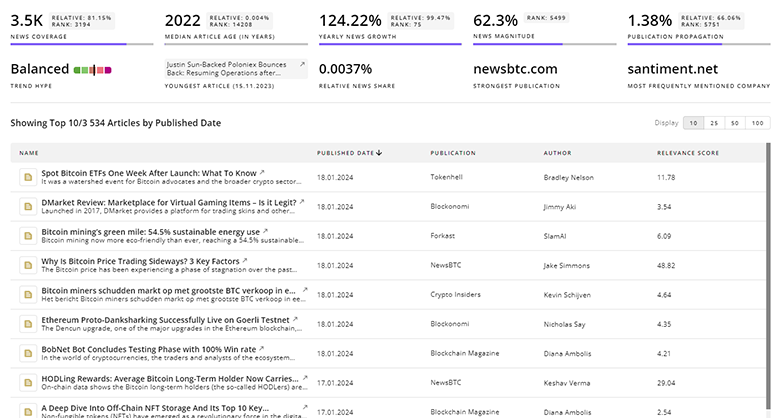
6.9K Battery Electric Vehicles News Articles
Discover Latest Battery Electric Vehicles Articles, News Magnitude, Publication Propagation, Yearly Growth, and Strongest Publications
Executive Summary
Battery electric vehicles have shifted from a single-technology race into a systems competition where service models, software-defined battery intelligence, and integrated charging infrastructure determine which players capture long-term value. Market metrics show deep capital flows and a high patent/technology baseline, but the fastest commercial returns appear where operators reframe electrification as an operational service—reducing customer Upfront cost and delivering guaranteed uptime. For strategists and investors, the immediate priorities are securing supply-chain resilience (material sourcing, recycling), locking in software and data control (BMS, fleet orchestration), and aligning deployment models to regional economics (BaaS and retrofits in APAC; CaaS and integrated platform plays in Europe/North America).
Interested in enhancing our coverage of trends and tech? We value insights from experts like you - reach out!