Biomedical Engineering Report
: Analysis on the Market, Trends, and TechnologiesThe biomedical engineering landscape is consolidating technical depth and manufacturing scale while attracting targeted capital: total funding across the field is $12.20B, and global market analysis places the sector at US $58.3 billion in 2022 with an expected 7.5% CAGR through 2030 Grand View Research – “Biomedical Engineering Market Size, Share & Trends Analysis Report 2023-2030”. This report synthesizes market sizing, patent and technology signals, and company-level capabilities to show a near-term commercial race between (a) specialized contract manufacturers and materials innovators that secure clinical translation pathways and margins, and (b) data- and biologics-platform companies that compress time-to-validation for diagnostics and advanced therapies.
This report was last updated 37 days ago. Spot an error or missing detail? Help us fix it by getting in touch!
Topic Dominance Index of Biomedical Engineering
To identify the Dominance Index of Biomedical Engineering in the Trend and Technology ecosystem, we look at 3 different time series: the timeline of published articles, founded companies, and global search.
Key Activities and Applications
- AI-augmented medical imaging and diagnostics: Development teams integrate deep-learning image analysis with device hardware to accelerate detection and triage workflows; the medical imaging device market alone was US $44.5 billion in 2023 and is forecast to grow at 5.2% to 2030, driven by AI image analytics and portable ultrasound adoption MarketsandMarkets – “Medical Imaging Devices Market by Product, Application, and Region: Global Forecast to 2030”.
- Wearable continuous monitoring and remote patient management: Endpoints that stream multi-parameter vitals and derive early-warning scores are moving into clinical practice; wearable health revenue reached US $27 billion in 2023 with strong CAGR in the next five years Frost & Sullivan – “Wearable Health Devices Market – Global Forecast 2023-2029”.
- Regenerative medicine and biofabrication at scale: Industry players focus on translating scaffold, hydrogel, and cell-based constructs into GMP-ready manufacturing, with initiatives addressing the scale bottleneck between lab prototypes and reproducible production Advanced Regenerative Manufacturing Institute | BioFabUSA.
- Neural interfaces and neuromodulation systems: Development of implantable microelectrode arrays and closed-loop neuromodulation to treat peripheral nerve and CNS conditions, supported by targeted regulatory pathways (e.g. Breakthrough Device designations for select devices) Neurolytics – Company Overview.
- High-fidelity preclinical testing and in-vitro human models: Organ-on-chip and high-resolution electrophysiology tools enable earlier de-risking of drug/device combos and refine translational predictions.
Emergent Trends and Core Insights
- Shift from product ownership to platform and ingredient roles: Market signals favor firms that supply indispensable components—high-precision textiles, validated scaffold materials, real-time analytics—rather than competing on finished-device branding; this concentration of value in niche providers is visible in company specialization patterns.
- Multimodal sensing and federated analytics are becoming table stakes: Patent and development activity concentrate on fusing electrical, biomechanical, and biochemical streams to produce composite clinical indices rather than isolated metrics — this tightens regulatory and data-integration requirements and raises the bar for clinical validation [Patent landscape commentary].
- Bioresorbable and biohybrid materials are entering regulatory pathways: Recent device-level patents show high porosity and bone-like mechanical performance for 3D-printed bioresorbable scaffolds, with preclinical bone regeneration metrics such as 84% bone volume fraction at 12 weeks reported for specific constructs USPTO Patent – “3D-Printed Bioresorbable Scaffold for Bone Regeneration” (US 20240123456 A1).
- Capital allocation favors platform validation over incremental hardware: Venture flows increased notably into gene-editing delivery and AI-driven diagnostic platforms, with gene-editing startups raising US $1.2 billion in 2023 across 27 firms, a 34% year-on-year rise in that segment CNBC – “CRISPR gene-editing firms raise $1.2 billion in 2023”.
- Operational readiness and data quality remain blind spots: Historical emphasis on sensing hardware created recurring issues with user setup, signal artifacts, and data integrity; patent filings show increasing attention to automated calibration, telemetry resilience, and artifact rejection as practical prerequisites for clinical deployment.
Technologies and Methodologies
- Organ-on-chip platforms and 3-D bioprinting: Microfluidic dynamic culture systems and smart multi-material printers drive higher predictive validity for toxicity and function testing, enabling earlier go/no-go decisions BiomimX® Srl.
- CMOS high-density microelectrode arrays (HD-MEAs) for label-free electrophysiology and drug screening: Thousands of sensors per chip permit high-throughput functional assays of neurons and cardiomyocytes 3Brain AG.
- Lipid nanoparticle and programmable polymer carriers for nucleic acid delivery: Advances in LNP design and AI-guided polymer discovery accelerate gene therapy and RNA therapeutic pipelines nanobiotechnology market reporting.
- Real-time bioprocess monitoring and AI control loops: In-line metabolic sensing plus analytics platforms reduce batch variability and speed scale-up for biologics manufacturing BioIntelligence Technologies – BioIntelligence Analytics Solution™.
- Textile-based implantable structures and nitinol braiding: Advanced textile forming yields spatially graded mechanical behavior for implants, enabling fine-tuned biomechanical matching to tissue Cortland Biomedical US BioDesign.
Biomedical Engineering Funding
A total of 478 Biomedical Engineering companies have received funding.
Overall, Biomedical Engineering companies have raised $12.2B.
Companies within the Biomedical Engineering domain have secured capital from 2.0K funding rounds.
The chart shows the funding trendline of Biomedical Engineering companies over the last 5 years
Biomedical Engineering Companies
- Optics11 Life — Optics11 Life offers mechanobiology platforms (PIUMA, CHIARO, PAVONE) for non-destructive, real-time mechanical characterization of cells and tissues; their platforms accelerate translational assays in regenerative medicine and contractility studies and support automated, screening-scale workflows. Series B funding and product deployments demonstrate demand from translational research labs.
- Biomomentum Inc. — Biomomentum is a specialist preclinical CRO providing multiaxial mechanical testing and in vivo/ex vivo models (e.g. ACL and cartilage models) that bridge material characterization to functional performance, enabling device developers to generate defensible mechanical and biochemical datasets for regulatory submissions.
- Biomembretics, Inc. — Biomembretics develops 3-D microfluidic membranes that mimic pulmonary blood flow to reduce thrombosis and hemocompatibility issues in artificial lung devices; preclinical models report improved blood handling and lower clotting risk, positioning the company as an ingredient supplier for extracorporeal therapy upgrades.
- Biocompatibility Innovation — Biocompatibility Innovation focuses on plant-based biostealth coatings and surface chemistries to extend implant durability and lower immunogenic responses; their technology targets lifecycle cost reduction for high-volume cardiovascular implants and offers licensing potential to major OEMs seeking improved long-term outcomes.
- Biogenes Technologies — Biogenes Technologies engineers animal-free aptamers for diagnostics and launched an aptamer-based histochemistry kit for HPV detection in 2024; their platform offers fast, scalable molecular recognition reagents that reduce reliance on antibody supply chains in point-of-care and lab settings.
Identify and analyze 2.3K innovators and key players in Biomedical Engineering more easily with this feature.
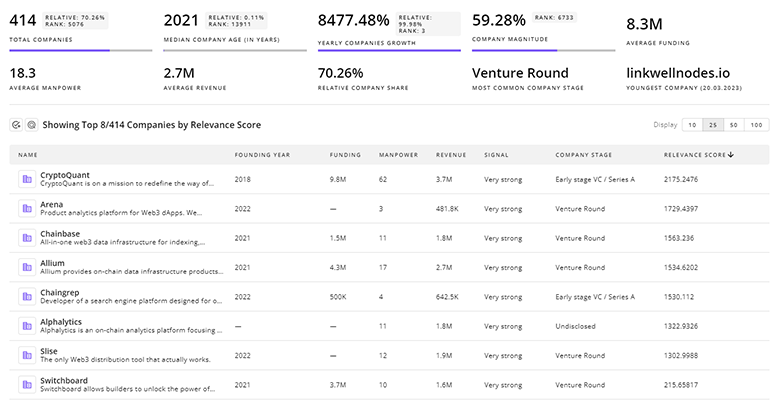
2.3K Biomedical Engineering Companies
Discover Biomedical Engineering Companies, their Funding, Manpower, Revenues, Stages, and much more
Biomedical Engineering Investors
TrendFeedr’s investors tool offers a detailed view of investment activities that align with specific trends and technologies. This tool features comprehensive data on 1.7K Biomedical Engineering investors, funding rounds, and investment trends, providing an overview of market dynamics.
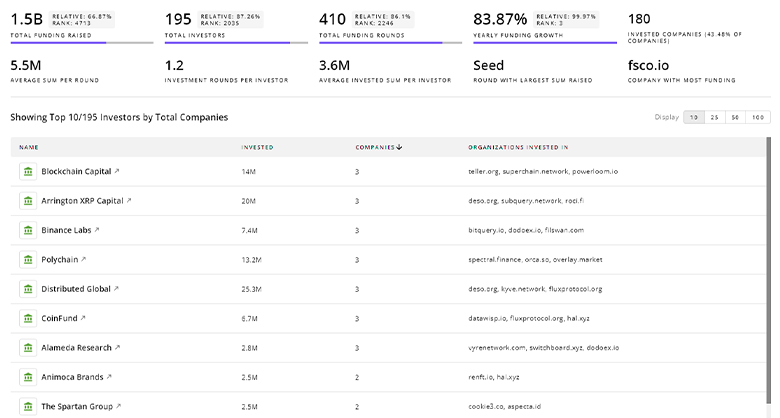
1.7K Biomedical Engineering Investors
Discover Biomedical Engineering Investors, Funding Rounds, Invested Amounts, and Funding Growth
Biomedical Engineering News
Stay informed and ahead of the curve with TrendFeedr’s News feature, which provides access to 6.2K Biomedical Engineering articles. The tool is tailored for professionals seeking to understand the historical trajectory and current momentum of changing market trends.
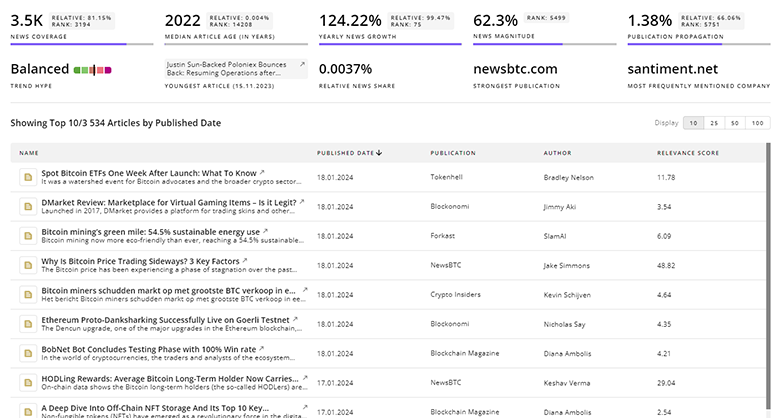
6.2K Biomedical Engineering News Articles
Discover Latest Biomedical Engineering Articles, News Magnitude, Publication Propagation, Yearly Growth, and Strongest Publications
Executive Summary
Investment, regulatory incentives, and clinical need are aligning to favor companies that combine high-quality sensing, data science, and materials engineering with manufacturing discipline. Leaders will be those that supply validated ingredients—scaffolds, analytics, high-fidelity preclinical assays, and contamination-reduction tools—that compress clinical translation timelines and reduce downstream risk. For business strategists, the pragmatic priority is to direct capital to narrowly scoped, defensible technologies that integrate into larger care pathways and to secure partnership agreements with platform owners who control clinical scaling and reimbursement channels.
Interested in enhancing our coverage of trends and tech? We value insights from experts like you - reach out!