
Car-t Cell Report
: Analysis on the Market, Trends, and TechnologiesThe CAR-T cell sector stands at a strategic inflection point driven by fast clinical progress and widening commercial forecasts: the internal CAR-T trend report records a 2023 market size of $2.50 billion and a projected 2032 market value of $9.0 billion, with a 15.2% CAGR noted in the internal data. External market studies present a range of near-term scenarios—from aggressive 5-year expansions to more conservative 7- to 10-year ramps—reflecting different assumptions about allogeneic scale-up, solid-tumor translation, and reimbursement adoption CAR T-Cell Therapy Market to Surge at 40.2% CAGR – BCC Research CAR T-Cell Therapy Market Size & Growth Forecast to 2029 CAR T-Cell Therapy Market Size, Share | Industry Report 2030. The immediate business agenda is clear: close the manufacturing cost curve, demonstrate repeatable activity in solid tumors, and deploy data/AI to compress R&D timelines—those moves will determine platform leadership and commercial capture.
We updated this report 325 days ago. Noticed something’s off? Let’s make it right together — reach out!
Topic Dominance Index of Car-t Cell
The Topic Dominance Index trendline combines the share of voice distributions of Car-t Cell from 3 data sources: published articles, founded companies, and global search
Key Activities and Applications
- Developing therapies for hematologic malignancies (CD19, BCMA and related targets), the backbone of commercial CAR-T uptake and revenue today.
- Advancing BCMA-directed products for multiple myeloma as a major near-term growth engine CAR T-Cell Therapy Market - Market Size, Forecasts, Trials, and Trends, 2025.
- Creating allogeneic, donor-derived "off-the-shelf" CAR-Ts to cut vein-to-vein time and lower per-patient cost; this is a primary route to scale and broader access.
- Engineering multi-antigen and logic-gated CAR constructs to reduce antigen-escape and increase tumor specificity in solid tumors.
- Exploring CAR approaches for autoimmune diseases (selective deletion of autoreactive cells and CAAR approaches), representing a strategic extension beyond oncology CAR-T Therapy- Pipeline Insight, 2024.
- Automating and decentralizing manufacturing (IDMO platforms, closed bioreactors, point-of-care systems) to improve reproducibility and reduce costs Cellares.
Emergent Trends and Core Insights
- Rapid but divergent market forecasts. Multiple market studies predict strong near-term growth but differ on magnitude and horizon—this signals high upside if allogeneic scale and solid-tumor efficacy arrive, and downside if manufacturing or reimbursement stalls.
- Focus shifting from single-antigen hematologic successes to engineered solutions for the tumor microenvironment (armored CARs, PD-1 resistance, cytokine payloads) as the central technical battleground for solid tumors.
- AI and high-throughput discovery shorten antigen selection and TCR/CAR design cycles; firms that combine AI with scalable engineering will reduce preclinical time and de-risk INDs.
- Manufacturing platform winners will emerge: integrated IDMO models and closed automated systems (industry examples include integrated cell-shuttle platforms and electroporation/flow delivery systems) will capture margin and partner flow-through Kytopen.
- Clinical diversification: autoimmune and in-vivo CAR generation (nanoparticle or viral in-patient programming) are nascent but two of the most strategically important non-oncology opportunities that reframe CAR-T as a platform rather than only an oncology modality.
Technologies and Methodologies
- CRISPR and TALEN multiplex editing to create universal allogeneic cells and to program resistance to checkpoint suppression Caribou Biosciences.
- Non-viral transposon systems and electroporation (PiggyBac, Sleeping Beauty, flow electroporation) for lower-cost gene insertion and quicker scale-up.
- Logic gates, bispecific/dual-CARs, and affinity-tuned CARs to improve tumor specificity and reduce off-target toxicity (AND/OR/NOT gate designs) Link Cell Therapies.
- In-vivo CAR generation using lipid nanoparticles or viral vectors to program T cells inside patients—this could collapse manufacturing and broaden outpatient delivery.
- Automated end-to-end manufacturing IDMO platforms (walk-away automation, closed bioreactors) to reduce variability and lower per-dose costs.
- Single-cell multi-omics and AI for patient stratification, mechanism-of-failure analysis, and potency metrics to improve trial design and predict durability.
Car-t Cell Funding
A total of 218 Car-t Cell companies have received funding.
Overall, Car-t Cell companies have raised $51.6B.
Companies within the Car-t Cell domain have secured capital from 998 funding rounds.
The chart shows the funding trendline of Car-t Cell companies over the last 5 years
Car-t Cell Companies
- Aleta Biotherapeutics — Aleta develops multi-antigen CAR-T Engager constructs designed to preserve T-cell fitness and persistence while addressing antigen loss and tumor heterogeneity; the company positions its platform for both hematologic indications and difficult solid-tumor targets and maintains early clinical programs supported by academic collaboration.
- CellFE — CellFE offers a microfluidic delivery platform focused on high-efficiency, viability-preserving delivery of gene-editing reagents into therapeutic cells; its system targets manufacturers that need scalable, non-viral transfection to lower costs and expand construct complexity for next-generation CAR designs.
- KiraGen Bio — KiraGen uses machine learning to identify synergistic multiplex gene-editing combinations that blunt tumor microenvironment suppression; the company's KiraLOGIC platform reports designed edits for persistence and anti-TME function and targets glioblastoma and other solid tumors.
- NTrans Technologies BV — NTrans develops proprietary non-viral delivery harnessing macropinocytosis for efficient intracellular delivery of gene-editing cargo; the platform targets GMP-ready non-viral workflows to reduce vector bottlenecks and enable higher throughput manufacturing.
- T-CURX GmbH — T-CURX commercializes virus-free, transposon-based CAR engineering and a modular CAR format spun out of an academic CAR-T clinical group; its emphasis on virus-free manufacture and modularity targets faster, lower-cost autologous and personalized CAR programs.
Gain a better understanding of 589 companies that drive Car-t Cell, how mature and well-funded these companies are.
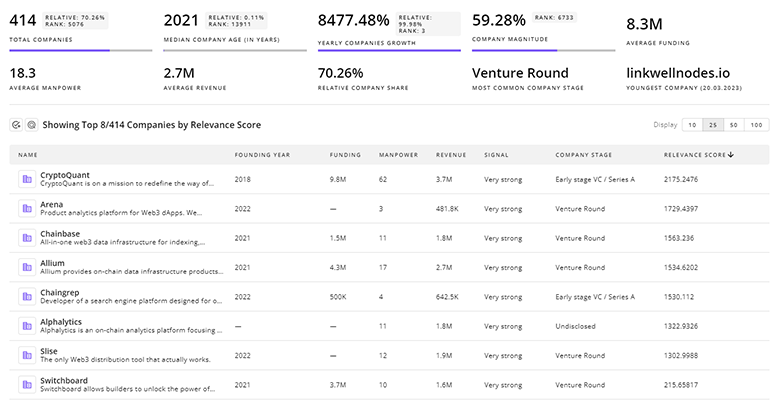
589 Car-t Cell Companies
Discover Car-t Cell Companies, their Funding, Manpower, Revenues, Stages, and much more
Car-t Cell Investors
Gain insights into 1.3K Car-t Cell investors and investment deals. TrendFeedr’s investors tool presents an overview of investment trends and activities, helping create better investment strategies and partnerships.
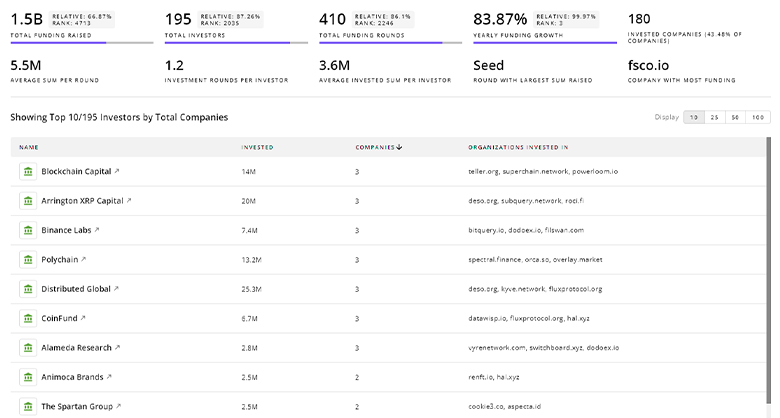
1.3K Car-t Cell Investors
Discover Car-t Cell Investors, Funding Rounds, Invested Amounts, and Funding Growth
Car-t Cell News
Gain a competitive advantage with access to 3.6K Car-t Cell articles with TrendFeedr's News feature. The tool offers an extensive database of articles covering recent trends and past events in Car-t Cell. This enables innovators and market leaders to make well-informed fact-based decisions.
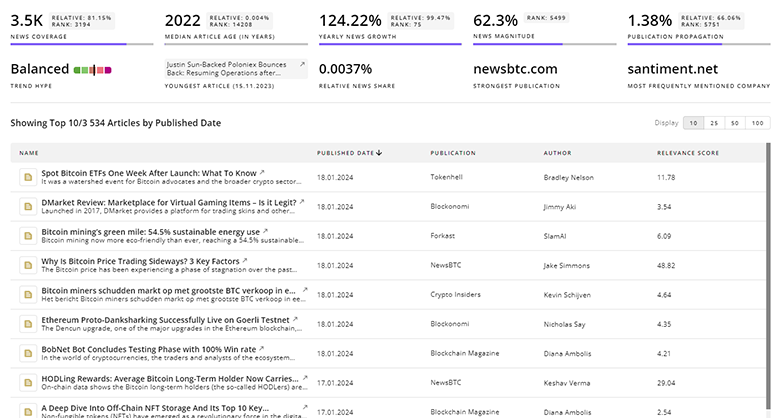
3.6K Car-t Cell News Articles
Discover Latest Car-t Cell Articles, News Magnitude, Publication Propagation, Yearly Growth, and Strongest Publications
Executive Summary
CAR-T has moved from scientific proof to a full commercialization test. Near term, the market will reward players that materially lower cost and time-to-treatment (manufacturing automation, non-viral delivery, IDMO partnerships) and those that can show reproducible activity in selected solid-tumor niches with clear biomarkers for patient selection. Parallel expansion into autoimmune indications and in-vivo programming creates optionality beyond oncology and a route to diversify revenue streams. Strategic imperatives for investors and management teams are (1) select technologies that directly reduce unit cost and shorten vein-to-vein time, (2) validate antigen/biomarker strategies that limit off-target risk in solid tumors, and (3) pair clinical progress with payer engagement early to shape reimbursement models that match commercial economics.
We seek partnerships with industry experts to deliver actionable insights into trends and tech. Interested? Let us know!