Carbon Trading Report
: Analysis on the Market, Trends, and TechnologiesThe carbon trading market is at an inflection point where capital, policy, and data systems are re-pricing what qualifies as value: $71.89B in cumulative funding sits behind a growing pool of technology-first entrants and removal specialists, concentrating demand on credits that demonstrate verifiable permanence. Market forecasts show the broader market expanding from USD 469.8 billion in 2023 to USD 9,446.1 billion by 2033, a 35% CAGR that will redirect investment toward marketplaces, verification infrastructure, and engineered removals. Compliance schemes still account for the vast majority of traded volume (≈97.8% in 2023), but the premium attached to high-integrity removals and government-authorised international transfers is already reordering deal flow and valuation dynamics.
We updated this report 218 days ago. Noticed something’s off? Let’s make it right together — reach out!
Topic Dominance Index of Carbon Trading
The Topic Dominance Index trendline combines the share of voice distributions of Carbon Trading from 3 data sources: published articles, founded companies, and global search
Key Activities and Applications
- Allowance allocation and trading – Regulated ETS operations distribute, auction, and enable secondary trading of allowances across power, industry, and aviation; platform and auction design remain core vendor opportunities as jurisdictions expand coverage.
- Carbon credit generation – Project development for nature-based and engineered removal assets (reforestation, biochar, DAC, CCS) continues to supply both voluntary and compliance pools while buyers shift preference toward long-duration removals.
- Digital MRV and registry services – Embedded digital MRV (satellite, IoT, AI) and immutable registries resolve provenance and double-counting risks and are rapidly becoming purchase-criteria for corporate buyers.
- Cross-border transfers and Article 6 implementation – Country-level authorisations and international transfer rules are unlocking higher price realization for government-cleared credits and creating new offtake pathways for project developers.
- Sector-specific credit streams – Specialized credits (refrigerant credits, food-waste diversion, shipping/aviation offsets) convert operational improvements into tradable assets, enabling firms to monetize targeted decarbonization actions.
Emergent Trends and Core Insights
- Premium on authorised, high-permanence removals – Credits that carry government authorisation for international transfer or that represent engineered removal command material price premiums; markets now assign significant scarcity value to verified permanence.
- Voluntary market growth with divergent forecasts – Industry forecasts range widely (from multi-tens of billions to >USD 100B by the early 2030s), but consensus says buyer demand for higher-integrity removals will outpace supply, driving premium formation and new financing models Carboncredits.com – Voluntary Carbon Market in 2026.
- China’s national ETS reshapes global volumes – Full sectoral inclusion in China will create the single largest allowance pool globally, influencing price corridors and liquidity dynamics for both compliance and linked voluntary instruments csis – China’s New National Carbon Trading Market, 2021.
- Convergence of compliance and voluntary channels – Corporates increasingly use voluntary removals to address residual emissions while participating in compliance markets for operational exposure, narrowing the functional split between market types marketresearchfuture – Carbon Trading Market, 2025.
- Data and marketplace arbitrage – As AI price signals and near-real-time MRV enter workflows, mispricings shrink and liquidity shifts toward credits with machine-verifiable provenance, creating business cases for data-first intermediaries GMI Insights.
Technologies and Methodologies
- Distributed ledger registries and tokenization – Blockchain and registry integrations remove settlement frictions, provide immutable provenance, and enable fractionalization or programmatic retirements for corporate reporting Beyond Opacity: Distributed Ledger Technology as a Catalyst for Carbon Credit Market Integrity.
- AI-driven dMRV – Satellite, multispectral sensors, and machine learning automate verification and materially reduce verification cost and time for land-based and distributed energy projects.
- Direct Air Capture and biochar scaling – Engineered removal systems and low-energy pyrolysis biochar processes provide the long-duration stores buyers now prize; financing models link offtake to removal certification platforms.
- Automated trading primitives and auction design – Smart contracts, auction algorithms, and automated market maker approaches speed price discovery for heterogeneous credit types and enable new derivatives for risk management.
- IoT edge measurement and product-level accounting – Edge sensors and embedded product carbon data provide transaction-level traceability that can convert behavior or purchases into quantified credits or insetting instruments.
Carbon Trading Funding
A total of 1.1K Carbon Trading companies have received funding.
Overall, Carbon Trading companies have raised $71.9B.
Companies within the Carbon Trading domain have secured capital from 4.0K funding rounds.
The chart shows the funding trendline of Carbon Trading companies over the last 5 years
Carbon Trading Companies
- Carba, Inc. — Carba develops low-energy pyrolysis reactors to convert agricultural and municipal waste into stable biochar that functions as both a soil input and a permanent removal credit. Their model targets high yield and low operational energy requirements to reduce per-ton sequestration cost and support multi-use revenue through heat and material co-products. Carba’s technology positions it to supply verified removal certificates to corporates seeking durable, nature-based credits.
- Carbon27 — Carbon27 produces lightweight IoT sensor packages and blockchain-native audit flows that automate issuance of CO₂ savings certificates for distributed renewables and small-scale generators. Their fraud-detection stack uses AI/ML for anomaly detection, lowering the verification burden for micro-projects and increasing the pool of investable credits. The company targets pilots in emerging markets where cost per verification is a binding constraint.
- Therm — Therm monetizes emissions reductions in the food supply chain by issuing credits tied to refrigerant upgrades and food-waste diversion actions. Their specialty product lines—Refrigerant Carbon Credits and Food Waste Diversion Credits—translate operational changes into tradable assets for grocers and distributors. Therm bridges operational decarbonization and credit issuance with sector-specific MRV and buyer engagement playbooks.
- CarbonClear — CarbonClear focuses on embedded digital-MRV to enable finance flows into underfunded distributed renewable energy projects, aiming to make project credits bankable with conservative audit rules and traceable datasets. Their platform is designed to reduce issuance cost, accelerate credit delivery, and bring liquidity to smaller project classes that currently under-issue. CarbonClear positions itself as the data layer that marketplaces and buyers rely on for conservative credit supply.
- Novocarbo — Novocarbo builds scaled biochar parks and pairs carbon removal certificate issuance with product markets for biochar in agriculture and construction. Their heat-as-a-service commercial model and multi-use product strategy lower project cash-flow barriers while guaranteeing verifiable removal tonnage. Novocarbo targets industrial offtakes and removal certificate sales to institutional buyers seeking nature-based, durable credits.
Gain a better understanding of 5.4K companies that drive Carbon Trading, how mature and well-funded these companies are.
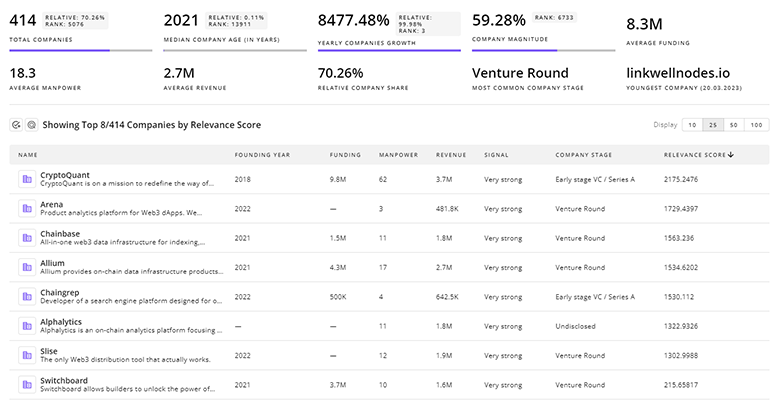
5.4K Carbon Trading Companies
Discover Carbon Trading Companies, their Funding, Manpower, Revenues, Stages, and much more
Carbon Trading Investors
Gain insights into 4.0K Carbon Trading investors and investment deals. TrendFeedr’s investors tool presents an overview of investment trends and activities, helping create better investment strategies and partnerships.
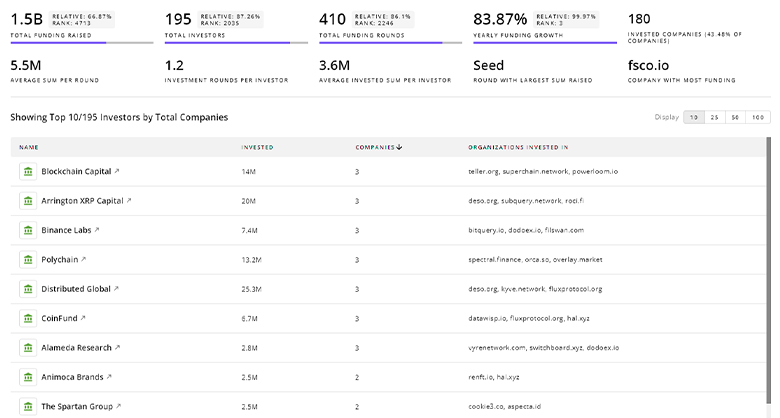
4.0K Carbon Trading Investors
Discover Carbon Trading Investors, Funding Rounds, Invested Amounts, and Funding Growth
Carbon Trading News
Gain a competitive advantage with access to 14.6K Carbon Trading articles with TrendFeedr's News feature. The tool offers an extensive database of articles covering recent trends and past events in Carbon Trading. This enables innovators and market leaders to make well-informed fact-based decisions.
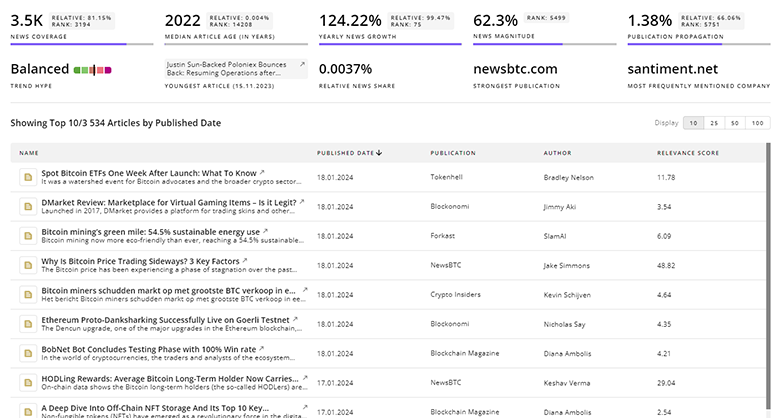
14.6K Carbon Trading News Articles
Discover Latest Carbon Trading Articles, News Magnitude, Publication Propagation, Yearly Growth, and Strongest Publications
Executive Summary
The carbon trading landscape is transitioning from volume toward verifiable permanence. Market expansion and high CAGR projections create large pools of capital, but buyers will pay for certainty: government authorisation, third-party ratings, and machine-verifiable MRV will determine which credit types receive institutional demand. Strategic investors and platform builders should prioritize (1) establishing end-to-end traceability and settlement rails, (2) anchoring offtake agreements to high-integrity removal projects, and (3) modular MRV services that scale across jurisdictions and project sizes. Firms that control certification, real-time data, and settlement channels will capture the spread between supply of removals and the price premium that durable, authorised credits command.
We seek partnerships with industry experts to deliver actionable insights into trends and tech. Interested? Let us know!