Cellular Agriculture Report
: Analysis on the Market, Trends, and TechnologiesThe cellular agriculture market shows clear commercial momentum and measurable scale-up challenges: the internal trend data projects a market value of USD 520.61 billion by 2030 with a stated CAGR of 18.4%, anchoring near-term expectations for rapid expansion. External market models give a wider range—one 2023-base forecast estimates USD 176.48 billion (2023) rising to USD 786.74 billion by 2033 (CAGR ~16.1%) Global Cellular Agriculture Market Size, Spherical Insights while another model aligns with the internal projection to USD 520.61 billion by 2030 (CAGR ~18.4%) Cellular Agriculture Market Size, Zion Market Research. The practical implication is that investment and strategy decisions must target media-cost reduction, scalable bioreactor throughput, and cell-line durability because these three vectors jointly determine whether companies capture margin as the market shifts from R&D demonstrations to commercial production.
We updated this report 258 days ago. Noticed something’s off? Let’s make it right together — reach out!
Topic Dominance Index of Cellular Agriculture
The Topic Dominance Index trendline combines the share of voice distributions of Cellular Agriculture from 3 data sources: published articles, founded companies, and global search
Key Activities and Applications
- Cultivated (cell-grown) meat production: development of animal muscle and fat tissue using cell lines and tissue engineering for ground and structured products; companies prioritize process repeatability and food-safety validation to move to regulated retail channels.
- Precision fermentation for dairy and specialty proteins: microbial production of casein/whey analogs and high-value ingredients that replace animal extraction and reduce supply-chain exposure Cellular Agriculture Market Report: Trends, Forecast and Competitive Analysis to 2031.
- Growth-media ingredients and growth-factor manufacture: industrial-scale, non-animal sources (yeast/microbial or plant molecular farming) to replace expensive recombinant proteins and fetal serum, driven by explicit cost-of-goods targets in commercial roadmaps Opening the door to affordable lab-grown beef, cow cells defy aging.
- Scaffolding and 3-D structuring for texture: development of edible matrices and natural polymers that support muscle alignment and vascular-like channels to produce whole-cut analogs rather than mince Cellular Agriculture Scaffolding Materials Market Size Report, 2034.
- Infrastructure and manufacturing automation: design and deployment of continuous perfusion systems, hollow-fiber modules, and hands-off monitoring to reach high facility utilization and reduce labor-linked variability.
Emergent Trends and Core Insights
- Cost-structure as the gating metric: media and growth factors frequently represent the largest share of COGS; the internal dataset flags media and bioreactor capital as primary market challenges and shows a strategic pivot to suppliers who can lower these inputs.
- Cell-line stability and self-sustaining proliferation: recent technical reports and news describe cell lines that avoid senescence or produce autocrine growth signals, a development that materially reduces recurring input costs and repeat biopsies Breakthrough Could Reduce Cultivated Meat Production Costs by up to 90%. The implication is an accelerating premium on proprietary, high-yield cell lines as strategic assets.
- Precision fermentation and molecular farming integration: firms move to produce growth factors and specialty lipids in-house (or via tight partners) to capture margin and reduce price volatility of recombinant proteins Startup Looks to Use Tobacco Plants to Make Cultured Meat Less Costly.
- Regional strategy fragmentation: Asia-Pacific leads in market share and early deployment incentives while Europe emphasizes multi-institution consortia and regulatory coordination; companies pursue regulatory arbitrage to access early revenue and scale proof points Top 50 Cellular Agriculture Companies in Globe 2025.
- Niche upstream suppliers capture disproportionate value: small but rapidly growing scaffolding and media vendors (scaffolding market estimated at USD 72 million in 2024) become essential partners for product developers who need both supply security and cost declines.
Technologies and Methodologies
- Continuous perfusion and hollow-fiber bioreactors: engineered for sustained high-density culture and continuous harvest, improving facility utilization and reducing per-kg capital amortization; recent grant projects target hollow-fiber demonstrators to validate scale.
- Serum-free, chemically defined media and in-house growth-factor production: formulation engineering plus microbial or plant-based manufacture of factors aims to reduce media cost shares that currently dominate COGS.
- 3-D bioprinting and edible scaffolds: multi-material printers and natural polymer scaffolds (plant-derived or recombinant collagen) help recreate muscle microarchitecture and fat dispersion required for whole-cut products Cellular agriculture research manages to culture pork fat tissue on rye protein scaffolds.
- Genetic and non-genetic cell engineering: targeted edits plus transient, environmental control strategies (temperature shifts, signaling molecules) increase yield, environmental tolerance, and product attributes while offering different regulatory and consumer acceptance tradeoffs.
- AI and high-throughput experimentation for media optimization: ML models accelerate selection among thousands of component permutations, compressing development time and lowering experimental cost.
Cellular Agriculture Funding
A total of 150 Cellular Agriculture companies have received funding.
Overall, Cellular Agriculture companies have raised $6.6B.
Companies within the Cellular Agriculture domain have secured capital from 732 funding rounds.
The chart shows the funding trendline of Cellular Agriculture companies over the last 5 years
Cellular Agriculture Companies
- Myriameat — Myriameat develops cultivated seafood and hybrid fish products using plant-based scaffolds to recreate flaky textures. The firm targets premium foodservice channels to validate consumer acceptance while scaling scaffold manufacturing in partnership with ingredient suppliers.
- FoldChanges — FoldChanges supplies modular bioreactor control modules and automation software tuned to perfusion systems, enabling smaller producers to move from lab-scale to continuous flow operations with standardized process control. Their platform reduces operational variability and shortens scale-up timelines.
- Cellag (cellag.gr) — Cellag (a regional incubator and research network) connects academic cell-biology advances to commercial scaffold and media projects, emphasizing open collaboration and shared facility access to reduce capital burdens for early ventures in the region.
Gain a better understanding of 292 companies that drive Cellular Agriculture, how mature and well-funded these companies are.
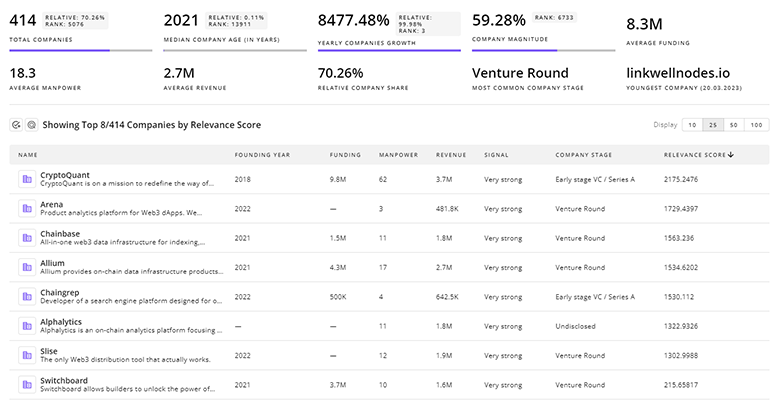
292 Cellular Agriculture Companies
Discover Cellular Agriculture Companies, their Funding, Manpower, Revenues, Stages, and much more
Cellular Agriculture Investors
Gain insights into 1.1K Cellular Agriculture investors and investment deals. TrendFeedr’s investors tool presents an overview of investment trends and activities, helping create better investment strategies and partnerships.
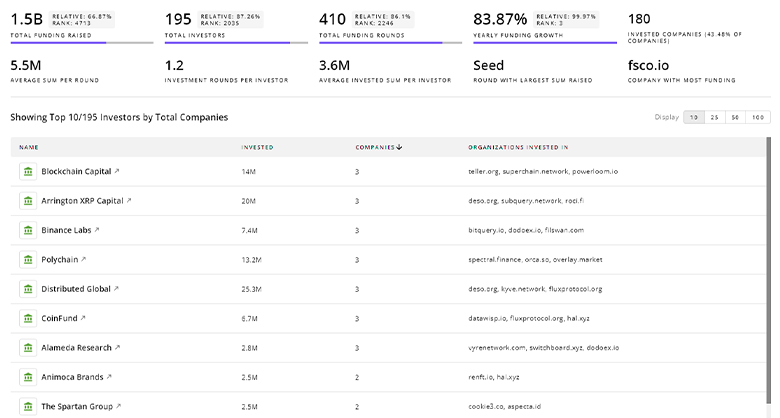
1.1K Cellular Agriculture Investors
Discover Cellular Agriculture Investors, Funding Rounds, Invested Amounts, and Funding Growth
Cellular Agriculture News
Gain a competitive advantage with access to 1.1K Cellular Agriculture articles with TrendFeedr's News feature. The tool offers an extensive database of articles covering recent trends and past events in Cellular Agriculture. This enables innovators and market leaders to make well-informed fact-based decisions.
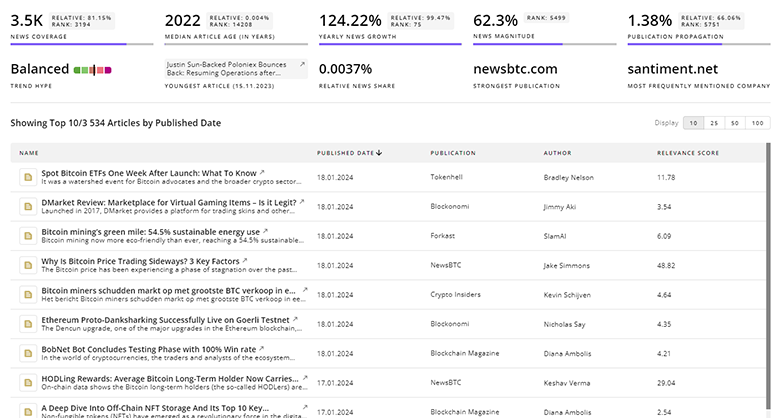
1.1K Cellular Agriculture News Articles
Discover Latest Cellular Agriculture Articles, News Magnitude, Publication Propagation, Yearly Growth, and Strongest Publications
Executive Summary
The available data show a market that will scale materially in the coming decade, but that scaling will reward operational excellence more than product novelty. Successful participants will be those who secure low-cost, reliable inputs (media and growth factors), own or control high-yield cell lines, and implement continuous, automated production systems that compress capital payback. Regional regulatory choices will create temporary market advantages that savvy firms can exploit to prove commercial economics. For investors and corporate strategists, the highest-leverage moves are: invest in suppliers that lower input costs, partner with CDMOs and automation providers to shorten time to volume, and secure regulatory approvals in one or two favorable jurisdictions to convert technical validation into repeatable revenue.
We seek partnerships with industry experts to deliver actionable insights into trends and tech. Interested? Let us know!