
Charging Station Report
: Analysis on the Market, Trends, and TechnologiesThe charging station market is transitioning from pure rollout to operational intelligence, anchored by an estimated market size of $19,950,000,000 in 2025 and a reported CAGR of 10.2% that supports a projected $35,730,000,000 market by 2031. Demand concentrates on higher-power installation types and commercial deployments (highway, fleet, destination), while energy-integration strategies—on-site storage, solar pairing, and bidirectional services—are shaping who captures long-term value.
We updated this report 200 days ago. Noticed something’s off? Let’s make it right together — reach out!
Topic Dominance Index of Charging Station
The Topic Dominance Index trendline combines the share of voice distributions of Charging Station from 3 data sources: published articles, founded companies, and global search
Key Activities and Applications
- Public and commercial fast-charger deployment: rollouts prioritize DC fast chargers on highways, retail sites, and fleet depots to reduce dwell time for drivers and enable long-distance logistics operations Grand View Research - Electric Vehicle Charger and Charging Station Market.
- Turnkey installation and O&M services: end-to-end contracts (supply, civil, grid connection, commissioning, maintenance) continue to dominate procurement for municipalities and large hosts, driven by capex/opex outsourcing preferences.
- Software-defined network management (CSMS / eMSP): remote monitoring, billing, roaming, and dynamic pricing are core operator activities to raise utilization and enable roaming revenue streams.
- Energy-integration and resilience projects: pairing charging stalls with battery energy storage systems (BESS) and solar to limit demand charges and provide back-up power for high-power delivery.
- Mobile and on-demand charging services: app-driven mobile chargers and biodiesel-hybrid vans serve events, under-served neighborhoods, or temporary spikes, reducing initial fixed-site capex and filling gaps in density.
- Fleet depot optimization and subscription services: turnkey depot builds, intelligent scheduling and subscription/BaaS models for fleets minimize downtime and smooth energy costs for commercial operators.
Emergent Trends and Core Insights
- Shift toward high-power and ultra-fast DC: schemes centering on ≥150 kW and XFC deployments accelerate to cut charging time and support commercial vehicles; DC fast chargers are projected to lead revenue in heavy-use corridors.
- Energy as a competitive asset: operators that pair BESS + renewables reduce exposure to utility demand charges and can monetize grid services (peak shaving, ancillary markets) — this is now a primary moat for network economics.
- Software wins the margins: hardware commoditization pressures margins; software stacks (OCPP/ISO15118, plug-and-charge, dynamic load) drive recurring revenue and multi-site management scale ChargeLab.
- Service diversification (CaaS / BaaS / subscription models): Charging-as-a-Service and Battery-as-a-Service reduce host capex barriers and expand adoption in multi-family and fleet markets.
- Localized solutions for grid constraints: off-grid and mobile fast-charging (bioethanol, containerized generation) enable deployment where grid upgrades are costly or slow.
- Policy-driven network shaping: targeted funding programs (highway corridors, NEVI-style allocations) and national installer requirements materially accelerate deployment timelines and influence site economics Electric Vehicle Charging Station Market Report and Forecast 2025-2034.
Technologies and Methodologies
- High-power DC hardware and liquid-cooled cables for sustained XFC output and thermal reliability in repeated heavy-use contexts DC Fast Electric Vehicle Charging Station Market.
- BESS integration and demand-charge management: on-site storage absorbs grid peaks, enabling multiple high-power stalls per site while keeping grid draw within contracted limits.
- Cloud-native CSMS and open protocols (OCPP, ISO15118 Plug & Charge) to enable roaming, OTA firmware, secure plug-and-charge, and third-party integrations ioCharger.
- AI/ML for forecasting and predictive maintenance: algorithms optimize siting, demand forecasting, and uptime by predicting failures and smoothing load profiles to lift utilization metrics.
- Modular, containerized and mobile charging units for rapid site activation and low civil works—useful for events, rural corridors, or pilot deployments.
- Automated and wireless charging pilots (robotic docking, inductive pads) for specialized fleet or micromobility applications that require hands-free operation or high-density throughput Plugless Power.
Charging Station Funding
A total of 1.1K Charging Station companies have received funding.
Overall, Charging Station companies have raised $97.6B.
Companies within the Charging Station domain have secured capital from 3.7K funding rounds.
The chart shows the funding trendline of Charging Station companies over the last 5 years
Charging Station Companies
- Edison XFC — Edison XFC designs combined solar + BESS + EMS systems to deliver extreme fast charging capable of moving many EVs from 10% to 80% in minutes at sites with limited grid capacity; the company focuses on replicating a gasoline-station experience with payment flexibility and reduced utility dependency.
- ME Energy - Liquid Electricity GmbH — ME Energy offers a 150 kW fast, off-grid charger that creates electricity on-site from climate-neutral carriers, enabling immediate deployment without heavy civil works; the design targets fleet and remote applications where grid upgrades are prohibitive.
- EVesto — EVesto provides a low-cost, hardware-agnostic charge point management system that emphasizes no-commission pricing for Charge Point Operators and fast onboarding; the platform targets small to mid-sized CPOs that require an economical, scalable CSMS.
- Orange Charger — Orange Charger designs lightweight, installation-friendly Level-2 chargers purpose-built for multifamily properties and apartments, reducing infrastructure complexity and enabling any electrician to complete installs; the product-market fit addresses a chronic gap in residential shared parking.
- Jupiter EV (by Parkomat) — Jupiter EV builds modular, robotic park-and-charge hubs that concentrate dozens of fast chargers into small footprints (deploying multiple DC chargers within ≤50 m²), reducing land-use and enabling high-density urban charging for fleets and real-estate partners.
Gain a better understanding of 12.8K companies that drive Charging Station, how mature and well-funded these companies are.
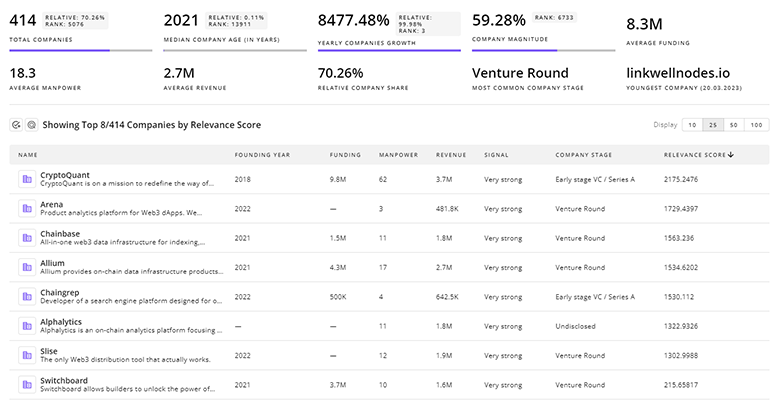
12.8K Charging Station Companies
Discover Charging Station Companies, their Funding, Manpower, Revenues, Stages, and much more
Charging Station Investors
Gain insights into 4.0K Charging Station investors and investment deals. TrendFeedr’s investors tool presents an overview of investment trends and activities, helping create better investment strategies and partnerships.
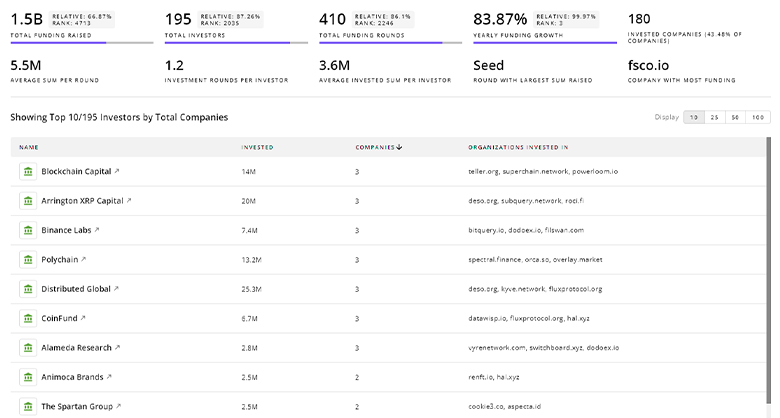
4.0K Charging Station Investors
Discover Charging Station Investors, Funding Rounds, Invested Amounts, and Funding Growth
Charging Station News
Gain a competitive advantage with access to 15.0K Charging Station articles with TrendFeedr's News feature. The tool offers an extensive database of articles covering recent trends and past events in Charging Station. This enables innovators and market leaders to make well-informed fact-based decisions.
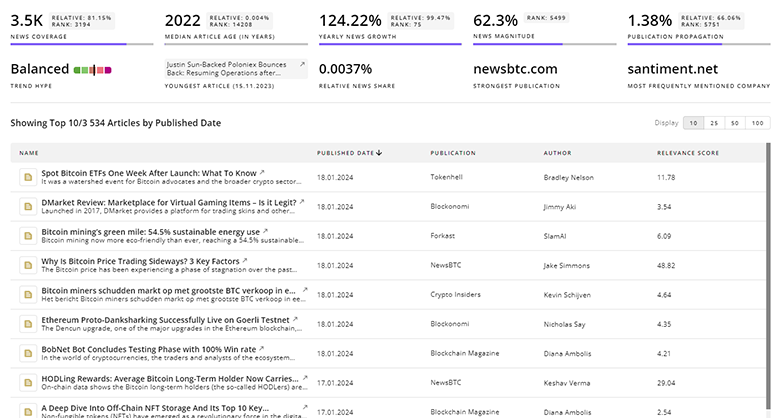
15.0K Charging Station News Articles
Discover Latest Charging Station Articles, News Magnitude, Publication Propagation, Yearly Growth, and Strongest Publications
Executive Summary
The charging station market will reward actors that pair energy access with operational software. Short-term value still flows from installing additional stalls, but medium-term advantage accrues to those who reduce host carbon intensity, shrink demand-charge exposure, and control the software layer that manages utilization and billing. Strategic moves that merit priority are: secure renewable or buffered energy at key sites, adopt open protocols to ensure roaming and plug-and-charge compatibility, and pursue service models that convert capex barriers into recurring revenue. That combination converts charging points from cost centers into revenue-generating, grid-interactive assets.
We seek partnerships with industry experts to deliver actionable insights into trends and tech. Interested? Let us know!