Clinical AI Report
: Analysis on the Market, Trends, and TechnologiesThe clinical AI market is shifting from isolated diagnostic tools to integrated, workflow-centric systems that drive measurable operational value: the sector had an estimated market size of $3.37B in 2022 and is projected to reach $20.09B by 2027, with an implied CAGR of 42.9%. This growth is concentrated in applications that combine imaging, patient-matching for trials, ambient documentation, and agentic orchestration—creating a premium for solutions that can demonstrate quantified safety (uncertainty estimation), local contextualization, and seamless EHR integration.
We updated this report 57 days ago. Noticed something’s off? Let’s make it right together — reach out!
Topic Dominance Index of Clinical AI
The Topic Dominance Index trendline combines the share of voice distributions of Clinical AI from 3 data sources: published articles, founded companies, and global search
Key Activities and Applications
- Computer-aided diagnosis and imaging augmentation — AI pipelines that flag urgent findings, prioritize studies, and embed into radiology workflows remain the primary revenue driver; clinical deployments emphasize regulatory clearance as a market entry requirement.
- Clinical trial optimization (design, site selection, recruitment, retention) — AI models that use real-world and EHR data to accelerate patient matching and adaptive trial design reduce time-to-first-dose and trial cost pressure.
- Ambient clinical documentation and transcription — voice-driven and ambient scribe tools that convert consultations into structured notes and billing codes target direct clinician time savings and downstream revenue capture.
- Remote patient monitoring and predictive analytics — wearable and biosignal analytics for early detection (sepsis, respiratory decline) shift care from reactive to predictive, supporting risk-based monitoring in trials and care pathways.
- Agentic workflow orchestration and autonomous assistants — multi-step agentic systems coordinate scheduling, orders, triage, and follow-up across systems, turning disparate point solutions into continuous care flows.
- AI assurance, bias mitigation and governance — tools that measure model confidence, detect bias, and maintain audit trails are now mandatory for enterprise adoption and regulator acceptance.
Emergent Trends and Core Insights
- Shift from isolated models to agentic orchestration — AI agents that execute multi-step clinical tasks are moving from R&D to initial production deployments, bringing requirements for observability, safety, and policy enforcement.
- Explainability and uncertainty quantification become table stakes — solutions that expose confidence metrics and provenance win trust from clinicians and procurement committees; commercial demand favors vendors that operationalize UQ at inference time.
- Federated and localized training as a deployment default — privacy constraints and data residency rules push federated learning and on-site model packaging, increasing the strategic value of companies offering secure distributed pipelines.
- RAG architectures with controlled knowledge sources for clinical LLMs — retrieval-augmented generation anchored to verified clinical content limits hallucination risk and satisfies audit requirements when applied to documentation and decision support AI in Clinical Trials Market Size to Hit USD 22.36 Bn by 2034.
- Commercial focus on measurable operational ROI — buyers prioritize metrics such as documentation time reduction, imaging throughput uplift, and trial enrollment acceleration over textbook accuracy improvements Digital Health Trends 2024 | IQVIA.
- Regulatory harmonization remains incomplete — uneven approvals and fragmented datasets create cross-jurisdictional scaling risk; firms that bake compliance and auditability into their stack capture procurement-level advantage Artificial Intelligence in Clinical Practice Physician Perspective, 2024.
Technologies and Methodologies
- Deep learning (CNNs, transformers) for imaging and signal analysis — the foundation for most diagnostic and motion/physiology-based models.
- Natural language processing and generative LLMs for documentation — LLMs plus domain grounding (RAG) power ambient scribing, note summarization, and triage assistants Generative AI In Healthcare: Current trends and future outlook.
- Federated learning and on-site model containers — privacy-preserving training and packaged local inference reduce data transfer risk and support regulatory compliance.
- Uncertainty quantification and model monitoring (MLOps for high-stakes medicine) — continuous drift detection, confidence scoring, and audit logs enable safe production use and post-market surveillance Explainable AI market forecasts.
- Neuro-symbolic and hybrid architectures — combining rule-based logic with learned representations improves interpretability and deterministic behaviour for clinical decision rules.
- Agentic orchestration frameworks and observability stacks — platforms that support multi-agent coordination, testing, and traceability become critical infrastructure for clinical automation AgentOps.
Clinical AI Funding
A total of 275 Clinical AI companies have received funding.
Overall, Clinical AI companies have raised $9.7B.
Companies within the Clinical AI domain have secured capital from 1.1K funding rounds.
The chart shows the funding trendline of Clinical AI companies over the last 5 years
Clinical AI Companies
- SIMBO.AI — SIMBO.AI supplies a Symbolic RAG architecture designed to control and fact-check generative outputs for regulated customers, with targeted use in ambient scribing and front-desk voice automation. The platform emphasizes deterministic retrieval and hallucination mitigation, which directly addresses audit and safety requirements in clinical documentation. This positioning lowers the friction for health systems that require grounded LLMs for patient-facing and billing workflows.
- Intelligencia AI — Intelligencia AI focuses on de-risking drug development and clinical trials through risk prediction and interpretability tools that pull together sponsor, CRO, and site data. Their models quantify trial risk drivers and provide scenario analyses used in protocol design and site selection, enabling faster, evidence-driven decisions for sponsors. This specialization positions them to capture pharma R&D budgets that prioritize actionable intelligence over generic analytics.
- Recourse AI — Recourse AI builds life-science and healthcare-grade conversational agents and digital humans for training, patient engagement, and internal medicine education. Their platform emphasizes domain safety and real-time interactions, enabling clinical teams to run scenario-based simulations and generate scalable training content that improves clinician readiness. The company’s no-code tooling accelerates content creation for specialty training programs and patient communication scenarios.
- GENAIZ — GENAIZ offers a federated learning and life-science data platform that lets hospitals, academics, and biopharma partners share models without exposing raw patient data. Their unsupervised validation and quality-control suites speed document completeness checks and large-scale pattern discovery, which is particularly useful for multi-site oncology and pharmacovigilance projects. By enabling secure, monetizable data collaboration, they reduce a major barrier to cross-institutional model generalization.
- Themis AI — Themis AI built Capsa, a platform that injects uncertainty quantification into existing models so they self-report confidence and flag likely failures. This capability is especially valuable in clinical settings where provenance and verifiable uncertainty determine whether an output can be actioned. Themis AI’s approach reduces the operational risk of deploying generative and predictive models in production health systems.
Gain a better understanding of 746 companies that drive Clinical AI, how mature and well-funded these companies are.
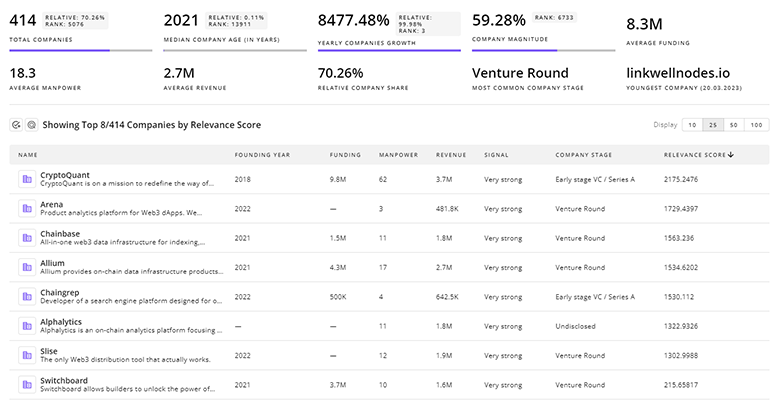
746 Clinical AI Companies
Discover Clinical AI Companies, their Funding, Manpower, Revenues, Stages, and much more
Clinical AI Investors
Gain insights into 1.4K Clinical AI investors and investment deals. TrendFeedr’s investors tool presents an overview of investment trends and activities, helping create better investment strategies and partnerships.
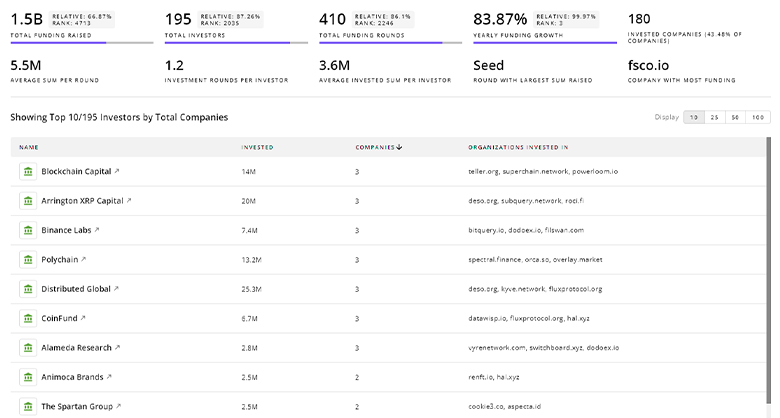
1.4K Clinical AI Investors
Discover Clinical AI Investors, Funding Rounds, Invested Amounts, and Funding Growth
Clinical AI News
Gain a competitive advantage with access to 1.1K Clinical AI articles with TrendFeedr's News feature. The tool offers an extensive database of articles covering recent trends and past events in Clinical AI. This enables innovators and market leaders to make well-informed fact-based decisions.
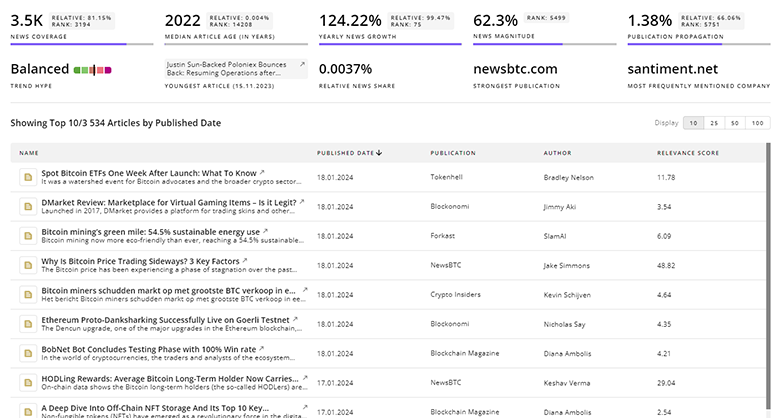
1.1K Clinical AI News Articles
Discover Latest Clinical AI Articles, News Magnitude, Publication Propagation, Yearly Growth, and Strongest Publications
Executive Summary
Clinical AI has entered a phase where operational trust, contextual relevance, and governance determine winners more than headline model performance. Firms that combine rigorous uncertainty quantification, controlled knowledge grounding, and deep EHR/workflow integration will capture procurement dollars and scale across sites. For investors and health systems, the immediate tactical priorities are to fund or procure (1) AI assurance and monitoring stacks, (2) RAG implementations that preserve data sovereignty, and (3) agentic orchestration platforms that deliver measurable clinician time savings and trial efficiencies.
We seek partnerships with industry experts to deliver actionable insights into trends and tech. Interested? Let us know!