
Collaborative Workspace Report
: Analysis on the Market, Trends, and TechnologiesThe collaborative workspace sector consolidates around two value pools—physical space orchestration and digital workspace platforms—while the internal data records 1,002 active companies operating in this space, showing the market’s scale and fragmentation. Market signals show strong revenue potential in adjunct segments (for example, coworking revenue is projected at $27.64 billion in 2025), yet funding has shifted to efficiency and software-first plays, forcing operators to trade pure growth for operational intelligence. The practical consequence: winners will be those who convert spatial data and presence signals into continuous, AI-assisted workflows that reduce meeting overhead and materially improve utilization and employee experience.
We updated this report 300 days ago. Noticed something’s off? Let’s make it right together — reach out!
Topic Dominance Index of Collaborative Workspace
The Topic Dominance Index trendline combines the share of voice distributions of Collaborative Workspace from 3 data sources: published articles, founded companies, and global search
Key Activities and Applications
- Private-office and curated focus spaces: Operators shift capacity mix from hot-desks toward private offices to meet demand for concentrated work time and privacy.
- So what: Pricing mixes and long-term leases must reflect higher yields per square foot for private offerings and provide flexible conversion between private and collaborative modes.
- Hybrid presence orchestration and booking: Software that lets teams declare schedules, reserve desks, and analyze presence metrics (declaring availability, team maps, utilization analytics) drives operational decisions.
- So what: Occupancy analytics become core KPIs suppliers must expose to enterprise clients to justify workspace budgets.
- Async-first collaboration and meeting synthesis: Tools that convert live meetings into searchable knowledge, extract action items, and enable threaded follow-ups reduce live meeting time and mitigate fatigue.
- So what: Providers that embed reliable automatic minutes and action tracking will demonstrate measurable time savings per employee.
- Immersive and spatial virtual offices: Spatial audio/video environments and XR workrooms that simulate proximate interaction support design, engineering, and innovation workflows Kumospace.
- So what: These features justify premium subscriptions for teams that require high-fidelity visual collaboration.
- Workspace experience platforms for landlords and corporates: Tenant and employee experience platforms integrate booking, billing, community, and building services to convert real estate into service revenue.
- So what: Real-estate owners that adopt these platforms can recapture margin lost to pure operators by selling experience and data services.
Emergent Trends and Core Insights
- Platformization wins over point tools: Users reject app sprawl; platforms that integrate scheduling, billing, community, and analytics gain stickiness.
- So what: Niche vendors must define clear integration roles (ingredient provider, OEM, or aggregator) or accept lower valuations.
- AI as operational fabric: AI moves from assistant features to contextual synthesis (catch-up lists, relevance filters, auto-provisioning of workspaces) as per patent filings and market forecasts.
- So what: AI that reduces context switching will translate into measurable productivity lifts and a defensible product moat.
- Asynchronous collaboration matures: Firms emphasize async meeting reduction, with AI summaries and threaded workstreams becoming standard product requirements 2025 Workplace Collaboration: Statistics, Trends & Takeaways Cosmos Video.
- So what: Adoption metrics should shift from meeting minutes to reduction in live meeting hours and faster decision velocity.
- Physical marketplaces fragment; digital aggregators expand reach: Local coworking anchors retain community value, while aggregators and digital brokers expand enterprise footprint access MillWorks CoSharing WorkSpace Worklib.
- So what: Operators must choose between deep local community plays or integration into global booking networks to scale.
- Data governance and compliance become procurement gates: Enterprise buyers prioritize GDPR, HIPAA, and auditability for collaboration platforms to qualify for procurement CollabWorkx.
- So what: Security posture, data residency, and auditable agent behavior determine enterprise TAM access.
Technologies and Methodologies
- Contextual AI and activity filtering: Patent activity emphasizes AI that curates user catch-up lists and surfaces relevant workspace items, reducing noise.
- So what: Embedding lightweight personalization engines will raise per-user utility and retention.
- Spatial computing and persistent virtual spaces: XR/VR patents and offerings aim to keep stateful collaboration canvases that persist across sessions.
- So what: Persistence supports async workflows by preserving artifacts and context between synchronous touchpoints.
- Integrated experience platforms (PropTech overlap): Buildings expose APIs for booking, access, and occupant services to feed tenant experience platforms.
- So what: Operators that connect building systems to member apps can monetize services beyond desks.
- Occupancy sensors and automated operations: Smart booking, occupancy detection, and energy control optimize utilization and costs The Future of Coworking Spaces: Trends and Insights - Industrious.
- So what: Faster payback on fit-out and lower operating expense improves unit economics for physical operators.
- No-code workspace composition: Low-code builders let teams assemble tailored workspaces combining CRM, HR, and project modules Amwork.
- So what: Enterprises can prototype workflows without heavy IT involvement, accelerating adoption.
Collaborative Workspace Funding
A total of 235 Collaborative Workspace companies have received funding.
Overall, Collaborative Workspace companies have raised $4.0B.
Companies within the Collaborative Workspace domain have secured capital from 660 funding rounds.
The chart shows the funding trendline of Collaborative Workspace companies over the last 5 years
Collaborative Workspace Companies
- Deskare
Deskare provides hybrid presence orchestration and space analytics that let teams declare schedules, find colleagues, and manage flex-office logistics across countries where it operates. Its platform addresses utilization and policy enforcement while integrating with standard workplace tools, making it a fit for enterprises seeking operational control without changing employee workflows. - Kino Live
Kino Live builds an always-on online co-working environment with spatial spaces and private rooms that simulate in-office proximity; it emphasizes continuous side-by-side work sessions that reduce meeting switching. The product targets distributed teams that need ambient presence and persistent micro-interactions rather than scheduled video calls. - Triberry
Triberry converts live product builds and application artifacts into interactive workspaces so product teams collaborate directly on real builds instead of on detached artifacts. That approach reduces meeting prep and accelerates QA and iteration cycles by surfacing context where engineers and stakeholders already work. - Spaceware
Spaceware provides a tenant and employee experience platform that connects building services, booking, and community features for landlords and operators. By treating buildings as platforms, Spaceware creates operational workflows and monetizable services that increase retention for tenants and tenants' employees.
Gain a better understanding of 1.3K companies that drive Collaborative Workspace, how mature and well-funded these companies are.
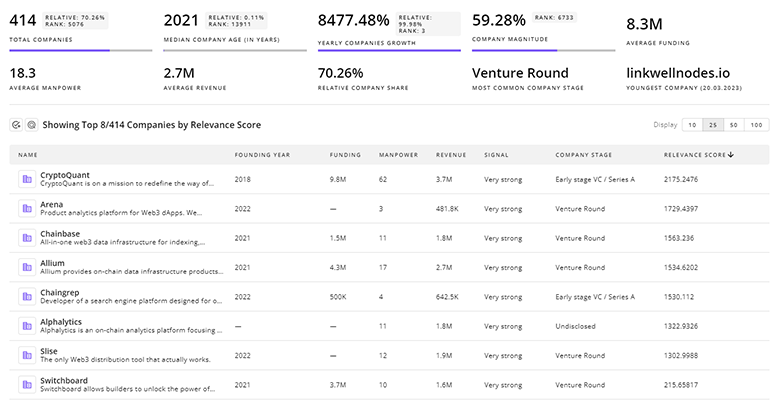
1.3K Collaborative Workspace Companies
Discover Collaborative Workspace Companies, their Funding, Manpower, Revenues, Stages, and much more
Collaborative Workspace Investors
Gain insights into 904 Collaborative Workspace investors and investment deals. TrendFeedr’s investors tool presents an overview of investment trends and activities, helping create better investment strategies and partnerships.
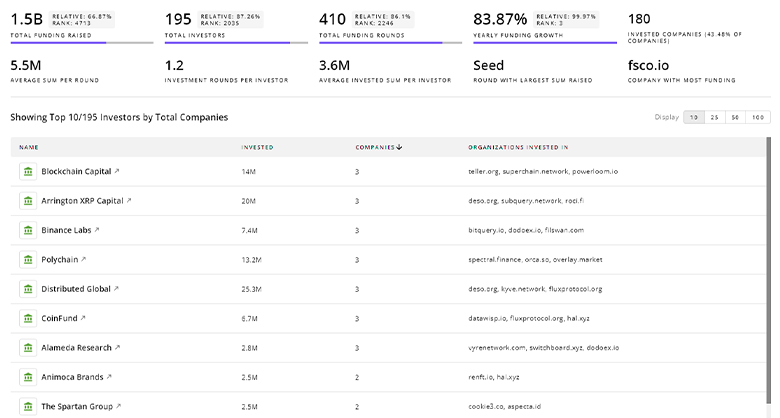
904 Collaborative Workspace Investors
Discover Collaborative Workspace Investors, Funding Rounds, Invested Amounts, and Funding Growth
Collaborative Workspace News
Gain a competitive advantage with access to 916 Collaborative Workspace articles with TrendFeedr's News feature. The tool offers an extensive database of articles covering recent trends and past events in Collaborative Workspace. This enables innovators and market leaders to make well-informed fact-based decisions.
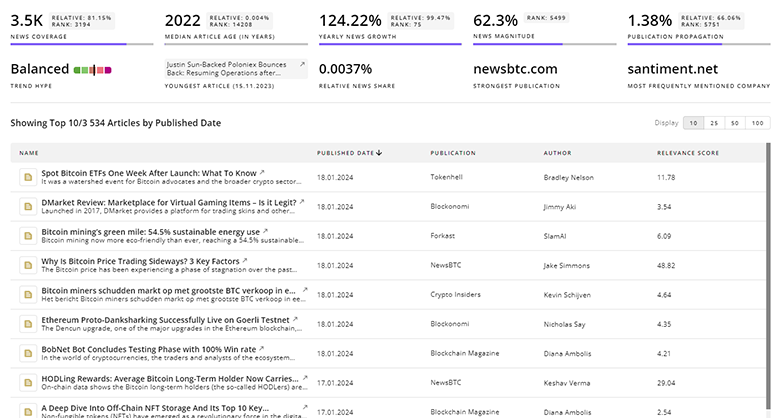
916 Collaborative Workspace News Articles
Discover Latest Collaborative Workspace Articles, News Magnitude, Publication Propagation, Yearly Growth, and Strongest Publications
Executive Summary
The collaborative workspace market is moving from transactional space rentals and isolated communication tools toward data-driven platforms that orchestrate presence, synthesize context with AI, and integrate building systems into member experiences. Physical operators must adopt or partner with digital flow architects to defend margin; software providers must prove measurable time savings and compliance readiness to access large enterprise accounts. Companies that demonstrate a clear reduction in context switching, measurable meeting-time savings, and integrated presence analytics will capture the most durable value as buyers shift spending from capex fit-outs to subscription and service models.
We seek partnerships with industry experts to deliver actionable insights into trends and tech. Interested? Let us know!