Context Modeling Report
: Analysis on the Market, Trends, and TechnologiesThe context modeling market is shifting from point solutions to infrastructure, driven by intense funding and media attention: total sector funding reported at $6.20B and 533 funding rounds to date, underscoring broad investor commitment to context-first platforms. Real-world demand for standardized context exchange and auditable grounding is converging around the Model Context Protocol (MCP) and retrieval-grounding patterns, creating immediate commercial openings for companies that can deliver low-friction, privacy-aware context pipelines while enabling specialist vendors to preserve domain value.
We updated this report 63 days ago. Noticed something’s off? Let’s make it right together — reach out!
Topic Dominance Index of Context Modeling
The Topic Dominance Index trendline combines the share of voice distributions of Context Modeling from 3 data sources: published articles, founded companies, and global search
Key Activities and Applications
- AI Orchestration & Agent Connectivity — Building infrastructure that connects generative models to business data, tools, and action primitives (tool invocation, resource access). Vendors supply MCP servers and orchestration runtimes to reduce integration friction and token costs while enabling persistent state across agents.
- Enterprise Knowledge Graphs & Context Stores — Aggregating CRM, documents, and operational telemetry into semantic graphs that serve as the single source of truth for copilots and RAG agents; this activity emphasizes lineage, permissioning, and GDPR-aware hosting for enterprise deployments.
- High-Fidelity Domain Simulation — Producing metamodels and world models (physics, behavior, geospatial) to support decision-making and test agents against verifiable ground truth; these systems enable real-time scenario analysis in engineering, logistics, and risk functions.
- Contextual Decision Intelligence — Combining internal datasets with large external signals to produce time-relevant prescriptions (e.g. supply chain adjustments, credit stress scenarios), often implemented through composite AI that blends retrieval, symbolic rules, and probabilistic reasoning ContexQ.
- Automated Research & Requirements Modeling — Applying context-aware analysis to automate user research, threat modeling, and product requirements generation, turning contextual inputs into structured artifacts (personas, journeys, risk maps) for downstream teams ProContext Inc..
Emergent Trends and Core Insights
- Standardized context exchange is becoming the infrastructure differentiator. Adoption signals for MCP and related tooling are rising across agent frameworks and vendor SDKs, shifting competitive advantage toward those that anchor on MCP and compatible servers.
- Market forecasts and buyer preferences show sustained double-digit growth for context-enabled systems: historical projections placed context-rich systems at USD 2.48 billion by 2020 and more recent regional forecasts target USD 3.1 billion by 2026, indicating continued commercial traction for context solutions in personalization and enterprise workflows.
- Many teams prefer internal control over context pipelines: 56.3% of organizations build custom context solutions while almost 48.5% of AI assistant implementations report MCP usage patterns or MCP-style integrations, exposing a split between in-house platforms and standardized server ecosystems GrowthMethod – “The Biggest Takeaways from Martech for 2026 (And Why Most …)”.
- Organizational readiness and integration friction remain a bottleneck: around 50% of firms cite technical or governance hurdles when attempting to deploy context engines, creating market demand for turnkey MCP-compliant connectors and privacy-preserving architectures.
- Edge and on-device context processing continues to gain commercial appeal for latency-sensitive use cases (AR/VR, robotics) and for privacy-constrained deployments; this encourages a split between cloud-hosted context fabrics and highly optimized on-prem or edge runtimes Contextworld – “Forecasting”.
Technologies and Methodologies
- Model Context Protocol (MCP) — Standardized primitives for Prompts, Resources, and Tools that decouple hosts from model servers; MCP reduces repeated context passing and supports persistent resources and tool invocation across agents Model Context Protocol.
- Agentic Context Engineering (ACE) — A pattern that treats context as an evolving playbook with role-based agents (Generator, Reflector, Curator) that incrementally maintain and validate context artifacts instead of rewriting full context windows on each call ACE prevents context collapse with ‘evolving playbooks’ for self-improving AI agents.
- Retrieval-Augmented Generation (RAG) 2.0 & Context Stores — Architectures that combine dense and symbolic retrieval with freshness and provenance tracking; these approaches reduce hallucination risk and improve auditability in regulated environments Contextual AI.
- World Models & Metamodel Acceleration — Compact surrogate models and metamodels that approximate expensive simulations to permit near-real-time reasoning and stress-testing of agents; this is critical for engineering and safety validation workflows.
- Ontology-based Memory & Semantic Web Tooling — Use of RDF/SPARQL and modular ontologies to encode long-term memory and enable semantic queries that align LLM outputs with formalized business concepts.
- Federated / Privacy-Preserving Training & On-Device Inference — Techniques (federated learning, encrypted retrieval, on-device SLMs) that keep raw data local while permitting shared context signals across organizational boundaries, addressing data-sovereignty and compliance constraints.
- Interpretable & Steerable Models — Tooling for traceability, circuit tracing, and counterfactual explanation that let auditors and operators validate how context influenced a decision, a requirement for finance, healthcare, and government customers.
Context Modeling Funding
A total of 168 Context Modeling companies have received funding.
Overall, Context Modeling companies have raised $6.2B.
Companies within the Context Modeling domain have secured capital from 533 funding rounds.
The chart shows the funding trendline of Context Modeling companies over the last 5 years
Context Modeling Companies
- Smithery — A small team building an AI orchestration platform that focuses on connecting agentic tools to MCP servers so enterprises can host and extend their agent capabilities. Smithery emphasizes modular MCP integrations to lower friction for tool and resource discovery; its early traction and focused stack position it as an integration-first specialist for firms adopting MCP-based agents.
- Janix — Provides custom AI agents and MCP server consulting for event and enterprise workflows, delivering dedicated agents on customer infrastructure to handle repetitive operational tasks such as sponsor research and ROI calculations. Janix targets tight vertical use cases where data control and tenancy matter, offering a pragmatic path for organizations that need bespoke agents without ceding control to public cloud toolchains.
- Qontext — European context management platform that unifies fragmented corporate data into a knowledge graph with entity extraction, relationship mapping, and granular access controls. Qontext emphasizes GDPR-compliant hosting and real-time context freshness so internal copilots and automations consume consistent strategic IP rather than stale documents.
- Miura Simulation — Builds a data-centric simulation backbone and metamodel tooling (Miura Nexus) that centralizes engineering data and exposes AI-ready endpoints for simulation acceleration. By dramatically reducing simulation time, Miura enables real-time decision loops in engineering that previously required batch processes, creating a high-value niche in regulated industrial settings.
- Concept m AI — Develops Morphological AI Twins that emulate consumer behavior at depth for product testing and marketing experiments. Concept m AI offers a novel path for context modeling in customer research: instead of relying on sparse survey data, it generates synthetic consumer personas with consistent behavioral dynamics to stress-test product concepts and messaging.
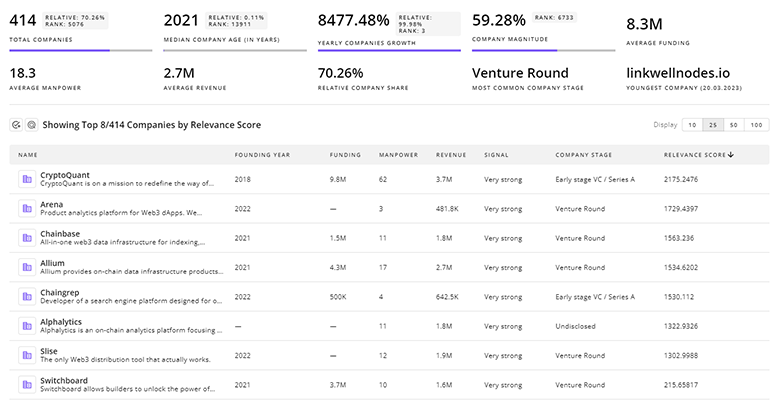
Gain a better understanding of 835 companies that drive Context Modeling, how mature and well-funded these companies are.
835 Context Modeling Companies
Discover Context Modeling Companies, their Funding, Manpower, Revenues, Stages, and much more
Context Modeling Investors
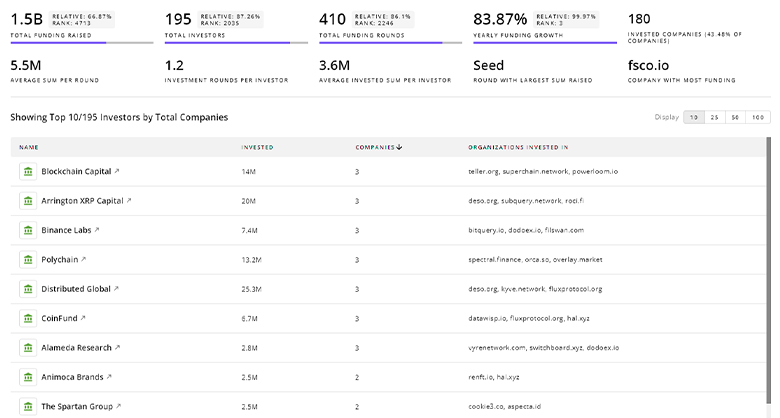
Gain insights into 820 Context Modeling investors and investment deals. TrendFeedr’s investors tool presents an overview of investment trends and activities, helping create better investment strategies and partnerships.
820 Context Modeling Investors
Discover Context Modeling Investors, Funding Rounds, Invested Amounts, and Funding Growth
Context Modeling News
Gain a competitive advantage with access to 1.5K Context Modeling articles with TrendFeedr's News feature. The tool offers an extensive database of articles covering recent trends and past events in Context Modeling. This enables innovators and market leaders to make well-informed fact-based decisions.
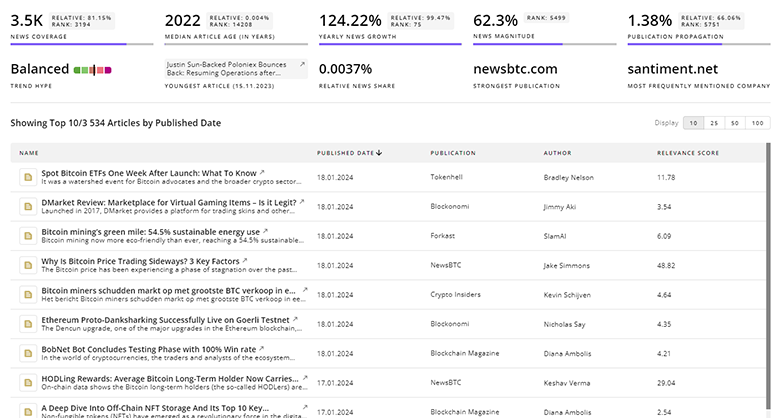
1.5K Context Modeling News Articles
Discover Latest Context Modeling Articles, News Magnitude, Publication Propagation, Yearly Growth, and Strongest Publications
Executive Summary
Context modeling has moved from academic curiosity to a practical, commercially-driven infrastructure play. Companies that capture the standard interfaces for context exchange, guarantee provenance and auditability, and offer low-friction connectors into enterprise systems will control the primary integration points between business data and generative models. At the same time, domain specialists with high-fidelity simulation assets or unique behavioral models will retain premium value when their outputs serve as verifiable ground truth or regulatory evidence. Strategic choices for executives are therefore binary and consequential: invest in owning context plumbing and standard compliance, or consolidate vertical advantage where context represents non-replicable domain knowledge. Short-term priorities should be to operationalize MCP-compatible connectors, formalize provenance and privacy controls, and fund a small team to evaluate which niche simulation partners are essential to your business workflows.
We seek partnerships with industry experts to deliver actionable insights into trends and tech. Interested? Let us know!