Cross Border Logistics Report
: Analysis on the Market, Trends, and TechnologiesThe cross-border logistics market sits at a strategic inflection where digitization and shifting trade corridors are re-pricing services: the sector’s 2024 market size is $258,000,000,000 with a projected pathway to $348,100,000,000 by 2030, supporting a steady 5.1% CAGR that reflects ongoing structural demand for cross-border movement and compliance orchestration. Growth is concentrated in e-commerce-driven parcel flows and North American nearshoring, while market winners will be the actors that pair rigorous customs automation with real-time orchestration and multimodal execution Cross-border E-commerce Logistics Market Size Report 2030 – Grand View Research.
We updated this report 258 days ago. Noticed something’s off? Let’s make it right together — reach out!
Topic Dominance Index of Cross Border Logistics
The Topic Dominance Index trendline combines the share of voice distributions of Cross Border Logistics from 3 data sources: published articles, founded companies, and global search
Key Activities and Applications
- Customs clearance automation and landed-cost calculation — Platforms centralize tariff, duty, and tax logic to deliver accurate landed cost at checkout and pre-validate filings to reduce border holds, a primary operational focus for cross-border merchants and brokers.
- Last-mile cross-border fulfillment and returns management — Providers combine overseas bonded inventory with local last-mile partners to compress delivery times and localize returns; this is rising fastest in B2C corridors where return rates materially affect acquisition economics Cross Border E-Commerce Logistics Market.
- US-Mexico corridor optimization / nearshoring enablement — Asset carriers and tech platforms optimize dense south–north lanes (dedicated LTL and cross-dock networks) to support manufacturers relocating production; physical footprint expansion at inland ports is a key activity United States Cross Border Road Freight Transport Market Report and Forecast 2024-2032.
- Multimodal orchestration and intermodal drayage — Integrating rail, short-sea, and road to balance lead time and cost is an increasingly commercial activity for high-volume shippers trying to manage carbon and capacity exposure Global Cross-border E-commerce Logistics Competitive Landscape Professional Research Report 2025.
- Temperature-controlled cross-border cold chain — End-to-end cold chain from origin to final mile (including temperature telemetry and bonded facilities) is expanding for pharmaceuticals and perishable food exports, creating specialized lane and compliance services.
Emergent Trends and Core Insights
- Platform vs. asset bifurcation — The field divides between technology-first orchestration platforms that own the customer interface and asset owners that compete on capacity and specialized handling; investors favor high-leverage, data-rich platforms while incumbents defend margin through scale
- Regulation and de-minimis changes raise landed-cost complexity — Policy shifts in de-minimis thresholds and anti-transshipment enforcement materially raise compliance costs per parcel, prompting consolidation of shipments and greater use of bonded warehouses to manage cash flow and duty timing.
- Nearshoring reshapes lane economics — Mexico's rise as a primary U.S. supplier accelerates capacity investment along southern corridors and increases LTL density; carriers and 3PLs are reconfiguring networks to favor northbound industrial flows
- Predictive compliance and anticipatory customs — Firms move from reactive filing to predictive clearance using port and carrier telemetry plus AI to reduce dwell times; the objective is to make customs processing visible and schedulable in the same way as capacity
- Under-served reverse logistics and lifecycle services — Forward logistics has outpaced innovation in returns, repair, and take-back processes; this gap creates an attractive white space for companies that can operationalize cross-border reverse flows profitably.
Technologies and Methodologies
- API-first orchestration stacks and carrier EDI/API integration — Standardized APIs accelerate partner onboarding and drive exception-driven workflows that cut manual touchpoints and clearance times.
- Blockchain for immutable trade documentation — Distributed ledgers are used to secure bills of lading and customs filings, reducing reconciliation effort and fraud risk for high-velocity parcel pipelines
- AI and ML for demand forecasting and dynamic lane selection — Predictive models allocate inventory to bonded hubs or direct shipment channels based on duty economics, inventory cost, and service promises, improving service-to-cost tradeoffs over time.
- Digital twin and simulation for network decisions — Scenario modeling of modal mixes and customs outcomes enables planners to quantify transit-time, cost, and emissions impacts before committing to lane changes.
- IoT telemetry and condition monitoring — Real-time sensors for temperature, shock, and location feed compliance and SLA enforcement for cold chain and high-value goods.
Cross Border Logistics Funding
A total of 234 Cross Border Logistics companies have received funding.
Overall, Cross Border Logistics companies have raised $24.2B.
Companies within the Cross Border Logistics domain have secured capital from 906 funding rounds.
The chart shows the funding trendline of Cross Border Logistics companies over the last 5 years
Cross Border Logistics Companies
- Camionix — Camionix offers an enterprise SaaS platform designed to unify customs, transport, and foreign-trade workflows for USA–Mexico imports and exports; the product targets SMB importers and brokers that need automated filings and visibility, and the company combines AI automation with WMS/TMS integrations to shorten clearance cycles
- Crossborderit — Crossborderit aggregates customs broker options and presents total import cost visibility for e-commerce shipments, enabling shippers to select destination country servicing and reduce landed-cost surprises at checkout; the platform is small, focused, and directly addresses the merchant checkout friction that drives cart abandonment
- e-CROSS — e-CROSS is a Latin America-focused end-to-end SaaS offering that couples localized storefront experience with logistics and financial settlement in regional currencies, lowering barriers for D2C brands entering LatAm markets; its strength lies in combining localized payments, tax/tariff handling, and partner logistics into one merchant workflow
- Crossborderly — Crossborderly offers a done-for-you international commerce solution that bundles shipping, duties, taxes, and 24/7 multilingual support for U.S. merchants expanding into Latin America and beyond, focusing on merchant experience and simplified returns and customer service, which is critical for sustained cross-border repeat rates
Gain a better understanding of 1.8K companies that drive Cross Border Logistics, how mature and well-funded these companies are.
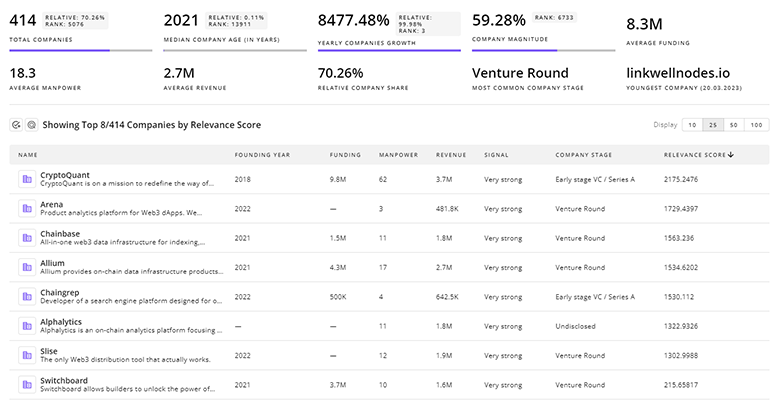
1.8K Cross Border Logistics Companies
Discover Cross Border Logistics Companies, their Funding, Manpower, Revenues, Stages, and much more
Cross Border Logistics Investors
Gain insights into 1.3K Cross Border Logistics investors and investment deals. TrendFeedr’s investors tool presents an overview of investment trends and activities, helping create better investment strategies and partnerships.
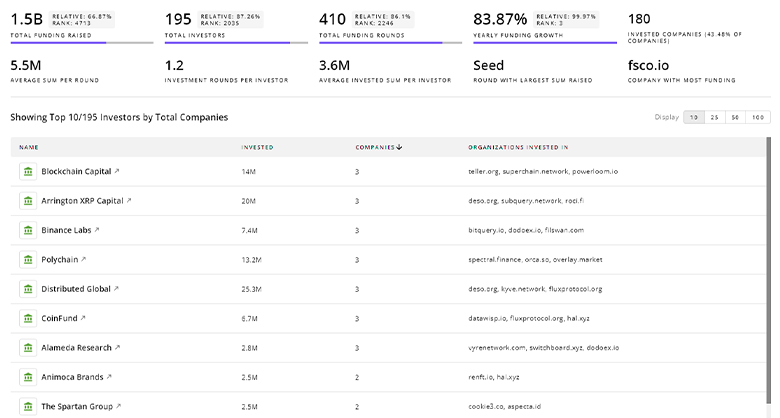
1.3K Cross Border Logistics Investors
Discover Cross Border Logistics Investors, Funding Rounds, Invested Amounts, and Funding Growth
Cross Border Logistics News
Gain a competitive advantage with access to 1.3K Cross Border Logistics articles with TrendFeedr's News feature. The tool offers an extensive database of articles covering recent trends and past events in Cross Border Logistics. This enables innovators and market leaders to make well-informed fact-based decisions.
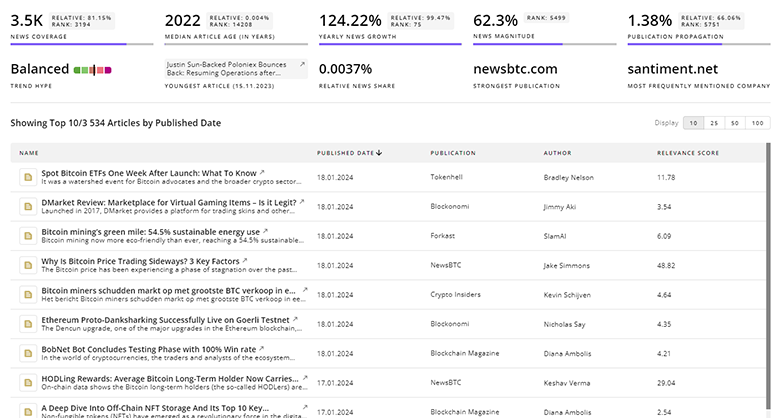
1.3K Cross Border Logistics News Articles
Discover Latest Cross Border Logistics Articles, News Magnitude, Publication Propagation, Yearly Growth, and Strongest Publications
Executive Summary
Cross-border logistics is transitioning from a capacity problem into a software and compliance choreography challenge. Short-term arbitrage comes from network densification in nearshoring corridors and the expansion of bonded warehousing, while medium-term value accrues to entities that can automate trade compliance and provide deterministic delivery promises for e-commerce. Businesses should evaluate where to invest along three vectors: (1) integration and data control to own the customer relationship, (2) operational partnerships to secure multimodal capacity and specialized handling, and (3) compliance automation that converts regulatory complexity into predictable cost and service outcomes. These choices define whether an organization earns margin as a platform orchestrator or remains a commoditized capacity supplier.
We seek partnerships with industry experts to deliver actionable insights into trends and tech. Interested? Let us know!