
Digital Education Report
: Analysis on the Market, Trends, and TechnologiesThe digital education market sits at an inflection where scale and instructional quality compete for priority: current market analysis pegs global market size at USD 43,860,000,000 for 2025, growing at a 26% compound annual rate through the forecast window, which signals large, fast-moving commercial opportunity but persistent operational friction around equitable delivery and assessment.
We updated this report 231 days ago. Noticed something’s off? Let’s make it right together — reach out!
Topic Dominance Index of Digital Education
The Topic Dominance Index trendline combines the share of voice distributions of Digital Education from 3 data sources: published articles, founded companies, and global search
Key Activities and Applications
- AI-driven adaptive curriculum generation that decomposes courses into atomic learning units and continuously reorders modules by learner performance, enabling individualized mastery pathways.
- Cloud-native LMS deployment and virtualization to support mass delivery, virtual labs, and global classroom orchestration across on-demand and live modalities.
- Hybrid/blended delivery orchestration that synchronizes self-paced modules with instructor-led sessions and local in-class activities to preserve pedagogical efficacy while scaling reach.
- Secure, automated assessment and proctoring that uses AI to generate, score, and validate assessments at scale while integrating anti-cheating and fairness controls Dugga Digital Assessment.
- Micro-credentialing and blockchain verification to make skills portable and verifiable for hiring workflows, reducing employer reliance on legacy degree signals.
- Offline & low-bandwidth delivery systems (micro-clouds, IoT classroom devices, cached content) to close the access gap in remote or infrastructure-constrained regions Critical Links.
Emergent Trends and Core Insights
- AI migrating into pedagogical control: AI moves beyond administrative tasks into core instructional decisions—content sequencing, automated remediation, and pedagogical feedback loops—making model quality a primary competitive moat Didask.
- Personalization at scale is now measurable: predictive analytics and big-data diagnostics enable early identification of weak points and targeted remediation, shifting vendor value toward demonstrable learning gains rather than raw engagement metrics.
- Practical skills and experiential training are rising in priority; simulation, workplace alignment, and competency evidence increase employer adoption of digital pathways for hiring and reskilling eDynamic Learning.
- Infrastructure arbitrage unlocks new addressable markets: solutions that operate offline, through micro-clouds or local IoT devices, produce higher adoption in underserved regions and create exportable models for resilience-focused buyers.
- Credentialing and credential portability are becoming procurement levers for enterprises that prioritize skills-matching over formal degrees; tamper-proof digital badges shorten hiring cycles and improve L&D ROI.
- Regulatory, privacy, and health debates now influence procurement: data sovereignty, low-latency personalization limits, and screen-time concerns shape product specifications demanded by institutions.
Technologies and Methodologies
- Pedagogical AI engines (content generation, adaptive sequencing, cognitive science models) that translate learning science into automated curriculum pipelines.
- Big data analytics and learning dashboards for student attrition prediction, skills gap mapping, and continuous improvement cycles that feed instructor dashboards.
- Cloud-native LMS + virtual labs to host heavy compute workloads, simulations, and real-time collaboration at institutional scale.
- Immersive XR and browser-based 3D environments for applied STEM and vocational simulation where hands-on practice matters and assessment must evaluate skill execution rather than recall MegaMinds.
- Offline micro-cloud and IoT classroom architectures that deliver content and analytics without continuous Internet, enabling secure central management with local operation.
- Blockchain-backed credential stacks to issue verifiable, portable micro-credentials that map to employer competency taxonomies.
- Modular content engineering and atomic learning units for reusability: content authoring tools that produce fine-grained components accelerate personalization and reduce content friction.
Digital Education Funding
A total of 296 Digital Education companies have received funding.
Overall, Digital Education companies have raised $9.1B.
Companies within the Digital Education domain have secured capital from 925 funding rounds.
The chart shows the funding trendline of Digital Education companies over the last 5 years
Digital Education Companies
- Enlight Ed — Enlight Ed offers a chat-style, stepwise STEM practice environment designed to simulate 1:1 tutoring while collecting diagnostic analytics for instructors; the platform focuses on teacher training use cases and classroom research pilots and is positioned as a lightweight teaching assistant for STEM teachers rather than a heavy LMS. Its design reduces teacher preparation time by providing prebuilt, scaffolded problem sequences and actionable dashboards. Early deployments emphasize improved formative assessment rates and simplified data capture for training programs.
- C1DO1 — C1DO1 digitizes practical skill training with a feedback loop that converts in-person workshops into remote, data-rich courses; the company reports that trainees using its system show measurable proficiency gains in skill domains previously thought to require tactile instruction. Its technology emphasizes granular feedback for complex motor tasks and can be applied across surgery, nursing, engineering workshops, and culinary arts, enabling institutions to convert scarce in-person resources into scalable programs. C1DO1 targets universities and vocational centers that must demonstrate competencies to employers.
- Kipin.id — Kipin enables schools to go digital in minutes even without continuous Internet by distributing curated curricula through smart classroom devices and local caching; that approach directly addresses the connectivity barrier in remote Indonesian districts and similar markets. The company's hybrid delivery model combines teacher dashboards with offline content, driving adoption in contexts where device and bandwidth constraints persist. Kipin's deployed base and teacher-ambassador network create a distribution advantage with ministries and NGOs focused on scale.
- Diplomasafe — Diplomasafe issues blockchain-backed digital diplomas and micro-credentials that employers can verify instantly; the product addresses employer demand for credible, tamper-proof evidence of skills and short-form credentials tied to courses and micro-programs. Diplomasafe's stack supports social sharing of credentials combined with verification APIs for HR systems, shortening hiring friction for skills-first recruitment. The company targets universities, bootcamps, and corporate L&D teams seeking trusted credential interoperability.
- Edulution — Edulution operates catch-up learning centers in Southern Africa using a blended model that pairs local coaches with a lightweight digital platform and evidence-based analytics; the organization emphasizes outcomes for learners who are chronically behind grade level and demonstrates a replicable model for fragile, off-grid contexts. Its focus on coaches, local employment, and measurable learning recovery makes it an operational template for public-private delivery in low-resource environments. Edulution's model signals how social mission and instructional design can combine to produce scalable learning recovery solutions.
Gain a better understanding of 3.0K companies that drive Digital Education, how mature and well-funded these companies are.
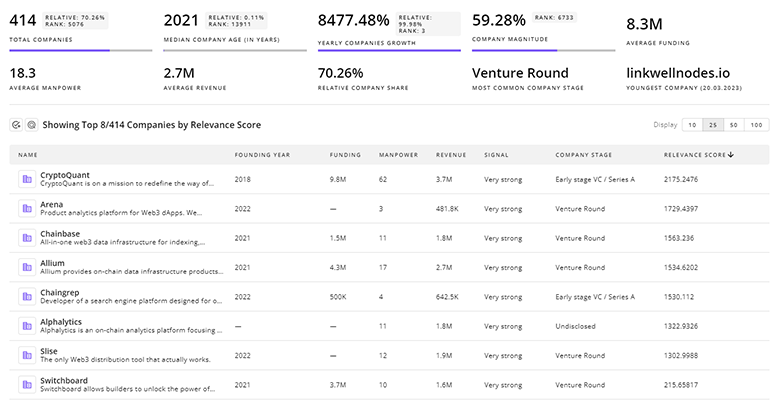
3.0K Digital Education Companies
Discover Digital Education Companies, their Funding, Manpower, Revenues, Stages, and much more
Digital Education Investors
Gain insights into 1.1K Digital Education investors and investment deals. TrendFeedr’s investors tool presents an overview of investment trends and activities, helping create better investment strategies and partnerships.
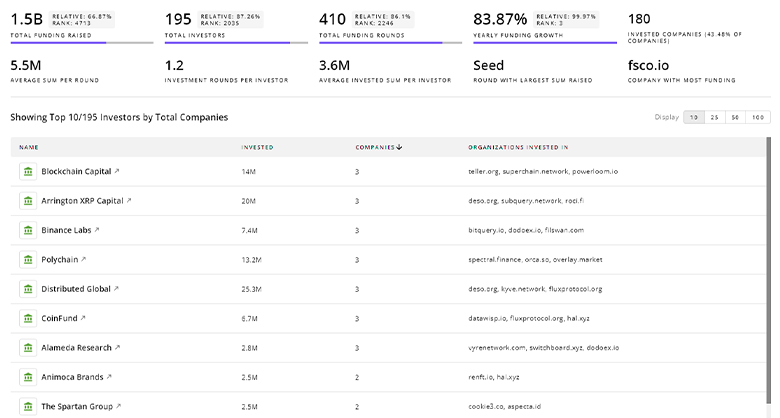
1.1K Digital Education Investors
Discover Digital Education Investors, Funding Rounds, Invested Amounts, and Funding Growth
Digital Education News
Gain a competitive advantage with access to 3.5K Digital Education articles with TrendFeedr's News feature. The tool offers an extensive database of articles covering recent trends and past events in Digital Education. This enables innovators and market leaders to make well-informed fact-based decisions.
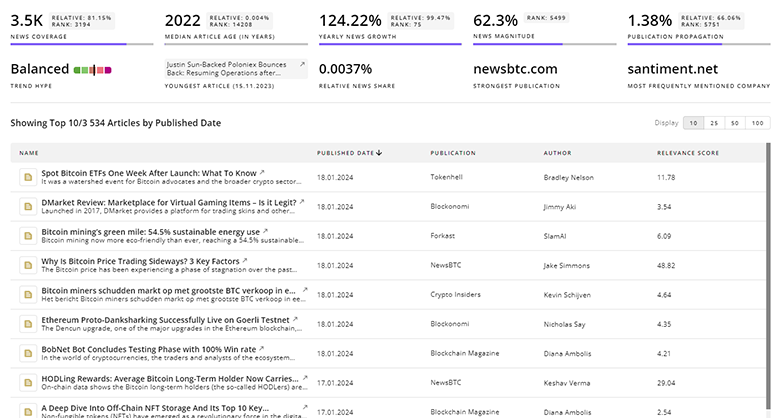
3.5K Digital Education News Articles
Discover Latest Digital Education Articles, News Magnitude, Publication Propagation, Yearly Growth, and Strongest Publications
Executive Summary
Digital education will be decided by who can prove learning, not who can only deliver content. Firms that embed rigorous measurement into instruction, that can deliver adaptive pedagogy under real connectivity constraints, and that provide trusted, portable credentialing will win institutional and corporate budgets. Buyers will prioritize demonstrated mastery gains and low-friction integration for instructors; vendors that reduce teacher workload while producing verifiable outcomes will scale fastest. Investors should prize technologies that serve as indispensable platform ingredients—assessment engines, offline delivery stacks, and credential verification layers—because they convert product performance into distribution contracts with large incumbents and governments. Institutions should allocate procurement capital to solutions that balance immediate access with long-term evidence collection, ensuring that digital investments translate into measurable human capital improvements.
We seek partnerships with industry experts to deliver actionable insights into trends and tech. Interested? Let us know!