Digital Enablement Report
: Analysis on the Market, Trends, and TechnologiesThe digital enablement landscape is at an operational inflection: total funding across the sector stands at $34.83B and 3,044 companies compete for adoption and outcomes, forcing buyers to prioritize measurable return and workforce readiness. Market forecasts show service demand expanding into the next decade as firms shift spend from legacy monetization systems to customer and employee experience investments, while platform-level winners and narrow domain specialists begin to capture the bulk of strategic value Digital Enablement Service Market – Global Forecast 2026-2032.
We updated this report 48 days ago. Noticed something’s off? Let’s make it right together — reach out!
Topic Dominance Index of Digital Enablement
The Topic Dominance Index trendline combines the share of voice distributions of Digital Enablement from 3 data sources: published articles, founded companies, and global search
Key Activities and Applications
- Revenue-system modernization: Replatforming billing, charging, and policy engines into cloud-native, API-first stacks to enable real-time monetization and flexible offer models; monetization remains a major spend category even as experience investments rise.
- Digital Employee Experience (DEX) optimization: Deploying analytics-driven DEX and in-app guidance to reduce digital friction, cut help-desk load and improve productivity metrics; firms measure DEX to justify IT spend and retention outcomes.
- Embedded, just-in-time enablement for revenue teams: Integrating enablement content, playbooks, and AI assistants into sales workflows to raise conversion rates and shorten cycles; this ties enablement spend directly to pipeline performance Sales Enablement Platform Market – 2024 – 2030.
- Workforce skilling and data literacy at scale: Rolling out role-specific learning, assessments and experiential analytics to close the digital dexterity gap and operationalize data across functions.
- Operational automation and AIOps: Applying cognitive automation to detect, predict and remediate infrastructure and application issues autonomously, reducing downtime and manual toil.
Emergent Trends and Core Insights
- Experience-first budget reallocation: Customer and employee engagement investments are growing relative to monetization, with forecasts indicating a material shift in priorities by 2030.
- Data-fabric and unified observability: Organizations adopt a data fabric approach to unify telemetry, enterprise data and model inputs so AI can act across workflows rather than in isolated pockets.
- AIOps and cognitive automation replacing reactive operations: The operational control plane is moving from human triage to algorithmic remediation and orchestration, compressing MTTR and enabling continuous delivery at scale.
- Digital Twin adoption in industrial enablement: 3D Digital Twin systems are evolving from visualization to closed-loop asset management, linking condition data to maintenance, safety and decarbonization programs.
- Low-code/no-code and citizen development for scale: Enterprises use Low-Code/No-Code to decentralize solution creation and accelerate response to operational needs, reducing backlog pressure on central IT.
- Adoption engineering as a competitive moat: Companies that pair product features with behavioral design and embedded learning secure higher realized value because adoption, not features, determines ROI.
Technologies and Methodologies
- Digital Adoption Platforms (DAPs) for in-flow guidance and measurement to drive measurable uptake of enterprise applications.
- AIOps and cognitive automation to detect anomalies, propose fixes, and execute remediation across hybrid estates.
- Data Fabric / Data Mesh constructs to decentralize ownership while preserving governance and discoverability for AI-driven workflows.
- Digital Twins and immersive 3D systems to operationalize asset state for maintenance, safety and sustainability use cases.
- Hyper-automation combining RPA, process mining and ML to orchestrate end-to-end operations and reduce manual handoffs.
- Low-Code/No-Code platforms to empower citizen builders and compress time-to-solution for tactical operational problems.
Digital Enablement Funding
A total of 357 Digital Enablement companies have received funding.
Overall, Digital Enablement companies have raised $34.8B.
Companies within the Digital Enablement domain have secured capital from 1.3K funding rounds.
The chart shows the funding trendline of Digital Enablement companies over the last 5 years
Digital Enablement Companies
- Visionaize Inc. — Visionaize Inc. provides immersive 3D Digital Twin solutions for Enterprise Asset Management that combine AI and generative assistance to deliver predictive maintenance, remote monitoring and decarbonization analytics; the product maps engineering and inspection systems into contextual 3D views to speed diagnostics and reduce on-site risk. Its niche in asset-heavy industries makes it a direct match for industrial enablement programs where physical context matters.
- Enabley — Enabley focuses on deskless-first learning and microtraining for frontline workforces, offering rapid content creation, analytics and distribution optimized for hourly and mobile workers; the platform targets scenarios where traditional L&D fails to reach operational users and where continuous refresh is required to maintain compliance. Its scale funding profile and product focus position it for deployments in retail, logistics and hospitality.
- NextAxiom — NextAxiom builds the Dynamic Work Execution Platform (DWEP) that digitalizes work by guiding, measuring and automating tasks end-to-end, effectively creating executable "digital work" artifacts tied into enterprise systems; this approach reduces human error in complex, compliance-sensitive operations. The company's emphasis on work orchestration makes it attractive where repeatability and traceability are contractually required.
- Data Literacy Academy — Data Literacy Academy delivers enterprise-scale data literacy programs and practical classroom experiences to raise workforce capability for data-driven decision-making, addressing the persistent digital dexterity shortfall that limits AI and analytics ROI. Its service-centric model couples training with measurement to show business impact.
- Edge Total Intelligence — Edge Total Intelligence provides a low-code Digital Twin and situational awareness platform that unifies applications and telemetry into a single operational view, enabling rapid composition of control-room style applications and role-based workflows. The platform's digital-twin centric architecture supports decentralized data ownership and fast incident response.
Gain a better understanding of 3.0K companies that drive Digital Enablement, how mature and well-funded these companies are.
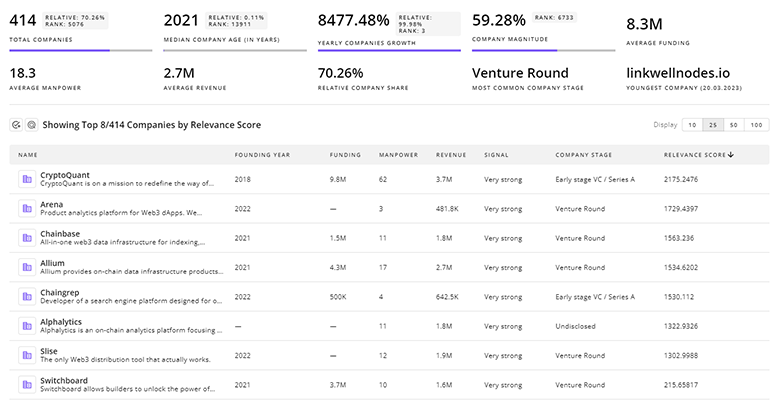
3.0K Digital Enablement Companies
Discover Digital Enablement Companies, their Funding, Manpower, Revenues, Stages, and much more
Digital Enablement Investors
Gain insights into 1.5K Digital Enablement investors and investment deals. TrendFeedr’s investors tool presents an overview of investment trends and activities, helping create better investment strategies and partnerships.
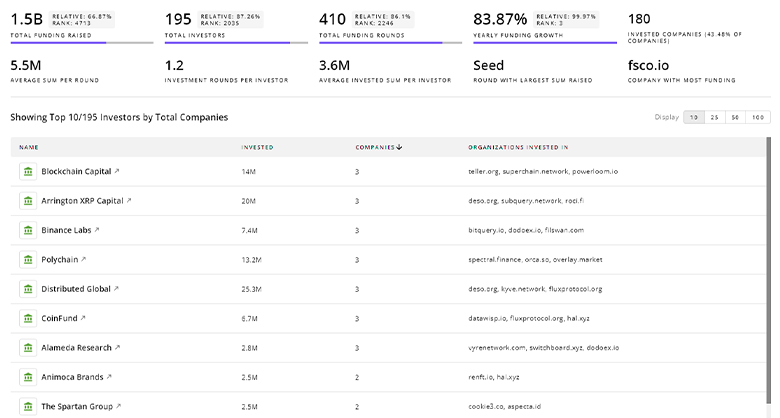
1.5K Digital Enablement Investors
Discover Digital Enablement Investors, Funding Rounds, Invested Amounts, and Funding Growth
Digital Enablement News
Gain a competitive advantage with access to 965 Digital Enablement articles with TrendFeedr's News feature. The tool offers an extensive database of articles covering recent trends and past events in Digital Enablement. This enables innovators and market leaders to make well-informed fact-based decisions.
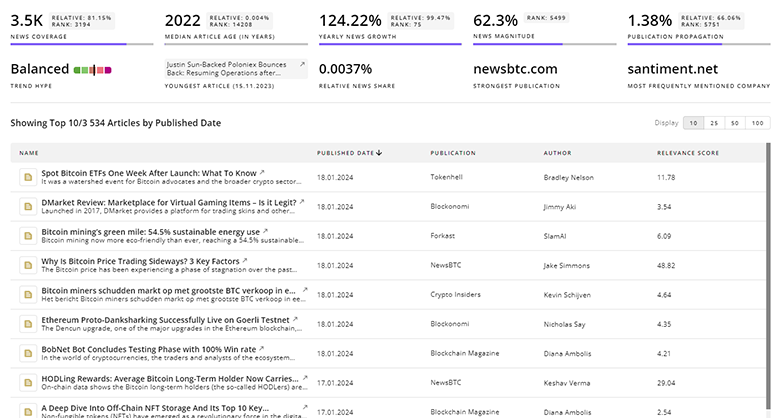
965 Digital Enablement News Articles
Discover Latest Digital Enablement Articles, News Magnitude, Publication Propagation, Yearly Growth, and Strongest Publications
Executive Summary
Digital enablement is shifting from proof-of-concept projects to outcome-driven programs that require aligned skills, integrated data architecture and adoption-centered delivery. The investment pool and company density mean buyers must choose partners that pair measurable adoption mechanics with architectures that permit continuous improvement: data fabric and AIOps for automated operations, DAPs and role-based learning for workforce capability, and Digital Twins for asset-intense environments. Providers that demonstrate routable metrics—reduced time-to-resolution, higher feature utilization, lower compliance risk—will win procurement cycles. Enterprises should prioritize vendors that combine domain-specific workflows with embedded learning and verifiable governance so technology investments convert into sustained operational advantage.
We seek partnerships with industry experts to deliver actionable insights into trends and tech. Interested? Let us know!