Digital Medicine Report
: Analysis on the Market, Trends, and TechnologiesThe digital medicine market is accelerating from pilots to clinically integrated products: market analysis records $8.9B in 2023 and a 31.5% projected CAGR that frames near-term commercial expansion. Investment flows and patent activity show a movement from basic digitization toward closed-loop medication management, personalized dosing, and clinical-grade decision support, but commercialization hinges on three constraints: validated clinical outcomes, interoperable data infrastructure, and regulated reimbursement pathways. Evidence from recent trend and patent analysis indicates firms that combine medication management with regulated software (drug+software combination products) and that own longitudinal patient identity will extract the most value as health systems seek measurable reductions in readmissions and medication-related risk.
We updated this report 14 days ago. Noticed something’s off? Let’s make it right together — reach out!
Topic Dominance Index of Digital Medicine
The Topic Dominance Index trendline combines the share of voice distributions of Digital Medicine from 3 data sources: published articles, founded companies, and global search
Key Activities and Applications
- Intelligent medication management and adherence monitoring — systems that record ingestion, reconcile prescriptions across settings, and create the Best Possible Medication History to reduce medication errors and readmissions.
- Personalized dosing and predictive digital therapeutics (DTx) — software that adapts dosing recommendations and therapeutic content using patient-specific biomarkers and usage data, moving treatment from static protocols to dynamically adjusted regimens.
- Remote patient monitoring (RPM) for chronic disease management — continuous capture of physiologic signals (BP, glucose, ECG) combined with triage automation to reduce clinician workload and detect decompensation earlier.
- Clinical decision support embedded in workflow — AI-driven CDS that surfaces contextualized, guideline-based actions inside clinician workflows to avoid alert fatigue and preserve time with patients.
- Real-world evidence generation and digital biomarkers — passive and active sensor streams converted into validated digital biomarkers to support regulatory submissions, payer negotiations, and precision patient stratification.
Emergent Trends and Core Insights
- Shift to regulated, outcome-driven digital therapeutics — product strategies now emphasize clinical validation and regulatory clearance to move from pilots to reimbursable care pathways.
- Infrastructure-first economics — control of data interoperability, identity resolution, and FHIR-native repositories creates strategic moats that capture recurring value as feature-level services commoditize.
- Convergence of SaMD and pharma — combination products (prescription drug + software) and regulated digital dosing systems provide higher margin, payer-friendly value than standalone apps.
- Federated and privacy-preserving data models — federated architectures and explainable AI are becoming operational necessities to meet HIPAA/GDPR constraints while enabling cross-site model training.
- Geographic polarization of IP and deployment — China shows heavy patenting and implementation scale while North America leads commercialization and reimbursement sophistication; companies must design jurisdiction-aware regulatory strategies.
Technologies and Methodologies
- FHIR-native clinical data repositories and identity resolution — enterprise CDRs that natively ingest FHIR/HL7, support profiles, and provide read/write integration into EPRs are strategic enablers for scaled digital medicine Smile Digital Health.
- AI/ML for personalized dosing and predictive risk — explainable models for dosing, adverse event risk prediction, and patient stratification; federated learning preserves privacy while improving model generalizability.
- Closed-loop medication systems — ingestible/patch/pill-to-cloud solutions and automated dispensing combined with software feedback loops to validate adherence and trigger interventions.
- Edge-enabled wearable and kiosk platforms — low-latency processing at device or kiosk level for continuous biosensing, enabling real-time alerts while reducing cloud bandwidth MedicubeX Ltd.
- Regulated SaaS platforms for life sciences (SaMD infrastructure) — cloud platforms architected for medical device regulatory controls that let pharma and medtech deploy SaMD rapidly with compliant telemetry and audit trails BrightInsight.
Digital Medicine Funding
A total of 135 Digital Medicine companies have received funding.
Overall, Digital Medicine companies have raised $5.3B.
Companies within the Digital Medicine domain have secured capital from 572 funding rounds.
The chart shows the funding trendline of Digital Medicine companies over the last 5 years
Digital Medicine Companies
- Closed Loop Medicine — Closed Loop Medicine builds combination drug+software products that optimize individualized dosing for chronic disease; the company has raised $49.45M and focuses on closed-loop therapeutic workflows that pair pharmacology with patient-facing digital experiences. Their model targets payer-relevant outcomes (dose optimization, adherence-linked efficacy) and positions them to capture premium reimbursement when clinical endpoints are demonstrable.
- DTECTIO — DTECTIO operates a compact R&D-first team developing AI-based digital biomarkers from passive device streams to detect cardiac arrhythmias and other early physiologic signals; their approach minimizes hardware complexity by focusing on algorithmic interpretation and clinical validation. With early clinical validation claims, they pursue a capital-efficient path toward regulated diagnostic support.
- CAREMINDr — CAREMINDr transforms standard smartphones into clinical monitoring nodes via camera-based vital sign capture and automated patient check-ins, reporting 70–90% retention rates in target FQHC/ACO deployments; the company has raised $1.48M and emphasizes operational savings and CPT-billable monitoring workflows for safety-net providers. Their product targets high-volume primary care settings where small per-patient gains scale materially.
- Sanome — Sanome builds a clinically integrated Human Digital Twin that aggregates read/write access to EMRs to produce explainable AI clinical decision support classified as Class IIb SaMD; the firm has completed a Seed round of $4.88M and focuses on embedding alerts inside clinician workflows to identify emerging risk earlier. Their emphasis on deep EPR integration addresses the interoperability moat many competitors lack.
- Doxper | a meddo health brand — Doxper provides an AI-powered digital pen/paper solution that digitizes outpatient case sheets without altering clinician behavior and already serves thousands of clinicians in India; the company reported rapid adoption and was acquired by a larger clinic operator to scale longitudinal OPD data capture. Their workflow-preserving design demonstrates how low-friction capture yields rich, structured real-world data for downstream digital medicine use.
Gain a better understanding of 610 companies that drive Digital Medicine, how mature and well-funded these companies are.
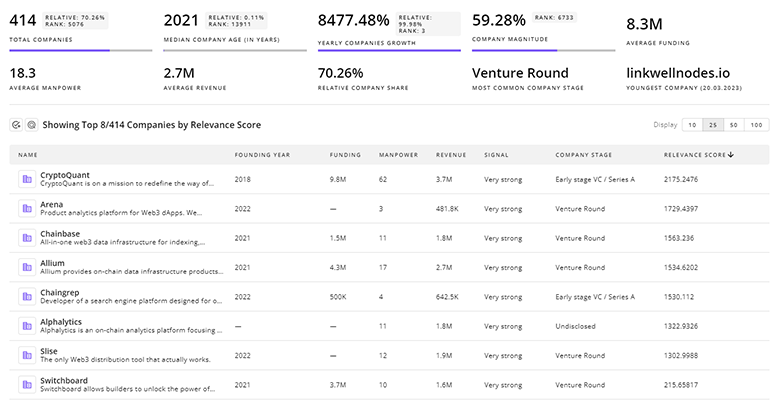
610 Digital Medicine Companies
Discover Digital Medicine Companies, their Funding, Manpower, Revenues, Stages, and much more
Digital Medicine Investors
Gain insights into 647 Digital Medicine investors and investment deals. TrendFeedr’s investors tool presents an overview of investment trends and activities, helping create better investment strategies and partnerships.
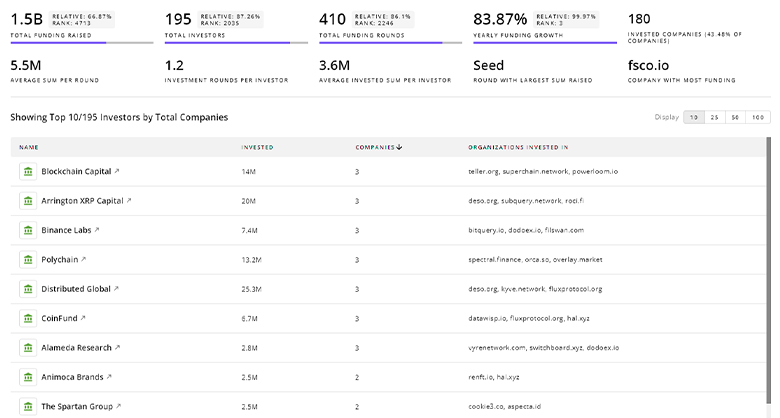
647 Digital Medicine Investors
Discover Digital Medicine Investors, Funding Rounds, Invested Amounts, and Funding Growth
Digital Medicine News
Gain a competitive advantage with access to 909 Digital Medicine articles with TrendFeedr's News feature. The tool offers an extensive database of articles covering recent trends and past events in Digital Medicine. This enables innovators and market leaders to make well-informed fact-based decisions.
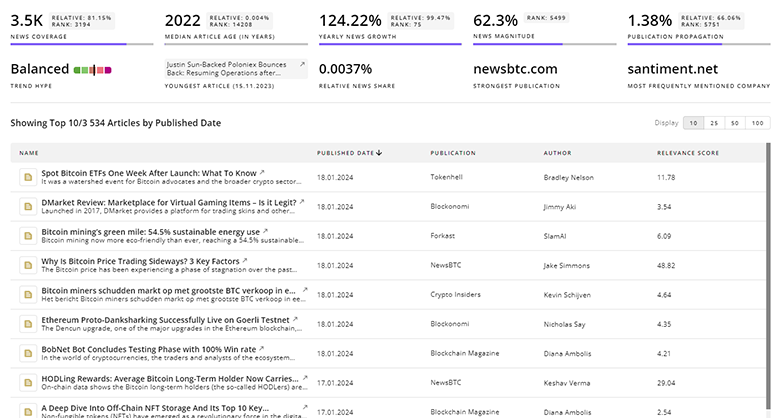
909 Digital Medicine News Articles
Discover Latest Digital Medicine Articles, News Magnitude, Publication Propagation, Yearly Growth, and Strongest Publications
Executive Summary
Digital medicine has moved from conceptual pilots to a strategic contest over data infrastructure, regulatory-grade software, and payer-relevant outcomes. Firms that control reliable, interoperable patient records, demonstrate measurable clinical benefit, and embed solutions in clinician workflows will command premium positions as health systems seek to reduce medication errors, lower readmissions, and manage chronic disease cost trajectories. For market entrants and investors, the practical path to scale is clear: develop clinically validated, regulatorily-aligned products; design for FHIR-first interoperability; and align commercial models with value-based payment levers so that digital medicine interventions show concrete ROI at scale Technology Review - Scaling integrated digital health.
We seek partnerships with industry experts to deliver actionable insights into trends and tech. Interested? Let us know!