Medical AI Report
: Analysis on the Market, Trends, and TechnologiesThe medical AI segment is growing rapidly: the internal trend data reports a market size of $1,280,000,000 in 2024 with a projected CAGR of 27.1%, and a forecast to $14,460,000,000 by 2034. Secondary industry estimates for the broader AI-in-healthcare category present much larger totals—illustrative forecasts cite $1,033.27 billion by 2034, highlighting the gap between narrow clinical segments and the full healthcare AI opportunity AI In Healthcare Market Size & Share | Industry Report, 2033. Market momentum is concentrated in imaging, predictive analytics, documentation automation, and genomics-driven personalization; concurrently, regulatory and explainability requirements are shifting investment toward verifiable, deployable systems that integrate into care workflows.
We last updated this report 283 days ago. Tell us if you find something’s not quite right!
Topic Dominance Index of Medical AI
To gauge the impact of Medical AI, the Topic Dominance Index integrates time series data from three key sources: published articles, number of newly founded startups in the sector, and global search popularity.
Key Activities and Applications
- Medical imaging analysis and diagnostics — AI systems automate segmentation, triage and quantitative measures across X-ray, CT, MRI, ultrasound and pathology; these applications drive a majority of validated clinical deployments and regulatory clearances.
- Predictive analytics and disease progression monitoring — Risk-stratification models and time-to-event predictors reduce readmissions and enable earlier interventions; clinical AI trial design and RWE use cases expand this activity beyond point diagnosis Artificial Intelligence in Clinical Practice Physician Perspective - 2024.
- Personalized treatment planning (genomics + multimodal fusion) — AI that combines genomics, imaging and EHR data supports precision oncology and therapy selection; platforms that ingest multi-modal inputs show measurable gains over single-modal baselines and become high-value data assets Deep Genomics.
- AI-powered clinical documentation and ambient scribing — Voice/NLP agents reduce clinician administrative time and improve billing capture; systems reporting tangible clinician time savings accelerate purchaser interest among hospitals.
- Drug discovery and digital-twin simulations — Generative models and digital patient twins compress early R&D timelines and inform trial design; firms using in-silico approaches attract larger late-stage rounds and strategic pharma partnerships Insilico Medicine.
- Remote patient monitoring and IoMT integration — Continuous telemetry fused with on-edge inference supports chronic care pathways and RPM reimbursement cases, expanding addressable markets outside hospital settings.
- Revenue cycle automation and autonomous coding — AI applied to coding and claims reduces turnaround and leakage; automation vendors demonstrate near-term ROI that shortens sales cycles with payers and hospital finance teams A new Rx: AI for operations in health care.
Emergent Trends and Core Insights
- Generative and agentic AI applied to clinical workflows — Large language models and multi-agent systems are moving from experimental pilots to production pilots for note generation, triage and administrative agents; safety and hallucination control are now gating factors for procurement Deloitte 2026 Global health care outlook AI in Clinical Care Market.
- Shift to multimodal, patient-centric intelligence — Combining imaging, genomics, wearables and EHRs yields material improvements in outcome prediction and therapy matching; vendors that own multimodal pipelines convert better to integrated clinical workflows Multimodal AI in Biomedicine.
- Verifiable and explainable AI becomes a buying criterion — Hospitals demand audit trails, drift detection and human-interpretable rationales; explainability toolkits and governance stacks are now productized and influence vendor selection New standards for AI clinical trials will help spot snake oil and hype.
- Edge and on-device inference for low-latency care — Moving inference to devices reduces latency and data transfer friction for point-of-care imaging and wearable analytics; hardware-aware optimization wins in constrained environments AI in Medical Imaging: Part I — Revolutionizing the Diagnostic Process.
- Federated learning and privacy-preserving collaboration — Collaborative training across institutions reduces data movement risk and enables cross-site generalization, unlocking larger-scale model development while preserving patient privacy.
- Regulation and real-world validation tilt commercial outcomes — FDA clearances, CE/UKCA marks and adherence to Good Machine Learning Practice materially shorten procurement cycles; vendors that invest in clinical trials and compliance secure higher multiples and enterprise contracts.
- Payer-side engagement presents a contrarian scaling path — AI products that quantify cost savings for payers (claims automation, early detection reducing downstream spend) can bypass slow hospital IT procurement and access capital via value-based contracts and payer partnerships The 2024 Artificial Intelligence in Diagnostic Imaging Landscape.
Technologies and Methodologies
- Convolutional neural networks (CNNs) and advanced segmentation pipelines for high-resolution image analysis and automated contouring in radiotherapy MVision AI.
- Transformer-based language models and Retrieval-Augmented Generation (RAG) for clinical note synthesis, literature retrieval and evidence-anchored responses—adopted in scribe and assistant products where provenance matters Tali AI.
- Generative models for image reconstruction and synthetic data—used to improve low-dose CT, augment training sets and overcome labeled data scarcity, with synthetic-data toolchains closing critical data gaps SKY ENGINE AI.
- Federated learning and privacy-preserving ML architectures enabling multi-center model development without centralizing PHI; adoption increases cross-site generalizability and regulatory acceptability GENAIZ.
- Neuro-symbolic and hybrid architectures combining symbolic reasoning with statistical learning to improve interpretability and reduce data reliance for niche clinical tasks aigo.ai.
- Explainable AI toolkits and runtime governance (real-time monitoring, model grading, bias detection) that convert compliance obligations into deployable features ALIGNMT AI.
- Edge-optimized inference and hardware-aware model compression for on-device ultrasound and bedside imaging, enabling faster turnaround and offline operation Smarter devices, better patient care.
Medical AI Funding
A total of 435 Medical AI companies have received funding.
Overall, Medical AI companies have raised $12.8B.
Companies within the Medical AI domain have secured capital from 1.7K funding rounds.
The chart shows the funding trendline of Medical AI companies over the last 5 years
Medical AI Companies
- A.I. VALI INC. — A.I. VALI INC. builds modular AI tools for endoscopy video and biopsy analysis aimed at early cancer detection and regulatory validation support; the company positions itself as a partner for clinical trials and CDx workflows, offering R&D, analytical validation and submission readiness services which situate it at the intersection of diagnostics and pharma R&D.
- iCardio.ai — iCardio.ai focuses on echocardiogram interpretation and claims a proprietary dataset of over 200 million annotated ultrasound images, enabling on-device or cloud inference for real-time echo analysis; the dataset depth and device partnerships make it attractive as an ingredient supplier for OEMs and imaging platform aggregators.
- AIGEA Medical — AIGEA Medical targets breast cancer screening with its DeepMammo solution and emphasizes generative AI for image enhancement and early detection in mammography; the firm exemplifies a focused, patent-backed insurgent strategy in a single high-impact diagnostic vertical.
- SIMBO.AI — SIMBO.AI supplies a Symbolic RAG architecture designed to reduce hallucination and provide deterministic fact-checking layers over LLMs, making it a practical safety and governance layer for enterprises deploying generative AI in clinical and administrative contexts.
- Aikenist Technologies — Aikenist Technologies develops AI that accelerates MRI acquisition and optimizes radiology workflows (including FDA-approved PACS/RIS modules), delivering measurable throughput improvements and reduced scan-to-report times—an operationally compelling ROI for imaging centers.
Enhance your understanding of market leadership and innovation patterns in your business domain.
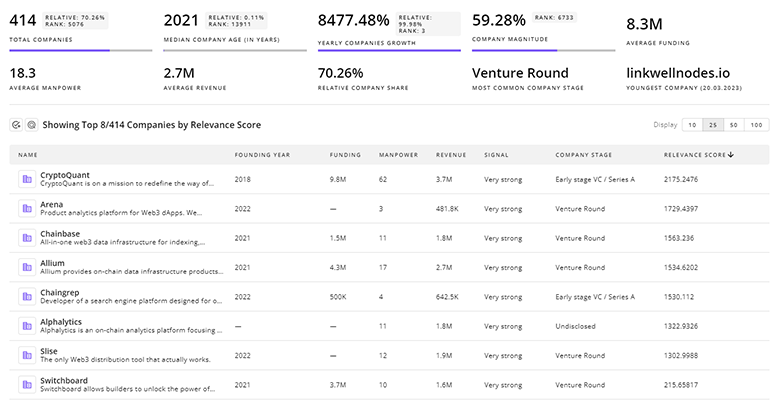
1.6K Medical AI Companies
Discover Medical AI Companies, their Funding, Manpower, Revenues, Stages, and much more
Medical AI Investors
TrendFeedr’s Investors tool offers comprehensive insights into 1.8K Medical AI investors by examining funding patterns and investment trends. This enables you to strategize effectively and identify opportunities in the Medical AI sector.
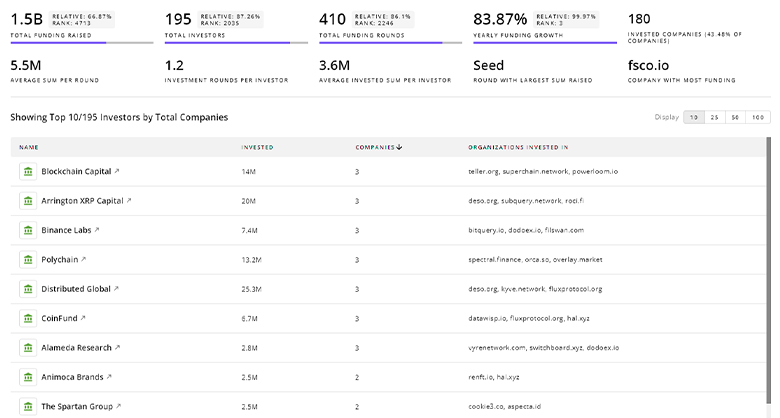
1.8K Medical AI Investors
Discover Medical AI Investors, Funding Rounds, Invested Amounts, and Funding Growth
Medical AI News
TrendFeedr’s News feature provides access to 2.6K Medical AI articles. This extensive database covers both historical and recent developments, enabling innovators and leaders to stay informed.
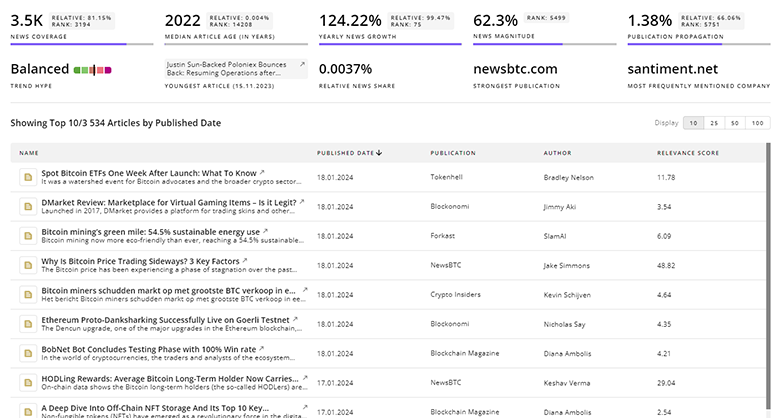
2.6K Medical AI News Articles
Discover Latest Medical AI Articles, News Magnitude, Publication Propagation, Yearly Growth, and Strongest Publications
Executive Summary
The medical AI opportunity divides into focused clinical segments that require rigorous validation and broad AI-in-healthcare projections that aggregate many of those segments. Short-term commercial winners will be companies that demonstrate measurable clinical or operational ROI, secure regulatory endorsements, and control high-frequency workflow endpoints or unique multimodal datasets. Product strategies that prioritize verifiability, integration with existing health IT, and payer-facing value capture will shorten sales cycles and increase enterprise uptake. For investors and health systems, the most defensible plays combine domain specificity (imaging, endoscopy, cardiology) with enterprise-grade governance and data-centric engineering that mitigates drift and bias while enabling scale.
We value collaboration with industry professionals to offer even better insights. Interested in contributing? Get in touch!