Edge Device Report
: Analysis on the Market, Trends, and TechnologiesThe edge device market shows concentrated momentum and measurable scale: total funding for companies active in this topic reached $12.72B and aggregate annual revenues across the ecosystem are $18.31B. Market forecasts for AI-enabled edge devices signal rapid expansion — one study projects growth from $8.7B in 2024 to $56.8B by 2030 (CAGR 36.9%) — while complementary hardware forecasts place edge chip markets in the tens of billions by the end of the decade Edge AI Market Report. The practical implication is immediate: enterprises must convert pilot projects into managed fleets with device-level compute, lifecycle controls, and built-in security if they want to capture measurable ROI from latency-sensitive applications.
This article was last updated 50 days ago. If you find any info is missing, let us know!
Topic Dominance Index of Edge Device
The Dominance Index of Edge Device looks at the evolution of the sector through a combination of multiple data sources. We analyze the distribution of news articles that mention Edge Device, the timeline of newly founded companies working in this sector, and the share of voice within the global search data
Key Activities and Applications
- Real-time video analytics and on-camera inference for security, retail loss prevention, and facility automation, where on-device models reduce backhaul and preserve privacy.
- Predictive maintenance and quality control on factory floors, embedding anomaly detection on sensors and PLCs to cut downtime and reduce scrap rates.
- On-device healthcare monitoring (wearables, diagnostic edge modules) that enforce data locality and enable immediate clinical alerts without cloud dependency.
- Autonomous navigation and perception for vehicles and drones, where low-latency inference and sensor fusion run on NPUs and accelerators inside the platform.
- Edge gateways and IIoT aggregation that translate industrial protocols, pre-process telemetry, and orchestrate field fleets for large deployments.
- Air-gapped and high-assurance deployments for defense, finance, and critical research requiring physical isolation controls and layer-1 protection.
Emergent Trends and Core Insights
- AI-native hardware is displacing retrofit approaches. Low-power NPUs and domain-specific accelerators are dictating device design choices rather than being an afterthought.
- Device lifecycle management becomes a strategic axis. Organizations that deploy fleets scale with DeviceOps platforms that handle OTA updates, observability, and security posture continuously.
- Security shifts left to the device. Zero-trust patterns and hardware roots of trust are now mandatory design elements for many deployments because edge endpoints expand the enterprise attack surface.
- Energy economics drive procurement. Power-efficient compute (analog/in-memory, specialized NPUs) materially alters TCO for large sensor fleets and remote nodes; buyers increasingly model lifetime energy costs, not only acquisition price.
- Hybrid orchestration replaces cloud-only strategies. Workloads now move dynamically between device, gateway, and cloud based on latency, cost, and sovereignty constraints Edge Computing: Emerging Trends and Applications.
- Sectoral concentration persists. Manufacturing, automotive, healthcare, and smart cities consume a majority of near-term edge spend, reinforcing verticalized product strategies
Technologies and Methodologies
- Low-power neural accelerators and NPUs for always-on inference, including specialized microarchitectures that prioritize energy per inference.
- TinyML and model compression toolchains (pruning, quantization, hardware-aware compilation) that permit complex models to run within strict memory and power budgets.
- Edge OS fabrics and AI-infused runtime layers that offload graphics/compute from client devices to nearby edge nodes to sustain high-frame-rate VDI and interactive workloads
- Containerized microservices and lightweight Kubernetes variants for constrained environments to maintain consistent CI/CD and observability across fleets.
- Hardware security primitives — TPM, Secure Enclaves, and light cryptography — combined with Zero Trust network controls for device authentication and policy enforcement.
- Air-gap and physical isolation controllers where absolute data separation is required for compliance or threat models, implemented at layer-1 network hardware.
- Edge gateways that normalize industrial protocols and perform deterministic preprocessing (OPC UA, MQTT, Modbus), reducing cloud load and accelerating local automation loops.
Edge Device Funding
A total of 336 Edge Device companies have received funding.
Overall, Edge Device companies have raised $13.7B.
Companies within the Edge Device domain have secured capital from 1.3K funding rounds.
The chart shows the funding trendline of Edge Device companies over the last 5 years
Edge Device Companies
Nedge Computing Corp.
Nedge delivers an AI-infused Edge OS fabric that offloads CPU/GPU workloads to nearby edge nodes to improve cloud VDI and real-time UX on constrained devices. The company positions its software as a way to maintain high frame rates and low latency while keeping client hardware inexpensive; this directly targets enterprise desktop virtualization and remote worker scenarios. Financial and product details show a small, venture-stage team focused on platform commercializationSecEdge
SecEdge provides a SaaS security platform specific to IoT and Edge devices, combining device-level protections, zero-trust networking, and firmware controls for distributed fleets. The firm completed a Series A after acquiring Sequitur Labs and emphasizes device identity and secure connectivity as core deliverables, positioning security as a managed service for edge deploymentsEdgeIQ
EdgeIQ offers an API-first DeviceOps platform intended to manage the lifecycle of connected products at scale — provisioning, updates, telemetry, and monetization workflows. It bridges the gap between hardware heterogeneity and enterprise operations teams, which directly addresses fleet lifecycle complexity that blocks many rolloutsEciton Corp
Eciton Corp builds compact, hardened Edge PC cards that provide full x86 capability in credit-card form factor with TPM support and wide temperature tolerance. The design prioritizes field resilience, low power, and tamper resistance for extreme environments; that product profile fits deployments where commercial off-the-shelf equipment cannot surviveGreen Edge Computing Corp
Green Edge Computing Corp (GECCO) develops modular, energy-efficient hardware nodes aimed at lowering deployment power draw and lifecycle carbon costs. The company markets its EdgePod approach as a way to reduce operational energy consumption and to appeal to procurement teams responsible for sustainability metrics in industrial and municipal projects
Uncover actionable market insights on 1.6K companies driving Edge Device with TrendFeedr's Companies tool.
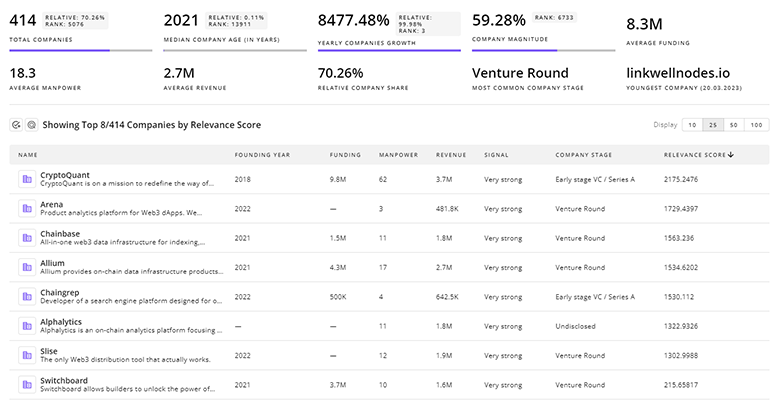
1.6K Edge Device Companies
Discover Edge Device Companies, their Funding, Manpower, Revenues, Stages, and much more
Edge Device Investors
Get ahead with your investment strategy with insights into 1.6K Edge Device investors. TrendFeedr’s investors tool is your go-to source for comprehensive analysis of investment activities and financial trends. The tool is tailored for navigating the investment world, offering insights for successful market positioning and partnerships within Edge Device.
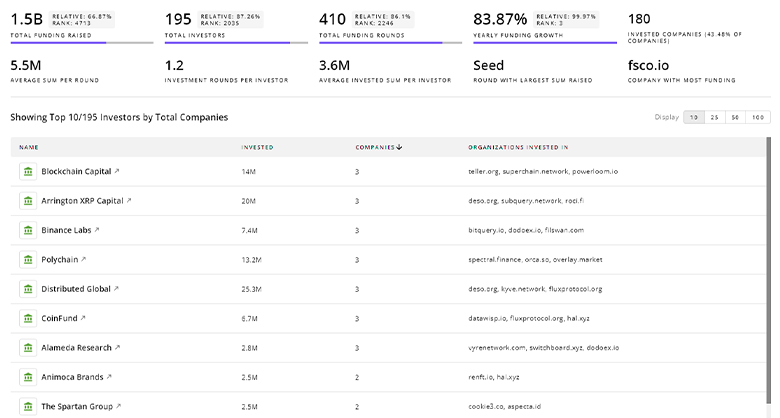
1.6K Edge Device Investors
Discover Edge Device Investors, Funding Rounds, Invested Amounts, and Funding Growth
Edge Device News
TrendFeedr’s News feature offers access to 1.3K news articles on Edge Device. The tool provides up-to-date news on trends, technologies, and companies, enabling effective trend and sentiment tracking.
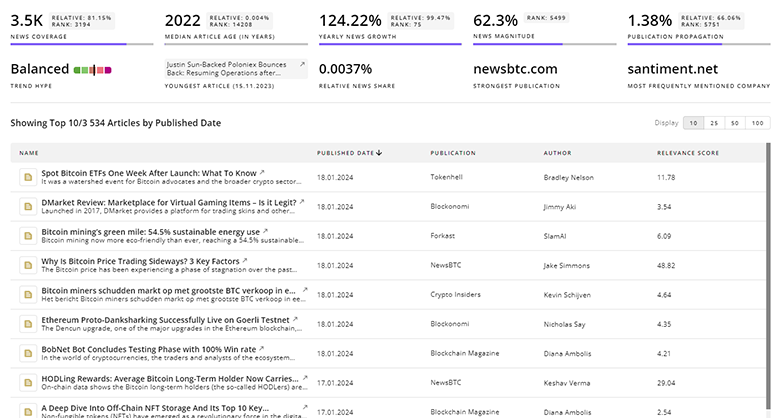
1.3K Edge Device News Articles
Discover Latest Edge Device Articles, News Magnitude, Publication Propagation, Yearly Growth, and Strongest Publications
Executive Summary
Edge devices are shifting from experimental add-ons to mission-critical infrastructure components, combining specialized hardware with platform software and security stacks. The measurable funding and revenue base shows investor and commercial commitment, but the strategic battle will center on two choices: build a platform that manages heterogeneity at fleet scale or engineer hardware and services so domain needs cannot be replaced by abstraction. Short-term winners will be those who deliver verifiable reductions in latency, operating cost, or regulatory risk — delivered together with lifecycle controls and device-anchored security.
Have expertise in trends or technology? Your input can enrich our content — consider collaborating with us!