Electrification Report
: Analysis on the Market, Trends, and TechnologiesThe electrification transition is accelerating into an infrastructure-first commercial problem where energy orchestration, not vehicle output, captures value; market data records $313.61B in total funding raised to date, underscoring a large capital flow into grids, charging and services. Global demand for electricity is rising in step with transport electrification—China’s electric-car market share is projected near 60% by 2025, and system planners expect electricity demand growth of ≈3.5% per year—creating a dual imperative: scale generation and add flexibility to avoid localized grid stress Trends in electric car markets – Global EV Outlook 2025. These dynamics make bidirectional energy flows, fast depot charging with on-site buffers, and software-defined fleet orchestration the immediate priorities for investors and operators.
This article was last updated 30 days ago. If you find any info is missing, let us know!
Topic Dominance Index of Electrification
The Dominance Index of Electrification looks at the evolution of the sector through a combination of multiple data sources. We analyze the distribution of news articles that mention Electrification, the timeline of newly founded companies working in this sector, and the share of voice within the global search data
Key Activities and Applications
- Fleet electrification and depot solutions — designing turnkey charging, financing and operations packages for medium and heavy commercial fleets to replace on-road diesel economics with a single monthly bill; this business model reduces CapEx barriers and concentrates operational risk with providers Electrada.
- Dynamic and wireless charging deployment — embedding conductive or inductive charging into dedicated routes and high-utilization sites (static and in-motion) to reduce battery size requirements and extend operational windows for buses and logistics vehicles Electreon.
- Battery swapping and modular energy services — implementing rapid exchange networks and battery-as-a-service models for two- and three-wheelers and last-mile fleets to eliminate downtime in dense urban markets.
- Retrofit and conversion programs — converting legacy ICE assets for commercial use to capture carbon reductions quickly and lower total cost of ownership, especially where fleet turnover is slow.
- Grid-aware charging orchestration — deploying AI and ML systems to coordinate charging schedules, aggregate V2G capacity and bid into ancillary markets, reducing peak demands and monetizing distributed assets.
Emergent Trends and Core Insights
- Value migration from hardware to software — capital efficiency favors platforms that manage energy flows and optimize utilization rather than those that only scale physical chargers; market signals show stronger investment velocity into management software and aggregated services.
- Electric roads and dynamic charging pilot scale-up — technical trials and commercial pilots are validating in-motion charging and road-embedded coils as economical for high-frequency routes, particularly buses and freight corridors.
- Grid investment gap and localized bottlenecks — analysts estimate persistent shortfalls in transmission, distribution and storage investment; without targeted grid upgrades, fast-charging clusters will create local capacity constraints that favor buffered or off-grid charging solutions Electricity 2026 – Analysis - IEA.
- Commercial fleets as the near-term economic pivot — heavy-duty and high-utilization fleets deliver the strongest ROI on electrification (fuel savings + regulatory compliance), which concentrates early value capture in depot engineering, battery lifecycle services and energy contracts 7Gen.
- Energy flexibility becomes the product: DER aggregation, V2G and scheduled discharge will allow fleets and residential aggregations to monetize grid services beyond simple fuel substitution The long march of electrification - Ember.
Technologies and Methodologies
- Inductive and conductive dynamic charging (electrified road systems) — segmented primary coils and buried conductors for static and in-motion transfer reduce the need for large battery packs on high-frequency routes.
- Bidirectional power electronics and V2G platforms — high-efficiency, bidirectional inverters and fleet orchestration stacks enable vehicles to provide frequency and capacity services while managing battery degradation economically Zemetric.
- Battery swapping and modular packs — standardized swappable modules and BaaS commercial models accelerate turnover for urban two- and three-wheelers and reduce customer CapEx.
- High-power depot charging plus stationary buffer BESS — pairing megawatt-scale chargers with on-site batteries mitigates grid constraints and reduces utility upgrade costs at busy depots Electrification Market analysis and industry cases.
- AI/ML load orchestration and digital twins — machine learning for predictive charge scheduling, lifetime optimization and tariff arbitrage converts operational data into recurring revenue streams for service providers Electric Miles.
Electrification Funding
A total of 1.4K Electrification companies have received funding.
Overall, Electrification companies have raised $313.6B.
Companies within the Electrification domain have secured capital from 5.1K funding rounds.
The chart shows the funding trendline of Electrification companies over the last 5 years
Electrification Companies
- EVIAS — EVIAS develops conductive dynamic fast-charging systems that transfer energy during driving with a claimed capacity of up to 1000 kWh per unit, targeting road and urban freight to remove stopping time from duty cycles; their product aims to shrink required onboard battery capacity for heavy vehicles and capture value at high-utilization transport hubs. EVIAS positions its E-DFS1® tech as a turnkey option for operators seeking continuous charging without operational downtime.
- Gridtractor — Gridtractor packages electrification planning and SaaS tools for agricultural electrification, enabling tractors and field equipment to participate in energy arbitrage and V2G operations; this flips farm vehicles into distributed energy assets that can store excess solar and sell to the grid. Their approach targets rural owners who co-locate generation and load and need integrated roadmaps for adoption.
- Easelink — Easelink develops the automated conductive Matrix Charging® system that charges vehicles by parking over an embedded pad, addressing user experience and vandalism concerns while enabling automated fleets and shared parking use cases; the company holds multiple patents and participates in standards work to accelerate interoperability. Easelink's technology targets high-density urban and garage deployments where cable handling and user friction inhibit adoption.
- VoltUp — VoltUp operates battery-swapping networks for two- and three-wheelers in dense Indian cities, offering instantaneous turnaround for riders and a subscription model that reduces vehicle upfront cost; their network model addresses time-sensitive urban logistics and high daily mileage operations. VoltUp's deployment strategy emphasizes operational density and IoT telemetry for safety and utilization optimization.
- Evolectric - CircularEV™ Solutions — Evolectric focuses on circular-economy electrification by retrofitting commercial vehicles and offering standardized battery/vehicle platforms to extend asset life and lower total electrification cost; the company's CircularEV™ offering targets fleet operators needing rapid decarbonization without the capital burden of new vehicle procurement. Their model emphasizes modular design, parts reuse and standardized certification to speed deployments at scale.
Uncover actionable market insights on 9.7K companies driving Electrification with TrendFeedr's Companies tool.
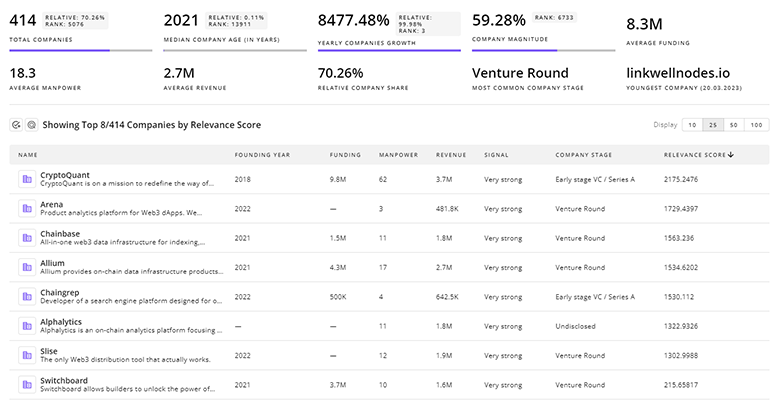
9.7K Electrification Companies
Discover Electrification Companies, their Funding, Manpower, Revenues, Stages, and much more
Electrification Investors
Get ahead with your investment strategy with insights into 4.9K Electrification investors. TrendFeedr’s investors tool is your go-to source for comprehensive analysis of investment activities and financial trends. The tool is tailored for navigating the investment world, offering insights for successful market positioning and partnerships within Electrification.
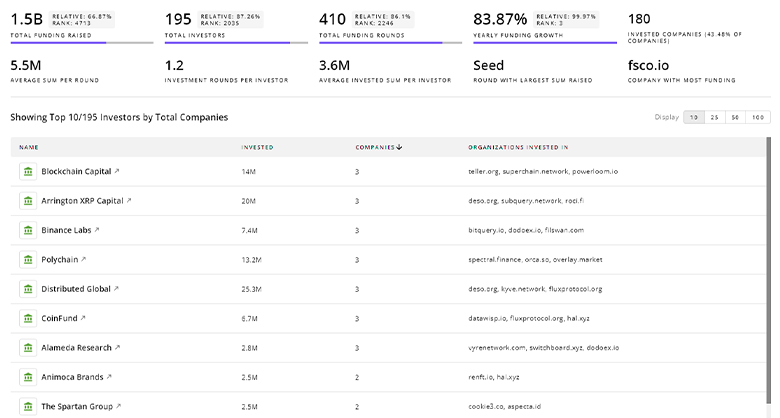
4.9K Electrification Investors
Discover Electrification Investors, Funding Rounds, Invested Amounts, and Funding Growth
Electrification News
TrendFeedr’s News feature offers access to 31.0K news articles on Electrification. The tool provides up-to-date news on trends, technologies, and companies, enabling effective trend and sentiment tracking.
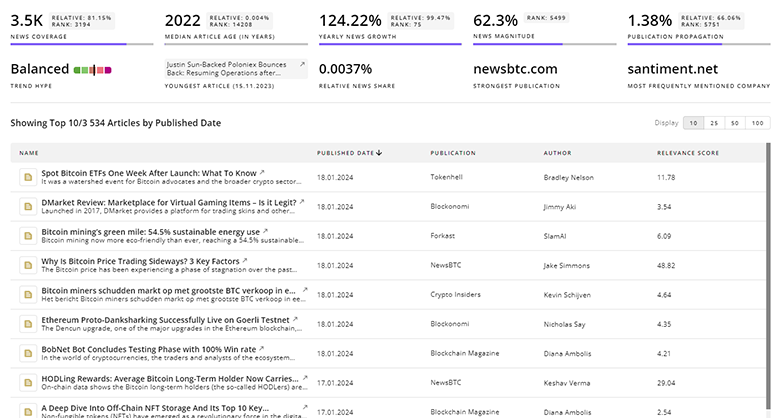
31.0K Electrification News Articles
Discover Latest Electrification Articles, News Magnitude, Publication Propagation, Yearly Growth, and Strongest Publications
Executive Summary
Electrification is now a systems problem where energy management and deployment economics determine winners. Capital is abundant but must flow into grid capacity, buffer storage and software that stitches assets into reliable services; companies that control bidirectional flows, depot engineering and urban access will secure durable revenue streams. For commercial operators, retrofit pathways and swapping networks provide fast, payback-driven options, while municipalities and utilities must coordinate targeted upgrades to avoid capacity shortfalls. Stakeholders should prioritize modular electrification strategies that monetize flexibility, pursue standards that enable interoperability, and treat fleets as managed energy resources rather than only vehicle customers.
Have expertise in trends or technology? Your input can enrich our content — consider collaborating with us!