Electronics Propulsion Technology Report
: Analysis on the Market, Trends, and TechnologiesThe electronics propulsion market shows measurable momentum: the internal trend report values the market at USD 10.94 billion in 2024 and projects USD 15.66 billion by 2029 (6.1% CAGR), signaling steady commercial scaling in aerospace, marine and terrestrial applications. Market forecasts focused on satellites and electrified aircraft reinforce rising demand for high-efficiency thrusters and integrated power electronics, while government R&D budgets and private contracts accelerate product validation and early commercial deployments Electric Propulsion Satellites Market Opportunity, Growth Drivers, Industry Trend Analysis, and Forecast 2024 – 2032 Electrified Aircraft Propulsion Market Outlook from 2025 to 2035.
This article was last updated 69 days ago. If you find any info is missing, let us know!
Topic Dominance Index of Electronics Propulsion Technology
The Dominance Index of Electronics Propulsion Technology looks at the evolution of the sector through a combination of multiple data sources. We analyze the distribution of news articles that mention Electronics Propulsion Technology, the timeline of newly founded companies working in this sector, and the share of voice within the global search data
Key Activities and Applications
- Development and integration of electric propulsion for satellites: station-keeping, orbit raising, life-extension and in-orbit servicing for small and large spacecraft, driven by lower launch-mass and higher delta-v efficiency.
- Electrified aircraft propulsion for eVTOL, regional and hybrid-electric aircraft: motor/powertrain integration, megawatt-class power conversion and energy management for short-range commercial use cases electric propulsion systems market report.
- Marine electrification and pods: development of high-power axial-flux and permanent-magnet motors, electric pod drives and battery/hybrid integration for ferries, workboats and leisure craft Marine Propulsion Systems Opportunity & Growth.
- High-power in-space propulsion: Hall, ion, electrospray and MPD thrusters for deep-space and transfer-stage maneuvers, including green propellant and iodine systems for smallsats.
- Energy storage and power electronics: battery chemistries (silicon-dominant, solid-state research), fast-charge architectures, and wide-bandgap (SiC/GaN) PPUs to feed high-density motors and thrusters.
Emergent Trends and Core Insights
- Shift from component-level wins to integrated propulsion platforms: buyers prefer modular, “system-level” powertrains that reduce integration risk and speed time-to-market; platform providers win larger OEM and integrator contracts.
- Green propellants and non-toxic fuels gain operational traction in space: iodine and other low-toxicity propellants reduce handling cost and regulatory friction for rideshare deployments, enabling more frequent smallsat launches.
- Power-processing miniaturization plus GaN/SiC enables higher specific power motors and thrusters, lowering system mass and improving mission range or payload capacity.
- Platform bifurcation: large aerospace incumbents focus on megawatt-class and hydrogen/fuel-cell pathways while specialist startups commercialize compact, manufacturable thrusters and axial-flux motors for niche segments (smallsats, eVTOL, marine pods).
- Supply-chain focus on critical materials and magnet-free alternatives: companies reduce exposure to rare earths by developing magnet-free motors or securing supply partnerships to improve resilience ePropelled, USA Rare Earth Partner for Drone Neo Magnet Supply Advanced Electric Machines.
Technologies and Methodologies
- Hall-effect and ion thrusters for efficient in-space propulsion, plus electrospray and FEEP for microsatellites that require compact, low-power thrust.
- Axial-flux motors for high power density in aviation and marine applications; favored where weight and packaging are critical Oxford Propulsion.
- Wide-bandgap semiconductors (SiC and GaN) in PPUs and inverters to reduce conversion losses and shrink thermal systems, unlocking higher continuous power for motors and thrusters EPC – Efficient Power Conversion.
- Additive manufacturing and automated production to shorten propulsion component lead times and reduce cost per unit—critical for scaling thruster production to support constellations.
- Hybrid chemical/electric architectures and hydrogen fuel-cell hybrids as pragmatic near-term solutions for regional aviation, balancing range and emissions targets.
Electronics Propulsion Technology Funding
A total of 402 Electronics Propulsion Technology companies have received funding.
Overall, Electronics Propulsion Technology companies have raised $58.0B.
Companies within the Electronics Propulsion Technology domain have secured capital from 1.7K funding rounds.
The chart shows the funding trendline of Electronics Propulsion Technology companies over the last 5 years
Electronics Propulsion Technology Companies
-
ENPULSION
ENPULSION designs compact Field-Emission Electric Propulsion (FEEP) thrusters targeted at CubeSats and smallsats; its modular, scalable thruster families have flight heritage and more than 200 active units in orbit as of April 2024, supporting constellation and life-extension missions. The company emphasizes serial production and ISO-9001 quality processes to reduce procurement risk for satellite integrators. -
Liftero
Liftero supplies automated manufacturing for green high-thrust chemical boosters designed for rapid delivery and low unit cost; it markets a flight-ready BOOSTER product and aims for aggressive time-to-orbit schedules to serve rideshare customers and rapid satellite deployments. The company touts flight readiness and low handling complexity to appeal to operators needing fast schedule certainty. -
Aliena Pte Ltd
Aliena develops miniaturized electric propulsion for very-low Earth orbits (VLEO) enabling imaging satellites to fly lower for higher resolution; the firm’s proprietary engines target sustained VLEO operations and analytics-driven remote sensing services. Their approach addresses a distinct commercial niche—close-to-Earth imaging—with propulsion and operations packaged as a service for data customers. -
H3X Technologies
H3X designs high power-density integrated motors and drives aimed at sustainable aviation and marine markets; the company advertises motors that are significantly lighter and integrates drives to simplify installation on eVTOLs and workboats. Its value proposition combines power density and integrated electronics to reduce system mass, a primary constraint in aerial applications.
Uncover actionable market insights on 1.4K companies driving Electronics Propulsion Technology with TrendFeedr's Companies tool.
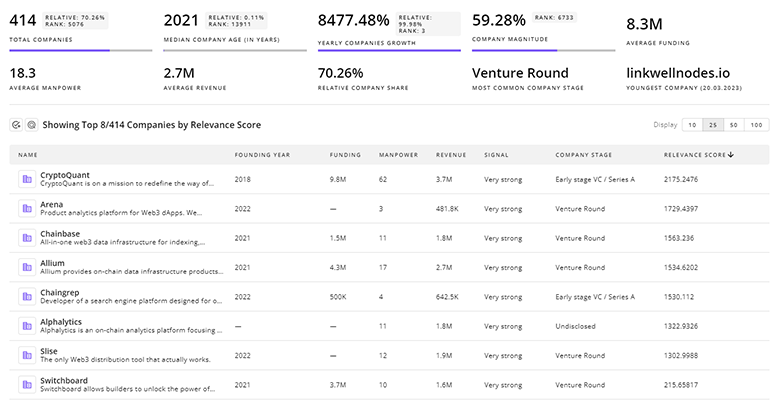
1.4K Electronics Propulsion Technology Companies
Discover Electronics Propulsion Technology Companies, their Funding, Manpower, Revenues, Stages, and much more
Electronics Propulsion Technology Investors
Get ahead with your investment strategy with insights into 1.9K Electronics Propulsion Technology investors. TrendFeedr’s investors tool is your go-to source for comprehensive analysis of investment activities and financial trends. The tool is tailored for navigating the investment world, offering insights for successful market positioning and partnerships within Electronics Propulsion Technology.
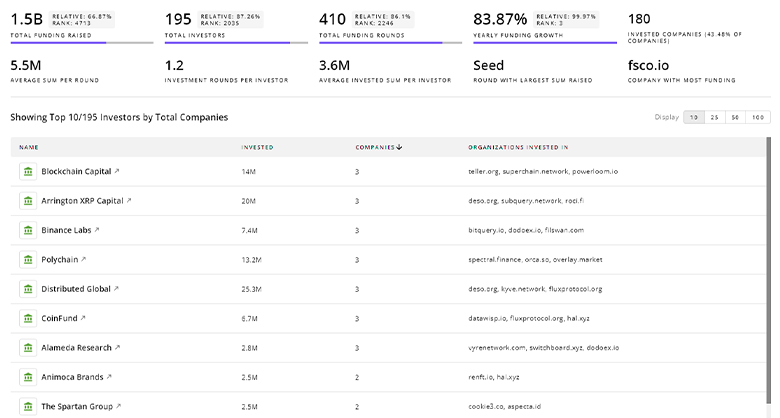
1.9K Electronics Propulsion Technology Investors
Discover Electronics Propulsion Technology Investors, Funding Rounds, Invested Amounts, and Funding Growth
Electronics Propulsion Technology News
TrendFeedr’s News feature offers access to 7.8K news articles on Electronics Propulsion Technology. The tool provides up-to-date news on trends, technologies, and companies, enabling effective trend and sentiment tracking.
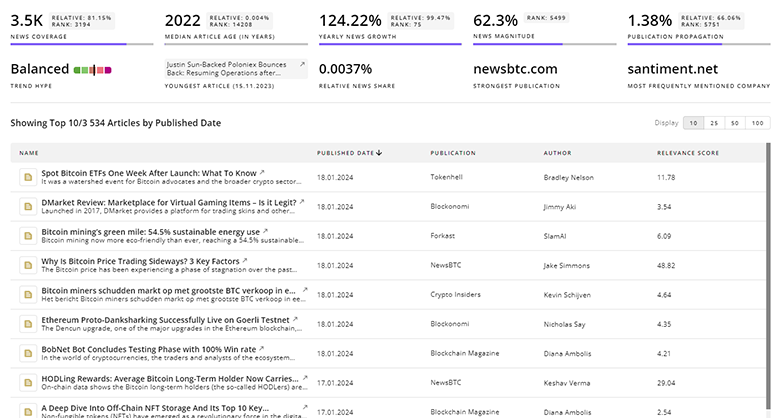
7.8K Electronics Propulsion Technology News Articles
Discover Latest Electronics Propulsion Technology Articles, News Magnitude, Publication Propagation, Yearly Growth, and Strongest Publications
Executive Summary
Electronics propulsion technology has moved from exploratory R&D into commercially relevant deployments across space, air and sea. The internal market baseline of USD 10.94 billion (2024) and projected USD 15.66 billion by 2029 reflect a pragmatic growth path driven by satellite constellations, urban and regional air mobility pilots, and marine electrification programs. Strategic winners will be the organizations that (1) package propulsion as a system-level product with clear integration and procurement advantages, (2) secure resilient supply chains for power electronics and critical materials, and (3) scale production using additive manufacturing and automated test to meet constellation and OEM lead times. For investors and industrial buyers, the near opportunity lies in modular thrusters, axial-flux motor platforms with integrated PPUs, and green propellant systems with flight heritage; these address immediate commercial pain points—cost per satellite, mass per kilowatt, and regulatory handling costs—and therefore offer the clearest paths to recurring revenue.
Have expertise in trends or technology? Your input can enrich our content — consider collaborating with us!