Embodied Carbon Report
: Analysis on the Market, Trends, and TechnologiesThe embodied-carbon challenge concentrates risk and opportunity: global construction alone may add >100 Gt CO₂e from new buildings by 2060 unless material intensity changes, while market models project the embodied-carbon solutions space growing at a CAGR of 21.9% Embodied Carbon Review. Concrete and steel remain the dominant hotspots, and progress in measurement, policy, and low-carbon materials is producing measurable declines in embodied-carbon intensity (industrial projects show ~4% annual reduction in ECI), but persistent data gaps, trade-adjusted leakage, and MRV integrity risk will determine whether the sector hits the industry target to halve embodied carbon in new construction by 2030 Reducing Embodied Carbon in Industrial Development.
This article was last updated 103 days ago. If you find any info is missing, let us know!
Topic Dominance Index of Embodied Carbon
The Dominance Index of Embodied Carbon looks at the evolution of the sector through a combination of multiple data sources. We analyze the distribution of news articles that mention Embodied Carbon, the timeline of newly founded companies working in this sector, and the share of voice within the global search data
Key Activities and Applications
- Whole-building Life Cycle Assessment (WB-LCA) for early-stage decision making and procurement specification; LCA benchmarks (e.g. datasets sampling 292 buildings) are enabling enforceable carbon budgets at the project level The Embodied Carbon Benchmark Report.
- Material substitution and low-carbon product deployment (engineered timber, geopolymer or CO₂-mineralized concrete, biochar-enhanced additives) to target the material hotspots where concrete and steel account for roughly 66% of embodied emissions in typical projects.
- Supply-chain Scope-3 measurement and procurement policies (e.g. Buy Clean implementations) that tie public and private purchasing to product EPDs and verified low-carbon supply; procurement is the primary lever converting measurements into demand signals Bringing Embodied Carbon Upfront.
- CO₂ integration and permanent sequestration in materials (CO₂-cured precast, mineralized aggregates, carbon-negative concretes) that transform emissions into durable assets; these applications aim at both emissions avoidance and durable removal.
- Digital MRV and provenance systems (digital twins, blockchain registers, LCA-linked ERP connectors) to make embodied-carbon claims auditable and transactable across the value chain, addressing verification and double-counting concerns.
Emergent Trends and Core Insights
- Measurement is moving earlier in design. Tools now operate in concept stages, enabling architects and engineers to trade off structural choices against embodied-carbon budgets before specifications lock MVRDV CarbonSpace tool.
- Concentration on material decarbonization vs. removal permanence. The market is bifurcating: CCU and low-carbon material providers focus on replacing high-emission inputs, while CDR/biochar and mineralization players target long-duration storage and premium removal credits.
- Trade-adjusted accounting is rising as a policy priority. Imported high-carbon products create a hidden national footprint ("carbon loophole"), pushing regulators to adopt trade-adjusted approaches and cross-border cooperation Embodied Carbon in Trade: Carbon Loophole.
- MRV and data integrity now constrain market liquidity. Inconsistent EPDs and fragmented EPD sources produce LCA variability (one study showed a 35.2% difference using detailed vs. generic databases), raising transaction risk for procurement and credit buyers Role of Embodied Carbon Databases in LCA Accuracy.
- Private finance follows permanence and verifiability. Buyers pay premiums for credits with clear permanence and auditable chains of custody; engineered removal and mineralization projects are attracting long-term purchase agreements and infrastructure capital.
Technologies and Methodologies
- CO₂-mineralized and CO₂-cured concrete systems (including geopolymer and CO₂ injection in precast) that store CO₂ permanently in aggregates and blocks and can lower embodied carbon substantially Carbon Sequestering Concrete Market.
- Biochar and pyrolysis networks that convert biomass waste into stable solid carbon for soil amendment or as construction additives—preferred where feedstock is abundant and permanence requirements are strict.
- Digital LCA engines and ERP integration that automate Scope-3 capture, translate procurement spend into embodied-carbon exposure, and produce audit-ready disclosures in compliance with new procurement rules.
- Digital provenance and tokenization (blockchain-enhanced registries) to create immutable evidence of material origin, EPDs, and credit assignments that reduce double counting and increase investor confidence Carbon Credit Market Analysis.
- Design-stage ML optimization and digital twin MRV to explore thousands of design/material combinations and then reconcile estimated embodied carbon with construction-phase sensor data and delivery receipts, closing the verification loop Digital twins and MRV commentary.
Embodied Carbon Funding
A total of 131 Embodied Carbon companies have received funding.
Overall, Embodied Carbon companies have raised $8.9B.
Companies within the Embodied Carbon domain have secured capital from 539 funding rounds.
The chart shows the funding trendline of Embodied Carbon companies over the last 5 years
Embodied Carbon Companies
- CarbiCrete — CarbiCrete commercializes a cement-free, carbon-negative concrete using steel slag and injected CO₂; the company reports 150 kg CO₂ abated per ton of concrete produced and offers retrofit-friendly implementation for existing product plants, positioning itself where material performance and sequestration converge. CarbiCrete's model reduces reliance on Portland cement and provides an on-site pathway to permanent mineralization, lowering both embodied emissions and material cost exposure.
- Carbo Culture — Carbo Culture builds scalable biochar parks that convert waste biomass into high-quality biochar for agricultural and industrial uses; the firm couples carbon removal with renewable heat and electricity co-products, creating diversified revenue streams and verifiable removal outputs. Their funding trajectory (Series A, $42.56M raised) signals investor appetite for scalable, feedstock-based removal solutions that integrate into local value chains.
- ecoLocked — ecoLocked supplies CO₂-negative building additives derived from biogenic carbon, intended to sequester carbon within construction products while delivering functional benefits (insulation, curing control). The company targets European construction markets with regulatory-aligned products and a stated ambition to enable cumulative CO₂ impact at scale. By embedding removals into performance materials, ecoLocked reduces the need for separate offset accounting for some projects.
- carbmee — carbmee offers an integrated Environmental Intelligence System (EIS™) that accelerates Scope-1/2/3 supplier data collection and LCA workflows (claims of achieving supplier carbon footprints 94% faster) and focuses on enterprise procurement integration to expose high-impact suppliers quickly. The company's product strategy targets the data moat needed by buyers to enforce low-carbon material procurement across complex supply chains.
- Novocarbo — Novocarbo operates Carbon Removal Parks producing premium biochar and surplus heat as a service; they position biochar both as a verified removal and a construction/soil additive, enabling demand across agriculture and infrastructure markets. Novocarbo's commercial model focuses on product sales plus carbon credits, offering a route to scale where feedstock logistics and heat offtake are aligned with local partners.
Uncover actionable market insights on 714 companies driving Embodied Carbon with TrendFeedr's Companies tool.
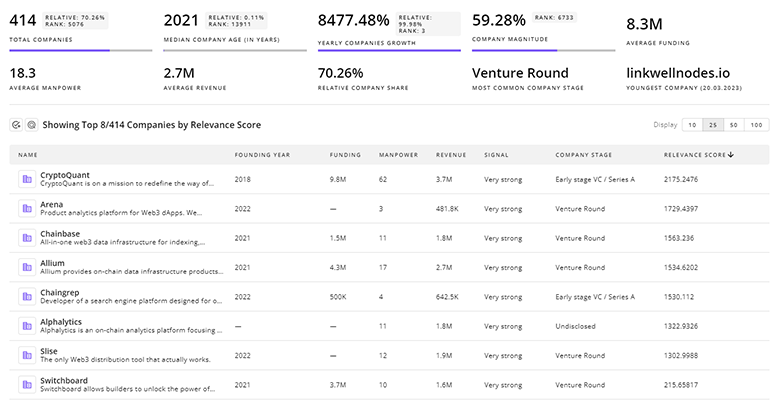
714 Embodied Carbon Companies
Discover Embodied Carbon Companies, their Funding, Manpower, Revenues, Stages, and much more
Embodied Carbon Investors
Get ahead with your investment strategy with insights into 562 Embodied Carbon investors. TrendFeedr’s investors tool is your go-to source for comprehensive analysis of investment activities and financial trends. The tool is tailored for navigating the investment world, offering insights for successful market positioning and partnerships within Embodied Carbon.
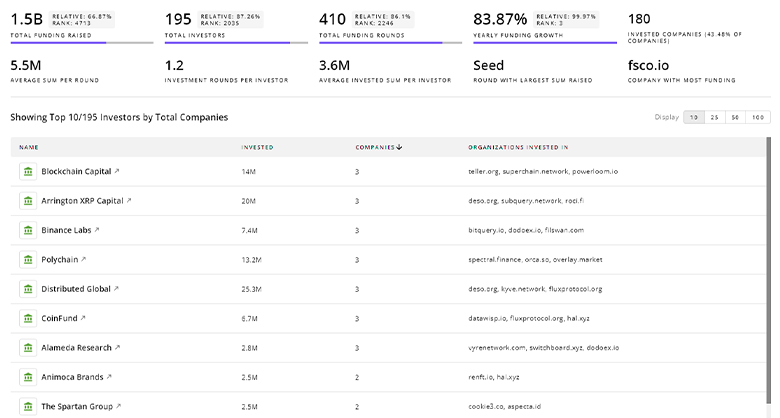
562 Embodied Carbon Investors
Discover Embodied Carbon Investors, Funding Rounds, Invested Amounts, and Funding Growth
Embodied Carbon News
TrendFeedr’s News feature offers access to 3.2K news articles on Embodied Carbon. The tool provides up-to-date news on trends, technologies, and companies, enabling effective trend and sentiment tracking.
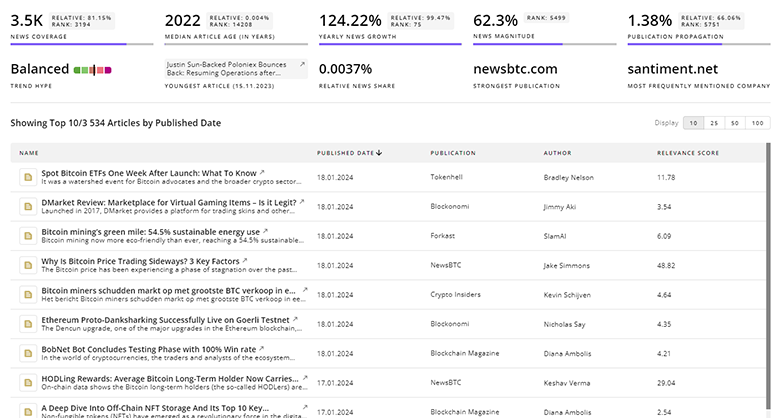
3.2K Embodied Carbon News Articles
Discover Latest Embodied Carbon Articles, News Magnitude, Publication Propagation, Yearly Growth, and Strongest Publications
Executive Summary
Embodied carbon is shifting from measurement optionality to procurement and capital necessity. Quantitative signals — strong market CAGR expectations, material-level concentration in concrete and steel, and demonstrated reductions in ECI where early interventions occur — show that business outcomes will separate actors who can pair low-carbon materials with auditable data flows from those who cannot. The strategic playbook is clear: secure verified, low-carbon material supply or durable removal streams; embed MRV and LCA into procurement and ERP processes to make embodied carbon a financial line item; and pursue partnerships that combine material performance with scalable verification to capture the procurement premiums that will flow as regulation and buyer expectations harden.
Have expertise in trends or technology? Your input can enrich our content — consider collaborating with us!