Emerging Markets Report
: Analysis on the Market, Trends, and TechnologiesThe emerging-markets opportunity is active and selective: investors captured a 7.5% total return on the MSCI Emerging Markets index in 2024 while internal data shows 72% of planned infrastructure investment over the next decade targets digital and smart-grid integration, which will reallocate capital toward digital utilities and payments infrastructure and change where value accrues in these economies
This article was last updated 126 days ago. If you find any info is missing, let us know!
Topic Dominance Index of Emerging Markets
The Dominance Index of Emerging Markets looks at the evolution of the sector through a combination of multiple data sources. We analyze the distribution of news articles that mention Emerging Markets, the timeline of newly founded companies working in this sector, and the share of voice within the global search data
Key Activities and Applications
- Payments and cross-border rails: building local payment acceptance, FX routing, and compliance stacks that let global merchants access fragmented local payment flows; these platforms produce network effects that capture merchant economics and enable downstream credit and working-capital products
> So what: controlling payment rails converts transaction flow into higher-margin B2B services (credit, insurance, payroll) and lowers SME operating costs. - SME capital aggregation and secondary distribution: electronic platforms that pool SME financing needs and distribute debt or equity to wide investor pools increase access to capital in markets with shallow traditional capital markets CXDA
> So what: faster SME formalization increases tax bases and creates scalable credit datasets, enabling larger institutional allocations. - Energy-market digitization and traded-commodity digitization: applying exchange and asset-management logic to power markets, microgrids, and renewable PPAs to create tradable instruments and risk transfers that support investment in distributed generation
> So what: tradable energy instruments unlock project finance by providing clearer price signals and hedging tools to investors. - Mobile-first retail analytics and last-mile logistics integration: mobile device analytics for informal retailers and API-first logistics to extract data and reduce inventory loss in high-fragmentation retail markets Gyaan Tel
> So what: data enables targeted marketing and inventory finance, turning previously opaque retail channels into addressable markets. - Tokenization and digital asset market infrastructure: fractionalization of commodities, SME debt, and public-sector instruments to widen investor participation and create secondary liquidity
> So what: tokenization reduces minimum ticket sizes and supports cross-border capital flows where traditional custody and settlement are costly or slow.
Emergent Trends and Core Insights
- Technology concentration drives market performance. AI and semiconductor capex materially drove single-market rallies (Taiwan led EM returns), reinforcing that sector specialization in EMs can dominate index returns Year End Emerging Markets Review and Outlook – Mondrian How did emerging markets perform in 2024? – MoneyWeek.
> Implication: active sector allocation and country-level selection matter more than blanket EM exposure. - Valuation gap and flows. EM equities trade at roughly a 30–40% discount versus developed peers, creating a valuation cushion that, combined with easing inflation, has driven renewed manager interest and net inflows Outlook on Emerging Markets in 2024 – Lazard.
> Implication: timing of policy shifts (e.g. Fed easing) will determine whether discount compression continues. - Regional divergence and selective resilience. Southeast Asia's near-term GDP momentum (~5.0% average) contrasts with China's slower consumer rebound and India's stronger but cyclically sensitive 7.0% growth forecast, which requires differentiated allocations by country and sector Economic Outlook Emerging Markets Q4 2024 – S&P Global Emerging Markets: Navigating Q4 Volatility and Challenges – VanEck.
> Implication: portfolio tools that permit country and sector tilts (active ETFs, country sleeves) will outperform lump-sum EM allocations. - Green transition as labor and finance vector. Projected job creation from green transition programs (for example, up to 10.5% net jobs in Latin America and the Caribbean by 2030) creates demand for project-level financing and GSS bond structures Business Insights on Emerging Markets 2024 – OECD.
> Implication: blended finance and impact instruments will attract DFIs and institutional ESG mandates. - Financial infrastructure modernization and CBDC experimentation. Multiple central banks have active pilots of digital currencies, shifting trade and inclusion dynamics and opening new rails for programmable finance
> Implication: vendors that supply secure, compliant CBDC stack and central-bank APIs will gain privileged, long-term contracts.
Technologies and Methodologies
- Advanced trading architectures applied to utilities and energy: applying exchange clearing, market-maker algorithms, and risk-tracing methods to power and commodity markets to enable regional spot-market clearing and cross-border scheduling (patent activity and consultancy deployments demonstrate this shift) Mercados Energy Markets India.
> Why it matters: it creates market liquidity and credit risk transfer mechanisms critical for private-sector investment in grids. - API-first fintech stacks and embeddable payments: modular APIs that plug into merchant platforms and telco ecosystems reduce integration cost and accelerate adoption across fragmented geographies Empower Hub Sdn Bhd.
> Why it matters: lowers barriers to scale for fintechs and accelerates product bundling (payments + credit + insurance). - DLT for tokenization and settlement: permissioned ledgers and exchange platforms for tokenizing commodities and SME debt create fractional, tradable instruments and faster settlement cycles EMIREX.
> Why it matters: reduces friction for cross-border capital and enables automated compliance and provenance for assets. - Machine-learning credit scoring and remote sensing for agriculture: remote data (mobile, satellite, IoT) feeding ML models to underwrite credit in absence of formal credit histories, improving risk pricing for smallholders
> Why it matters: unlocks working capital and reduces post-harvest loss through financed operating improvements. - Energy storage + renewables + finance stacks: standardized PPA token structures and bundled storage financing allow distributed projects to meet institutional return thresholds.
> Why it matters: creates investible, bankable assets from previously fragmented projects.
Emerging Markets Funding
A total of 3.3K Emerging Markets companies have received funding.
Overall, Emerging Markets companies have raised $434.1B.
Companies within the Emerging Markets domain have secured capital from 11.3K funding rounds.
The chart shows the funding trendline of Emerging Markets companies over the last 5 years
Emerging Markets Companies
- Emergent Gateway Agri-Tech
Emergent Gateway supplies post-harvest storage and handling equipment to smallholders and processors, starting with exclusive distribution agreements that bring manufacturing solutions into India and Ethiopia; the firm targets measurable reductions in post-harvest loss and incremental farmer income through hardware plus distribution partnerships - d-Node
d-Node organizes open-source, locally collected data across West Africa to replace assumptions with ground truth for policy and investment decisions; it operates community data projects and builds datasets that feed underwriting and demand forecasting models, addressing the scarcity of high-quality local data - Block Markets Africa
Block Markets Africa develops tokenized public and private-sector solutions—working with commercial and central banks—to create frameworks for debt issuance, trade settlement, and digital deposits that suit African market structures and regulatory constraints - Emerhub
Emerhub removes market-entry friction for foreign companies across Southeast Asia by combining corporate secretarial, licensing, HR, and tax services through localized offices, enabling faster time-to-market and lower execution risk for cross-border operations
Uncover actionable market insights on 26.1K companies driving Emerging Markets with TrendFeedr's Companies tool.
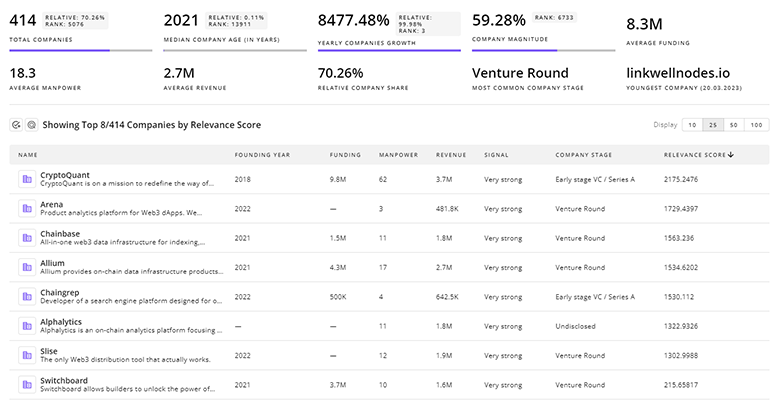
26.1K Emerging Markets Companies
Discover Emerging Markets Companies, their Funding, Manpower, Revenues, Stages, and much more
Emerging Markets Investors
Get ahead with your investment strategy with insights into 11.1K Emerging Markets investors. TrendFeedr’s investors tool is your go-to source for comprehensive analysis of investment activities and financial trends. The tool is tailored for navigating the investment world, offering insights for successful market positioning and partnerships within Emerging Markets.
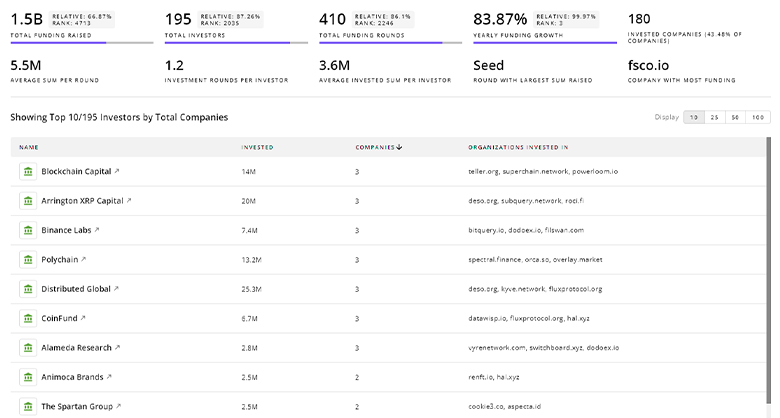
11.1K Emerging Markets Investors
Discover Emerging Markets Investors, Funding Rounds, Invested Amounts, and Funding Growth
Emerging Markets News
TrendFeedr’s News feature offers access to 73.4K news articles on Emerging Markets. The tool provides up-to-date news on trends, technologies, and companies, enabling effective trend and sentiment tracking.
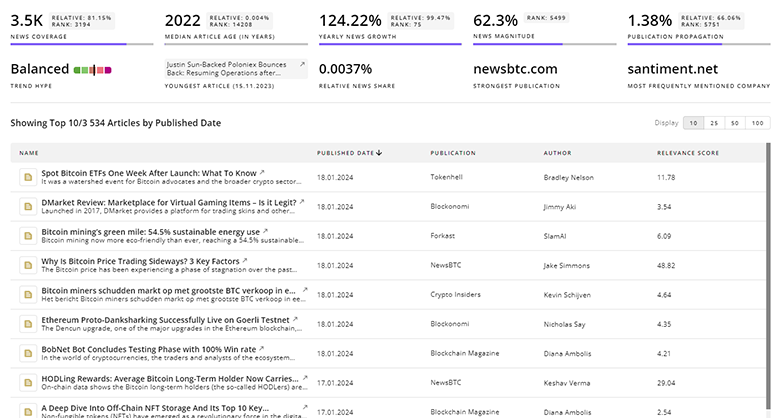
73.4K Emerging Markets News Articles
Discover Latest Emerging Markets Articles, News Magnitude, Publication Propagation, Yearly Growth, and Strongest Publications
Executive Summary
Emerging markets present a differentiated set of opportunities: digital payments, tokenization, and energy-market digitization concentrate value where platform providers and technology integrators deliver scale and interoperability; simultaneously, frontier and advisory niches retain outsized importance because local regulatory navigation and execution capabilities remain scarce. The capital picture looks constructive—valuation gaps, easing inflation, and significant planned infrastructure investment into digital energy and utilities create attractive windows for targeted, sector-focused allocations. The winning strategies combine deep local execution with platform scale: capture transaction flows, convert them into higher-margin B2B services, and structure finance so institutional capital can participate while meeting ESG and impact mandates.
Have expertise in trends or technology? Your input can enrich our content — consider collaborating with us!