Energy Efficient Building Report
: Analysis on the Market, Trends, and TechnologiesThe energy-efficient building market is scaling from design-stage activity into continuous, portfolio-level performance management driven by data and financing models; the internal trend report records a market compound annual growth rate of 5.93%. Policy tightening, falling costs of sensors and software, and new financing (energy-as-a-service) push owners toward measurable operational savings, while forecasts from independent market studies show a wide spread of projected market sizes—reflecting different definitional scopes and adoption assumptions Energy-Efficient Building Research Report 2026: $192.5+ Bn Market – Yahoo Finance.
This article was last updated 242 days ago. If you find any info is missing, let us know!
Topic Dominance Index of Energy Efficient Building
The Dominance Index of Energy Efficient Building looks at the evolution of the sector through a combination of multiple data sources. We analyze the distribution of news articles that mention Energy Efficient Building, the timeline of newly founded companies working in this sector, and the share of voice within the global search data
Key Activities and Applications
- Retrofitting existing stock with high-performance envelope upgrades (insulation, airtightness, low-E glazing) to cut baseline loads—this remains the primary near-term value lever for older commercial and residential facilities.
- Continuous commissioning and EMS deployment: installing Energy Management Systems (EMS) and cloud analytics to move from one-off audits to ongoing automated optimization; EMS accounted for 43% of component revenue in the trend report and is the largest single commercial opportunity.
- Smart HVAC and room-level controls using occupancy and thermal models to reduce heating and cooling waste; targeted solutions can reduce heating energy substantially when paired with digital twins and occupancy mapping.
- Prefabricated, panelized construction for new builds (SIPs, high-performance panels) that guarantee envelope performance while compressing schedules and quality variance—this addresses both cost and labor constraints in high-volume projects.
- Energy-as-a-Service and retrofit financing: structuring projects as performance contracts to remove upfront CapEx for owners and align incentives with guaranteed OpEx savings Efficiency Capital.
Emergent Trends and Core Insights
- Performance verification is becoming the commercial differentiator: documented performance shortfalls (the "performance gap") force buyers to value continuous measurement and third-party validation over modeled claims Energies case study: Towards a Positive Energy District.
- Energy Management Systems (EMS) hold a dominant revenue share (43%) and are consolidating as the integration layer for sensors, HVAC, lighting, and storage.
- Regional growth bifurcates: North America held 45.80% share in 2022 while Asia-Pacific is projected the fastest CAGR in many forecasts—local policy and renovation pipelines determine where scale will occur first.
- Demand is moving from isolated upgrades to bundled packages that combine envelope, controls, on-site PV, and storage
- Material innovation is maturing: bio-based insulations, aerogels, and integrated BIPV façades are shifting retrofit economics for difficult façades, while patented envelope injection methods reduce disruption for large portfolios.
Technologies and Methodologies
- AI-driven predictive control systems for HVAC that anticipate occupancy, weather, and tariff signals to minimize consumption and peak charges.
- Digital twin + dynamic simulation integrated into project delivery to align design intent with operational reality, reducing the energy performance gap and enabling automated commissioning workflows.
- Non-disruptive envelope retrofit techniques (cavity injection foams, modular panel overlays) that lower cost and downtime for large-scale portfolio upgrades.
- Room-level, occupancy-sync heating controls and micro-digital twins that cut heating energy by coordinating temperature setpoints with real occupancy maps ecosync.
- Decentralized energy integration (BIPV, rooftop PV + storage, heat pumps, thermal storage) into building energy models to pursue NZEB outcomes without extreme overbuild of equipment.
- Lifecycle and embodied carbon methodologies embedded into procurement and design (LCA inside BIM workflows) to ensure carbon reductions are not offset by high-impact materials Embodied carbon in nZEB studies.
Energy Efficient Building Funding
A total of 274 Energy Efficient Building companies have received funding.
Overall, Energy Efficient Building companies have raised $19.7B.
Companies within the Energy Efficient Building domain have secured capital from 689 funding rounds.
The chart shows the funding trendline of Energy Efficient Building companies over the last 5 years
Energy Efficient Building Companies
- QEA Tech — QEA Tech performs high-resolution envelope forensics using drones, thermography, and patented AI analytics to map heat loss down to inches; their database of over 1 million envelope performance datapoints supports prioritized retrofit plans with short paybacks. Their non-intrusive approach targets large portfolios where disruption risk blocks deep retrofits, translating diagnostic precision into faster capital allocation.
- Sky-Walls LTD — Sky-Walls LTD develops autonomous, climate-adaptive façade systems that modulate thermal transmittance and harvest solar energy at the envelope level; the solution targets high-rise façades where rooftop PV is limited and façade area is ample. Their approach combines embedded microprocessors and adaptive cladding mechanics to deliver envelope-level energy services with an installed product footprint that can be integrated during recladding phases.
- Building Envelope Materials — Building Envelope Materials offers an injection-based closed-cell foam retrofit designed to densify and insulate under-insulated walls with minimal interior/exterior disruption; the tech suits large commercial and heritage stocks where full panel replacement is impractical. Their business model packages material, proprietary equipment, and mobile training to accelerate retrofit throughput for mid-sized contractors.
- TermoBuild — TermoBuild is an engineering-led firm that pairs advanced thermal-storage ventilation architectures with precision mechanical design to achieve verified ultra-low energy performance in institutional buildings. Their portfolio includes high-performance schools and large net-positive developments; they emphasize measured outcomes and long-term verification rather than one-off modeling reports.
- Etopia — Etopia manufactures panelized SIP systems that are factory-produced to Passive House tolerances, offering a U-Value of 0.13 in their panels to compress onsite labor and reduce thermal bridging. Their value proposition integrates design, manufacture, and installation to reduce schedule risk for developers pursuing near-zero performance in mainstream housing programs.
Uncover actionable market insights on 5.5K companies driving Energy Efficient Building with TrendFeedr's Companies tool.
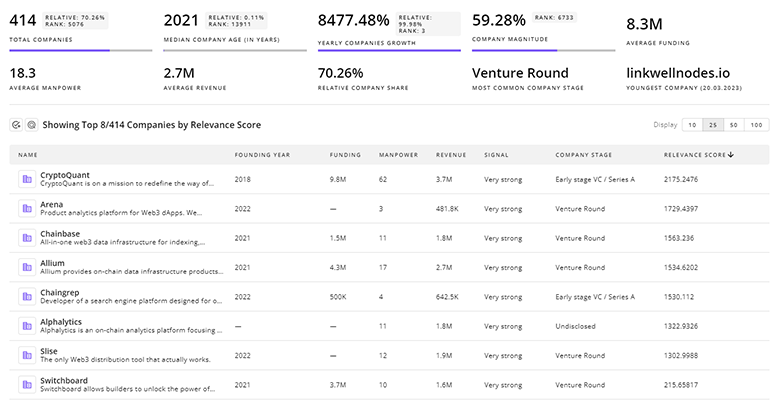
5.5K Energy Efficient Building Companies
Discover Energy Efficient Building Companies, their Funding, Manpower, Revenues, Stages, and much more
Energy Efficient Building Investors
Get ahead with your investment strategy with insights into 925 Energy Efficient Building investors. TrendFeedr’s investors tool is your go-to source for comprehensive analysis of investment activities and financial trends. The tool is tailored for navigating the investment world, offering insights for successful market positioning and partnerships within Energy Efficient Building.
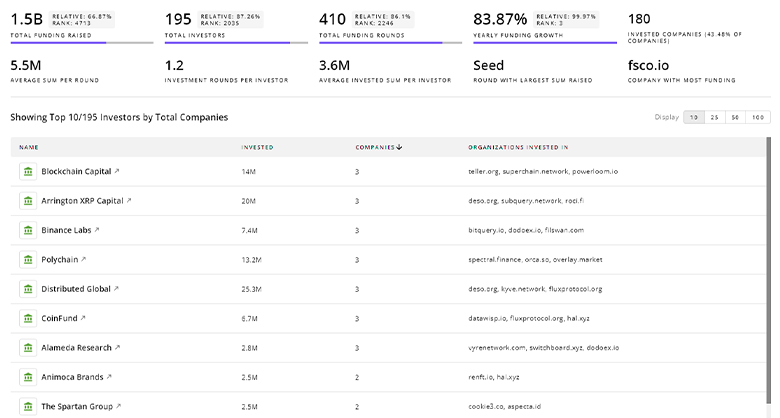
925 Energy Efficient Building Investors
Discover Energy Efficient Building Investors, Funding Rounds, Invested Amounts, and Funding Growth
Energy Efficient Building News
TrendFeedr’s News feature offers access to 1.9K news articles on Energy Efficient Building. The tool provides up-to-date news on trends, technologies, and companies, enabling effective trend and sentiment tracking.
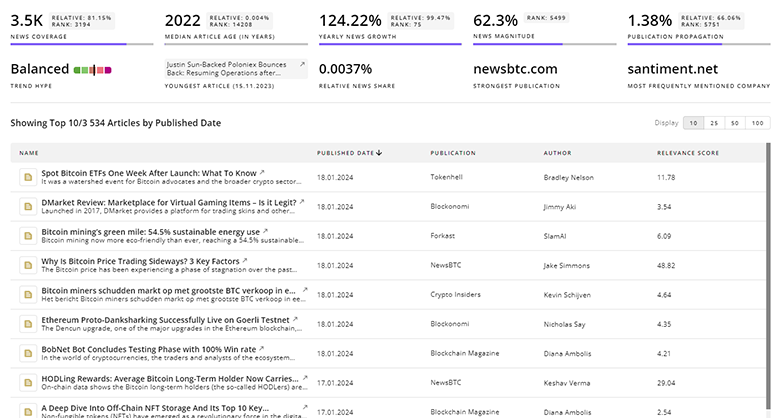
1.9K Energy Efficient Building News Articles
Discover Latest Energy Efficient Building Articles, News Magnitude, Publication Propagation, Yearly Growth, and Strongest Publications
Executive Summary
The commercial opportunity in energy-efficient buildings now separates winners by two capabilities: the ability to guarantee and measure operational savings across portfolios, and the ability to deliver low-cost, low-disruption envelope upgrades at scale. Market signals—divergent external forecasts, the internal report's 5.93% CAGR, and the dominance of EMS revenue—indicate balanced growth driven by digital platforms and financing models rather than hardware alone. Practically, firms should choose one of two paths: (1) scale software and data platforms that integrate disparate hardware and monetize continuous performance, or (2) develop defendable physical "ingredients" (patented envelope or system hardware) that command margin when embedded into platform ecosystems. For investors and owners, the priority is rigorous, operational verification and financing arrangements that align incentives across design, installation, and multi-year operation to ensure modeled savings become realized cash flows.
Have expertise in trends or technology? Your input can enrich our content — consider collaborating with us!