
Energy Infrastructure Report
: Analysis on the Market, Trends, and TechnologiesThe energy infrastructure sector is at a capital and operational inflection point as investments, load growth from AI and electrification, and grid hardening requirements converge; the market is projected to grow at 6.54% CAGR per the energy infrastructure trend data. Market and industry reports show simultaneous surges in utility-scale storage, transmission upgrades, and export infrastructure finance—creating a window for technologies that reduce permitting time, shift long-duration storage costs, and orchestrate distributed resources while supporting rapidly rising large, inflexible loads such as data centers Top-Read Energy Infrastructure Research in 2025 – ETF Trends.
This article was last updated 239 days ago. If you find any info is missing, let us know!
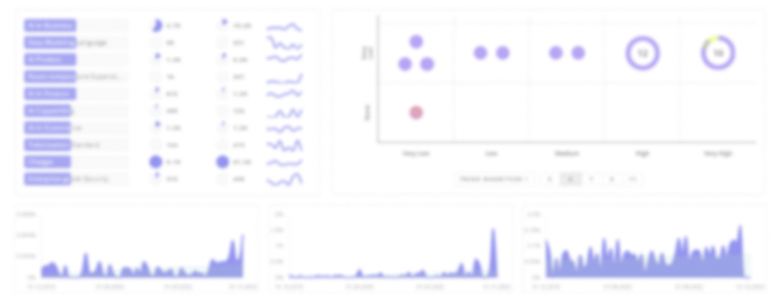
Topic Dominance Index of Energy Infrastructure
The Dominance Index of Energy Infrastructure looks at the evolution of the sector through a combination of multiple data sources. We analyze the distribution of news articles that mention Energy Infrastructure, the timeline of newly founded companies working in this sector, and the share of voice within the global search data
Key Activities and Applications
- Transmission expansion and interconnection upgrades to relieve backlog in interconnection queues and move remote renewables to load centers IEA – International Energy Agency.
- Utility-scale and long-duration energy storage deployment to firm renewables and provide seasonal or multi-hour capacity.
- Data-center load integration and managed flexibility where compute operators, grid operators, and market participants coordinate schedules and demand flexibility to balance peak requirements Strategic Thinking on Electric Transmission in the Age of AI - CSIS.
- LNG export and midstream development that tie production, pipeline reinvestment, and terminal capacity to global energy security strategies.
- Non-wires alternatives and localized microgrids (including multi-fuel hubs) to bypass long permitting cycles and deliver last-mile energy to industrial, data, and mobility customers.
Emergent Trends and Core Insights
- AI and data-center demand is a structural driver for near-term electricity growth and capacity stress; this demand is reshaping prioritization of flexible resources and fast-track network solutions
- Interconnection and permitting bottlenecks now constrain deployment more than technology availability, producing multi-GW backlogs and raising the premium on planning and siting tools that shorten timelines The Past and Present of Strategic Transmission Expansion - CSIS.
- Private capital and alternative financing models (MLPs, private credit) are increasing their share of project funding, changing the risk allocation between developers, utilities, and governments
- Long-duration storage and non-battery LDES architectures (mechanical, thermal, CAES, advanced flywheels) are emerging as cost-effective complements to lithium-ion for multi-hour and seasonal firming demands.
- Grid digitalization and energy orchestration (IoE, DERMS, VPPs, digital twins) are becoming operational prerequisites to integrate dispersed resources at scale and to monetize flexibility services
Technologies and Methodologies
- High-Voltage Direct Current (HVDC) and backbone transmission for efficient, long-distance renewable transport and cross-border interconnectors MarketResearchFuture - Transmission Infrastructure Market.
- Battery Energy Storage Systems (BESS) and alternative LDES including novel CAES and flow, and extended-duration flywheels for daily and multi-hour shifting Amber Kinetics.
- DER orchestration platforms, DERMS and VPPs to aggregate EV chargers, behind-the-meter storage, and flexible loads into dispatchable grid services.
- Advanced planning and geospatial optioneering to accelerate routing, environmental clearance, and stakeholder engagement for linear projects
- AI-driven forecasting, digital twins, and predictive maintenance applied to transmission, storage, and midstream assets to reduce forced outages and optimize operating margins
Energy Infrastructure Funding
A total of 853 Energy Infrastructure companies have received funding.
Overall, Energy Infrastructure companies have raised $674.3B.
Companies within the Energy Infrastructure domain have secured capital from 2.6K funding rounds.
The chart shows the funding trendline of Energy Infrastructure companies over the last 5 years
Energy Infrastructure Companies
- StorEdgeAI — StorEdgeAI develops a non-wires technology platform that creates high-utilization, point-to-point energy delivery alternatives by leveraging transportation and local feedstock infrastructure to shift MWh-to-GWh of clean energy without protracted transmission permitting. The company couples advisory services with pilot deployments to demonstrate grid-adjacent delivery of renewables and storage services, targeting rapid commercial adoption where transmission expansion is the primary barrier. StorEdgeAI's strategy addresses the interconnection and permitting backlog by removing dependence on new high-voltage corridors.
- Storelectric — Storelectric engineers a large-scale Compressed Air Energy Storage system designed to deliver 500MW with ≥45GWh per installation, positioning the technology as a lower-capex option to replace thermal plants for long-duration firming. The approach targets utility and system-level firming, enabling seasonal storage and grid balancing at scale and seeking to materially reduce LCOS for multi-day or seasonal applications. Their projects emphasize integration with abundant offshore and onshore renewables and claim capital cost advantages versus gas peakers.
- Qnetic — Qnetic is developing a next-generation flywheel energy storage system (FESS) tailored for daily shifting and claims a Levelized Cost of Storage that competes with lithium-ion by halving LCOS in targeted use cases. The technology emphasizes high cycle life, safety, and low maintenance for grid services such as peak shaving, spinning reserve, and renewable firming where lifecycle cost matters. Qnetic targets mass production ramp in 2025 to capture utility-scale project opportunities that require high throughput and low degradation.
- Continuum Industries — Continuum Industries offers the Optioneer™ platform that automates routing and environmental scoring for linear infrastructure projects, compressing months of siting and environmental evaluation into hours. The platform ingests thousands of GIS layers and applies scenario generation to present developers and permitting authorities defensible route alternatives, which materially reduces stakeholder friction and time to shovel-ready status. That capability directly addresses the principal non-technical bottleneck in transmission and interconnector development.
- Emerald AI — Emerald AI builds orchestration software that enables data centers to act as flexible grid participants by scheduling compute and shifting workloads to provide grid services while maintaining service level agreements. The platform frames data centers as dispatchable resources and quantifies the potential to free up grid capacity without new generation or transmission investments, a capability that helps reconcile the compute growth with constrained T&D assets. Emerald AI targets partnerships with hyperscalers and utilities to monetize demand-side flexibility.
Uncover actionable market insights on 6.5K companies driving Energy Infrastructure with TrendFeedr's Companies tool.
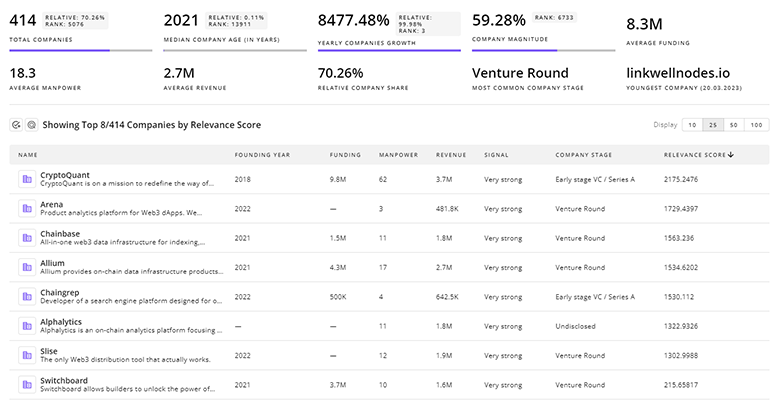
6.5K Energy Infrastructure Companies
Discover Energy Infrastructure Companies, their Funding, Manpower, Revenues, Stages, and much more
Energy Infrastructure Investors
Get ahead with your investment strategy with insights into 2.4K Energy Infrastructure investors. TrendFeedr’s investors tool is your go-to source for comprehensive analysis of investment activities and financial trends. The tool is tailored for navigating the investment world, offering insights for successful market positioning and partnerships within Energy Infrastructure.
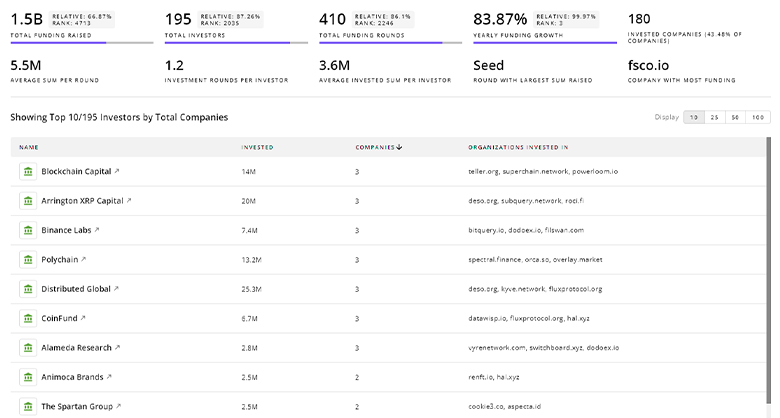
2.4K Energy Infrastructure Investors
Discover Energy Infrastructure Investors, Funding Rounds, Invested Amounts, and Funding Growth
Energy Infrastructure News
TrendFeedr’s News feature offers access to 17.6K news articles on Energy Infrastructure. The tool provides up-to-date news on trends, technologies, and companies, enabling effective trend and sentiment tracking.
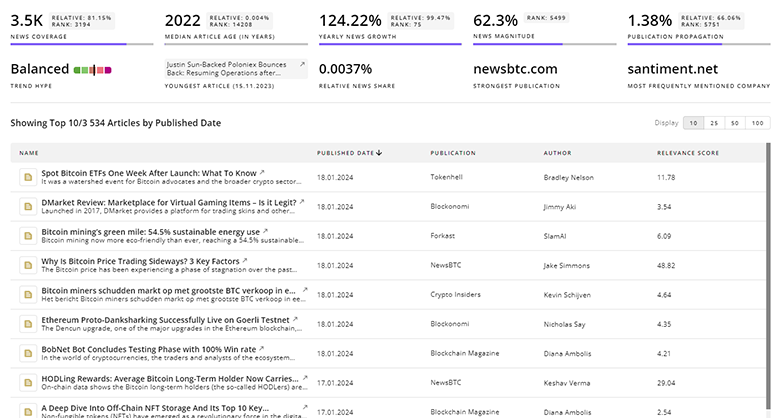
17.6K Energy Infrastructure News Articles
Discover Latest Energy Infrastructure Articles, News Magnitude, Publication Propagation, Yearly Growth, and Strongest Publications
Executive Summary
The immediate strategic imperative in energy infrastructure is to convert available capital and technological progress into deliverable capacity while shortening the time from project concept to commercial operation. Market signals show that value now accrues to solutions that (1) relieve interconnection and permitting friction, (2) provide firm, long-duration capacity at controllable LCOS, and (3) orchestrate distributed flexibility across commercial and industrial loads, including data centers and EV fleets. For investors and operators, the highest-probability paths to near-term impact lie in funding and adopting technologies that accelerate siting and permitting, scale non-battery long-duration storage where lifecycle economics win, and integrate digital orchestration layers that monetize demand-side and DER flexibility.
Have expertise in trends or technology? Your input can enrich our content — consider collaborating with us!