Enterprise Technology Report
: Analysis on the Market, Trends, and TechnologiesThe enterprise technology landscape is consolidating around AI-driven automation, integrated data platforms, and cloud-first architectures, with the internal data showing $3.83B total funding raised for the topic and accelerating adoption metrics across ERP, EAM, and data-management segments. Investment and market forecasts from specialist reports reinforce that outcome: ERP alone was a $149.53B market in 2024 with a ~10.1% CAGR to 2029, while connected-enterprise and EIM markets project high double-digit to mid-teens growth rates, indicating sustained demand for integration, intelligent automation, and real-time data tooling marketresearchfuture.com alliedmarketresearch.com.
This article was last updated 331 days ago. If you find any info is missing, let us know!
Topic Dominance Index of Enterprise Technology
The Dominance Index of Enterprise Technology looks at the evolution of the sector through a combination of multiple data sources. We analyze the distribution of news articles that mention Enterprise Technology, the timeline of newly founded companies working in this sector, and the share of voice within the global search data
Key Activities and Applications
- Modernize and migrate core ERP and ERM workloads to cloud-native, multi-tenant platforms to enable continuous innovation and faster delivery cycles researchandmarkets.com.
- Implement enterprise application integration (EAI/iPaaS/dPaaS) and API management to remove data silos and connect 100s of internal and external services for operational continuity.
- Deploy AI-enabled automation (agentic AI, AIOps, RPA + ML) to automate end-to-end processes (finance close, IT operations, service management) and generate predictive actions from operational telemetry bain.com.
- Build data fabrics/mesh and real-time streaming layers to support analytics, master data, compliance, and low-latency decisioning across OT/IT boundaries.
- Operationalize security, governance, and privacy (data catalogs, model governance, zero-trust) within integration and AI pipelines to meet regulatory and enterprise risk requirements.
Emergent Trends and Core Insights
- Agentic AI and autonomous workflows are moving into pilots and pockets of production; C-suite and CIO-level surveys show high pilot intent and CIO commitment to agent-style automation, pushing architecture modernization to support autonomous agents accenture.com.
- Integration demand outpaces standalone application spend: enterprises favor platform-level integration (EAI, data fabrics, API governance) as the number of enterprise apps grows and real-time IoT/edge data increases.
- Data platform economics shape decisions: organizations invest in EDM and BI stacks to turn rising data volumes into reliable inputs for AI models and operational decisions; EDM market dynamics show strong CAGR and large TAM, pushing vendors to provide AI-native data services marketresearch.com.
- Faster funding and shorter time-to-scale for AI-first enterprise software: investor flows favor AI-centric enterprise SaaS, compressing go-to-market timelines and increasing M&A interest in integration and automation capabilities svb.com.
- Upskilling and operating-model change are binding constraints: companies report intensive retraining on generative-AI tooling and a need to rewire processes to accept machine-generated decisions.
Technologies and Methodologies
- Cloud-native microservices, multi-cloud orchestration, and container platforms as the baseline for modular enterprise apps and integration fabric.
- Agentic AI stacks, generative-AI copilots, and model governance layers that embed decisioning into business processes while tracking provenance and compliance.
- Data fabric/mesh, streaming platforms (Kafka ecosystems), and virtual data pipelines to enable real-time analytics and federated data access at scale conduktor.io.
- Low-code/no-code and AI-assisted development flows for rapid customization of business workflows, reducing time-to-value for line-of-business teams.
- AIOps, predictive infrastructure management, and infrastructure-as-code as operational foundations that automate remediation and capacity planning across hybrid estates.
Enterprise Technology Funding
A total of 853 Enterprise Technology companies have received funding.
Overall, Enterprise Technology companies have raised $125.0B.
Companies within the Enterprise Technology domain have secured capital from 2.4K funding rounds.
The chart shows the funding trendline of Enterprise Technology companies over the last 5 years
Enterprise Technology Companies
- EnterpriseITC — A regional systems integrator focusing on cloud ERP migrations and managed services for mid-market enterprises; it packages rapid migration playbooks and offers staff augmentation to accelerate cloud adoption while minimizing business disruption, aligning directly with enterprise ERP modernization and integration activities.
- SMS-ITC — Provides middleware and application-integration services for firms with mixed legacy and cloud estates; the company emphasizes low-code connectors and API gateways that reduce custom glue code and shorten integration projects, matching the EAI demand signal in the market.
- Merino Consulting Services — Specializes in ERP alliance implementations and ESM rollouts for enterprise clients; Merino’s delivery model focuses on pre-built industry accelerators and packaged analytics to cut deployment risk and speed adoption, addressing ERP modernization and ESM expansion use cases.
- Relish — A niche vendor that helps enterprises maximize value from ERP and source-to-pay stacks through analytics-led adoption programs and configuration optimization; its product set maps to business-process automation and post-deployment ROI capture, which many buyers cite as a pain point.
- Apty — An AI-assisted digital adoption and workflow automation platform that embeds guidance inside enterprise applications to raise user productivity and reduce errors; this directly supports workforce upskilling and digital adoption objectives tied to AI/ERP rollouts.
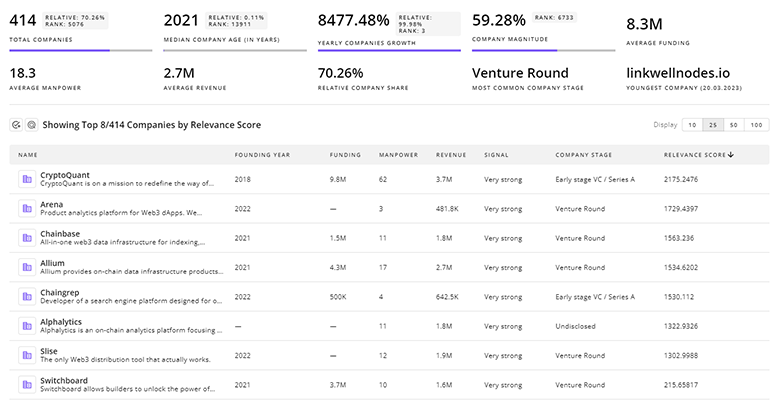
Uncover actionable market insights on 9.0K companies driving Enterprise Technology with TrendFeedr's Companies tool.
9.0K Enterprise Technology Companies
Discover Enterprise Technology Companies, their Funding, Manpower, Revenues, Stages, and much more
Enterprise Technology Investors
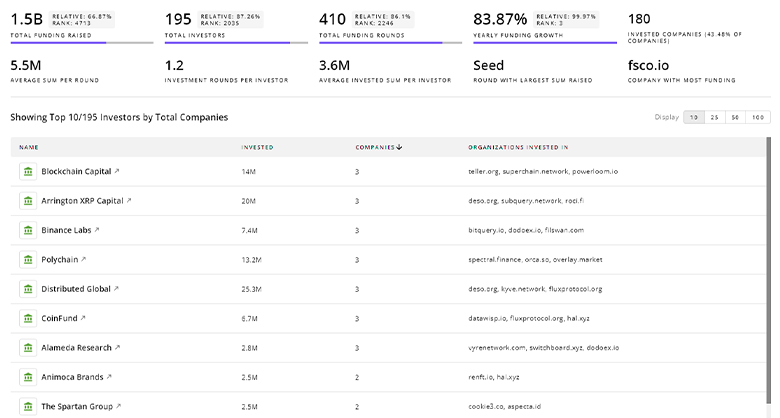
Get ahead with your investment strategy with insights into 2.5K Enterprise Technology investors. TrendFeedr’s investors tool is your go-to source for comprehensive analysis of investment activities and financial trends. The tool is tailored for navigating the investment world, offering insights for successful market positioning and partnerships within Enterprise Technology.
2.5K Enterprise Technology Investors
Discover Enterprise Technology Investors, Funding Rounds, Invested Amounts, and Funding Growth
Enterprise Technology News
TrendFeedr’s News feature offers access to 27.3K news articles on Enterprise Technology. The tool provides up-to-date news on trends, technologies, and companies, enabling effective trend and sentiment tracking.
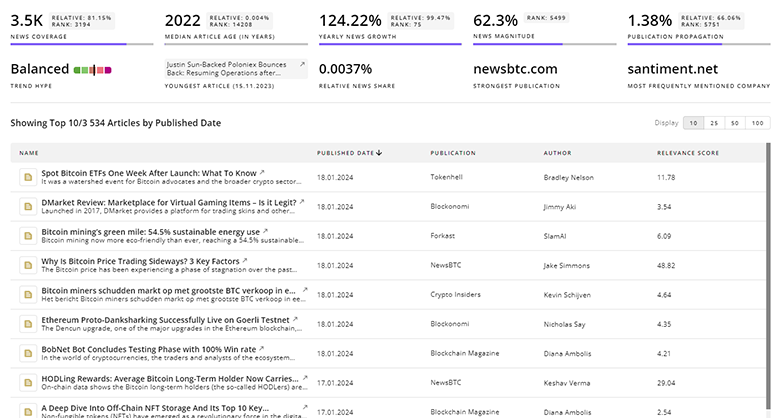
27.3K Enterprise Technology News Articles
Discover Latest Enterprise Technology Articles, News Magnitude, Publication Propagation, Yearly Growth, and Strongest Publications
Executive Summary
Enterprises now face a two-part technical agenda: first, build the integration and data foundations (APIs, data fabric, streaming) that make systems interoperable and auditable; second, layer intelligent automation and agentic AI into those foundations to drive measurable operational outcomes. Funding and market signals favor vendors that combine deep integration expertise with AI-native data and governance capabilities. For business leaders, the immediate priorities are clear: rationalize application portfolios to simplify integration, invest in first-class data infrastructure, and design governance that allows safe, auditable AI-driven decisions. These moves convert current technology spend into scalable operational advantage and reduce long-term cost and risk as AI assumes more decision responsibility inside enterprises.
Have expertise in trends or technology? Your input can enrich our content — consider collaborating with us!