Epigenetics Report
: Analysis on the Market, Trends, and TechnologiesThe epigenetics market sits at a clear commercial inflection where diagnostic revenue streams and therapeutic engineering investments are both expanding; the sector’s measured market size is $2,640,000,000 in 2025 and it carries a reported 14.8% CAGR in core trend projections. Market forecasts diverge but consistently show rapid expansion—one major projection places the opportunity above $70B by the mid-2030s, driven by DNA-methylation diagnostics, epigenome-editing platforms, and multi-omics clinical translation Fortune Business Insights – Epigenetics Market. This report synthesizes those financial signals with patent activity and company signals to show where commercial value will concentrate: validated methylation diagnostics, spatial single-cell epigenomics, and controllable epigenetic modulation platforms that couple delivery with explainable analytics.
This article was last updated 263 days ago. If you find any info is missing, let us know!
Topic Dominance Index of Epigenetics
The Dominance Index of Epigenetics looks at the evolution of the sector through a combination of multiple data sources. We analyze the distribution of news articles that mention Epigenetics, the timeline of newly founded companies working in this sector, and the share of voice within the global search data
Key Activities and Applications
- DNA-methylation diagnostics for early cancer detection and monitoring. Blood-based methylation assays drive current commercial revenue and regulatory traction, supplying non-invasive screening and MRD monitoring use cases DNA Methylation Detection Technology Report.
- Epigenome editing and programmable modulation (non-nuclease approaches). Engineered effectors that tune gene expression without DNA cleavage are moving from tool development into preclinical therapeutic pipelines, targeting oncology, metabolic disease, and degenerative disorders CAS – Epigenetics Emerging Technologies.
- Spatial epigenomics and single-cell chromatin profiling for tissue-context biomarkers. Mapping chromatin marks inside intact tissues enables precision target identification and stratification signals that bulk assays miss Rootsanalysis – Genomics Market.
- Multi-omics integration and AI-driven biomarker discovery. Combining methylation, histone marks, and transcriptomics with explainable ML produces clinically actionable signatures for companion diagnostics and patient selection Genome Profiling.
- Consumer and clinical wellness: epigenetic clocks and lifestyle diagnostics. Biological-age tests and skin-epigenetic assays create B2B and DTC revenue channels that monetize longitudinal sampling and intervention tracking.
Emergent Trends and Core Insights
- Methylation remains the dominant commercial modality while modalities expand. DNA-methylation products capture the largest share of current diagnostics revenue, but histone marks, spatial CUT&Tag approaches, and RNA-modification assays are gaining attention as clinical differentiation vectors Mordor Intelligence – Epigenetics Market.
- Proprietary, clinically annotated epigenetic datasets create the most defensible moats. Firms that convert assay throughput into curated outcome-linked knowledge bases (episignatures, spatial atlases) obtain asymmetric licensing and diagnostic margins EpiSign Inc.
- Control precision has overtaken raw editing power as a commercial differentiator. Platforms that modulate expression levels across multiple loci with predictable dosing and feedback outperform those focused solely on nuclease activity in near-term therapeutic economics Tune Therapeutics.
- Spatial and single-cell resolution unlock clinically actionable heterogeneity. Tumor microenvironment stratification and neuronal population mapping are immediate applications where spatial epigenomics translates directly to trial inclusion/exclusion criteria The Business Research Company – Epigenetics Market Overview.
- Platform consolidation is likely over the next 24–48 months. High-velocity capital has funded many tool vendors; the next value shift will reward integrated diagnostic-to-analytics stacks or therapeutic delivery plus biomarker feedback businesses, driving M&A and partnership activity.
Technologies and Methodologies
- Bisulfite-free and direct detection sequencing (long-read platforms). Long-read nanopore and new chemistry approaches reduce conversion biases and allow direct base-modification calling, improving assay specificity for cfDNA and tissue applications.
- CRISPR-dCas and engineered effector fusions for reversible modulation. Programmable DNA-targeting effectors fused to epigenetic enzymes deliver remodelers, acetyltransferases, or repressive complexes without introducing double-strand breaks.
- Spatial ATAC/CUT&Tag combined with histology (spatial multi-omics). Assays that preserve tissue architecture while profiling accessibility and histone marks enable direct linkage between epigenetic state and microenvironmental cell identity Functional Genomics Market Report.
- Machine learning pipelines for episignature discovery and explainability. Explainable ML extracts multi-site methylation signatures tied to phenotype and supports regulatory submissions for diagnostic claims.
- Non-invasive sample modalities and liquid biopsy workflows. cfDNA methylation panels and cfChIP-seq lower clinical friction for screening and longitudinal monitoring, expanding addressable markets for payers and providers Precision Epigenomics.
Epigenetics Funding
A total of 279 Epigenetics companies have received funding.
Overall, Epigenetics companies have raised $26.1B.
Companies within the Epigenetics domain have secured capital from 1.3K funding rounds.
The chart shows the funding trendline of Epigenetics companies over the last 5 years
Epigenetics Companies
- AtlasXomics Inc. — AtlasXomics Inc. builds spatial epigenomics services and kits that layer chromatin accessibility and histone marks onto histology, enabling tissue-context biomarker discovery for oncology and neurodegeneration. Their platform supports multi-omics studies on the same tissue section to verify functional mechanisms and accelerate target selection. AtlasXomics has commercial traction with research groups focused on tumor microenvironment and aging, positioning it as a specialist supplier for spatial assay projects.
- Aptadir Therapeutics — Aptadir Therapeutics develops RNA-based modulators (DNMT1-interacting RNAs) that locally prevent aberrant DNA methylation and reactivate silenced loci; the approach aims to reprogram methylation in situ for cancer and rare disease targets. The company's RNA therapeutic concept provides a mechanistic alternative to systemic DNMT inhibitors, offering locus specificity and potential safety benefits. Early financials and seed funding indicate a focused development path toward proof-of-concept studies.
- Mitra bio — Mitra bio offers non-invasive skin epigenetic assays that quantify biological aging rate, inflammation, and UV damage for dermatology and aesthetic therapeutics. By focusing on skin-accessible biomarkers, they create a low-barrier clinical and consumer pathway to monetize epigenetic readouts for product development and personalized dermatology. Their approach demonstrates how verticalized sampling plus actionable reporting can open specialty markets.
- Epigenica Biosciences — Epigenica Biosciences operates in South America providing epigenetic mapping, target identification, and bioinformatics services that support diagnostics and therapeutic discovery. The company pursues regional clinical validation and partner projects that translate epigenomic signals into locally relevant health solutions, filling geographic gaps in global epigenetic datasets. Their presence highlights regional market expansion opportunities for epigenetic services providers.
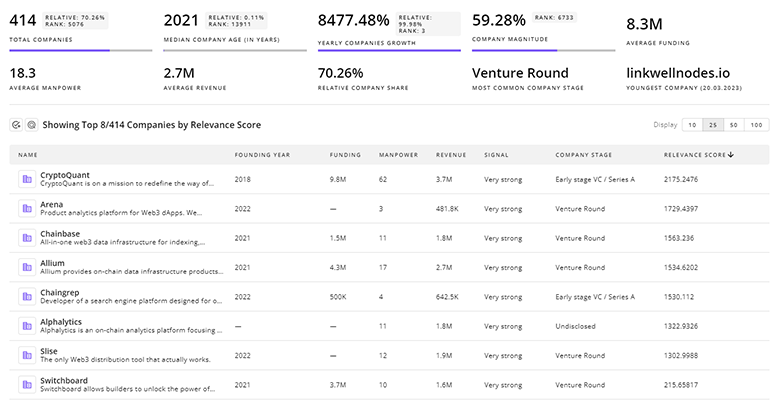
Uncover actionable market insights on 1.6K companies driving Epigenetics with TrendFeedr's Companies tool.
1.6K Epigenetics Companies
Discover Epigenetics Companies, their Funding, Manpower, Revenues, Stages, and much more
Epigenetics Investors
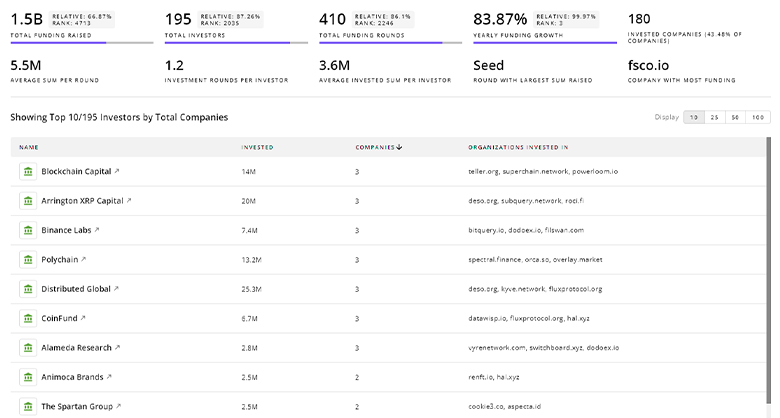
Get ahead with your investment strategy with insights into 1.4K Epigenetics investors. TrendFeedr’s investors tool is your go-to source for comprehensive analysis of investment activities and financial trends. The tool is tailored for navigating the investment world, offering insights for successful market positioning and partnerships within Epigenetics.
1.4K Epigenetics Investors
Discover Epigenetics Investors, Funding Rounds, Invested Amounts, and Funding Growth
Epigenetics News
TrendFeedr’s News feature offers access to 2.7K news articles on Epigenetics. The tool provides up-to-date news on trends, technologies, and companies, enabling effective trend and sentiment tracking.
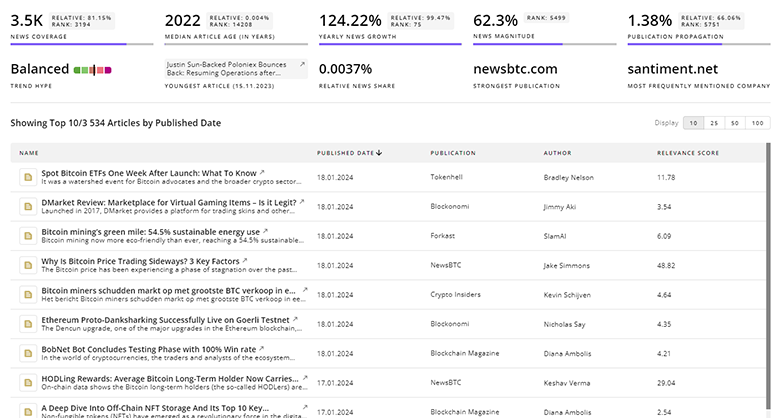
2.7K Epigenetics News Articles
Discover Latest Epigenetics Articles, News Magnitude, Publication Propagation, Yearly Growth, and Strongest Publications
Executive Summary
Epigenetics currently offers two clear, investable value paths: first, high-margin diagnostic assets built on validated methylation assays and curated, outcome-linked databases; second, therapeutic platforms that deliver precise epigenetic modulation with controlled dosing and reliable delivery. For business strategy, prioritize assets that combine an assay or editing capability with a clinical feedback loop—either a proprietary knowledge base or a companion diagnostic pathway—that enables rapid regulatory progress and payer negotiation. Geographically, the United States remains the primary capital center, but firms that establish clinically annotated cohorts or validated assays in underrepresented regions will hold strategic bargaining chips for partnerships and region-specific approvals. Finally, expect consolidation as platform integrators acquire or partner with high-resolution assay owners and data-rich diagnosticians to form end-to-end offerings that translate epigenetic science into repeatable clinical revenue.
Have expertise in trends or technology? Your input can enrich our content — consider collaborating with us!