
Esim Report
: Analysis on the Market, Trends, and TechnologiesThe eSIM market sits at an inflection where patent activity, device integration, and travel demand meet scalable cloud management; the internal trend data shows 1,699 patents and 3,104 companies engaged in the topic, underlining intense technical investment and a broad supplier base. Market forecasts and shipment projections point to multi-billion dollar opportunity segments: several market sources project market values between roughly USD 1.2-5.5 billion today growing to mid-single or double-digit billions by 2030-2032, while device shipments are expected to surpass 633 million units in the mid-2020s, driven by smartphone and IoT adoption.
This article was last updated 120 days ago. If you find any info is missing, let us know!
Topic Dominance Index of Esim
The Dominance Index of Esim looks at the evolution of the sector through a combination of multiple data sources. We analyze the distribution of news articles that mention Esim, the timeline of newly founded companies working in this sector, and the share of voice within the global search data
Key Activities and Applications
-
- Remote SIM provisioning and profile lifecycle management for consumer devices and IoT fleets, enabling over-the-air activation, updates, suspension, and profile reuse.
-
- Travel and prepaid data services that let travelers buy country or regional plans instantly via apps and QR activation, reducing roaming bills and distribution logistics for physical SIMs.
-
- Embedded connectivity for IoT and M2M use cases (asset trackers, smart meters, connected cars) where eUICC/eSIM and eUICC lifecycle tools enable remote operator selection and secure updates.
-
- Enterprise mobility and device fleet management that centralize billing, KYC, and policy controls through cloud-based eSIM subscription platforms and APIs.
-
- Wearables and consumer electronics adopting embedded profiles to remove SIM trays, improve ingress protection, and add independent cellular connectivity.
Emergent Trends and Core Insights
-
- Shipment and device concentration. Large shipment projections (over 633 million eSIM-enabled devices by 2026) reflect handset OEM moves and regional rollouts; China and major OEMs accelerate unit adoption, creating a supply and provisioning scale problem that platform providers will monetize eSIM-enabled Device Shipments Will Exceed 633 Million in 2026.
- Travel segment re-configuration. Travel eSIM subscriptions and revenues rise sharply (travel segment revenue reported at ~US$1.8 billion in 2025, with projections to multi-billion levels by 2030), forcing incumbent operators to repackage roaming offers or risk margin loss to aggregator marketplaces Travel eSIM Market Hits US$1.8bn in 2025, Disrupting Roaming Global Travel SIMs & eSIMs Market: Forecast, Share, Size 2025-30.
- Security and standards drive enterprise adoption. Patent activity emphasizes secure provisioning, profile lifecycle, and eUICC/TSM functions; adoption of standards such as SGP.32 for IoT increases operator and enterprise confidence in large deployments eSIM-enabled Device Shipments Will Exceed 633 Million in 2026.
- Platform consolidation and white-label SaaS growth. Market activity shows many new entrants and white-label provisioning platforms; incumbents and cloud players will move to bundle provisioning with identity, billing, and device management to capture higher value.
-
- AI and dynamic network selection. Providers adopt ML for real-time network selection and cost optimization, improving QoS and lowering roaming expense for end customers.
Technologies and Methodologies
- Remote SIM Provisioning (RSP) and eUICC management, the operational foundation for profile download, activation, and lifecycle control in consumer and IoT devices Embedded SIM (eSIM) Technology Market Size, Share, Growth and Global Industry Analysis By Type & Application, Regional Insights and Forecast to 2024-2032.
- Secure elements and TSM architectures that place cryptographic keys in hardened domains and provide secure personalization during provisioning.
- Cloud-native subscription management platforms and APIs that deliver lifecycle controls, reseller models, and enterprise fleet dashboards eSIM Market Share, Size, Trends, Industry Analysis Report, By Solution (Hardware, Connectivity Services).
- AI and decision engines for dynamic network selection and personalized plan recommendation, reducing cost and latency for roaming and IoT device failover eSIM market Report Size, Growth & Opportunities | 2031 Report.
- iSIM and deeper integration into system-on-chip for constrained IoT devices, offering further size, power, and cost advantages over discrete eUICC modules News Landscape Report on eSIM developments Travel eSIM adoption set to quadruple by 2030.
Esim Funding
A total of 310 Esim companies have received funding.
Overall, Esim companies have raised $104.1B.
Companies within the Esim domain have secured capital from 1.2K funding rounds.
The chart shows the funding trendline of Esim companies over the last 5 years
Esim Companies
- Talkesim LLC provides data-only travel eSIM plans for roughly 200 countries via QR activation and a consumer app; it targets price-sensitive travelers and digital nomads by offering many short-term packages and simple onboarding, which reduces distribution friction compared with physical SIM channels.
- eSIM Nexus positions itself as a traveler-focused eSIM provider that emphasizes instant activation and user experience; the company targets both leisure and business segments and focuses on straightforward purchase flows to lower adoption friction for nontechnical users.
- Imex Security FZE offers eSIM and USIM R8 solutions and focuses on secure element software for MNOs and device makers; their product set addresses operator demands for certified provisioning, cryptographic protection, and regulatory compliance in enterprise and government projects.
- Sensorise supplies end-to-end M2M/eSIM lifecycle and SenseLCM device management for IoT fleets, with a focus on QoS, remote provisioning, and certificate management; its platform and operator relationships serve industrial and automotive customers where secure, long-lived connectivity matters.
- Yesim offers prepaid and corporate eSIM plans across 200 countries with an emphasis on enterprise accounts and localization; it targets SMB travel programs and international workers by combining corporate billing and API integrations for partner distribution.
Uncover actionable market insights on 3.3K companies driving Esim with TrendFeedr's Companies tool.
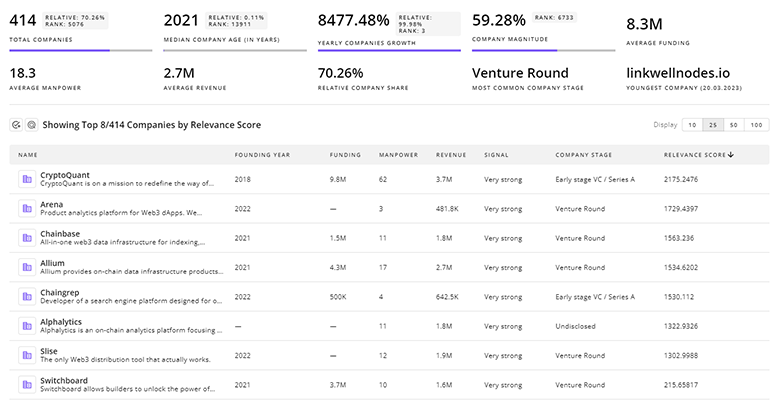
3.3K Esim Companies
Discover Esim Companies, their Funding, Manpower, Revenues, Stages, and much more
Esim Investors
Get ahead with your investment strategy with insights into 1.4K Esim investors. TrendFeedr’s investors tool is your go-to source for comprehensive analysis of investment activities and financial trends. The tool is tailored for navigating the investment world, offering insights for successful market positioning and partnerships within Esim.
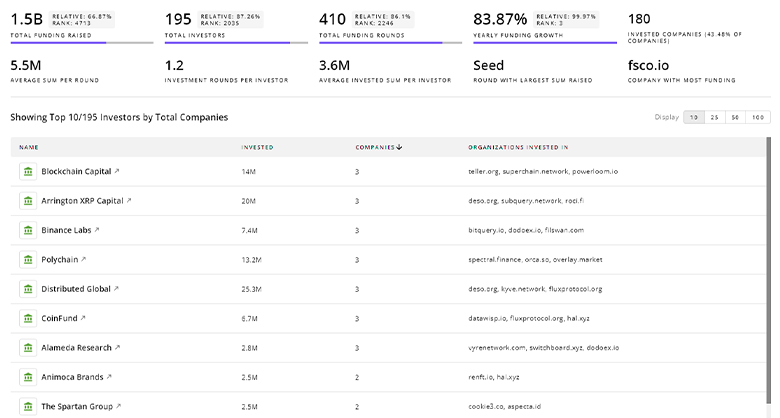
1.4K Esim Investors
Discover Esim Investors, Funding Rounds, Invested Amounts, and Funding Growth
Esim News
TrendFeedr’s News feature offers access to 11.3K news articles on Esim. The tool provides up-to-date news on trends, technologies, and companies, enabling effective trend and sentiment tracking.
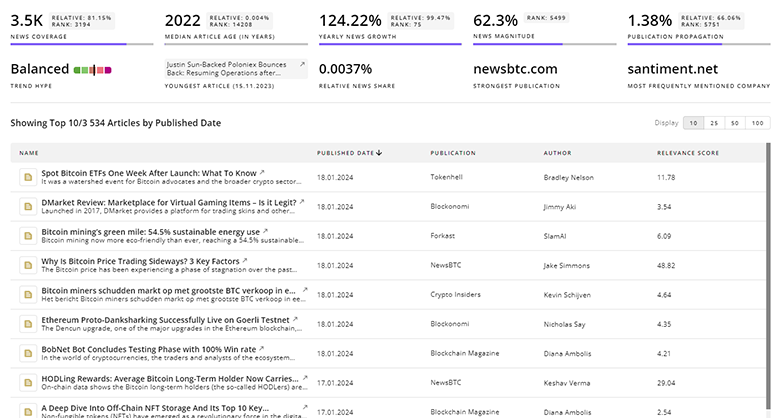
11.3K Esim News Articles
Discover Latest Esim Articles, News Magnitude, Publication Propagation, Yearly Growth, and Strongest Publications
Executive Summary
The data shows eSIM has moved from a niche enabler to a commercial platform opportunity with three clear value pools: travel/prepaid marketplaces, enterprise/IoT fleet management, and chipset-level integration for constrained devices. Patent intensity around secure provisioning and profile lifecycle aligns with market demand for reliable IoT deployments, which supports premium pricing for managed provisioning services. Travel remains the fastest way to scale consumer volumes and awareness, but margin capture shifts to platform operators who bundle subscription management, identity, and analytics. Strategic moves that matter now: secure GSMA and eUICC certifications, prioritize cloud API partnerships with device OEMs and MNOs, and invest in ML-driven network selection to reduce end-user costs; companies that execute on these operational capabilities will convert unit growth into durable revenue.
Have expertise in trends or technology? Your input can enrich our content — consider collaborating with us!