Factory Automation & Control Report
: Analysis on the Market, Trends, and TechnologiesThe factory automation and control market sits at an inflection point where scale and software meet the shop floor: the internal trend data values the segment at USD 152.33 billion in 2025, and forecasts show sustained growth driven by IIoT, edge computing, and modular PLC platforms. Market-level forecasts align with this expansion, and vendors that combine flexible hardware with cloud-native operational software capture the most near-term opportunity Factory Automation Market – Forecasts from 2024 to 2029.
This article was last updated 322 days ago. If you find any info is missing, let us know!
Topic Dominance Index of Factory Automation & Control
The Dominance Index of Factory Automation & Control looks at the evolution of the sector through a combination of multiple data sources. We analyze the distribution of news articles that mention Factory Automation & Control, the timeline of newly founded companies working in this sector, and the share of voice within the global search data
Key Activities and Applications
- Real-time process monitoring and supervisory control using SCADA, edge analytics, and remote PLC management to reduce unplanned downtime and support distributed operations.
- Robotics integration for machine tending, welding, assembly, and precision motion tasks, including cobots for human collaboration and robot cells for high throughput lines Factory Automation Global Market Briefing 2023.
- Predictive and prescriptive maintenance using streaming sensor data and ML models to convert condition monitoring into scheduled interventions Global Automated Material Handling Market Report.
- Warehouse and intralogistics automation (AMRs, AS/RS, fleet orchestration) to relieve labor shortages and compress fulfillment cycles Warehouse Automation - Market Share Analysis.
- Modular, turnkey machine building and retrofit services (custom SPM) to modernize legacy lines and enable rapid reconfiguration for high-mix, low-volume production.
Emergent Trends and Core Insights
- Software-defined automation platforms that separate control logic from proprietary hardware accelerate upgrades and enable continuous deployment of control apps; they raise the strategic value of software partners and cloud/edge orchestration suppliers Insights from Automate 2023.
- IIoT + Edge AI is shifting value upstream: edge inference reduces latency for control loops while central analytics extract cross-site yield improvements and predictive patterns Global Automated Material Handling Equipment Market.
- Modular robotics and cobots expand automation into SMEs by lowering integration effort and capital outlay; system integrators that offer repeatable modular cells scale faster.
- Digital twins and virtual commissioning compress time-to-production and reduce risk for complex lines; companies that embed simulation into design workflows shorten commissioning cycles significantly Factory Automation and Industrial Controls Market.
- Cybersecurity for OT has moved from checkbox to boardroom priority as connected controllers broaden attack surface; secure remote access and segmented IIoT architectures now drive procurement decisions Industrial Control & Factory Automation Market Report 2025.
Technologies and Methodologies
- PLCs, soft-PLCs, and distributed control systems (DCS) remain backbone technologies; cloud-enabled PLC management and versioned DevOps for control code accelerate safe change management.
- IIoT sensors, industrial Ethernet, and edge gateways that support local analytics and deterministic connectivity for low latency control.
- Machine vision and 3D inspection with embedded ML for inline quality control, reducing scrap and enabling in-process acceptance Food Automation Market Report.
- Digital twins and simulation for virtual commissioning, throughput modeling, and what-if planning prior to physical change.
- Model-based engineering and no-code/low-code operator apps to reduce integration time and empower plant engineers to adjust workflows without full engineering cycles.
Factory Automation & Control Funding
A total of 1.1K Factory Automation & Control companies have received funding.
Overall, Factory Automation & Control companies have raised $42.9B.
Companies within the Factory Automation & Control domain have secured capital from 3.4K funding rounds.
The chart shows the funding trendline of Factory Automation & Control companies over the last 5 years
Factory Automation & Control Companies
- Process Automation & Controls — Australian systems integrator focused on PLC integration and turnkey control systems for heavy industry. The firm highlights 24/7 service and multi-discipline engineering teams capable of instrumentation, panel fabrication, and on-site commissioning, making it a practical partner for retrofit and brownfield modernization projects.
- Futura Automation, LLC — Small US integrator and robotics integrator that packages repeatable cell designs (machine tending, inspection, palletizing) with no-code programming stacks and remote support routers. Their focus on robot-agnostic, flow-chart programming for midmarket customers lowers integration risk and accelerates pilot deployments.
- Alliance Automation, LLC — Turnkey custom robotic cell builder in the US Midwest that combines robot offline simulation with in-house fabrication (waterjet, fixtures) to deliver specialized manufacturing cells (grinding, trimming, glue dispensing). Their verticalized offering suits OEMs requiring durable, single-purpose automation.
- AUTONOMA — Australian automation and robotics company that integrates AI into process automation for mining and laboratories; they emphasize task-driven automation for hazardous or repetitive work and offer end-to-end delivery from R&D through deployment, a model that fits complex process environments.
- DNC Automation — Malaysia/Singapore integrator that bundles Siemens-based IIoT and PLC/SCADA installations with local support and turnkey robotics for food, automotive, and semiconductors. Their local presence and emphasis on training reduce the barriers for regional smart factory rollouts.
Uncover actionable market insights on 21.5K companies driving Factory Automation & Control with TrendFeedr's Companies tool.
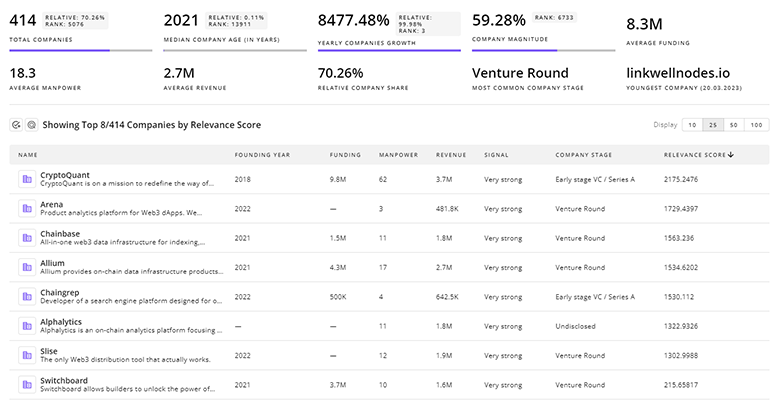
21.5K Factory Automation & Control Companies
Discover Factory Automation & Control Companies, their Funding, Manpower, Revenues, Stages, and much more
Factory Automation & Control Investors
Get ahead with your investment strategy with insights into 3.5K Factory Automation & Control investors. TrendFeedr’s investors tool is your go-to source for comprehensive analysis of investment activities and financial trends. The tool is tailored for navigating the investment world, offering insights for successful market positioning and partnerships within Factory Automation & Control.
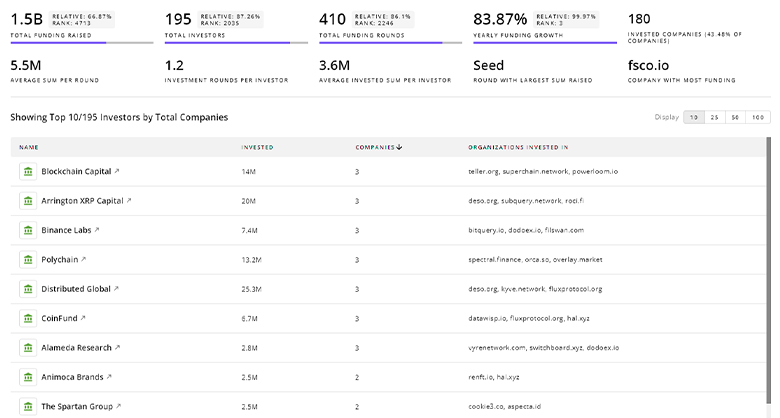
3.5K Factory Automation & Control Investors
Discover Factory Automation & Control Investors, Funding Rounds, Invested Amounts, and Funding Growth
Factory Automation & Control News
TrendFeedr’s News feature offers access to 21.2K news articles on Factory Automation & Control. The tool provides up-to-date news on trends, technologies, and companies, enabling effective trend and sentiment tracking.
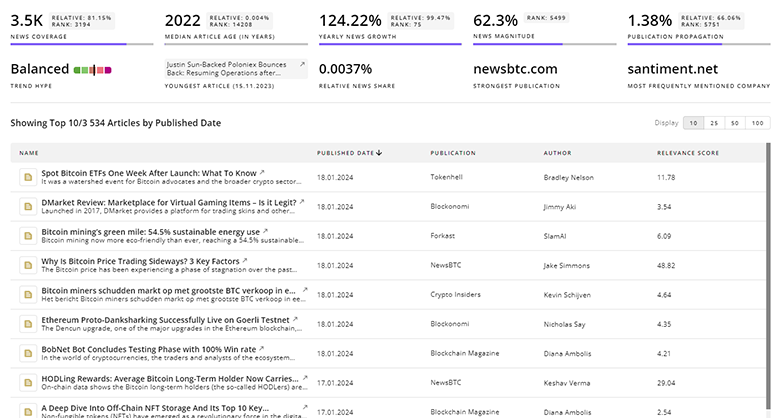
21.2K Factory Automation & Control News Articles
Discover Latest Factory Automation & Control Articles, News Magnitude, Publication Propagation, Yearly Growth, and Strongest Publications
Executive Summary
Factory automation and control now rewards combination plays: modular hardware, repeatable robotic cells, and software platforms that enable continuous improvement and remote operations. Near term, two commercial strategies win: (1) platform builders that integrate IIoT, edge AI, and lifecycle services to capture recurring revenue; and (2) specialized integrators that offer turn-key, rapid-ROI cells for niche high-value processes. Governments and large OEMs will continue to stimulate demand through incentives and local-content rules, while warehouse and AMH segments remain the fastest adopters because labor economics create clear payback. For investors and operators, priority actions are clear: back solutions that reduce integration friction (digital twins, low-code control stacks), harden OT security at the edge, and package automation as measurable service offerings that convert capex into predictable revenue.
Have expertise in trends or technology? Your input can enrich our content — consider collaborating with us!